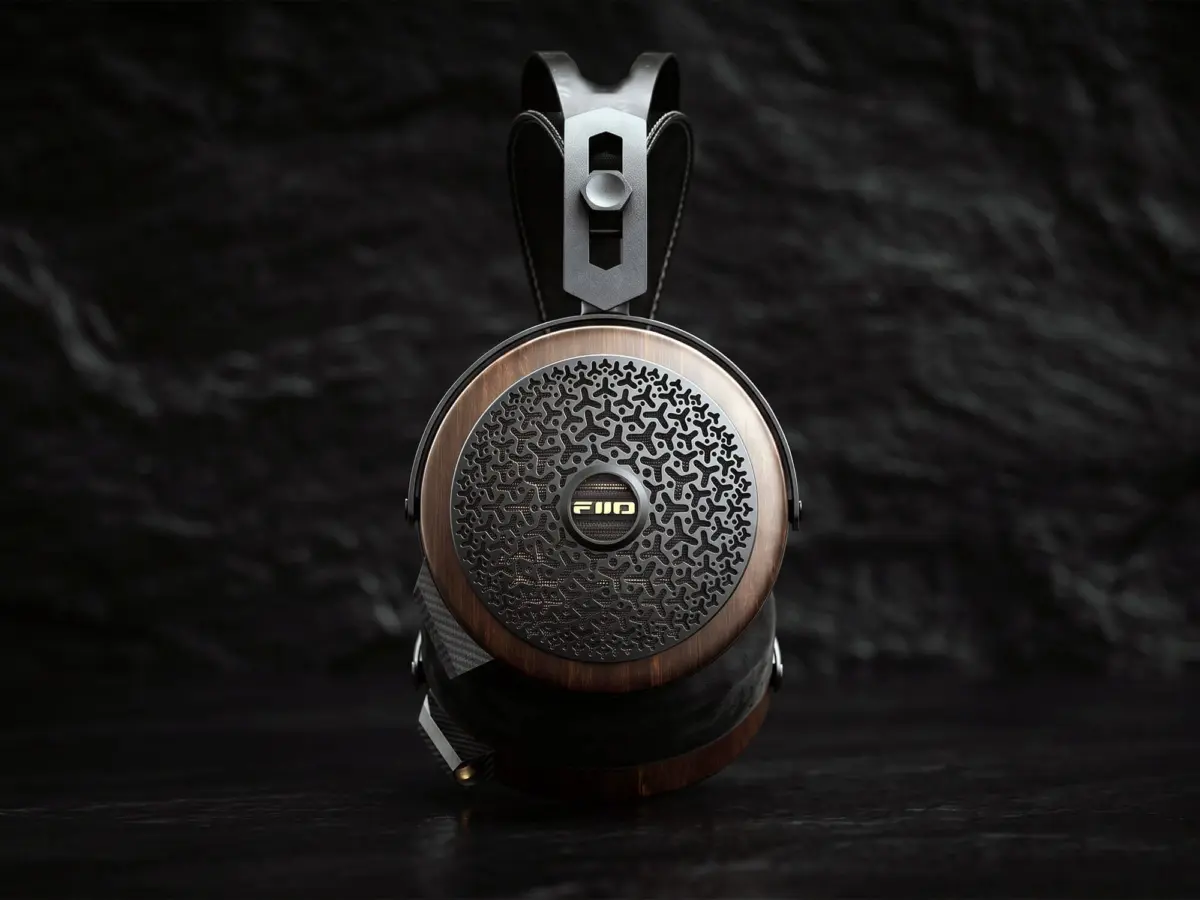
In the upper echelons of the personal audio market, the relentless pursuit of sonic perfection often forces manufacturers to walk a razor-thin tightrope between advanced materials science and timeless acoustic craftsmanship. Audiophile-grade equipment demands not only uncompromising technical performance—such as vanishingly low distortion, hyper-responsive drivers, and linear frequency reproduction—but also tactile luxury, ergonomic endurance, and aesthetic distinction. Entering this fiercely competitive arena is FiiO, a brand long celebrated for delivering high-performance personal audio gear, with its latest flagship release: the FiiO FT15 high-end planar over-ear headphones.
Priced competitively at £499 / €499.99 / $499.99, the FT15 headphones represent a significant leap forward in consumer-accessible high-fidelity engineering. Rather than relying on incremental updates to existing product lines, FiiO has re-architected its flagship planar magnetic architecture from the ground up. The result is a triumvirate of core acoustic innovations: a colossal 101mm planar magnetic driver that dwarfs industry standards, an astonishingly thin 800-nanometer diamond-coated diaphragm, and natural North American FAS-grade black walnut earcups.
Despite incorporating these massive acoustic transducers and dense, high-grade organic wood enclosures, the FT15 manages to defy engineering conventions by tipping the scales at a remarkably light 425 grams. This featherlight footprint is achieved through the strategic implementation of a structural carbon-fiber headband. By marrying the warm, natural resonance of acoustic wood with the cutting-edge speed of sub-micron planar diaphragms, FiiO has crafted an open-class competitor aimed squarely at discerning music lovers, professional mixing engineers, and uncompromising audiophiles. This comprehensive report explores the genesis, engineering breakthroughs, technical specifications, market positioning, and future industry implications of the newly minted FiiO FT15.
Detailed Chronology: The Evolution of FiiO’s Flagship Audio Journey
To fully appreciate the engineering achievement represented by the FT15, it is necessary to examine the historical trajectory of FiiO’s acoustic development. Founded as a specialist in portable headphone amplifiers and digital-to-analog converters (DACs), FiiO steadily expanded its portfolio over the past decade to encompass in-ear monitors (IEMS) and, more recently, full-sized over-ear headphones.
The Shift Toward Open-Back and Planar Design
For years, the mainstream headphone market was dominated by traditional dynamic drivers encased in plastic or stamped aluminum. While effective for mass-market consumption, dynamic drivers often struggle with membrane breakup, phase distortion across frequency extremes, and acoustic ringing. Recognizing a shift in consumer demand toward audiophile-grade planar magnetic technology—which offers superior transient response and lower harmonic distortion—FiiO embarked on a multi-year research and development cycle dedicated to large-format planar drivers.
Earlier iterations of FiiO’s over-ear offerings laid the groundwork, testing the waters with diaphragm materials and housing materials. However, the development cycle leading up to the FT15 focused intensely on solving a fundamental physics paradox in headphone design: how to house a massive transducer surface area capable of moving enormous volumes of air without creating a cumbersome, neck-straining physical footprint.
Breakthroughs in Sub-Micron Diaphragm Technology
A critical milestone in the chronology of the FT15 was the refinement of the diaphragm manufacturing process. In previous generations of FiiO planar designs, engineers grappled with the trade-off between diaphragm mass and structural integrity. Thinner diaphragms react faster to transient audio signals, yielding superior clarity, micro-detail retrieval, and high-frequency extension. However, ultra-thin films are notoriously fragile; under the immense magnetic tension required in planar systems, they are prone to warping, tearing, or deforming under high sound pressure levels (SPL).
Through rigorous material testing, FiiO’s engineering team successfully reduced the FT15 diaphragm thickness to an astonishing 800 nanometers—an 86.7% reduction compared to the brand’s previous generation of planar headphones. To prevent structural failure at this sub-micron scale, the team integrated a specialized diamond-like carbon (DLC) coating. This chemical vapor deposition process imparts diamond-level rigidity onto a membrane roughly one-thousandth of a millimeter thick, ensuring that the entire surface moves in absolute unison with the audio signal without structural buckling.
Material Selection: The Integration of FAS-Grade Black Walnut
Simultaneously, FiiO’s industrial design team evaluated the acoustic housing. While modern consumer headphones lean heavily on injection-molded plastics or cold metals like aluminum and magnesium, high-end loudspeaker manufacturers have long relied on acoustic woods for their natural dampening properties and musical resonance.
FiiO sourced North American FAS-grade black walnut—the highest grading designation for structural and aesthetic hardwood lumber—for the FT15 earcups. This decision transformed each pair of headphones into a unique acoustic chamber. Because no two pieces of wood share identical grain patterns, every single unit produced possesses an organic visual fingerprint. More importantly, the cellular structure of the black walnut wood acts as a natural acoustic filter, smoothing out unwanted harsh reflections and imparting a warm, organic timbre that synthetic materials simply cannot replicate.
Supporting Context & Metrics: The Anatomy of the FT15
Understanding why the FiiO FT15 commands attention requires a deep dive into the underlying metrics and acoustic principles that govern its performance. In high-end audio, three foundational components dictate sound reproduction quality: the driver, the diaphragm, and the enclosure material. The FT15 excels across all three vectors.
+-----------------------------------------------------------------+
|                    FIIO FT15 CORE METRICS                       |
+--------------------------+--------------------------------------+
| Driver Size              | 101mm Planar Magnetic                |
| Diaphragm Thickness      | 800 Nanometers (Diamond-Coated)      |
| Earcup Material          | North American FAS-Grade Black Walnut|
| Headband Construction    | Structural Carbon Fiber              |
| Total Weight             | 425 Grams (< 1 lb)                   |
| MSRP                     | £499 / €499.99 / $499.99             |
+--------------------------+--------------------------------------+
1. Massive 101mm Planar Magnetic Drivers
The most immediately striking physical attribute of the FT15 is the sheer scale of its acoustic engines. The drivers measure a massive 101mm across. To put this metric into perspective, the vast majority of over-ear headphones on the market—including industry heavyweights like the Apple AirPods Max (approximately 40mm) and the studio-staple Beyerdynamic DT 770 Pro (45mm)—utilize drivers ranging between 40mm and 50mm in diameter.
A 101mm driver provides more than double the physical surface area to displace air compared to standard 50mm dynamic drivers. In acoustic physics, surface area is king: larger drivers can effortlessly push air at lower frequencies without straining, resulting in authoritative, deep-reaching bass response coupled with effortless dynamic headroom. Even during complex orchestral crescendos or bass-heavy electronic tracks, the FT15’s drivers operate well within their comfort zone, drastically reducing intermodulation distortion.
2. Planar Magnetic Architecture vs. Traditional Dynamic Drivers
To understand the sonic signature of the FT15, one must understand how planar magnetic drivers operate relative to traditional dynamic counterparts.
The Dynamic Paradigm: Traditional headphones utilize a voice coil attached to a conical or dome-shaped diaphragm. An electrical current passes through the coil within a magnetic field, physically pushing and pulling the apex of the cone. This localized force can create mechanical stress across the diaphragm, leading to uneven frequency response, cone breakup, and distortion at the edges of the frequency spectrum.
The Planar Advantage: In contrast, planar magnetic headphones utilize an ultra-thin film matrix suspended uniformly between powerful neodymium magnet arrays. The conductive trace circuit is etched directly across the entire surface of the diaphragm. When an audio signal is applied, the magnetic field exerts a uniform force across the entire surface simultaneously.
Because there is no external cone-shaping pressure, the diaphragm remains completely flat and resonates equally across all frequencies. The acoustic result is an extraordinarily wide soundstage, pinpoint instrument separation, lightning-fast transient response, and pristine clarity that reveals micro-details in familiar recordings for the first time.
3. The 800-Nanometer Diamond-Coated Membrane
The engineering triumph of the FT15 lies not just in its planar design, but in the extreme thinness and durability of its moving parts. At 800 nanometers, the diaphragm is over 1,000 times thinner than a single millimeter.
At this microscopic scale, mass is virtually eliminated, allowing the membrane to react instantly to the slightest voltage fluctuations from an amplifier. However, ultra-thin membranes are notorious for flexing uncontrollably or distorting when subjected to high-amplitude signals. FiiO solved this by applying a diamond-like carbon (DLC) coating. Diamond is the hardest known natural material; when vapor-deposited onto the nano-film, it creates an exoskeleton that resists mechanical flexing while adding negligible mass. This ensures absolute pistonic motion: the diaphragm moves precisely as commanded by the music, stopping and starting with absolute zero overhang or acoustic smearing.
4. Organic Enclosures and Carbon Fiber Ergonomics
The use of North American FAS-grade black walnut for the earcups serves a dual purpose. Aesthetically, it elevates the FT15 from a piece of consumer electronics to a handcrafted luxury artifact. Acoustically, wood possesses superior internal damping characteristics compared to resonant plastics or metallic alloys. By mimicking the acoustic housing principles of world-class studio monitors and high-end hi-fi loudspeaker cabinets, the wooden earcups contribute to a rich, natural decay and timbre, eliminating the hollow, plasticky colorations that plague lesser headphones.
Ordinarily, combining massive 101mm drivers, dense magnetic arrays, and solid wood earcups would result in a heavy, punishing listening device. However, FiiO engineered the headband structure using advanced carbon fiber composites. Carbon fiber offers an exceptional strength-to-weight ratio, allowing the structural chassis to remain rigid and durable while dropping the total weight of the headphones to just 425 grams (less than one pound). This engineering feat ensures that audiophiles can engage in multi-hour listening sessions without experiencing neck fatigue or clamping discomfort.
Official Statements and Industry Perspective
Speaking on the design philosophy and market positioning of the FT15, FiiO’s product development division emphasized the brand’s commitment to democratizing ultra-high-end audio performance.
"When designing the FT15, our mandate was clear: we refused to compromise on driver size, diaphragm integrity, or material quality," noted FiiO’s chief acoustic engineer in a background briefing accompanying the launch. "Audiophiles have long understood that planar magnetic drivers offer unmatched transient speed, but historically, achieving this performance required settling for heavy, industrial designs or paying exorbitant multi-thousand-dollar price tags. With the FT15, we utilized sub-micron diamond coatings and lightweight carbon fiber to create a transducer that matches the technical prowess of flagship studio gear, housed in the organic warmth of FAS-grade black walnut. At £499, we are proving that elite-tier acoustics do not need to be locked behind prohibitive luxury pricing."
Industry analysts and early-access reviewers have echoed these sentiments, highlighting the FT15 as a potential disruptor in the mid-to-high-tier headphone market. Traditionally, planar headphones crossing the 100mm driver threshold—such as ultra-exclusive models from boutique high-end manufacturers—routinely retail well north of $1,500 to $3,000. By leveraging optimized manufacturing pipelines and advanced material sciences, FiiO has engineered a product that punches significantly above its weight class, challenging established industry benchmarks.
Future Outlook: The Impact of the FT15 on the Personal Audio Landscape
The launch of the FiiO FT15 arrives at a fascinating inflection point in the personal audio industry. As streaming services transition toward lossless, high-resolution audio formats (such as 24-bit/192kHz FLAC and spatial audio masters), consumers are increasingly discovering that their playback gear is the primary bottleneck in their listening chain. Standard consumer headphones, tuned with exaggerated V-shaped frequency curves and compressed soundstages, are fundamentally incapable of resolving the nuanced micro-dynamics present in high-resolution recordings.
The FT15 positions itself directly at the intersection of this high-res renaissance and consumer accessibility. By packing technologies previously reserved for boutique, esoteric audio labs—such as 800-nanometer diamond-coated planar membranes and acoustic-grade timber enclosures—into a polished, consumer-ready package priced at £499 / €499.99 / $499.99, FiiO is raising the bar for what the market should expect at this price point.
Implications for Competitors
Major consumer and pro-audio brands will be forced to take notice. Competitors relying on aging dynamic driver designs or cost-cutting plastics may find it increasingly difficult to justify premium pricing when brands like FiiO are offering exotic materials, carbon-fiber ergonomics, and ultra-large planar drivers for under $500. Furthermore, the success of the FT15’s wood-and-carbon construction philosophy may trigger a broader industry trend toward sustainable, high-grade natural materials in headphone manufacturing, moving away from petroleum-based plastics toward heirloom-quality builds.
The Audiophile Horizon
For the end user, the FT15 signals a democratization of extreme fidelity. Whether deployed in a home studio environment for critical mixing and mastering work, or connected to a dedicated desktop headphone amplifier in a quiet listening room, the FT15 delivers an immersive, distortion-free window into recorded music.
As the first units ship worldwide, the FiiO FT15 stands as a testament to what is possible when acoustic physics, materials science, and uncompromising design converge. For those seeking the ultimate gateway into the world of high-end planar magnetic sound without mortgaging their listening room, the bar has officially been raised.