Executive Overview
For nearly three decades, Capcom’s Resident Evil franchise has cast a long, imposing shadow over the survival horror genre. First unspooled on the original Sony PlayStation in 1996, the Japanese developer’s masterclass in tension redefined interactive entertainment. Eschewing the invincible, super-powered protagonists common to 1990s video games, Resident Evil forced players to navigate claustrophobic corridors armed with little more than sparse ammunition, inventory management dread, and their own wits. Through decades of clever reinventions, high-profile remakes, and iterative sequels, the property has cemented its place in pop culture history, moving an astonishing 213 million copies globally. Its expansive lore has spawned fiercely dedicated communities, while its iconic characters and nightmarish creatures have become foundational to modern horror mythology.
Yet, despite this unmitigated interactive success, translating Resident Evil—and video games at large—to the silver screen has historically been a treacherous endeavor. Cinematic adaptations have long been plagued by the "video game movie curse," resulting in divisive box-office hits, critically panned reboots, and alienated fanbases.
Enter Zach Cregger. Fresh off his acclaimed work on Weapons, the visionary filmmaker has stepped into the apocalyptic world of Raccoon City with a bold, uncompromising cinematic vision. Rejecting the traditional playbook of faithfully copying source material frame-for-frame or relying on bloated fan-service, Cregger has crafted a tense, atmospheric thriller centered on an original protagonist: Bryan, a courier played by Austin Abrams.
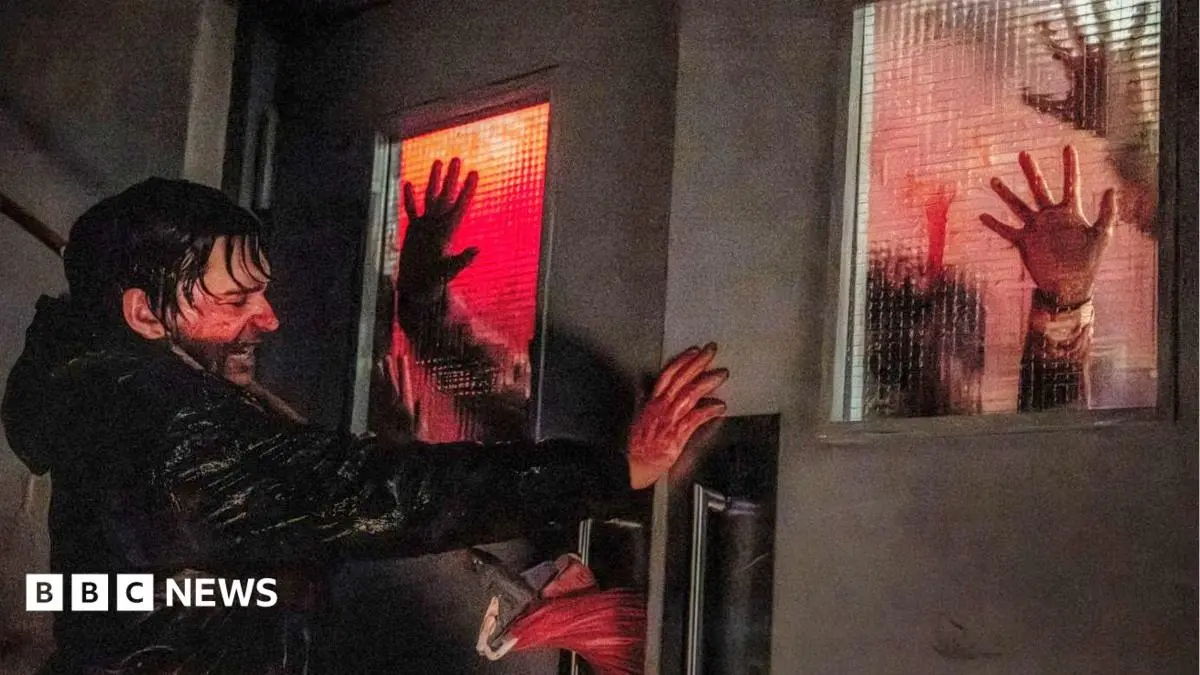
The film follows Bryan as he accepts a routine delivery to a hospital situated in the heart of Raccoon City, only to find himself ground zero for a catastrophic viral outbreak that rapidly mutates ordinary citizens into grotesque, bloodthirsty monsters.
Upon its initial trailer release, Cregger’s unconventional approach triggered immediate backlash across online comment sections. Die-hard fans lamented the conspicuous absence of legacy heroes like Leon S. Kennedy or Jill Valentine, alongside classic mutations. However, as early critical consensus rolls in, a different narrative is taking shape. Critics are hailing Cregger’s work as a watershed moment for game adaptations—one that prioritizes translation over imitation, and atmospheric dread over superficial mimicry. As the film barrels toward what is projected to be a triumphant opening weekend, the industry is forced to ask a vital question: Has Hollywood finally figured out how to adapt video games for the cinema?
Detailed Chronology: From Raccoon City Streets to the Silver Screen
To understand the cultural shockwave surrounding Zach Cregger’s new film, one must examine the turbulent cinematic timeline of the Resident Evil intellectual property. The journey from polygons to live-action has been long, fraught with creative compromises, and heavily scrutinized by a passionate fandom.
The Paul W.S. Anderson Era (2002–2016)
The cinematic legacy of Capcom’s flagship franchise began in earnest in 2002, helmed by writer-director Paul W.S. Anderson. Eschewing the specific character arcs of the games, Anderson introduced audiences to Alice (played by his wife, Milla Jovovich), an original action-heroine navigating a corporate-engineered apocalypse orchestrated by the Umbrella Corporation.
Spanning six films over nearly a decade and a half, the Anderson franchise carved out a distinct, hyper-stylized niche at the box office, eventually developing a dedicated cult following. However, critics routinely dismissed the series as derivative, fast-paced action shlock that traded the slow-burn psychological horror and puzzle-solving mechanics of the games for wire-fu choreography and sci-fi conspiracies.
The 2021 Reboot and Streaming Interventions
Hoping to court purists who felt alienated by the Alice-centric action epics, Constantin Film—the German production company holding the live-action rights—pivoted in 2021. They released Resident Evil: Welcome to Raccoon City, a film explicitly marketed as a faithful, nostalgia-heavy adaptation incorporating iconic locales like the Spencer Mansion and the Raccoon City Police Department, alongside beloved game characters. Despite this fan-service-oriented approach, the film stumbled both commercially and critically, failing to capture the atmospheric magic of the source material.
A subsequent live-action streaming series released on Netflix in 2022 attempted a dual-timeline narrative approach exploring the fallout of the T-virus. It met a swift and unceremonious cancellation after a single season, further cementing the perception that Resident Evil was a poisoned chalice for filmmakers.
The Cregger Paradigm Shift
Amidst this backdrop of creative stagnation, Zach Cregger was quietly plotting a different course. Rather than attempting to cram dozens of hours of lore, inventory management, and branching narratives into a two-hour runtime, Cregger chose to zoom in on the macro-level terror by examining the macro-apocalypse through a micro-lens.
In Cregger’s film, the story kicks off not with elite military operatives, but with an everyday working-class man: Bryan (Austin Abrams). As a courier tasked with delivering an innocuous package to a municipal hospital in Raccoon City, Bryan serves audience members as an avatar of vulnerability. He does not know martial arts; he cannot effortlessly clear a room of Lickers with a tactical combat knife. When the viral outbreak hits, Bryan’s struggle is purely primal—a desperate, boots-on-the-ground fight for sheer survival.
When the marketing campaign kicked off with its first teaser trailer, the internet reacted with predictable fury. Dedicated forums and social media platforms erupted with critiques:
- Where were the franchise’s marquee heroes?
- Where were the familiar, recognizable biological weapons?
- Why was an unknown, original character taking center stage in a multi-million-dollar adaptation of a legendary gaming property?
Cregger, speaking candidly about the pre-release firestorm, admitted his initial surprise at the vitriol. "I think I was naive," he reflected. "I think I was expecting people to be excited to see a Resident Evil movie that felt in the spirit of the games. What I was trying to do is make a movie that really honoured the experience of playing them."
Despite the early social media storms, the strategy appears to have paid off where it matters most: artistic execution.
Supporting Context & Metrics: Critical Reception and Box Office Projections
While online fan communities remain intensely divided over creative liberties, professional film critics have largely rallied around Cregger’s bold artistic vision. In many ways, the film is riding a wave of critical reappraisal for video game adaptations, following hot on the heels of massive commercial successes like the Super Mario Bros. Movie and Minecraft adaptations—projects that similarly brushed off initial skepticism to achieve stratospheric box office returns.
Critical Breakdown
Early reviews from prominent outlets suggest Cregger has successfully cracked the code of interactive-to-cinematic translation.
- NME: Awarding the film three stars, reviewer Jordan Bassett posed the provocative question: Is this "the first great horror movie game adaptation?" Bassett noted that while Bryan’s encounters occasionally slip into repetitive beats as the runtime wears on, "for a large chunk of the film’s runtime, the answer is a resounding yes."
- The Jam Report: Critic Doug Jamieson doled out a glowing four-star rating, praising the director’s philosophy. Jamieson observed that Cregger "understands adaptation as translation rather than imitation," separating his film from cheap cash-grabs that mimic surface-level aesthetics without grasping emotional core mechanics.
- Looper: Handing down an impressive 8/10 score, critic Alastair Ryder championed the film’s structural achievement: "Zach Cregger has done the best job I’ve seen of translating the experience of playing a video game and making it feel cinematic."
Commercial Outlook and Global Metrics
From a financial standpoint, early box office tracking indicates that Resident Evil is well on its way to securing a lucrative opening weekend. The film benefits from a potent combination of general horror audiences drawn to high-concept suspense and franchise die-hards driven by morbid curiosity.
To contextualize the property’s enduring commercial muscle, consider the following key metrics spanning the franchise’s history:
| Metric Category | Statistical Data / Milestone |
|---|---|
| Global Game Sales | Over 213 million copies sold worldwide since 1996 |
| Original Launch Platform | Sony PlayStation (1996) |
| Primary Cinematic Rights Holder | Constantin Film (Germany) |
| Total Live-Action Feature Films | 8+ films (including Anderson series, 2021 reboot, and Cregger’s feature) |
| Projected Opening Weekend Status | Strong commercial pacing, defying niche online controversy |
Official Statements and Industry Insights
Behind the scenes of any major intellectual property adaptation lies a complex web of corporate agreements, developer oversight, and creative friction. In the case of Resident Evil, rumors have long swirled regarding why previous cinematic iterations struggled to capture the intricate canon of the games.
The Constantin-Capcom Dynamic
Online sleuths and industry insiders have frequently pointed the finger at Constantin Film, the German production company holding the live-action rights. Persistent rumors suggest that licensing agreements between Constantin and Capcom strictly forbid the studio from anchoring its films within the same official canon and timeline as the video games. This structural barrier has historically forced filmmakers into creating parallel universes, standalone side-stories, or loose interpretations that alienate narrative purists.
When questioned by Newsbeat regarding his collaboration with the original Japanese creators, Cregger revealed a surprising detachment from the corporate machinery.
"Nobody from Capcom ever reached out to me, ever, in any way," Cregger stated plainly.
While Constantin Film declined to issue a formal statement regarding these claims, sources close to the production have indicated to BBC Newsbeat that subtle behind-the-scenes coordination did occur between the game developer and the film’s executive producers to ensure brand safety, even if Cregger himself operated with a high degree of creative autonomy.
Cregger on Fan Expectations and Artistic Integrity
Addressing the fierce online backlash head-on, Cregger expressed philosophical acceptance of the impossibility of pleasing a fragmented global fandom. He argues that crafting a frame-by-frame carbon copy of a classic PlayStation title would have likely provoked an equally hostile reaction from audiences.
"It’s probably impossible to please everyone," Cregger noted. "If I had delivered a faithful retelling of one of the stories in the games, I feel like those people would probably be upset with me for that too. Because I would have messed it up somehow, inevitably."
For Cregger, the primary obligation of a filmmaker is not to act as a human photocopier for pre-existing lore, but to protect the integrity of the storytelling medium.
"So all I can do is just tell the story that I think is going to be the very best story," he asserted. "If somebody’s going to have a problem that it doesn’t do exactly what they had in their mind of what a Resident Evil movie is, I can’t say anything to that."
Future Outlook: A New Horizon for Game Adaptations
As Resident Evil establishes its footing in cinemas worldwide, its performance serves as a bellwether for the future of horror adaptations. For decades, studios treated video game properties as cheap, disposable intellectual property—fast food for multiplexes designed to extract quick cash from recognizable branding without artistic risk.
Zach Cregger’s gamble suggests a maturing industry. By treating the experience of playing a game—the suffocating dread, the helplessness of limited resources, the gritty descent into municipal decay—as the emotional core to be preserved, rather than hollow plot points or character names, filmmakers are discovering a sustainable path forward.
Whether this film spawns a new cinematic universe or remains a singular, terrifying anomaly in the annals of horror history remains to be seen. What is clear, however, is that the conversation around video game adaptations has fundamentally shifted. Directors are no longer asking how to copy a game; they are learning how to translate it into the language of cinema. And in Raccoon City, that translation is proving to be a thrilling, bloody success.