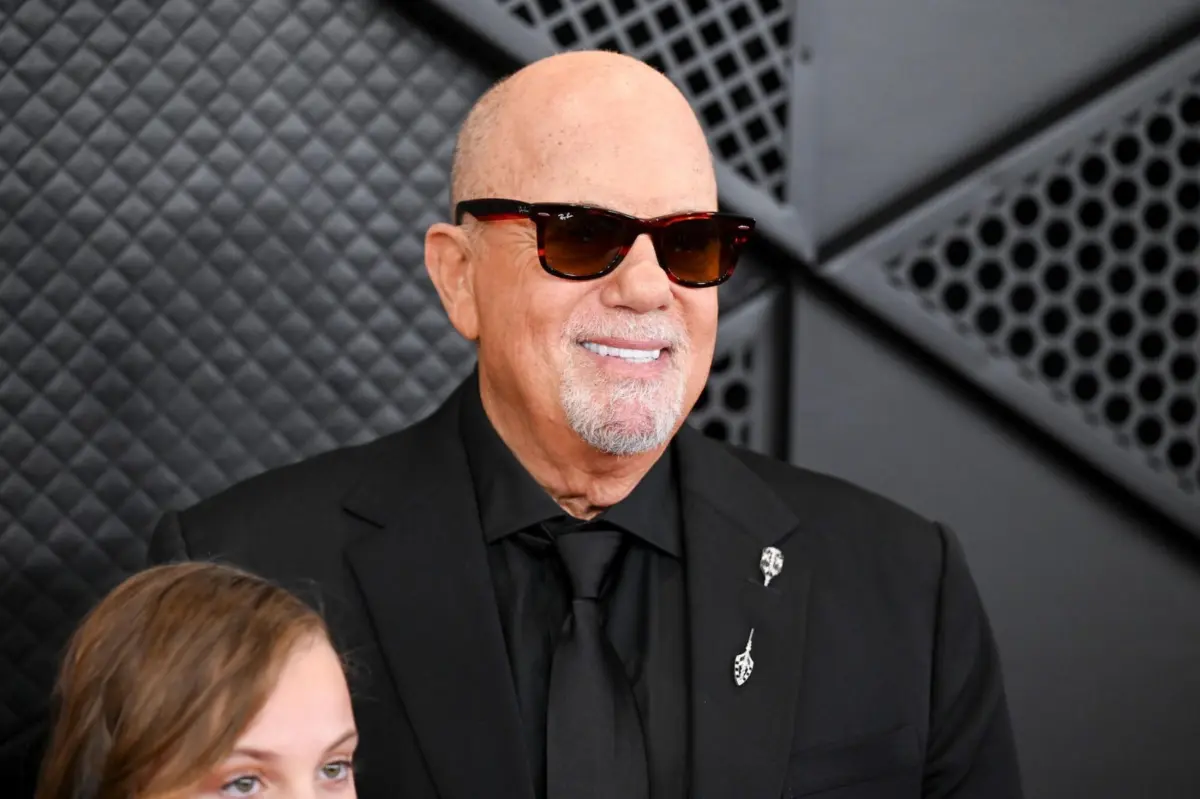
In what promises to be a watershed moment for both his legions of devoted fans and the broader music industry, legendary singer-songwriter Billy Joel is set to host his first-ever live, interactive call-in special. Broadcasting via The Billy Joel Channel on SiriusXM, the exclusive event kicks off at 2:00 p.m. ET on Thursday, September 24. This rare, unscripted forum offers listeners worldwide a direct line to the Rock & Roll Hall of Famer, allowing them to engage with the "Piano Man" in real time, pose burning questions, and hear firsthand reflections from one of America’s most enduring musical icons.
Beyond the celebration of his timeless catalog, this broadcast carries profound significance. It marks Joel’s first major public conversation since his candid disclosure regarding a diagnosis of Normal Pressure Hydrocephalus (NPH) last year—a medical condition that ultimately forced the cancellation of his highly anticipated 2025 tour dates. More alarmingly, the diagnosis brought to light a severe, hidden toll exacted by decades of arena-level performances: neurologists revealed that the sheer decibel levels of his live rock ‘n’ roll shows were causing cumulative trauma to his brain nerves.
As fans prepare to dial in via 1-844-365-BILLY or submit inquiries digitally, the event transcends a standard promotional appearance. It stands as an intimate, courageous check-in between a generational artist and the public that has championed him for over half a century, offering reassurance amidst uncertainty and a rare look behind the curtain of a rock icon’s health journey.
Detailed Chronology: From Balance Issues to Medical Revelations
The journey leading up to this unprecedented SiriusXM broadcast has been marked by unexpected health hurdles, difficult medical realizations, and a forced pivot away from the stage that defined Billy Joel’s adult life.
The Onset of Symptoms
The warning signs began subtly before manifesting in ways that could no longer be ignored. Joel initially sought medical attention after experiencing persistent balance issues—a disorienting physical sensation that he memorably described as feeling perpetually "on a boat." For a performer whose stagecraft relied on physical presence, composure, and decades-old stamina, stability was paramount.
Upon consulting a neurologist, Joel underwent diagnostic evaluations that led to the identification of Normal Pressure Hydrocephalus (NPH), a brain disorder characterized by the abnormal buildup of cerebrospinal fluid in the brain’s ventricles. This fluid accumulation exerts excess pressure on surrounding brain tissue, impairing functions ranging from cognition and concentration to movement and memory.
The Surgical Interventions
Faced with progressive symptoms, Joel’s neurologist recommended a standard neurosurgical intervention: the implantation of a shunt to drain excess fluid and relieve intracranial pressure. Initially, the prospect understandably gave the legendary musician pause. Joel openly admitted that his first instinct was to "pass" on a procedure that required drilling a hole through his skull to accommodate the shunt hardware.
However, after reviewing medical literature indicating that the procedure could significantly restore both balance and cognitive acuity, Joel moved forward with the surgery. The intervention yielded positive results regarding his neurological recovery, successfully mitigating the balance and memory deficits that had plagued him.

The Staggering Diagnosis
While the shunt successfully addressed the NPH symptoms, subsequent medical evaluations delivered a sobering secondary blow. Joel’s doctors informed him that the physical reality of his profession—specifically decades spent fronting high-volume rock ‘n’ roll bands in major arenas and stadiums—was actively compromising his neurological health.
"I realized, and the doctors told me this, because of my job, which is playing rock ’n’ roll music very loud, that it was giving me something like a concussion every time I did a show," Joel shared during a previous SiriusXM interview. "It was causing damage to my brain nerves and I could be losing more brain cells the more shows I did, and I realized that means I shouldn’t be doing this right now."
This stark warning necessitated the cancellation of his planned 2025 tour dates. Rather than risking permanent, debilitating neurological decline, Joel made the difficult decision to step back from the rigorous demands of live touring, initiating a period of physical therapy, recovery, and a quieter lifestyle centered on healing.
Supporting Context & Metrics: Understanding NPH and the Toll of Live Performance
To fully grasp the gravity of Billy Joel’s current situation, it is essential to examine both the medical mechanics of Normal Pressure Hydrocephalus and the broader occupational hazards faced by veteran rock musicians in an era of unprecedented sound amplification.
What is Normal Pressure Hydrocephalus (NPH)?
According to the Cleveland Clinic, Normal Pressure Hydrocephalus is a brain disorder most commonly affecting older adults. It occurs when cerebrospinal fluid (CSF)—the clear liquid that cushions the brain and spinal cord—fails to drain properly, leading to an abnormal accumulation within the brain’s ventricles. While the fluid pressure remains within normal ranges, the sheer volume exerts mechanical stress on adjacent neural pathways.
Clinical manifestations of NPH typically present as a distinct triad of symptoms:
- Gait Disturbances: Often the earliest and most prominent sign, manifesting as instability, shuffling, or a feeling of imbalance (frequently described by patients as walking on an unstable surface).
- Cognitive Impairment: Ranging from mild forgetfulness and slowed executive function to difficulties with concentration and problem-solving.
- Urinary Incontinence: Resulting from the compression of neural pathways that control bladder function.
While surgical shunting remains the gold standard for treatment, managing NPH requires continuous medical oversight, physical rehabilitation, and lifestyle adjustments.
The Decibel Dilemma: Acoustic Trauma in Rock Music
Live music sound pressure levels (SPL) routinely reach hazardous heights. Major rock concerts frequently register between 100 and 115 decibels (dB) near the mixing board or front-of-house positions. Prolonged exposure to sound levels above 85 dB is widely recognized by occupational health organizations as dangerous to hearing, but the physics of massive concert subwoofers and amplification stacks introduce broader physiological dynamics.
Low-frequency bass waves and high-volume acoustic energy do not merely affect the cochlea; they generate whole-body mechanical vibrations. In Joel’s case, his medical team drew a direct correlation between the concussive acoustic waves of decades of live performances and cumulative neural trauma. Much like repeated sub-concussive impacts in contact sports, the relentless battering of high-decibel sound waves over a 50-plus-year career created an unsustainable toll on his central nervous system.
Philanthropic Resilience
Despite stepping away from the grueling touring circuit, Joel has maintained a selective, purpose-driven public profile. His most recent public appearance prior to this SiriusXM announcement occurred in March at a star-studded tribute fundraiser at Carnegie Hall. The event—featuring luminaries such as Rufus Wainwright, Rob Thomas of Matchbox Twenty, Matt Nathanson, Pat Monahan of Train, Wyclef Jean, and Mary Chapin Carpenter—successfully raised more than $225,000 to support music education initiatives. This underscores a lifelong commitment to fostering the next generation of artists, even as he navigates his own health transition.
Official Statements and Industry Impact
The announcement of The Billy Joel Channel live call-in special has generated immense anticipation across the music industry. SiriusXM executives and representatives for the artist have emphasized that the event is designed to be entirely unfiltered, giving listeners direct access to the Rock & Roll Hall of Famer without pre-screened boundaries or rigid structural limitations.
In previous statements addressing his devoted fanbase following the cancellation of his 2025 dates, Joel offered words of steadfast reassurance. Acknowledging the anxiety of fans accustomed to his relentless touring schedule—which included a historic, decade-spanning residency at Madison Square Garden—Joel stated plainly: "Don’t worry about me. I’m not going anywhere. I’m here. I’m still here."
Industry analysts note that this level of transparency is rare among heritage acts. By openly discussing the neurological impacts of high-volume performance, Joel has opened a vital conversation within the music community regarding artist health, occupational hazards, and the necessity of longevity over relentless touring schedules. The decision to leverage his dedicated SiriusXM channel—which will remain active through September 30—cements a direct, intimate communication channel with his audience that bypasses traditional media intermediaries.
Future Outlook: What to Expect on Thursday and Beyond
As Thursday, September 24 at 2:00 p.m. ET approaches, anticipation has reached a fever pitch. Fans wishing to participate can submit their questions via video, voice, or text through the dedicated portal at siriusxm.com/askbilly, or dial in live directly at 1-844-365-BILLY.
Key Themes for the Call-In Special
- Health Updates: Listeners will undoubtedly seek firsthand updates on his recovery from NPH surgery, his physical therapy regimen, and his current neurological status.
- Reflections on Retiring from Touring: Fans will have the opportunity to hear Joel reflect on closing the chapter on major live concert tours, his legendary residencies, and his historic career milestones.
- Catalog and Legacy: Amidst the health discussions, the special is expected to celebrate the deep cuts, chart-topping hits, and enduring stories behind masterpieces like "Piano Man," "New York State of Mind," and "Vienna."
The Road Ahead
While Billy Joel’s days of pounding arena stage pianos night after night may have reached a necessary conclusion, his artistic footprint remains indelible. The upcoming SiriusXM special proves that his connection to his audience requires no stadium lights or thunderous amplification. As he prepares to take calls from living rooms, cars, and kitchens across the globe, Billy Joel remains precisely where he has always been: deeply attuned to the people who found their own lives soundtracked by his music.
The Billy Joel Channel will continue broadcasting via satellite radio and the SiriusXM app through September 30, ensuring that fans have ample opportunity to immerse themselves in his catalog while processing this historic new chapter in the "Piano Man’s" storied career.