Executive Overview
In a powerful testament to a lifelong mission of literacy, compassion, and community upliftment, Dolly Parton’s legendary Imagination Library is officially doubling its footprint across the capital. The transformative early-childhood literacy initiative, which delivers a brand-new, age-appropriate book every month to children from birth until their fifth birthday, is expanding from five to ten London boroughs. Funded generously by the People’s Postcode Lottery, this major metropolitan expansion will make an astounding 157,000 children newly eligible for the program, offering a lifeline of learning to families navigating a challenging economic climate.
This milestone announcement arrives just a month after the global music icon and philanthropist passed away at the age of 80, sending shockwaves of grief and gratitude through communities worldwide. Parton established the Imagination Library in 1995 as a deeply personal tribute to her father, Robert Lee Parton, who spent his entire life unable to read or write. What began as a localized Appalachian project has since burgeoned into an international phenomenon, with more than seven million books delivered to children across the United Kingdom alone.
The expansion comes at a critical juncture for British education. Recent data highlights a worrying decline in home reading habits, alongside growing concerns from educators regarding children’s physical familiarity with traditional print media in an increasingly digitized world. By providing universal, barrier-free access to literature—independent of household income—the Imagination Library continues to champion Parton’s core belief that books should not be a luxury reserved for the privileged few, but a foundational right for every child.
Detailed Chronology: From Appalachian Roots to a Capital Milestone
To fully understand the weight of the London expansion, one must trace the extraordinary trajectory of the Imagination Library from its humble origins in Sevier County, Tennessee, to its current status as a beacon of global philanthropy.
1995: The Genesis in East Tennessee
Dolly Parton founded the Imagination Library in 1995 with a remarkably straightforward yet revolutionary concept: mail a high-quality, age-appropriate book each month to every child in her home county, completely free of charge, from the time they are born until they enter school. The initiative was born out of profound personal empathy. Parton’s father worked tirelessly as a subsistence farmer and construction worker to support a family of twelve children, yet he never learned to read or write. Witnessing firsthand the limitations and quiet heartbreaks illiteracy inflicted upon her father—and realizing how early intervention could change a child’s destiny—Parton vowed to bridge that gap for the next generation.
2007–2019: International Growth and UK Arrival
Buoyed by its overwhelming success in the United States, the program expanded across North America before setting its sights internationally. Recognizing the universality of early childhood literacy struggles, the Dollywood Foundation launched the initiative in the United Kingdom, partnering with local councils, charities, and philanthropic organizations. Over the next decade, pockets of the UK—ranging from rural communities in Yorkshire to diverse urban centers—began adopting the model.
2024–2025: Scaling the Capital and Mourning a Icon
As the program took root in London, it initially established operations across five distinct boroughs. Despite proving wildly successful, organizers knew that the vast urban sprawl of the capital left tens of thousands of young families still lacking access. The planning for a major metropolitan scaling effort intensified throughout 2024.
However, the rollout of this expansion is cast in poignant emotional relief following Parton’s passing at age 80. Rather than halting operations, the leadership of the Dollywood Foundation, alongside key funding partners like the Postcode Lottery, view this expansion as the ultimate realization of Parton’s dying wish: that the Imagination Library would outlive her, growing dynamically to serve future generations of children. The announcement is being formally commemorated with a special celebration at the British Library, strategically timed just ahead of "Give Like Dolly Day" on September 25th.
Supporting Context & Metrics: Literacy in Crisis and the Power of Print
The expansion into five additional London boroughs is not merely a logistical scaling-up; it is a targeted intervention designed to combat a worsening crisis in early-childhood literacy across the United Kingdom.
The Decline of the Shared Bedtime Story
Recent figures cited by literacy organizers paint a stark picture of modern childhood reading habits. Statistics reveal that only 41% of children aged four and under are read to frequently by their parents or caregivers. This represents a precipitous drop from 64% in 2012.
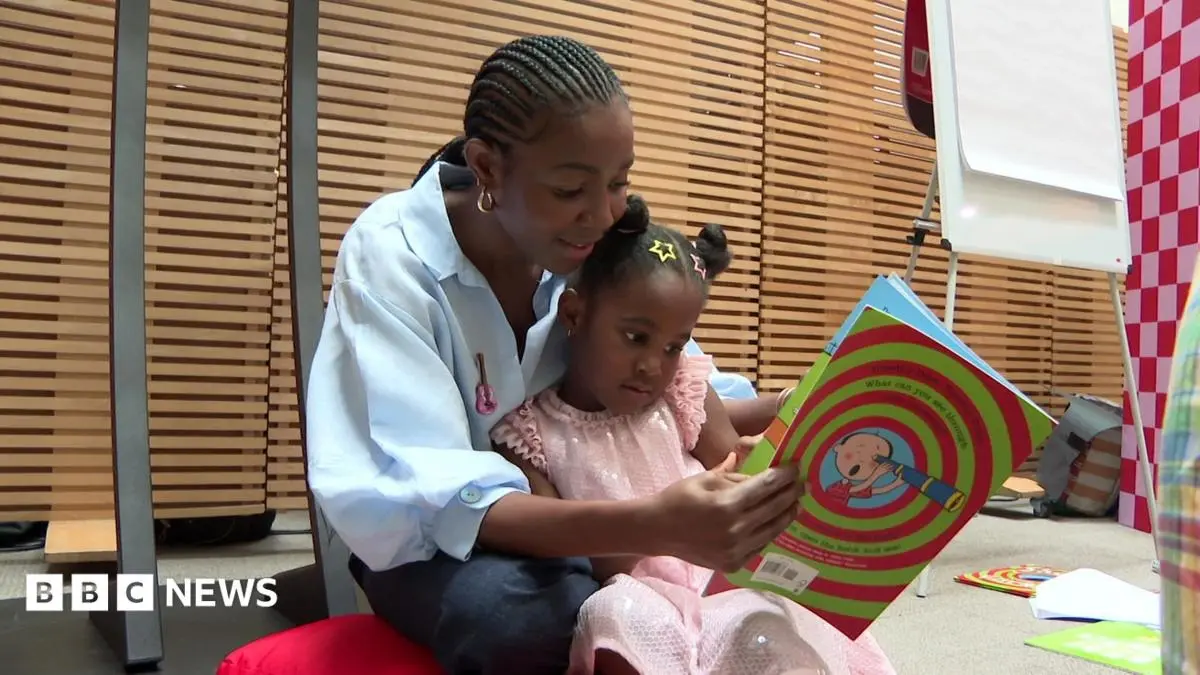
Sociological and economic pressures are frequently cited as key drivers behind this decline. With the cost-of-living crisis squeezing household budgets across the capital, books are increasingly viewed as discretionary expenses rather than household staples. Harriet Sedrick-Ugo, an early years educator and mother from south London, underscores this economic reality. Discussing her four-year-old daughter, Sienna, who receives books through the scheme, Sedrick-Ugo noted:
"Buying books can be quite expensive, so if they’re going to be getting it for free, that would be something a lot of families can benefit from. I think it’s the kindest initiative ever and we are so very grateful to have something so meaningful gifted to us."
Sedrick-Ugo credits the monthly deliveries with fundamentally transforming her daughter’s relationship with literature. "The monthly books have given Sienna a lot more confidence," she explained. "We read together every day and that’s been made possible because we get a book once a month. She loves reading for pleasure because we have so many books at home from the Imagination Library."
The Digital Generation and the Death of the Physical Page
Beyond the frequency of reading, educators are sounding the alarm over a startling shift in how children interact with books. Teachers across reception classes have reported that a staggering 28% of children starting school are unable to use physical books properly. In an era dominated by smartphones, tablets, and interactive flat screens, educators frequently observe young children attempting to swipe or tap the static paper pages of a picture book as if they were operating a touchscreen device.
This tactile disconnect poses profound cognitive hurdles. Developmental psychologists emphasize that turning physical pages, smelling paper, tracing illustrations with small fingers, and holding a bound volume contribute heavily to spatial awareness, fine motor skills, and deep comprehension. By flooding homes with physical books, the Imagination Library actively combats screen-dependency, reintroducing families to the irreplaceable tactile intimacy of reading together.
A Universal Model: Bridging the Inequality Gap
Crucially, the Imagination Library operates on a completely universal model. Unlike many targeted welfare or educational programs that require rigorous means-testing or proof of low income—which can often carry bureaucratic friction or social stigma—every single child residing in a participating London borough is eligible to sign up.
This universal approach ensures that no family slips through the cracks. It normalizes book ownership across diverse socioeconomic backgrounds, fostering community-wide literacy cultures where neighbors, classmates, and friends are all exploring the same literary landscapes. Over seven million books have now been delivered across the UK under this inclusive framework, establishing an unmatched baseline of early educational equity.
Official Statements and Leadership Perspectives
The announcement has elicited profound emotional responses from the leaders steering the foundation forward, as well as the institutional partners making the expansion financially possible.
Jeff Conyers, president of the Dollywood Foundation, reflected on the deep personal dedication Parton invested in the project right up until her final days. Speaking on how the icon would view the London expansion, Conyers stated:
"Dolly would have been incredibly proud to see it grow in the capital. Dolly always wanted the Imagination Library to be something that lived on for generations into the future. She was constantly pushing us about how we get the Imagination Library to more and more children and more and more families."
Conyers emphasized that Parton’s creative energy was inextricably linked to her philanthropic vision. To her, the Imagination Library was not a side project; it was her truest legacy. Every book mailed out bearing her signature inside the front cover represented a personal handshake between the singer and a child she would never meet, bridging oceans and generations through the simple magic of a story.
Clara Govier, managing director of the Postcode Lottery, echoed these sentiments, highlighting the elegant simplicity of Parton’s philosophy.
"Dolly understood the extraordinary power of something very simple: a child, a grown-up and a book," Govier noted.
The partnership between the Postcode Lottery and the Dollywood Foundation has proven to be a masterclass in effective philanthropic synergy. By utilizing funds raised by players of the Postcode Lottery, the expansion into five new London boroughs is fully underwritten, ensuring long-term sustainability and removing any financial burden from local municipal authorities whose budgets are already stretched to their absolute limits.
Future Outlook: Sustaining the Momentum
As the Imagination Library prepares to officially mark its London expansion with celebrations at the British Library ahead of Give Like Dolly Day on September 25th, the horizon looks both promising and demanding.
The immediate challenge for the Dollywood Foundation will be successfully onboarding the 157,000 newly eligible children across the expanded London boroughs. Outreach coordinators are currently collaborating closely with local children’s centers, health visitors, libraries, and community groups to ensure that parents are aware of the scheme and find the registration process seamless. Word-of-mouth advocacy from enthusiastic parents like Harriet Sedrick-Ugo will undoubtedly play an instrumental role in driving sign-ups.
Looking further ahead, the leadership of the foundation remains committed to scaling the initiative even further across the United Kingdom. Discussions are already underway with regional authorities outside of London who are eager to replicate the success seen in the capital.
Ultimately, the expansion of Dolly Parton’s Imagination Library in London serves as a powerful reminder that while icons may pass, visionary ideas rooted in genuine human empathy can endure indefinitely. By placing books directly into the eager hands of toddlers, the initiative is doing far more than teaching children how to read; it is unlocking imaginations, building emotional resilience, and ensuring that Dolly Parton’s generous spirit continues to whisper stories of hope into homes across the globe for generations to come.