Executive Overview
For decades, the hunt for the ultimate vocal sample has been a sacred ritual for electronic music producers, hip-hop beatmakers, and sound designers alike. Whether scavenging for obscure monologues in public domain cinema, ripping dialogue tracks from low-resolution YouTube clips, or digging through crates of bootleg, scratch-heavy vinyl acapellas, the goal remains the same: finding that one distinct piece of human speech or singing that injects soul, narrative depth, and unbridled character into a production.

Yet, this hunt has always been plagued by a fundamental technological compromise—fidelity. Producers were routinely forced to choose between the artistic brilliance of a rare vocal performance and the sonic degradation of its source. Background hums, unwanted room reverb, harsh digital compression artifacts, and the inescapable crackle of deteriorating vinyl records routinely forced mixes into muddy compromises. While traditional spectral repair tools and rudimentary noise gates offered minor relief, they frequently left behind spectral "swirling" artifacts or stripped the vocal of its organic warmth.

Enter LALAL.AI, a platform globally recognized for its industry-leading stem separation capabilities, which has now shifted the paradigms of audio restoration. With the introduction of its cutting-edge neural network, Lynx (built on the v7 architecture), the company has unveiled a dedicated voice isolation and cleanup engine designed to tackle "sonic dirt" head-on. Following a rigorous year-long training cycle focused exclusively on isolating human vocal textures from chaotic audio environments, Lynx promises to clean up the muddiest voice rips and deliver studio-ready acapellas suitable for high-end digital audio workstations (DAWs).

This comprehensive review puts LALAL.AI Lynx through its paces. By testing the algorithm across three distinct, challenging real-world scenarios—scratched horror film dialogue, a simulated bootleg house vinyl acapella, and an overdub-heavy live rock concert recording—we evaluate whether Lynx lives up to the hype and how these pristine stems integrate into modern professional tracks.

Detailed Chronology: The Evolution of Vocal Extraction and the Rise of Lynx
To understand the magnitude of LALAL.AI’s latest advancement, it is essential to trace the historical timeline of how producers have interacted with vocal samples over the years.

The Analog Era and the Bootleg Golden Age
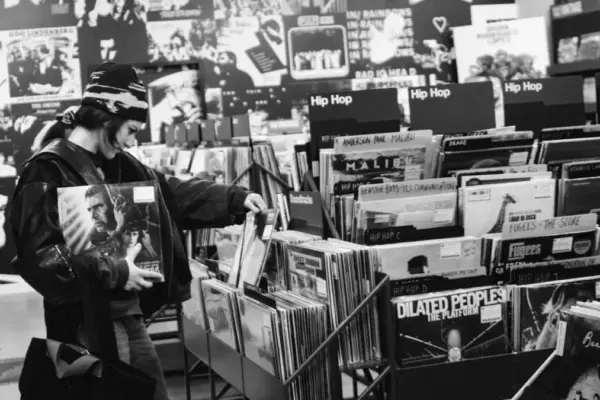
In the early days of sample-based music production, isolating a vocal meant relying heavily on instrumental and acapella versions officially pressed onto 12-inch vinyl records by major labels for club DJs. When those official pressings didn’t exist, producers turned to specialized DJ record shops that sold bootleg acapellas. These bootlegs were notoriously low-fidelity—often third- or fourth-generation cassette or vinyl dubs laden with surface noise, inner-groove distortion, and baked-in room acoustics. Producers wore these sonic limitations like a badge of honor, utilizing heavy filtering, distortion, and compression to glue these gritty elements into rough-and-ready house, techno, and hip-hop arrangements.

The Digital Revolution and Spectral Editing
As the digital audio workspace (DAW) matured through the late 1990s and 2000s, software suites introduced early iterative tools for noise reduction, such as multi-band expanders and spectral repair plugins (pioneered by companies like iZotope). While these tools allowed engineers to surgically paint over individual clicks, pops, and hums using visual frequency displays, they were remarkably time-intensive and largely ill-equipped to disentangle a voice tangled within a dense, multi-instrumental mix or heavy background reverb.

The AI Stem Separation Boom
The landscape shifted dramatically in the late 2010s and early 2020s with the advent of machine learning models trained on isolated multi-track stems. Platforms like LALAL.AI emerged at the forefront of this movement, utilizing deep neural networks to parse stereo mixes and split them into distinct instrument and vocal stems. While these tools excelled at separating vocals from music beds, they often left behind subtle residual noise, phase cancellation artifacts, or "gargling" digital anomalies when forced to process severely compromised input files.

The Introduction of Lynx (v7)
Recognizing that raw stem separation was only half the battle, LALAL.AI spent the past twelve years—culminating in a dedicated, intensive twelve-month training cycle for the v7 architecture—developing Lynx. Rather than merely splitting vocals from a backing track, Lynx was purpose-built to act as a hyper-specialized voice cleaner and isolation neural network. Trained on vast datasets containing every conceivable form of audio corruption, Lynx targets the subtle interplay between human vocal formants and environmental degradation, setting a new benchmark for AI-driven audio restoration.

Supporting Context & Metrics: Under the Hood of LALAL.AI Lynx
Deploying Lynx within a modern production workflow is remarkably flexible. The software is accessible across multiple form-factor environments, including a web browser interface, a dedicated standalone desktop application, mobile apps for iOS (iPhone and iPad), and—for high-tier subscribers—a native DAW plugin that integrates directly into the mixing session.

The Processing Architecture and Settings
When loading an audio file into the LALAL.AI desktop ecosystem, users are greeted by two primary paths:

- Vocal & Instrumental: The classic stem separation mode designed to extract vocals from a complete musical composition.
- Voice & Noise: The dedicated cleanup mode housing the new v7 Lynx neural network.
Within the Voice & Noise menu, producers can fine-tune several critical processing parameters:

- Neural Network Selection: Ensuring the engine is set to v7 Lynx.
- Noise Canceling Levels: Users can choose between Mild, Normal, and Aggressive. Real-world testing reveals that Normal strikes the optimal sweet spot, effectively sweeping away unwanted grunge without chewing into the vital high-end air and transient details of the human voice.
- De-Echo Processing: An optional toggle specifically engineered to neutralize room reflections and heavy natural reverberation—an invaluable feature for dialogue or live-recorded vocals captured in untreated spaces.
- Preview Safety Mode: A crucial feature that generates a short, watermarked preview of the processed audio, ensuring users do not needlessly expend processing credits on misconfigured batches.
Putting Lynx Through Its Paces: Three Real-World Trials
To rigorously test the capabilities of LALAL.AI Lynx, we put the algorithm through three distinct production scenarios, transforming damaged source material into polished components for finished tracks.

Trial 1: Movie Dialogue Cleanup (The Horror Sample)
Cinematic dialogue samples provide immense dramatic tension in electronic music, particularly when sourced from public domain films from the early-to-mid 20th century readily available on YouTube. However, these recordings are universally plagued by severe high-frequency roll-off, magnetic tape hiss, and broad-band crackle.

- The Source: A dramatic, scratchy piece of dialogue pulled from a public-domain horror film, dripping with vintage grit and heavy noise artifacts.
- The Process: The file was dropped into the desktop app, with the noise-canceling level set to Normal utilizing the v7 Lynx algorithm.
- The Result: The neural network surgically stripped away the pervasive background hiss and static while leaving the actor’s vocal formants intact and intelligible. After importing the cleaned render into the DAW, minor time-stretching, dynamic EQ, and parallel compression allowed the dialogue to sit seamlessly inside an energetic speed garage production built with complementary loops. The final mix retained its cinematic atmosphere without sacrificing sonic clarity.
Trial 2: The Bootleg Vinyl Acapella Restoration
Replicating the traditional DJ workflow of the 1990s, we tested Lynx on a synthetic worst-case scenario.

- The Source: We ripped a low-resolution (240p) YouTube video of Fingers Inc. and the legendary Chuck Roberts performing the timeless underground house anthem "My House". To replicate the authentic degradation of a bootleg DJ record, we routed the audio through Ableton Live and heavily abused it with iZotope’s Vinyl plugin, baking in simulated dust pops, deep scratch artifacts, and electrical turntable hum.
- The Process: Initially tested on the Aggressive setting, we found the algorithm slightly too heavy-handed on the core vocal transients. Stepping back to the Normal setting—while engaging the De-Echo parameter to combat the original recording’s slapback delay—yielded dramatic improvements.
- The Result: LALAL.AI not only output the cleaned vocal file but also provided a secondary file containing only the extracted noise and artifacts. This transparent workflow gave us total oversight of what the AI removed. Integrated into a driving UK Garage arrangement with added saturation and space-creating delay, Chuck Roberts’ iconic spoken-word intro cut through the mix with modern authority while retaining its authentic underground pedigree.
Trial 3: Live Concert Overdub Extraction (Remix Workflow)
For our final test, we pushed Lynx to its absolute limits by attempting a remix workflow using a live concert recording—a notoriously difficult challenge due to overlapping crowd cheers, crowd applause, and stadium reflections.

- The Source: An excerpt from 1970s rock icons Kiss, pulling from their live album Kiss Destroys Anaheim 76 on the track "Do You Love Me?".
- The Process: First, the raw live snippet was processed through the Vocal & Instrumental model to separate the performance from the backing band. Naturally, this initial stem still contained heavy audience cheering and bleed. We then fed that resulting stem back into Lynx using the Voice & Noise mode, engaging both Normal noise cancellation and De-Echo.
- The Result: The algorithm successfully suppressed the roar of the stadium crowd, isolating the raw lead vocal from the live mix. When dropped into a driving acid house framework supplemented by external drum loops, subtle saturation, and precise equalization, the isolated rock vocal morphed into an arresting focal point for a warehouse-ready club track ("Limousine Acid").
Pricing and Accessibility
LALAL.AI Lynx is structured around a flexible tiered subscription and credit model designed to accommodate casual hobbyists and professional mixing engineers alike:

- Free Starter Tier: Allows users to test core functionalities with limited file sizes and processing minutes.
- Lite Tier ($7.50 / month): Tailored for independent producers requiring regular processing allocations.
- Pro Tier ($15 / month): Unlocks full professional capabilities, including advanced stem separation, higher file throughput, and direct DAW plugin integration.
- One-Time Top-Ups: Flexible credit packages available for producers who prefer a pay-as-you-go model without recurring subscription overhead.
Future Outlook: The Next Frontier of AI Audio Engineering
The release of LALAL.AI Lynx marks a significant milestone in the intersection of artificial intelligence and music production. As neural networks become increasingly sophisticated at parsing the micro-nuances of human speech and performance, the traditional barriers between lo-fi audio scavenging and high-fidelity mixing continue to dissolve.

Looking ahead, we can anticipate even tighter DAW integration, real-time zero-latency processing capabilities, and advanced contextual learning algorithms that understand genre-specific mixing aesthetics. For modern music producers, tools like Lynx transform what was once considered unusable sonic trash into an endless palette of pristine, highly unique creative gold. The hunt for the perfect vocal sample just got a whole lot cleaner.