Executive Overview
For decades, the pantheon of mid-century American rhythm and blues has been dominated by a familiar constellation of names: Aretha Franklin, Etta James, and Gladys Knight. Yet, a glaring oversight persists in the broader historical narrative of soul music—one that kept another of her generation’s most transcendent voices from achieving the same universal household-name status, particularly across the Atlantic. Aside from her devoted following on the UK’s Northern Soul circuit, Irma Thomas has long been the "artist’s artist," a towering pioneer whose voice is simultaneously bruised, resilient, magnificent, and entirely singular.
Born in Ponchatoula, Louisiana, in 1941, Thomas’s journey is not simply a tale of chart placements and missed commercial opportunities. It is an epic chronicle of cultural endurance, artistic reinvention, and quiet triumph. From her early breakout singles on local New Orleans imprints to her Grammy-winning renaissance in the wake of Hurricane Katrina—and right up to her recent 2025 collaborations with electro-funk powerhouse Galactic—Thomas has commanded the respect of rock and blues royalty. Titans such as Mick Jagger, Otis Redding, and Bonnie Raitt have openly acknowledged her profound influence.
This comprehensive retrospective explores the life, catalog, and cultural impact of the Soul Queen of New Orleans, charting her trajectory from a teenage mother with an extraordinary gift to a living legend who continues to teach masterclasses in rhythm and blues.
Detailed Chronology: From Ponchatoula Prodigy to New Orleans Royalty
Early Beginnings and the Ron Records Breakthrough
Irma Thomas’s extraordinary vocal talents were evident early on in her local Louisiana community. By the tender age of 13, she was already auditioning for Specialty Records, signaling an ambition that far outgrew her small-town roots. However, it was local bandleader Tommy Ridgley who truly catalyzed her professional career. Recognizing a generational talent, Ridgley secured Thomas a recording contract with Ron Records, a boutique New Orleans label specializing in rich, swampy R&B.
Run by Joe Ruffino, Ron Records was a incubator for regional greatness, housing icons such as Professor Longhair and Mac Rebennack (who would later find global fame as Dr. John). Thomas fit right into this elite ecosystem. Her debut single, the fiercely independent "(You Can Have My Husband But Please) Don’t Mess With My Man," peaked at No. 22 on the Billboard R&B chart. The track immediately established her artistic identity: bold, uncompromising, and brimming with the effortless confidence of a seasoned veteran.
The Minit Label Years and Allen Toussaint
Seeking to expand her reach, Thomas transitioned to the Minit label, where she began a legendary creative partnership with visionary producer and arranger Allen Toussaint. It was Toussaint who penned the profoundly atmospheric, blues-soaked masterpiece "It’s Raining" (1962). The following year, she recorded "Ruler Of My Heart," written by Aaron Neville. The song’s emotional depth and structural elegance made it an instant classic, subsequently covered by luminaries like Otis Redding (who transformed it into "Pain in My Heart") and Norah Jones.
The Imperial Era and the Rolling Stones Enigma
The year 1964 proved to be a watershed moment for Thomas. She secured four Top 100 R&B hits on the Imperial label, beginning with the heart-wrenching "Wish Someone Would Care." Penned by a distraught Thomas during the painful dissolution of her first marriage, the song was an exercise in pure emotional catharsis. Ironically, its physical release was backed by the nifty snare drum shuffle of the uptempo track "Breakaway"—written by Jackie DeShannon and Sharon Sheely—which later became a major pop hit for Tracy Ullman.
This momentum continued with "Anyone Who Knows What Love Is (Will Understand)," a breathtaking, co-written masterpiece by Randy Newman. Like much of her Imperial output, it was an emotional tour de force. Its B-side, the gospel-tinged "Time Is On My Side," would become the focal point of one of rock and roll’s most infamous historical ironies.
The Rolling Stones copied Thomas’s arrangement word-for-word—including her specific ad-libs—for their second album, turning it into their first US Top 10 hit. In a cruel twist of fate, casual pop fans frequently accused Thomas of covering the Stones, rather than the other way around. The sheer injustice of this reversal deeply wounded Thomas, moving her to flatly refuse to perform the song live for decades.
Her 1964 imperial streak rounded out with "Times Have Changed" and the stunning "He’s My Guy." During this era, Thomas was effectively cast as an R&B ambassador, her pristine vocal executions serving as the gold standard for the genre.
The Chess Interlude and Swamp Dogg Adventures
As the 1960s drew to a close, Thomas’s label trajectory became increasingly erratic. Her final major R&B hit of the decade was a stellar cover of Otis Redding’s "Good For Me" (1968), recorded at the legendary FAME Studios in Muscle Shoals for Chess Records. Sadly, her tenure with Chess was criminally short-lived; the institutional backing of a major label during those years could have propelled her to household-name status.
Brief stints with Canyon, Roker, and Cotillion followed before she crossed paths with visionary producer Jerry Williams Jr., better known as Swamp Dogg. Recording for Swamp Dogg’s Fungus Records, Thomas delivered In Between Tears (1973), an idiosyncratic, deeply soulful, and immersive album that remains one of the most unjustly neglected masterpieces of 1970s soul.
Homecoming, Rounder Records, and the Crown
Following a period of residency in Los Angeles, Thomas returned home to New Orleans. Embraced fully by her city, she was officially crowned the "Soul Queen of New Orleans." Alongside her husband, Emile Jackson, she opened a popular local venue, The Lion’s Den, where she regularly fronted the house band. Her ongoing integration into the newly established New Orleans Jazz & Heritage Festival (founded in 1970) elevated her global profile, leading to increasingly lucrative international touring schedules.
In 1978, she signed with Maison de Soul, releasing "Hip Shakin’ Mama" as a direct nod to the burgeoning dance-floor and disco movements, alongside Soul Queen Of New Orleans, an album featuring disco-inflected updates of her classic back catalog.
A major critical resurgence arrived in 1986 when Thomas signed with Rounder Records. This partnership yielded a brilliant string of acclaimed albums, including The New Rules (1986), The Way I Feel (1988), Live: Simply The Best (1991), and True Believer (1992). These records proved that her vocal power had not merely survived the decades—it had deepened, weathered by life, and grown richer.
Hurricane Katrina and the Grammy Triumph
In August 2005, catastrophe struck the Gulf Coast when Hurricane Katrina breached the levees, flooding 80 percent of New Orleans. The Lion’s Den was among the hundreds of thousands of properties utterly destroyed in the deluge. Displaced but unbowed, Thomas retreated to Dockside Studios in Maurice, Louisiana, to channel her grief, resilience, and survival into After The Rain (2006).
Her 18th studio album was a critical masterpiece. It earned Thomas her first-ever Grammy Award for Best Contemporary Blues Album, making her the first woman to win in that category since Etta James. It was a long-overdue institutional validation of a lifetime of musical excellence.
Modern Collaborations and Ongoing Legacy
In the decades following her Grammy win, Thomas has remained a vibrant, active force in contemporary music. She has lent her legendary voice to records by artists ranging from B.B. King to the New Orleans funk ensemble Galactic. In 2011, she joined actor and musician Hugh Laurie on his blues-tribute album Let Them Talk, delivering a show-stopping rendition of the legendary steel-driving song "John Henry."
Pop culture audiences were introduced to her timeless work when television creator Charlie Brooker prominently featured "Anyone Who Knows What Love Is (Will Understand)" across multiple pivotal episodes of the Netflix anthology series Black Mirror.
Perhaps the ultimate full-circle moment arrived at Jazz Fest 2024, when Mick Jagger invited Irma Thomas to share the stage and finally reclaim "Time Is On My Side." In front of a roaring hometown crowd, Jagger publicly and graciously acknowledged the Rolling Stones’ massive musical debt to Thomas, offering a poignant public restitution six decades in the making.
Supporting Context & Metrics: Commercial Reach vs. Critical Influence
| Metric Category | Historical Data & Details |
|---|---|
| Peak Chart Success | "(You Can Have My Husband…)": No. 22 Billboard R&B (1959); Four Top 100 R&B hits in 1964 via Imperial Records. |
| Grammy Recognition | Winner: Best Contemporary Blues Album for After The Rain (2006). |
| Key Collaborative Partners | Allen Toussaint, Swamp Dogg, Randy Newman, Aaron Neville, Hugh Laurie, Galactic, The Rolling Stones. |
| Pop Culture Integration | "Anyone Who Knows What Love Is" featured in seven episodes of Netflix’s Black Mirror. |
| Industry Standing | Widely cited as a primary influence by Otis Redding, Mick Jagger, Bonnie Raitt, Eric Clapton, and Peter Green. |
Official Statements and Critical Appraisals
Throughout her career, critics and fellow musicians have struggled to find adjectives grand enough to capture the magnitude of Irma Thomas’s instrument. Often described as possessing "the sadly sweet voice of a fallen angel," Thomas bridges the gap between raw, secular blues and redemptive gospel uplift.
Reflecting on her self-imposed moniker, Thomas frequently refers to herself simply as "The Teacher." It is a title she has earned through decades of artistic integrity, refusing to pander to commercial trends and maintaining absolute control over her interpretation of the human condition.
Industry heavyweights have consistently stepped forward to pay homage. When Mick Jagger shared the stage with Thomas in 2024, his remarks underscored a truth known to crate-diggers, Northern Soul purists, and musicians for generations: modern rock and roll was built on the foundation of blues royalty, and few architects were as foundational—or as overlooked—as Irma Thomas. Musicologists have long argued that her delicate yet devastating delivery of tracks like "I Need Your Love So Bad" directly inspired foundational British blues acts, including Peter Green’s early iterations of Fleetwood Mac.
Future Outlook: The Everlasting Reign of the Queen
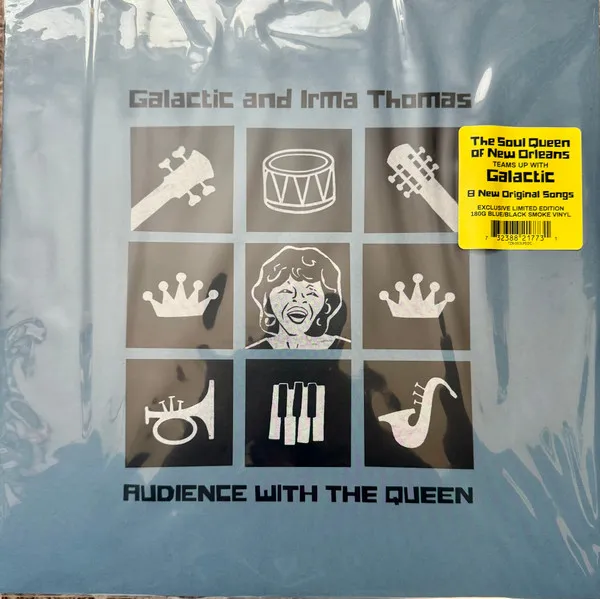
As she advances deeper into her eighth decade of life, Irma Thomas shows no signs of artistic deceleration. The release of her 2025 collaborative album Audience With The Queen, recorded alongside modern electro-funk innovators Galactic via Tchoup-Zilla Records, proves that her creative curiosity remains as sharp as ever.
While the mainstream pop apparatus of the 20th century occasionally sidelined her in favor of louder, more aggressively marketed contemporaries, history has a way of correcting its omissions. Today, younger generations of soul and blues artists continue to discover her catalog via sync deals, vinyl reissues, and streaming algorithms.
For anyone seeking an absolute masterclass in how to command rhythm and blues royalty, the curriculum remains unchanged. One needs only to listen to the majestic, unyielding, and eternal voice of Her Majesty, Irma Thomas.