Executive Overview
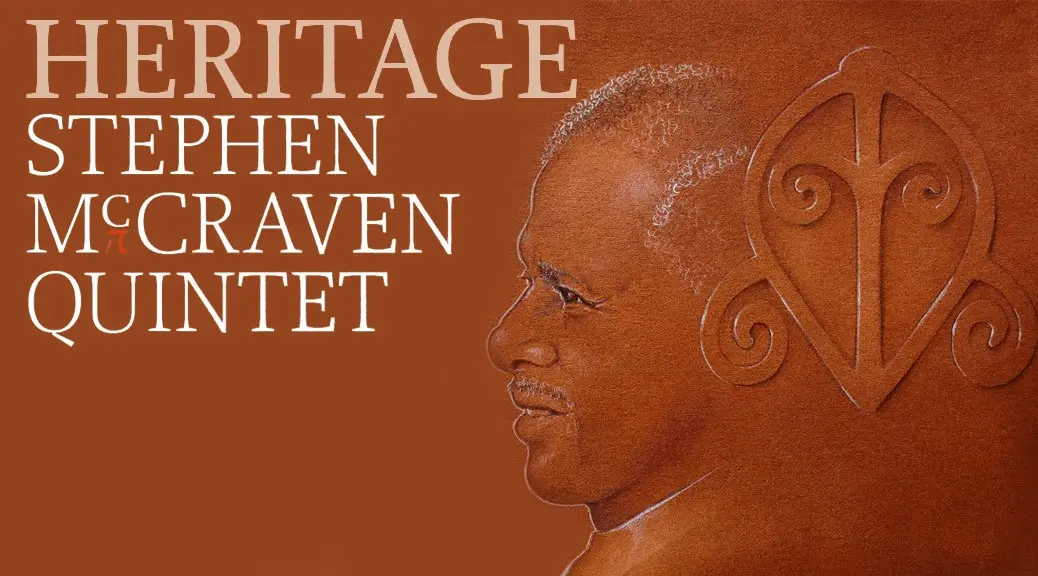
For decades, the name McCraven occupied a curious footnote in the margins of international jazz discography. From the erroneous "Stephen McGraven" logged by Cash Box in August 1980 upon the arrival of Wooley the Newt, to the "Steve McRaven" credited on Archie Shepp’s 1992 masterpiece Black Ballads, and the "Mac Graven" listed in the cast of Jalil Lespert’s feature film 24 mesures, jazz history has frequently fumbled the spelling. Today, thanks to the global ascent of his son, contemporary drum innovator Makaya McCraven, the surname is universally recognized. Yet, with the release of his latest album, aptly titled Heritage, Stephen McCraven turns the lens back to where the roots run deep, reclaiming the narrative with a double-charged statement of lineage, history, and uncompromising artistry.
Heritage is far more than a nostalgic exercise; it is an authentic dispatch from the creative crucible of late-1970s and early-1980s post-bop and avant-garde jazz. Eschewing the piano entirely, McCraven constructs a spacious, rhythm-heavy frontline comprising two saxophones, double bass, a standard drum kit, and the hypnotic pulse of the djembe. The result is a sound that feels genuinely unearthed—an unreleased holy grail from an era when jazz absorbed the spiritual fire of Pharoah Sanders, Don Cherry, and Doug Carn. Featuring long-time collaborators and musical titans such as alto and soprano saxophonist Sulaiman Hakim, tenor saxophonist Ricky Ford, master percussionist and vocalist Lamine Sow, and bassist Florent Allirot, Heritage bridges decades of transatlantic musical migration. It captures the raw, ritualistic energy of a golden age while proving that true legacy is forged not just in bloodlines, but on the bandstand.
Detailed Chronology: From Palo Alto to Paris and Beyond
To understand the profound weight of Heritage, one must trace Stephen McCraven’s formidable trajectory across continents and mentorships—a path defined by direct lineage to the architects of modern jazz.
The Formative Years and Academic Crucible
McCraven’s journey behind the kit began in the school bands of Palo Alto, California, when he was just eight years old. Following his family’s relocation to Hamden, Connecticut, he sharpened his technical foundation through lessons at Jimmy Stavris’s renowned drum school in New Haven. Hungry for deeper mastery, McCraven transitioned into institutional and mentorship settings that read like a masterclass in jazz history:
- The Berklee Era: Studying under the legendary Alan Dawson, whose pedagogical genius shaped generations of elite percussionists.
- The University of Massachusetts, Amherst: Immersing himself under the tutelage of bebop innovator Max Roach and avant-garde luminary Archie Shepp. It was here that McCraven absorbed both the structural rigor of the bebop tradition and the freewheeling intensity of the free jazz movement.
European Migration and Early Recordings
In 1977, a pivotal European tour with saxophonist Marion Brown anchored McCraven in the international touring circuit. This collaboration yielded La Placita, recorded live in Willisau, Switzerland, and issued in America on Timeless Muse. By 1978, McCraven permanently relocated to Paris, a city that served as a welcoming nexus for expatriate American jazz artists. In the French capital, his education continued under the legendary Kenny Clarke, one of the founding fathers of modern jazz drumming.
By April 1979, McCraven entered Ramses Studio in Paris to cut his debut bandleader project, Wooley the Newt, released on the independent Sweet Earth label. This was followed in December 1982 by Intertwining Spirits, which featured avant-garde saxophonist Sam Rivers as a special guest and bore a poignant sleeve dedication to McCraven’s infant son, Makaya, and his then-partner, Hungarian singer and flautist Ágnes Zsigmondi of the folk-fusion group Kolinda.
The Shepp Partnership and Global Collaborations
The defining chapter of McCraven’s career, however, was his long-standing tenure as Archie Shepp’s primary drummer. Documented brilliantly on albums like 1992’s Black Ballads (recorded in Holland alongside pianist Horace Parlan and bassist Wayne Dockery), this partnership cemented McCraven’s reputation as a drummer capable of balancing tender lyricism with volcanic avant-garde fury.
Beyond Shepp, McCraven maintained a decade-long collaborative relationship with Sam Rivers and worked extensively with tenor giant David Murray. Expanding his geographic reach eastward, McCraven cultivated a deep artistic bond with the Polish jazz scene. This bore fruit in projects like 2015’s Travelling East West (For Tune), co-led with tenor saxophonist Borys Janczarski and featuring AACM trumpeter Rasul Siddik, alongside ongoing creative partnerships with Polish trumpet virtuoso Piotr Wojtasik.

Supporting Context & Metrics: The Makaya McCraven Connection and Album Architecture
The dialogue between father and son across generations represents one of the most compelling cross-pollinations in modern music. While public perception has often viewed the musical debt as running exclusively from father to son, Makaya McCraven has consistently woven Stephen’s archival brilliance into the fabric of contemporary beat-driven production.
The Intergenerational Sampling Matrix
On Makaya McCraven’s acclaimed 2020 Blue Note/XL release We’re New Again—his radical reimagining of Gil Scott-Heron’s final masterpiece I’m New Here—Stephen’s historical recordings function as foundational DNA:
- "Me and the Devil" samples "Allah" directly from Stephen’s 1979 debut Wooley the Newt.
- Additional cuts across Makaya’s catalog draw heavily upon Intertwining Spirits and International World.
- "Guided (Broken Home Pt.4)" incorporates "Gare de l’Est Orient Express," a composition jointly credited to Stephen McCraven and Ágnes Zsigmondi.
- Makaya regularly carries compositions like "Song of the Forest Boogaraboo" into his own high-energy live sets, bridging the gap between acoustic 1970s freedom and contemporary loop-based jazz culture.
The Sonic Architecture of Heritage
Clocking in across nine meticulously sequenced tracks (four on side one, five on side two), Heritage rejects modern digital over-production in favor of a raw, immediate room sound.
| Track Title | Stylistic Root / Primary Influence | Key Instrumentation / Standout Elements |
|---|---|---|
| "McCraven’s Walk" | Late 1970s Post-Bop / Ritual Jazz | Ensemble vocal clapping, blistering alto/tenor interplay, Duke Ellington jungle-style textures. |
| "Bantu Hunter" | Afrocentric Avant-Garde | Front-and-center djembe and drum kit dialogue, soaring saxophone lines, mid-tempo rhythmic swing. |
| "TNT (A Tennessee Tantalizer)" | New Orleans Trad-Jazz Inflected Modernism | Party-piece atmosphere, celebratory brass/reed interplay with a southern march cadence. |
| "Song of the Forest Boogaraboo" | Don Cherry / Organic Music Society Vibe | Majestic, relentless rhythm; reimagines the 1995 Shepp/McCraven collaboration with deeper spiritual resonance; vocal entrance by Lamine Sow. |
| "Pigalle Sale" | Hard Groove / Urban Funk-Jazz | Longest track on the album; launched by Florent Allirot’s muscular bassline; dual-saxophone workout. |
| "Isfahan" | Billy Strayhorn / Far East Suite | Solo saxophone feature with a profound blues interpretation; direct nod to Johnny Hodges. |
| "Reggae 6" | Caribbean-Inflected Modal Jazz | Dual saxophone bounce over dynamic djembe rhythms (eschewing literal reggae for island syncopation). |
| "Wooley the Newt" | 1979 Reimagined | Sulaiman Hakim returns to the frontline; a high-octane revitalization of the historic title track. |
| "Ni Fente Bulu" | West African Vocal-Percussive Fusion | Lamine Sow’s lead vocals supported by ensemble chants, evoking the spirit of Baaba Maal and Youssou N’Dour. |
Official Statements & Artistic Vision
The conceptual backbone of Heritage relies on reuniting musicians who were present at the creation of the transatlantic avant-garde movement. The ensemble represents a living museum of techniques, tone, and cultural memory.
- Sulaiman Hakim: Bringing his history with Max Roach (dating back to their UMass collaborations in the mid-1970s) and his original alto/soprano contributions to Wooley the Newt, Hakim’s return to the studio alongside McCraven after 47 years anchors the project in unassailable authenticity. His tone on "Paris – La Manu" was famously sampled by Makaya; here, his live interplay proves that time has only deepened his harmonic vocabulary.
- Ricky Ford: A graduate of the New England Conservatory who stepped directly into the Duke Ellington Orchestra under Mercer Ellington and claimed George Adams’s chair with Charles Mingus in 1976, Ford brings a massive tenor presence honed through decades of leadership on Candid, Muse, and New World. Settling in Paris in the 1990s, Ford bridges American orchestral jazz history with European expatriate freedom.
- Lamine Sow: Hailing from a lineage of Senegalese and Guinean dancers and percussionists associated with the Ballet Bougarabou, Sow’s transition to Paris in 1990 and subsequent work with Archie Shepp and Stephen McCraven’s Black Studies (2003) imbues Heritage with an undeniable West African rhythmic heartbeat.
Reflecting on the album’s creation during their 2024 appearance at Poland’s Jazz nad Odrą festival—where they performed under the banner of the African-American Heritage Ensemble alongside pianist Dominik Wania—the group solidified an aesthetic philosophy that prioritizes collective breath over harmonic complication. By omitting the piano entirely, McCraven opens up a vast acoustic landscape where the friction between double bass, djembe, drum kit, and dual horns creates an intoxicating, wide-open canvas.
Future Outlook: Preserving a Legacy for the Next Generation
As Heritage rolls out physically on CD and makes its way onto heavyweight vinyl pressings worldwide, its release signals a crucial turning point in how jazz history validates its living practitioners. Too often, the jazz industry looks backward through commercial reissues rather than supporting the active, late-career triumphs of foundational artists. Stephen McCraven has bypassed this trap by delivering a masterwork that stands toe-to-toe with his celebrated 1970s output.
The ripple effects of Heritage extend far beyond catalog numbers. It offers a masterclass for contemporary listeners accustomed to sample-based beat music—including fans of Makaya McCraven—allowing them to trace the physical, sweat-soaked source material back to its originators. With the spelling of his surname permanently corrected on album sleeves across the globe, and with his historic collaborators still matching him stride-for-stride on the bandstand, Stephen McCraven has delivered a definitive statement. Heritage is not merely a look back at the glory days of Willisau, Ramses Studio, and Paris jazz lofts; it is an active, pulsing blueprint for the future of creative improvised music.