Executive Overview
It is a curious exercise to look back across the decades at the seismic rupture of punk rock, an era often mythologized by its proponents as "Year Zero." Marking what appears to be the tenth anniversary of that historical pivot point—or thereabouts—critics and cultural historians are once again forced to reckon with the ideological architecture of 1977.
Before the advent of safety pins, bin liners, and the calculated destruction of rock orthodoxy, the history of popular music was viewed as an unbroken, respectful continuum. Rock and roll was deeply conscious of its ancestry, acknowledging blues pioneers, rockabilly icons, and the foundational deities of the 1950s and 1960s with reverent awe.
Punk shattered that consensus. In its most dogmatic moments, the movement drew a hard, unyielding line in the sand. The past was declared null and void; anyone associated with it was deemed an enemy of the new order. The Clash famously upped the ante in their anthem "1977," targeting not just establishment titans like The Beatles and The Rolling Stones, but even cultural linchpins like Elvis Presley.
Yet, as revolutions frequently demonstrate, ideological purity is rarely absolute. Beneath the surface of punk’s totalizing manifestos lay a fascinating ecosystem of exceptions—an exclusive roster of artists affectionately dubbed "The Acceptables." These were the acts that managed to bypass the strict embargo on the past, either through stylistic affinity, sympathetic posture, or direct lineage. This investigation explores the anatomy of punk’s exclusionary walls, the pragmatic hypocrisy of its "Year Zero" decree, and the curated pantheon of legacy artists who were granted honorary citizenship in the new musical state.
Detailed Chronology: From Stagnant Rock to the Great Schism
The Twilight of the 1970s Stagnation
To understand why punk’s scorched-earth policy resonated so powerfully, one must revisit the musical landscape of the mid-1970s. While mainstream pop programming on institutions like Top of the Pops maintained a healthy, diverse ecosystem, the realm of album-oriented rock was frequently mired in self-indulgence.
Archival recordings of foundational broadcasts—such as John Peel’s BBC shows from the era—reveal a curious paradox. Rather than functioning exclusively as hotbeds of the avant-garde, these programs routinely spent significant blocks of airtime mourning or analyzing legacy acts like The Doors and The Beatles, despite those bands having dissolved a mere half-decade prior.
On the live circuit, the pub-rock scene was undeniably lively, but the recorded output of many contemporaneous acts left much to be desired. Beyond lean, sharp operators like Dr. Feelgood, the broader landscape of blues-based rock had calcified into an elongated, bloated caricature of itself. Progressive rock "dinosaurs" and stadium monoliths dominated the charts, stretching compositions into sprawling, twenty-minute suites replete with synthesizer solos and orchestral interludes.
The Eruption of 1976–1977
When punk finally galvanized into a national movement, it arrived as a streamlined, boogie-less corrective. Songs were fast, abrasive, and relentlessly short. Progressive rock bands either adapted overnight—shedding their capes for skinny ties, cropped haircuts, and condensed song structures—or braced themselves for obsolescence.
For a brief, intoxicating moment, the rock world was cleanly bifurcated. You were either on the side of the new vanguard or trapped on the wrong side of history. The unwritten rule was simple: total rejection of the old guard.
However, the sheer logistical demands of filling radio playlists and live setlists quickly exposed the fragility of this doctrine. Early punk chroniclers, most notably John Peel, faced an immediate bottleneck: simply put, there were not enough recorded punk tracks in existence to fill a broadcast.
To bridge the gap, curators and musicians alike began establishing exemptions. Thus began the pragmatic categorization of "The Acceptables" and the "Revered Ancestors."
Supporting Context & Metrics: Anatomy of the Exemption Pass
Why were certain legacy artists granted passage across the barricades while others were cast into the outer darkness? An analysis of the cultural topography of 1977 reveals three distinct tiers of exemption.
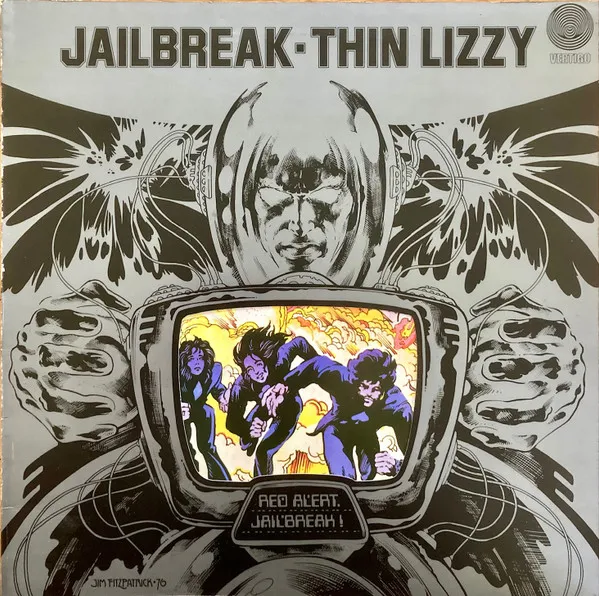
1. The Direct Allies: Motorhead and Thin Lizzy
Hard rock acts like Motörhead and Thin Lizzy occupied a peculiar middle ground. Though technically veterans of the pre-punk era, they were frequently embraced as comrades-in-arms in the war against musical boredom. Several factors contributed to this immunity:
- Economic Economy: Both bands favored punchy, driving, high-octane song structures that eschewed meandering progressive indulgence.
- Cultural Alignment: Rather than displaying the wounded resentment characteristic of older artists confronted by punk’s insolence, figures like Phil Lynott and Lemmy Kilmister met the movement with reciprocal respect and swagger.
- Aesthetic Uniformity: The ubiquitous leather jacket acted as a universal diplomatic passport.
2. The Cultural Benefactors: Marc Bolan
Marc Bolan’s inclusion in the pantheon of the acceptable is a masterclass in timely cultural positioning. T.Rex occupied a dual role in the hearts of the 1976 teenage demographic. First, Bolan’s television platform actively welcomed and showcased embryonic punk bands at a time when mainstream broadcasters treated the movement with open hostility. Second, many architects of the post-punk explosion—including Siouxsie and the Banshees, whose blistering cover of "20th Century Boy" stands as a monument to his influence—had grown up idolizing glam rock. Bolan’s blend of decadent pop art and primordial crunch made him a natural bridge between eras.
3. The Revered Ancestors
For bands that had effectively invented the ethos of punk before the genre was formally christened, the transition was seamless. Early punk radio sets relied heavily on foundational acts such as:
- The Velvet Underground
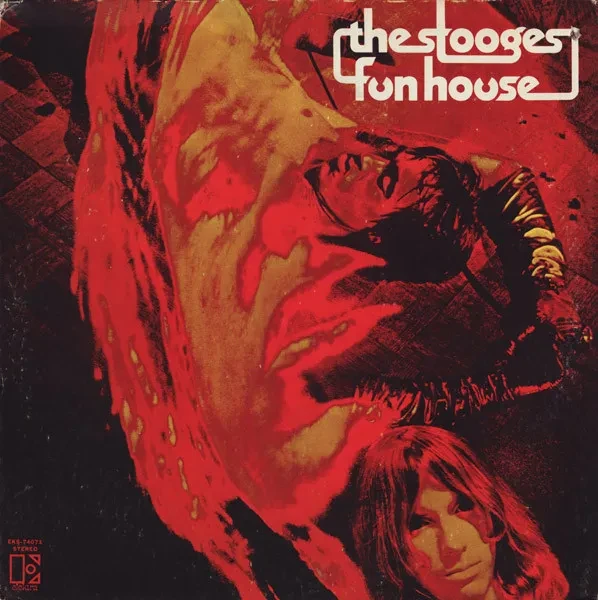
- The Stooges
- The New York Dolls
- 1960s garage-punk outfits like The Seeds and The Shadows of Knight
Any artist who encapsulated the abrasive, street-level realism and sonic nihilism of proto-punk was granted permanent residency. Consequently, emerging punk groups routinely featured a Stooges cover in their live sets or tucked a Velvet Underground track onto their debut 7-inch B-sides.
Official Statements & Cultural Impact: The Reign of David Bowie
At the apex of this hierarchy sat David Bowie, universally acknowledged as the undisputed king of the Acceptables.
Bowie’s relationship with the burgeoning punk movement was complex and symbiotic. Like Marc Bolan, he commanded the fierce devotion of younger music fans; his composition of "All The Young Dudes" for Mott the Hoople had explicitly cemented his status as an ally to the youth underground.
Unlike many of his progressive peers, however, Bowie spent the 1970s in a state of perpetual mutation, refusing to settle into predictable, bloated comfort. While other 1960s and early ’70s icons looked increasingly static, Bowie remained a dynamic, cult-revered avant-gardist.
More importantly, Bowie’s imprimatur extended outward. Through his production and collaborative work with Iggy Pop, Lou Reed, and Mott the Hoople—alongside sonic architects like Brian Eno and Robert Fripp—Bowie cast a long, protective shadow over the underground. To work with Bowie was to inherit a measure of his untouchable cool.
The cultural resonance of this positioning was captured brilliantly by RCA Records in their promotional campaign for Bowie’s 1977 masterpiece “Heroes”:
"THERE’S OLD WAVE, THERE’S NEW WAVE AND THERE’S DAVID BOWIE."
While Low and “Heroes” could by no means be classified as punk records, Bowie managed the rare alchemy of standing entirely outside the new wave scene while remaining its beating heart.
Future Outlook: The Collapse of the Boundaries
As the dust settled on the initial shockwaves of 1977, punk inevitably splintered. It fractured into new wave (melodic 1960s pop reimagined by young men in tailored jackets and skinny ties) and post-punk (angular, dissonant anti-pop performed by artists sharing the exact same wardrobe).
Yet, the legacy of punk’s ideological gatekeeping endured for years, even as the old guard mounted a triumphant return. By the 1980s, progressive dinosaurs like Genesis, Yes, and Pink Floyd were filling stadiums once more, proving that commercial appetites outlasted ideological purges.
Today, looking back across the decades, the rigid boundary lines of the 1970s appear increasingly porous. The fierce tribalism that once dictated who was permitted into the club has softened into a comprehensive appreciation of rock history’s messy, interconnected timeline.
Nevertheless, the memory of "Year Zero" remains a vital cautionary tale and a fascinating sociological study. For a brief, incandescent moment in time, popular music operated under a strict, unyielding ledger: there was a list of the chosen, and if your name wasn’t on it, you weren’t getting in.