Executive Overview
Saturday Night Live (SNL) returned for its landmark 52nd season with an incisive, high-profile cold open that immediately seized the cultural zeitgeist. Broadcasting live from Studio 8H, the legendary NBC sketch-comedy institution wasted no time skewering contemporary American politics, training its crosshairs on President Donald Trump, New York City Mayor Zohran Mamdani, and Trump’s fiercely devoted White House aide, Natalie Harp.
The sketch, which anchored the season premiere, featured franchise stalwart James Austin Johnson reprising his critically acclaimed impression of Donald Trump. Johnson’s Trump was depicted in a surreal, politically charged summit at Gracie Mansion with Mayor Mamdani, who was played with deadpan comedic precision by guest star Ramy Youssef. What began as a bizarre attempt by Trump to forge an unlikely political alliance and personal friendship rapidly devolved into psychological farce. The catalyst for this descent was the unexpected, weather-beaten intrusion of Harp—affectionately and infamously dubbed the "human printer"—played masterfully by SNL cast member Ashley Padilla.
The cold open captured the acute political theater surrounding Harp, whose fiercely loyal and notoriously omnipresent role within Trump’s inner circle has dominated headlines throughout the year. By fusing contemporary political scrutiny with horror-movie pastiches, Saturday Night Live demonstrated once again its unique capability to mirror, exaggerate, and interrogate the bizarre intersections of modern media, technology, and political devotion. This comprehensive report breaks down the anatomy of the season premiere’s headline-grabbing cold open, analyzes the real-world political dynamics underpinning the sketch, details the public and media reactions, and evaluates the broader cultural implications of SNL’s satirical salvos as Season 52 gets underway.
Detailed Chronology: Inside the Studio 8H Cold Open
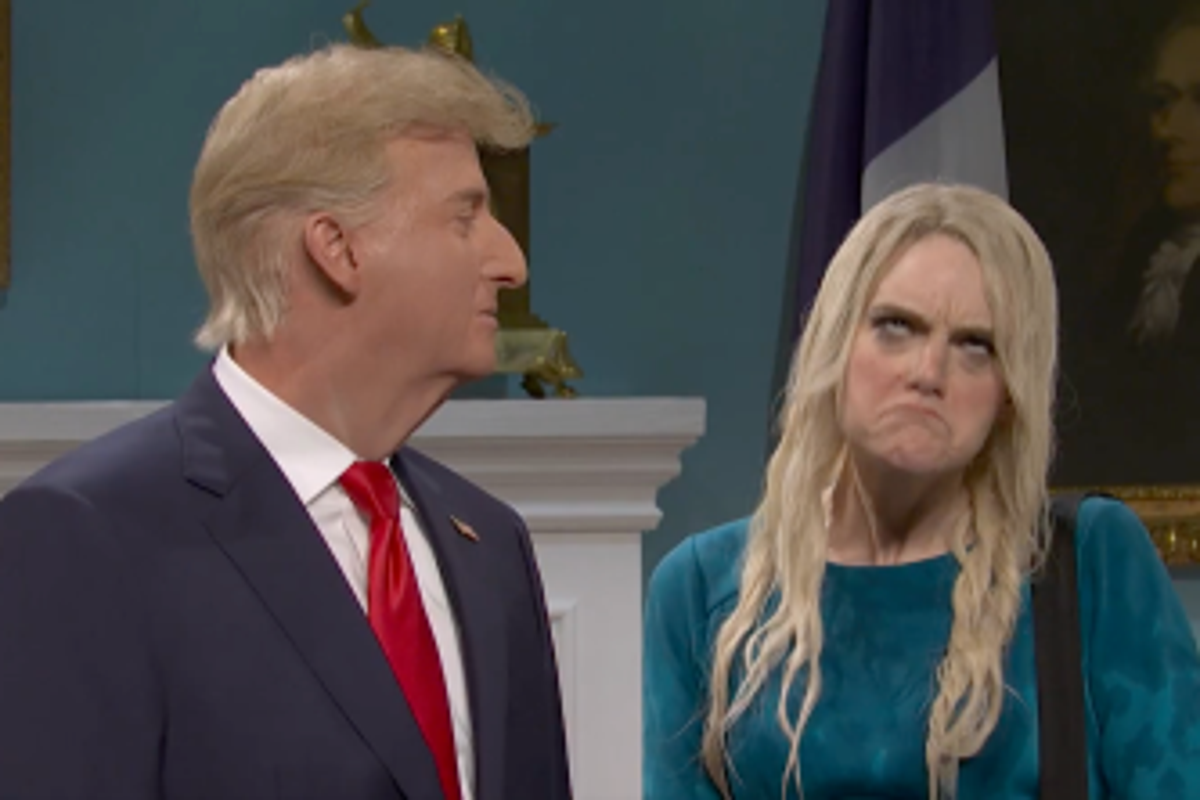
The lights dimmed over Studio 8H as the iconic Saturday Night Live theme music gave way to a stark, recognizable setting: the historic Gracie Mansion, official residence of the Mayor of New York City. The setup immediately established an absurd premise. James Austin Johnson’s Donald Trump—complete with vocal cadence, characteristic hand gestures, and meandering syntax—sat across from guest star Ramy Youssef’s Zohran Mamdani.
Mamdani, cutting a figure of bemused urban progressive pragmatism, found himself on the receiving end of Trump’s relentless, performative charm offensive. Rather than engaging in traditional municipal policy debates, Johnson’s Trump pivoted the conversation toward securing a personal bond, pitching Mamdani on the idea that the two men should become inseparable best friends. The comedic tension rested on the vast ideological and stylistic chasm separating the two politicians, amplified by Johnson’s uncanny ability to weave improvised non-sequiturs into scripted dialogue.
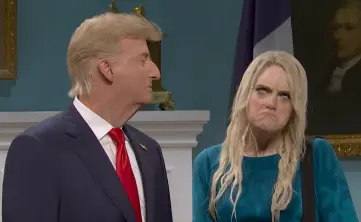
As the meeting unfolded, the atmosphere shifted abruptly from political satire to psychological thriller. The double doors of Gracie Mansion swung open to reveal Ashley Padilla as Natalie Harp. Stepping out of the torrential downpour brought on by the severe Nor’easter battering the Tri-State area, Padilla’s Harp presented a striking and unsettling image: hair completely drenched, clothing damp, and an expression of unblinking, hyper-vigilant intensity.
"Natalie, I didn’t realize you were in New York," Trump remarked, registering her sudden appearance.
Harp’s response set the tone for the remainder of the sketch. Delivering her lines with breathless, terrifying fervor, she replied, "Oh, I wasn’t. I ran here from D.C., Weapons-style. I came in case you needed anything."
The reference to running cross-country Weapons-style—nodding to high-intensity survival tropes—served as a direct meta-commentary on Harp’s real-world reputation for ubiquitous presence. The sketch leaned heavily into the viral discourse surrounding Harp’s digital loyalty and physical proximity to Trump, pushing the caricature to theatrical extremes.
Channeling the possessed, obsessive archetypes found in psychological horror films—specifically drawing inspiration from the hit cinematic release Obsession—Padilla’s Harp offered a smile that failed to reach her eyes before offering a swift, defensive pivot: "I’m kidding, I’m totally normal!"
The escalation reached its comedic peak when Harp physically separated Mamdani from Trump. Grabbing the New York City mayor by the lapel, she pulled him close and delivered a chilling, whispered ultimatum: "If you hurt him, I will end you."
The cold open concluded with the traditional rallying cry, "Live from New York, it’s Saturday Night!", delivered by Johnson’s Trump alongside Padilla’s Harp, solidifying a premiere night that immediately set the political and cultural agenda for the week.
Supporting Context & Metrics: The Real-World Origins of the Satire
To fully appreciate the cultural resonance of the Saturday Night Live Season 52 opener, one must examine the intricate web of real-world events, political appointments, and viral media moments that inspired the sketch.
The Rise of the "Human Printer"
Natalie Harp, a 35-year-old political operative and White House staffer, has occupied a singular and heavily scrutinized space within Donald Trump’s administrative and personal ecosystem. Dubbed the "human printer" by political commentators and media outlets, Harp’s primary functional role has long involved traveling everywhere by the president’s side, armed with mobile printing technology and digital devices. Her task: to ensure that favorable news articles, supportive social media posts, polling data, and flattering commentary are printed out and handed directly to Trump in real-time, regardless of location or circumstance.
However, beyond her logistical duties, Harp has drawn intense media scrutiny for the deeply personal, almost devotional nature of her loyalty. Over the summer, investigative reporting and resurfaced correspondence brought her internal dynamics with the former president into sharp public focus. Among the documents that circulated widely across cable news and social media were personal letters written by Harp to Trump in 2023. In one particularly striking excerpt that subsequently became a meme across political Twitter, Harp wrote:
"You are all that matters to me."
This level of unfiltered personal dedication provided fertile ground for SNL’s writers’ room. By casting Harp not merely as a dedicated bureaucratic aide, but as an omnipresent, supernatural force capable of traversing state lines on foot to shield her principal, the show transformed a political footnote into a masterclass in character-driven farce.
The Gracie Mansion Dynamic
The pairing of Donald Trump and New York City Mayor Zohran Mamdani on screen was itself rooted in recent political friction and cross-jurisdictional headlines. Mamdani, representing a progressive new wave in municipal governance, has frequently found himself at the center of national political debates regarding federal-local relations, urban development, and housing policies in New York.
By placing these two figures across from one another in Gracie Mansion, the writers utilized the setting to highlight the bizarre realities of modern political crossover episodes. The sketch capitalized on the absurdity of high-stakes political figures being shadowed by fanatical staffers whose personal stakes in political outcomes eclipse institutional norms.
Meteorological Realities
Adding an extra layer of verisimilitude to the sketch was the real-world weather emergency that gripped the Eastern Seaboard simultaneously. A powerful Nor’easter system battered New York, New Jersey, and Boston, causing severe disruptions, coastal flooding, and travel chaos. By incorporating the Nor’easter rain into Harp’s entrance—having her claim she sprinted from Washington, D.C. through the storm—the writers bridged real-world breaking news with absurdist fiction, a hallmark of SNL’s best cold opens.
Official Statements and Media Fallout
In the hours following the broadcast, the sketch generated a massive volume of digital engagement, trending globally across major social media platforms and driving discourse across Sunday morning political talk shows.
Network and Production Responses
While representatives for Saturday Night Live and NBC Universal declined to issue extended formal press statements regarding the creative motivations behind the cold open, production insiders noted that the sketch was designed to reflect the surreal nature of contemporary political branding. The decision to cast Ashley Padilla as Harp—utilizing physical comedy, deadpan delivery, and cinematic parodies—was praised by television critics for elevating political impressionism into narrative satire.
Political Reactions and Social Media Landscape
Reaction from political circles was sharply divided along partisan lines, reflecting the deeply polarized nature of modern American media consumption:
- Democratic and Progressive Commentators: Amplified clips of the sketch on platforms like X (formerly Twitter) and Bluesky, focusing heavily on the portrayal of Harp’s intense loyalty. Many progressive commentators lauded the sketch for capturing what they viewed as the sycophantic culture surrounding the Trump inner circle.
- Conservative Media Figures: Criticized the cold open as partisan hackery, arguing that late-night comedy has abandoned its historical mandate of equal-opportunity satire to focus disproportionately on conservative figures. Conservative commentators highlighted the portrayal of Harp as an unfair caricature of a dedicated public servant doing her job under difficult logistical circumstances.
- Independent Media Analysts: Focused primarily on the breakout performance of Ashley Padilla. Media critics noted that Padilla’s ability to anchor a high-stakes cold open alongside seasoned veterans like James Austin Johnson signals a generational shift in SNL’s cast roster, establishing her as a formidable comedic talent to watch throughout Season 52.
Future Outlook: What Season 52 Signals for Political Satire
The explosive debut of Saturday Night Live Season 52 serves as a clear indicator of how the venerable institution intends to navigate the treacherous waters of modern political comedy. As the United States marches toward future electoral cycles and legislative battles, the intersection of politics, media personality cults, and digital virality will only intensify.
The Evolution of Political Impressionism
The success of James Austin Johnson’s Trump and Ashley Padilla’s breakout turn as Natalie Harp underscores a broader evolution in how SNL handles political figures. Gone are the days when political sketches relied solely on direct, conversational impersonations of policy debates. Today’s political climate demands a hyper-stylized approach—one that blends political reality with psychological horror, pop-culture pastiches, and internet meme culture.
By framing a White House aide through the lens of a psychological thriller antagonist (Obsession), SNL’s writers demonstrated an acute awareness of how modern political actors are consumed by the public: not merely as functionaries, but as characters in an ongoing, multi-platform national soap opera.
Looking Ahead in Season 52
With ratings for the season premiere surging across both linear broadcast and streaming platforms on Peacock, executive producer Lorne Michaels and the SNL creative team have laid down a definitive marker. As the political landscape continues to produce unprecedented headlines—ranging from federal-municipal showdowns to extreme weather events and viral administrative dynamics—Saturday Night Live has signaled that no figure, no matter how devoted or underground, is safe from the Studio 8H satirical spotlight.
As the season progresses, audiences will be watching closely to see which political figures join Johnson’s Trump and Padilla’s Harp in the pantheon of Season 52 caricatures. If the premiere is any indication, the upcoming months will offer a sharp, unrelenting, and uproariously funny mirror to the wildest moments in American public life.