Executive Overview
In the rapidly shifting landscape where entertainment, corporate sports, and geopolitical activism collide, few recent controversies have captured the public imagination quite like the unfolding crisis surrounding singer-songwriter Ed Sheeran. What began as a routine booking dispute on an international concert tour has metastasized into a multi-layered cultural flashpoint, drawing in high-profile political figures, international boycotts, and prime-time satire.
At the heart of the storm is a clash over artistic accountability, corporate pressure, and the limits of neutrality in the digital age. As Sheeran navigated allegations of censorship, subsequent artist walkouts, and tearful on-stage apologies, the satirical machinery of Saturday Night Live UK seized upon the turmoil, transforming the pop star’s diplomatic tightrope walk into biting, water-cooler comedy.
This report examines the intricate timeline of the Ed Sheeran tour controversy, dissects the wider implications of corporate and political entanglements in live music, and analyzes how SNL UK—through sharp monologues and viral sketches—has cemented itself as the chief cultural arbiter of this ongoing saga.
Detailed Chronology
The Spark: Macklemore and the Gillette Stadium Ultimatum
The controversy that would eventually engulf Sheeran’s global loop tour traces back to early September 2026. Hip-hop artist Macklemore, serving as an opening act on the tour, made headlines during a concert performance by explicitly stating "Free Palestine" from the stage.
The political declaration immediately triggered a behind-the-scenes chain reaction. According to subsequent revelations by Macklemore, powerful corporate interests moved swiftly. Robert Kraft—CEO of the Kraft Group, which owns Gillette Stadium—reportedly intervened directly, placing a personal call to Ed Sheeran. Kraft allegedly delivered an ultimatum: Macklemore would not be permitted to perform at the prominent venue.
Faced with a high-stakes arena booking dilemma, the tour’s organizers—with Sheeran later maintaining it was ultimately "the promoter’s decision"—dropped Macklemore from the lineup. The decision to sever ties with the rapper sent immediate shockwaves through the tour ecosystem. Rather than weathering the storm individually, Sheeran’s other supporting acts took a unified stance, withdrawing from the tour in rapid succession in solidarity with Macklemore.
The Backlash and the First Protest Lines
With the tour’s support acts cleared out and public awareness mounting, Sheeran found himself stepping onto the stage for his first Macklemore-less concert under unprecedented scrutiny. Outside the venue, vocal protesters gathered, waving pro-Palestine placards and demanding accountability from a headliner who had initially attempted to steer clear of the friction.
Sheeran’s initial public posture was one of strict corporate and personal neutrality. In a statement addressing the mounting pressure, the 35-year-old artist asserted that he does not use his "professional platform for politics," attempting to frame the tour as a musical space divorced from geopolitical polarization. However, in an era where audiences increasingly expect ideological alignment from their cultural icons, a policy of "no comment" proved unsustainable.
The Philadelphia Confession
Realizing the erosion of goodwill among his fanbase, Sheeran broke his silence in a visibly emotional, unscripted address during a subsequent tour stop in Philadelphia, Pennsylvania. Standing before a massive stadium audience, the singer delivered a tearful apology that signaled a radical shift in his public relations strategy.
"I’ve had to take and make difficult decisions, and I am making mistakes. I’m so, so sorry. I don’t want to disappoint fans," Sheeran confessed, his voice cracking.
Moving away from his earlier insistence on silence, the singer attempted to articulate a nuanced stance on the Israel-Hamas war and the broader Middle Eastern conflict. "What happened in Israel, and at the music festival on October 7th, was horrific and compounded centuries of Jewish pain," he stated.
He continued, addressing the humanitarian toll in Gaza: "What is happening in Gaza is catastrophic and unjustifiable and disproportionate. My heart has been broken by the scale of devastation and loss of civilian loss and loss of children’s lives. And the systemic injustice we’re seeing unfolding in the West Bank cannot be overlooked."
While the emotional address sought to humanize the artist and placate critics demanding moral clarity, it arrived too late to stem the tide of late-night comedy. By trying to appease all sides, Sheeran had already provided satirists with an irresistible target: the archetypal modern pop star caught between moral imperative and commercial survival.
Supporting Context & Metrics
The intersection of live music touring and geopolitical commentary is not entirely new, but the economic stakes in 2026 have amplified the risks. Stadium tours represent multi-million-dollar corporate enterprises involving venue conglomerates, ticketing algorithms, global merchandise distribution, and massive promotional sponsorships.
Key Factors in the Sheeran Tour Crisis:
- The Corporate Leverage Matrix: The involvement of venue owners like Robert Kraft highlights the hidden infrastructure of major tours. Stadiums are often tied to municipal authorities, corporate conglomerates, and philanthropic donors with strong political investments, limiting the absolute autonomy of touring musicians.
- The "Scalping Bot" Factor: As parodied brilliantly by SNL UK, a significant percentage of modern stadium tickets are acquired by automated scalping bots rather than traditional human fans. This creates a surreal dynamic where artists feel beholden to algorithmic ticket-buyers and corporate venues rather than organic grassroots audiences.
- The Solidarity Cascade: The rapid withdrawal of opening acts illustrates a new paradigm in tour politics. Supporting acts are no longer passive background musicians; they possess independent social media platforms, distinct political alignments, and fanbases that demand ideological consistency.
Official Statements & Satirical Responses
SNL UK Enters the Fray
As the real-world drama unfolded across international news networks, Saturday Night Live UK recognized a cultural watershed moment. The sketch show launched a multi-pronged satirical campaign that dissected Sheeran’s defensive positioning with surgical precision.
Amelia Dimoldenberg’s Monologue Debut
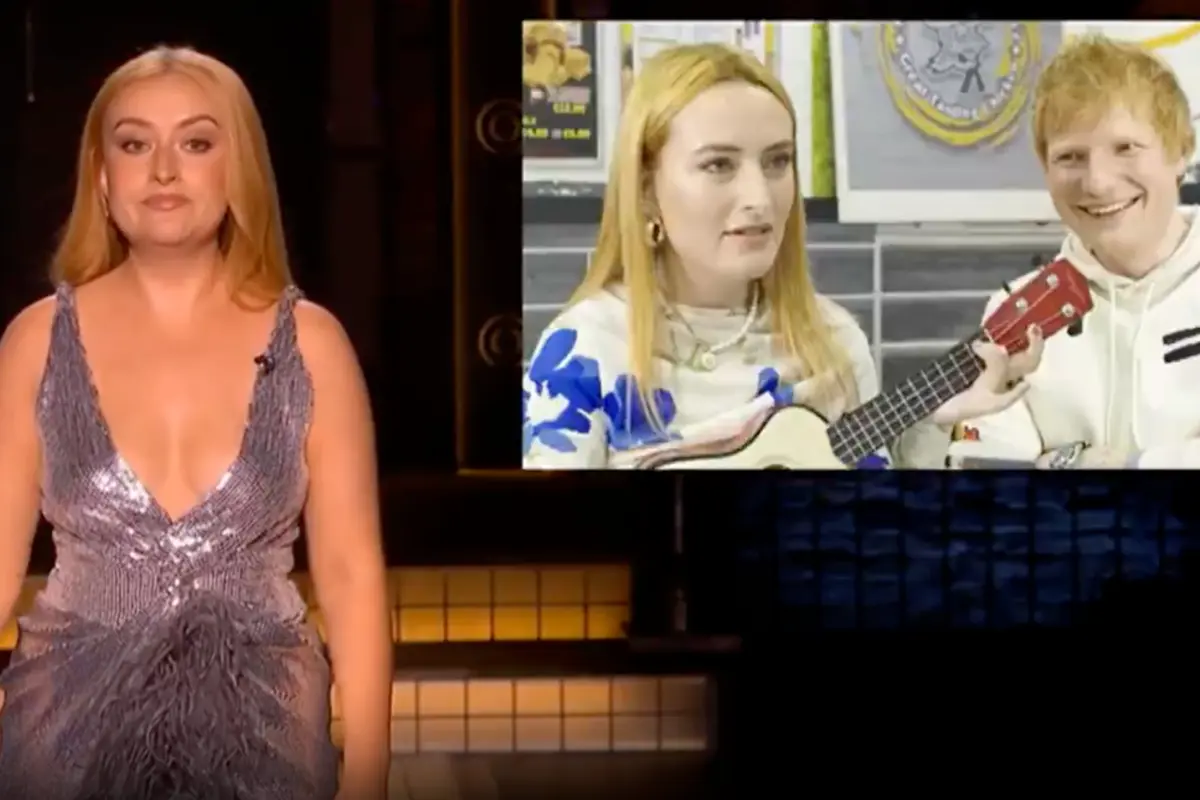
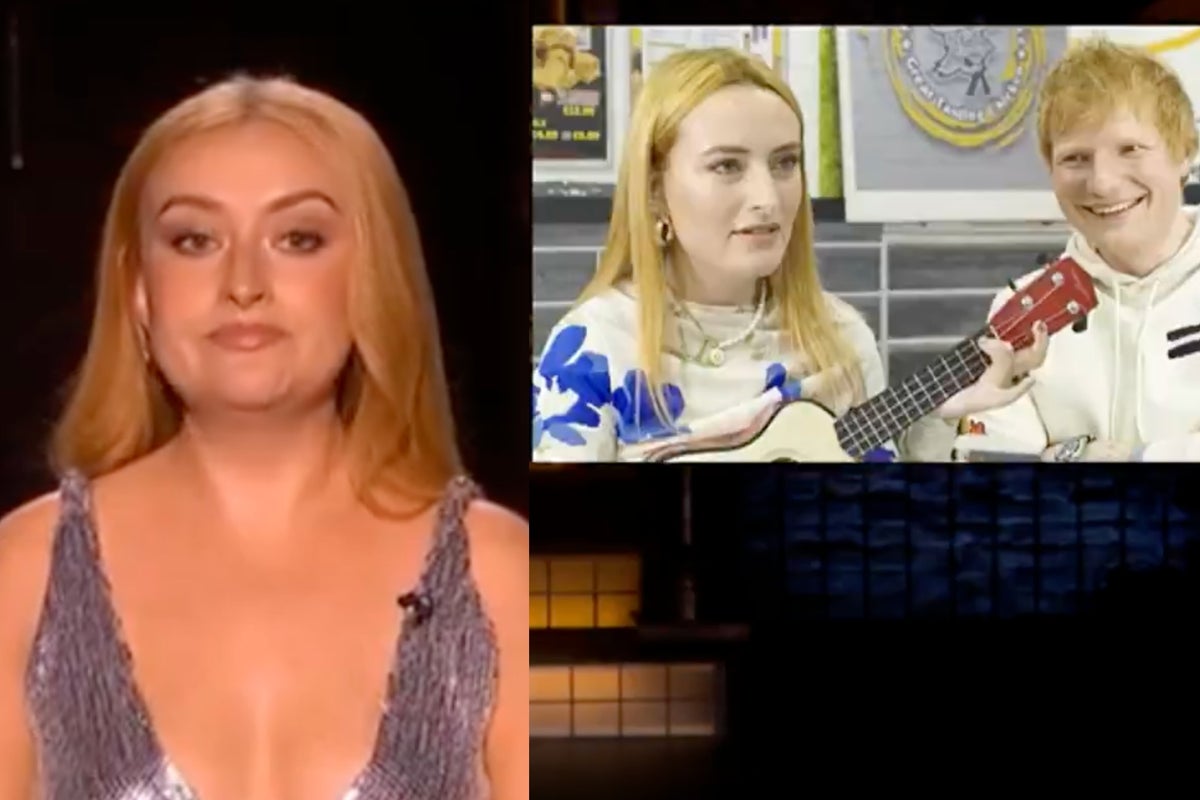
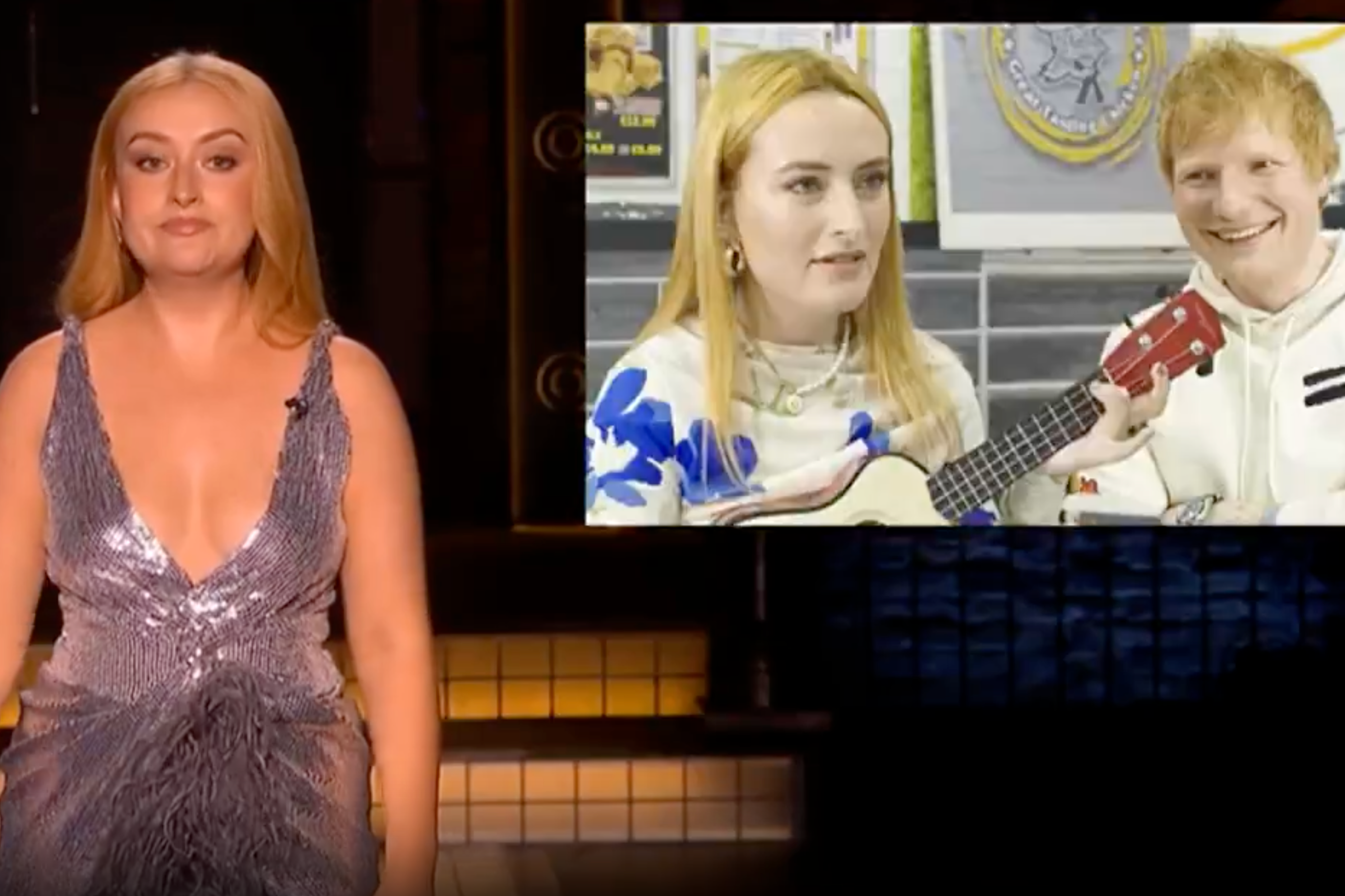
Hosting Saturday Night Live UK for the first time on Saturday, September 26, 2026, web-series icon Amelia Dimoldenberg (creator of Chicken Shop Date) used her opening monologue to skewer the singer.
Addressing the audience, the 32-year-old comedian remarked, "I’m incredibly privileged to have done so many interviews with people like Idris Elba, Cher, and even a world-famous redheaded puppet with a hand up his arse telling him what to say." As an image of herself alongside Elmo flashed on the screen, she paused before clarifying: "No, the other one," swapping the graphic to a photo of herself and Ed Sheeran. The punchline drew roaring laughter from the studio audience, instantly setting the tone for the evening.
The AI Robot War Sketch
This followed an even more elaborate takedown from the SNL UK cast the previous week—a sketch hailed by television critics as one of the program’s finest satirical achievements.
In the sketch, a dystopian war breaks out between artificial intelligence robots and humanity. King Charles urges the populace to mount an immediate resistance against the mechanized takeover. Stepping forward to address the monarch is a simulated Ed Sheeran—played with uncanny precision by cast member Annabel Marlow, complete with a ginger wig, faux-ink tattoos, and a trademark loop pedal.
Sheeran’s response to the existential crisis of humanity? "Or maybe we shouldn’t."
Describing himself as someone who prefers "sitting on the fence," Marlow-as-Sheeran tells the King: "The thing is, your Majesty, I don’t like to take sides. I don’t want to alienate any of my fans—humans or robots. A lot of my tickets are bought by scalping bots. Sometimes when it comes to conflicts, the bravest thing you can do is to say nothing at all."
The sketch lampooned Sheeran’s initial refusal to engage with the political realities of his tour cancellations, culminating in a musical parody of his pop style:
"I’m talking ’bout both sides are equally right.
No matter the conflict, whatever the fight.
Girl listen now, black, white, I only see grey."
Future Outlook
The convergence of geopolitical activism, corporate venue control, and late-night satire marks a definitive turning point for how global pop stars manage public crises. Ed Sheeran’s attempt to weather the storm through corporate detachment ultimately failed, while his subsequent emotional pivot in Philadelphia proved that public sentiment cannot be easily recalibrated once an artist is perceived as politically evasive.
Looking ahead, several systemic questions remain for the global music industry:
- Rethinking Rider Clauses and Political Safety: Artists, promoters, and booking agents will likely implement more rigorous vetting processes regarding venue ownership, corporate stakeholder influence, and political clauses in touring contracts to prevent sudden cancellations.
- The Weaponization of Satire: Shows like SNL UK have demonstrated that contemporary pop culture figures are subject to immediate, highly sophisticated institutional critique. The "both sides / neutral observer" defense mechanism is increasingly viewed by audiences and comedians alike as corporate cowardice rather than genuine diplomacy.
- The Fanbase Expectation Shift: The era of the apolitical pop star appears to be drawing to a close. As supporting acts exercise their right to solidarity walkouts and audiences demand moral transparency, headliners can no longer rely on universal mass appeal without taking calculated stances on humanitarian issues.
As Ed Sheeran attempts to pick up the pieces of his global loop tour, the cultural legacy of September 2026 will linger. He may have returned to the stage, but the satirical ghost of Annabel Marlow’s loop-pedal-wielding impression—and Amelia Dimoldenberg’s sharp-witted television barbs—will long serve as a cautionary tale for the modern music industry.