Executive Overview
Nearly 220 years after Jane Austen first penned her observations on the precarious economics of Regency-era womanhood, her debut novel Sense and Sensibility has received a radical, gritty, and fiercely contemporary cinematic makeover. Directed by Georgia Oakley, this fresh screen adaptation strips away the pastel-hued, idyllic nostalgia typically associated with period dramas—such as Ang Lee’s beloved 1995 film—and replaces it with damp walls, financial panic, and the visceral sting of systemic displacement.
Starring Daisy Edgar-Jones and Esmé Creed-Miles as the cash-strapped Dashwood sisters, Elinor and Marianne, Oakley’s adaptation lands at a fascinating cultural crossroads. Today’s young audiences, grappling with an unforgiving housing crisis, hyper-inflated living costs, and the transactional nature of modern dating, are finding an unexpected mirror in Austen’s heroines. Where historical adaptations once focused purely on drawing-room etiquette and polite courtship, Oakley reframes the narrative as an urgent commentary on gender, property, and economic survival.
By grounding the emotional stakes in tangible, hard-fought realities—such as the grim downgrade from the sprawling estate of Norland Park to a dark, dingy Devonshire cottage—the film directly addresses the anxieties of "Generation Rent." In doing so, it forces a critical interrogation: how much has actually changed for women navigating property, independence, and romance between 1811 and 2026?
Detailed Chronology: From Regency Turmoil to Modern Screens
To fully understand the resonance of Oakley’s adaptation, one must trace the historical parallels of financial instability that birthed the novel, alongside the structural evolution of its cinematic interpretations.
The Late 1790s: Austen’s Economic Reality
As Jane Austen drafted the initial manuscript of Sense and Sensibility in the late 1790s, Great Britain was gripped by a severe financial crisis. The Napoleonic Wars strained the national economy, inflation soared, and ordinary families experienced dramatic fluctuations in wealth and security. Austen herself was intimately acquainted with these anxieties. Following the sudden death of her father, she, her mother, and her sister Cassandra experienced prolonged housing insecurity, entirely dependent on the goodwill and estates of their male relatives.
Austen later heavily revised the manuscript between 1809 and 1810 while living in a modest cottage on her brother Edward’s estate in Chawton. This acute awareness of female dependence—where a woman’s entire social standing, shelter, and survival were dictated by inheritance laws and male goodwill—forms the DNA of the Dashwood family’s plight.
The 1995 Paradigm Shift
For decades, cinematic adaptations of Austen’s works—most notably Ang Lee’s 1995 film adaptation scripted by Emma Thompson—anchored themselves in a lush, romanticized aesthetic. Barton Cottage was depicted as an idyllic, sun-dappled haven where artistic expression and pastoral beauty softened the blow of financial ruin. While the economic stakes were present, they were largely wrapped in the comforting cinematic language of heritage cinema.
The 2026 Resurgence: Oakley’s Gritty Reimagining
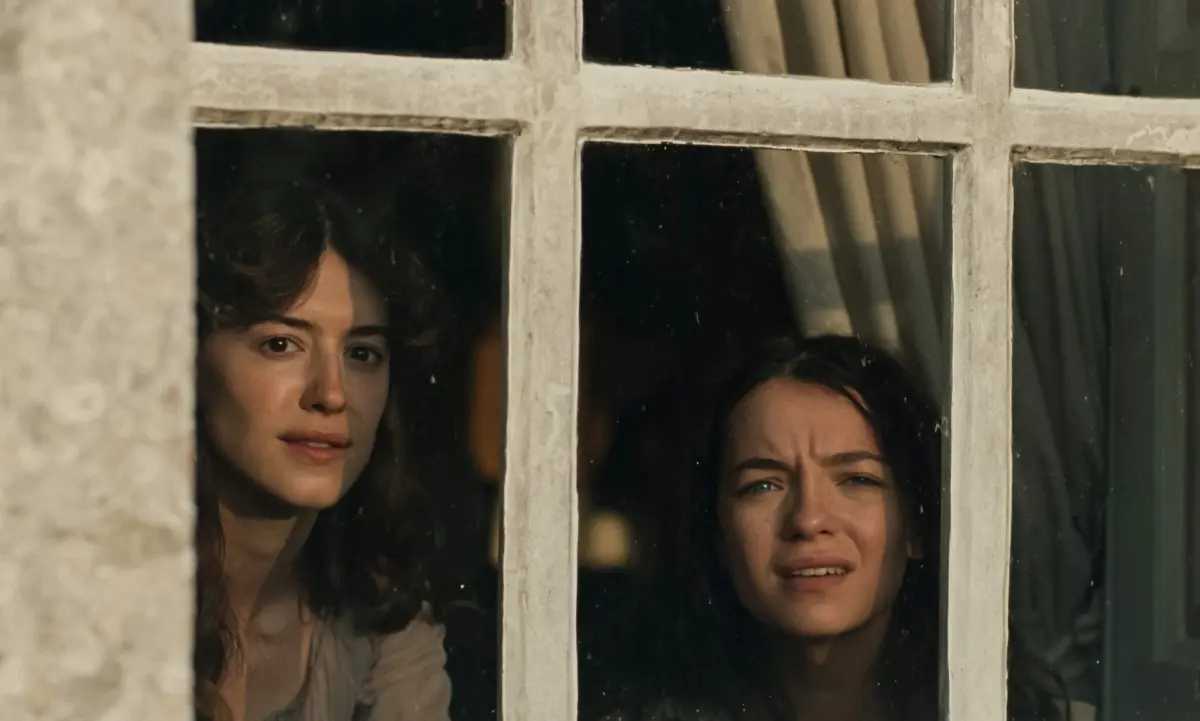
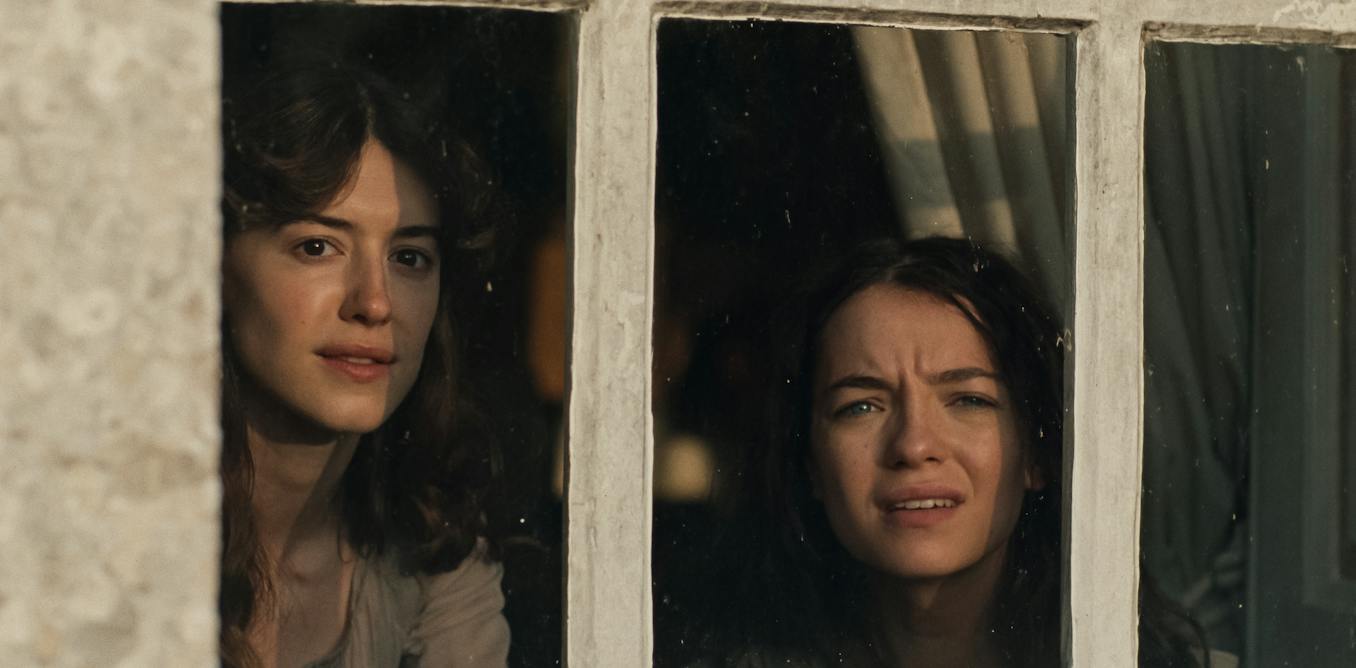
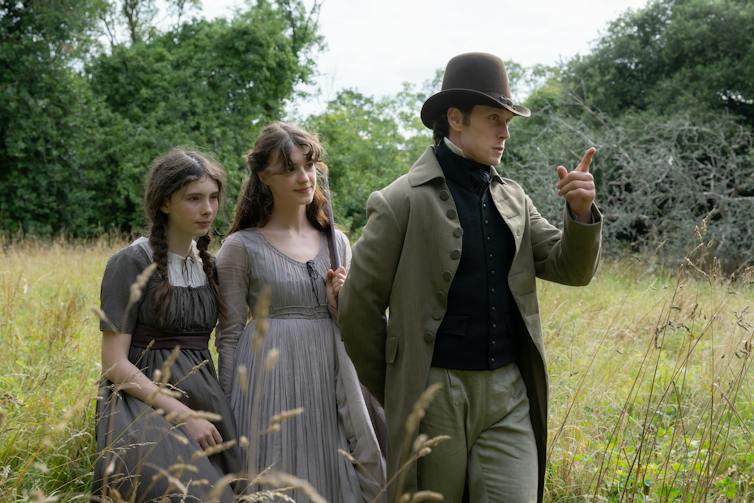
Georgia Oakley’s modern adaptation shatters this pastoral illusion. Following the death of their father, the Dashwood women—Elinor, Marianne, and the newly foregrounded younger sister Margaret (Bodhi Rae Breathnach)—are unceremoniously ousted from Norland Park when their half-brother John inherits the estate.
Unlike previous versions, Oakley emphasizes physical labor and domestic degradation. Mrs. Dashwood (Caitríona Balfe) is seen laboring over cooking, while Elinor takes on gardening and laundry. Barton Cottage is small, dark, and claustrophobic. Furthermore, linguistic choices—such as giving local characters like Mrs. Jennings (Fiona Shaw) and Sir John Middleton (Turlough Convery) robust, unpolished Devonshire accents—accentuate the Dashwoods’ jarring transition from landed gentry to marginalized outsiders.
Supporting Context & Metrics: The Gen Z Housing and Dating Crisis
The genius of Oakley’s adaptation lies in its synchronization with contemporary socioeconomic trends. The struggles faced by the Dashwood sisters bear a striking resemblance to the lived realities of Generation Z.
The Realities of "Generation Rent"
In the current socioeconomic landscape, soaring property prices, stagnant wages, and the cost-of-living crisis have conspired to lock the vast majority of younger adults out of the housing market. Homeownership has become an increasingly distant aspiration, giving rise to "Generation Rent."
According to data compiled by the think tank The Women’s Budget Group, housing insecurity disproportionately affects women. This disparity is driven by a greater reliance on private renting, a lack of affordable housing stock, and systemic difficulties in keeping pace with runaway housing costs.
Romance and Financial Dependence
Austen’s novel operates on a brutal economic truth that modern data continues to validate: romance and property are inextricably linked. Because the Dashwood women cannot inherit land under the strict entails of the era, marriage is not merely a matter of the heart; it is a financial survival strategy.
Recent metrics from YouGov indicate that over a third of women in relationships remain financially dependent on their male partners. This modern vulnerability echoes Marianne Dashwood’s disastrous "situationship" with the caddish John Willoughby. Willoughby, whom a contemporary audience would readily diagnose as a textbook lovebomber and ghoster, dangles the promise of the large estate of Combe Magna before abruptly discarding her at a London ball.
In a powerful updating of a classic scene, Esmé Creed-Miles’s Marianne reenacts the iconic walk in the rain towards Willoughby’s estate. However, instead of woefully reciting Shakespearean sonnets like Kate Winslet did in 1995, Creed-Miles lets out a raw, guttural scream of rage—directing her fury not just at a broken heart, but at the loss of the property she once believed she would rule.
Modern Dating and Economic Survival
The film also speaks directly to Gen Z anxieties surrounding modern romance, digital dating culture, and the "ick." With modern discourse frequently revolving around the economic utility of partnerships—such as The Kinsey Institute reporting that more than half of young single people are actively seeking partners to share skyrocketing living expenses—the transactional nature of dating has come full circle.
Simultaneously, internet subcultures have fractured responses to these pressures. While online "pinkpill" influencers aggressively promote hypergamy (marrying up) and traditional homemaking ("tradwife") aesthetics as a shield against economic precarity, young people navigate a dating pool where financial survival and emotional vulnerability constantly collide.
Official Statements & Critical Analysis
Critics and cultural analysts have lauded Oakley’s bold pivot away from traditional Austen tropes, noting how the film bridges a two-century gap without flattening the nuances of the original text.
Cultural commentators have pointed out that while Gen Z audiences gravitate toward clear-cut power dynamics, Oakley’s adaptation occasionally modernizes characters to fit contemporary ethical frameworks, sometimes altering the complex moral ambiguities Austen originally established.
For instance, the character of Colonel Brandon (played by Herbert Nordrum) is noticeably aged down from his original description as being "on the wrong side of five and thirty" relative to 16-year-old Marianne. This creative choice is widely interpreted as a direct response to modern online discourse surrounding problematic age-gap relationships and power imbalances.
Similarly, George MacKay’s portrayal of Edward Ferrars recontextualizes his emotional distance and poor treatment of Elinor not as awkward communication flaws, but as manifestations of an overly rigid, virtuous nature—diverging from Hugh Grant’s famously bumbling, hesitant interpretation in 1995.
Future Outlook: The Enduring Legacy of Austen on Screen
As Oakley’s Sense and Sensibility makes its way to audiences, it prompts a broader philosophical question regarding how classical literature must evolve to remain relevant.
By stripping away the sanitized veneer of the traditional period drama, the film challenges audiences to confront uncomfortable continuities. The systemic barriers that prevented Regency women from acquiring independent wealth find their modern successors in gender pay gaps, skyrocketing rental markets, and the persistent financial vulnerability of women in relationships.
Furthermore, the film’s conclusion plays cleverly with audience expectations. While the narrative resolves the romantic and economic crises of the Dashwood sisters by pairing them with their respective partners in neighboring harmony, Oakley notably omits the grand, celebratory white wedding sequences traditionally expected from Austen adaptations.
By cutting the narrative short before these institutional rituals, the film leaves viewers with a lingering, modern uncertainty: in a world of economic instability and shifting relationship paradigms, can property and matrimony ever truly guarantee long-term security and happiness?
Ultimately, Georgia Oakley’s Sense and Sensibility proves that Jane Austen’s biting social critiques are not museum pieces, but living, breathing blueprints for navigating the precarious financial and romantic landscapes of the 21st century.