By Caitlin Devlin
Published: September 28, 2026
Executive Overview
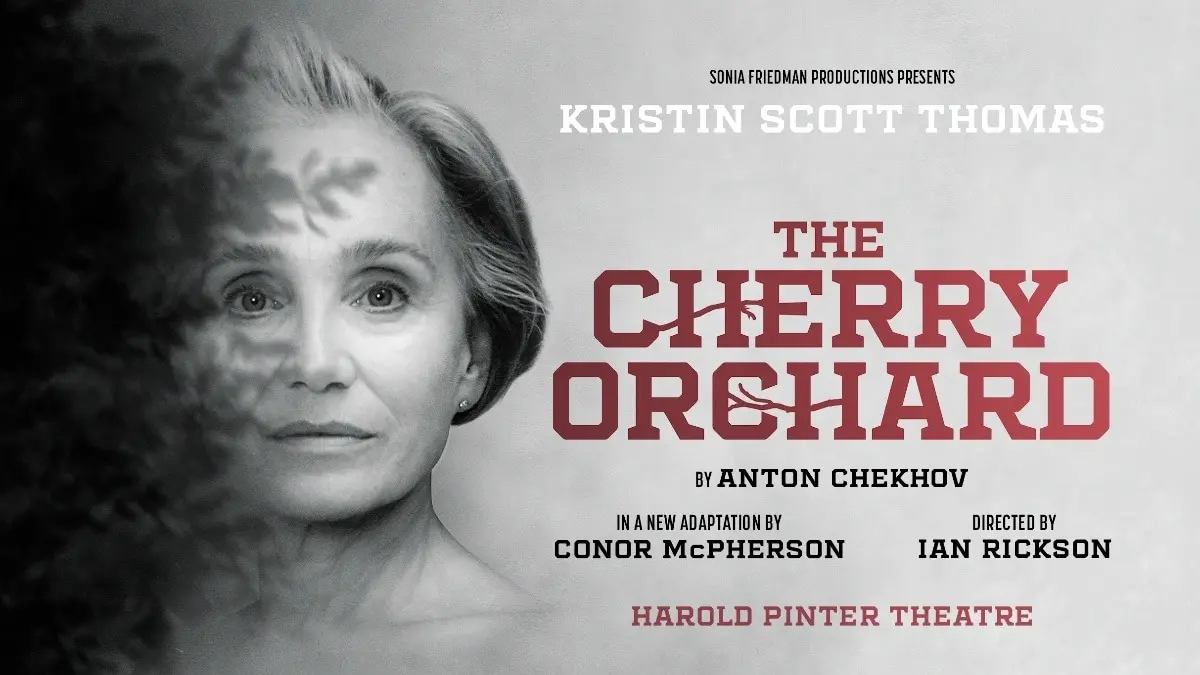
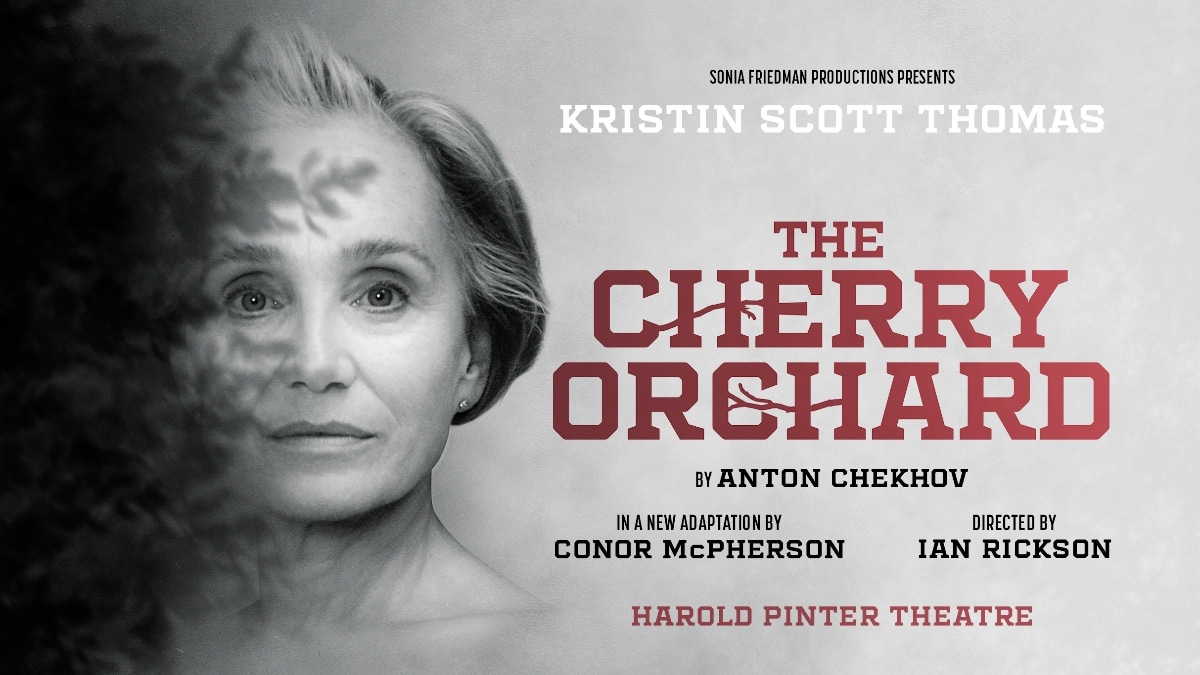
As the autumn leaves begin to settle over the British capital, London’s vibrant theatrical landscape is bracing itself for one of the most anticipated literary and dramatic events of the decade. Anton Chekhov’s era-defining classic, The Cherry Orchard, is returning to the West End in a strictly limited season running from October 3, 2026, to January 9, 2027. Staged at the historic Harold Pinter Theatre, this high-profile production marries a timeless text with a powerhouse creative team and a stellar cast led by BAFTA and Olivier Award winner Kristin Scott Thomas and acclaimed television and stage star Stephen Mangan.
For modern audiences, Chekhov can occasionally carry an aura of high-brow intimidation—a dusty relic of turn-of-the-century Russian academia. Yet, this upcoming West End staging aims to dismantle those barriers, presenting a visceral, deeply human examination of socioeconomic upheaval, personal loss, and the inevitability of change. With an acclaimed director at the helm, an A-list ensemble cast, and a rich theatrical legacy spanning more than a century, this autumn revival promises to be an unmissable cultural touchstone for seasoned theatergoers and novices alike.
Detailed Chronology: From Moscow 1904 to the Modern West End
To truly understand the weight of the upcoming production at the Harold Pinter Theatre, one must trace the winding, historically rich lineage of The Cherry Orchard across the span of the past 122 years.
The Inception and Premieres (1904–1911)
Written by Anton Chekhov toward the twilight of his life, The Cherry Orchard premiered at the legendary Moscow Art Theatre on January 17, 1904. The play’s initial run was fraught with creative tension. Chekhov famously envisioned the work as a light comedy, or even a farce in places, while his visionary director, Konstantin Stanislavski, interpreted it as a sweeping, melancholic tragedy. This friction between the comic and the tragic has defined the play’s identity ever since, positioning it as a mirror reflecting the complexities of the human condition.
The play crossed language barriers to reach international audiences in May 1911, when the first English-language performance was staged at London’s Aldwych Theatre. From that moment on, The Cherry Orchard embedded itself deep within the British theatrical consciousness, inspiring generations of dramatists from George Bernard Shaw to Arthur Miller.
The Evolution of Adaptation
Over the decades, London has hosted countless iterations of Chekhov’s masterpiece, ranging from orthodox period pieces to avant-garde conceptual shifts. Most recently, in 2022, audiences witnessed an English-language adaptation at The Yard Theatre that threw tradition to the wind by transplanting the narrative into a science-fiction setting.
Now, the 2026 West End revival represents a pivot back to a more grounded, emotionally resonant exploration of the text, helmed by a director intimately familiar with Chekhov’s psychological depths and structural nuances.
Supporting Context & Metrics: Plot, Characters, and Creative Vision
What is The Cherry Orchard About?
At its core, the narrative centers on Lyubov Ranevskaya, an aristocratic Russian landowner who returns to her ancestral estate after spending years squandering her fortune abroad. She arrives to a harsh reality: the estate is heavily mortgaged and scheduled for a public auction to settle debts. Worse still, the family’s crown jewel—a vast, beautiful cherry orchard—is slated to be cut down to make way for summer cottages.
The play serves as a profound historical and sociological snapshot of the seismic shifts in Russian society at the turn of the 20th century. It captures the decline of the landed gentry and the simultaneous rise of the nouveau riche, embodied by the merchant Lopakhin, whose grandfather was once a serf on the very estate he now stands to buy.
The Star-Studded Cast
The production boasts an extraordinary assembly of British acting talent:
- Kristin Scott Thomas stars as the mercurial, financially reckless, yet deeply sympathetic Lyubov Ranevskaya. Scott Thomas is no stranger to high-stakes theatrical classics or to Chekhov, having previously collaborated with director Ian Rickson on a celebrated staging of The Seagull.
- Stephen Mangan stars opposite her as the pragmatic, industrious Lopakhin, capturing the complex psychological duality of a man rising from oppression into positions of economic dominance.
- Ruby Bentall takes on the role of Sharlotta, alongside Megan Cusack as Dunyasha, veteran actor Karl Johnson as the loyal and aging servant Firs, Noof Ousellam as Yasha, and Nadia Parkes as Anya.
- The ensemble is further rounded out by Jack Riddiford as Trofimov, Vinette Robinson as Varya, Shubham Saraf as Yepikhodov, and Peter Wight as Gaev.
The Creative Engine
Director Ian Rickson leads a world-class creative team tasked with bringing the turn-of-the-century estate to life within the intimate confines of the Harold Pinter Theatre. The design team includes:
- Chloe Lamford (Set Design)
- Sussie Juhlin-Wallén (Costume Design)
- Bruno Poet (Lighting Design)
- Tom Gibbons (Sound Design)
- Stephen Warbeck (Composer)
- Shelley Maxwell (Movement Director)
- Amy Ball (Casting Director)
Together, this ensemble aims to construct an atmospheric, highly sensory environment that highlights the play’s delicate balance between bittersweet nostalgia and forward-moving historical inevitability.
Official Statements and Industry Insights
While formal press statements from the lead cast continue to roll out as opening night approaches, industry analysts and insiders have already pointed to this mounting as a high-water mark for the 2026 autumn season.
Theatre critics and historians note that casting heavyweights like Kristin Scott Thomas and Stephen Mangan in the central roles signals a deliberate choice to ground the production in elite-tier psychological realism. In recent interviews regarding her theatrical choices, Scott Thomas has consistently championed works that explore the intricacies of female aging, grief, and societal transition—themes that sit squarely at the heart of Lyubov Ranevskaya’s character arc.
Furthermore, producers have emphasized that staging the production at the Harold Pinter Theatre provides a unique intimacy. Unlike cavernous multi-tier venues, the Pinter allows every sigh, tear, and quiet hesitation of Chekhov’s dialogue to land directly with the audience, bridging the cultural and temporal gap between 1904 Russia and modern-day London.
Future Outlook: A New Standard for West End Classics?
As ticket sales surge ahead of the October 3 curtain-raiser, the implications of this production stretch far beyond a standard limited run. In an era where commercial theatre often relies heavily on movie-musical adaptations and high-concept spectacles, the commercial and critical success of The Cherry Orchard will serve as an important barometer for the health of classical drama in the West End.
Can a 122-year-old Russian play still command the attention of modern, fast-paced audiences? If the pedigree of this creative team, the magnetic pulling power of its lead actors, and the universal resonance of its themes are any indication, the answer is a resounding yes.
For those fortunate enough to secure tickets before the run concludes on January 9, 2027, the revival promises an evening of profound emotional clarity—reminding us why, more than a century after his death, Anton Chekhov remains the undisputed master of chronicling the human heart in times of radical transformation.
Tickets for The Cherry Orchard at The Harold Pinter Theatre (running 3 October 2026 – 9 January 2027) are available through official box office channels and major ticketing platforms.