Executive Overview
Since the escalation of geopolitical hostilities culminating in the 2022 full-scale invasion, the sovereign state of Ukraine has faced an existential threat not only to its territorial integrity, but to the very fabric of its historical and cultural identity. While military defense remains the most visible facet of the ongoing conflict, a parallel, equally devastating war is being waged in publishing houses, libraries, schools, and cultural institutions. This is a deliberate campaign of cultural erasure, weaponized language, and institutional destruction orchestrated by the Kremlin.
At the heart of this assault is the persistent imperial doctrine articulated by Vladimir Putin since 2013, which posits that Ukrainians and Russians constitute a singular, indivisible people—a philosophical and political framework designed to invalidate Ukrainian sovereignty and erase its distinct national identity. In practice, this ideology has translated into targeted bombardments of publishing ecosystems, the destruction of millions of volumes of literature, and a systematic assault on historical memory.
Yet, counteracting this onslaught is a historic cultural renaissance. Despite immense adversity, Ukrainian literature, language, and artistic heritage are experiencing an unprecedented global circulation. Through state-backed institutional frameworks, grassroots international campaigns, scholarly initiatives, and a massive linguistic shift away from the Russian language within Ukraine itself, the nation’s culture is actively hardening into a shield. By examining the mechanics of Russian cultural suppression alongside the burgeoning global movement of Ukrainian literature in translation, this report explores how books, libraries, and international solidarity are rewriting Ukraine’s place on the global map.
Detailed Chronology: From Ideological Pretext to Systematic Destruction
To understand the scale of the cultural devastation currently unfolding, one must trace the historical and ideological trajectory that paved the way for Moscow’s contemporary military strategy.
The Foundation of the "Russian World" Doctrine (1990s–2013)
The ideological architecture underpinning the current conflict began taking shape in the post-Soviet landscape of the 1990s. Evolving as a flexible concept known as Russkii Mir (the "Russian World"), it initially functioned as a soft power strategy to maintain cultural and political influence over the former Soviet diaspora. Over time, however, it hardened into a geopolitical justification for interventionist policies and a platform for ultra-conservative nationalist forces.
By 2013, this ideology crystallized into a direct political narrative when Vladimir Putin publicly advanced the thesis that Russians and Ukrainians are "one people." Far from being a benign historical observation, this thesis served as an ideological weapon aimed at delegitimizing Ukraine’s centuries-old struggle for independence, paving the way for the illegal annexation of Crimea in 2014 and the subsequent full-scale invasion in 2022.
The Weaponization of Culture and the 2022 Invasion
Following the full-scale invasion in February 2022, the suppression of Ukrainian identity transitioned from rhetorical subversion to kinetic destruction. Russian military forces systematically targeted tangible and intangible cultural heritage: museums, archives, universities, theaters, and, most notably, the publishing ecosystem.
The strategy is rooted in "linguistic violence"—an intentional effort to dismantle the infrastructure that supports the Ukrainian language and creative arts. Historical patterns of Russification, which for centuries sought to ban or marginalize Ukrainian print and speech under the Russian Empire and the Soviet Union, were modernized and militarized.
The 2026 Publishing Crisis
The gravity of this ongoing assault reached a critical juncture in the summer of 2026. According to rigorous analysis by Chytomo, Ukraine’s leading digital media platform for books, publishing, and culture, Russian airstrikes and targeted missile attacks destroyed nearly 10 million books within a matter of months. This catastrophic loss wiped out approximately 74% of Ukraine’s projected book output for 2026. Printing houses, distribution warehouses, and logistics hubs in major urban centers were reduced to rubble, cutting off the supply of literature to schools, public libraries, and bookstores across the country.
Supporting Context & Metrics: The Mechanics of Erasure and Resistance
The systematic targeting of books is not a byproduct of war; it is a primary objective. Authoritarian regimes recognize that totalitarian control requires the destruction of independent historical narratives.
The Statistics of Destruction vs. Revival
- 74% of 2026 Output Wiped Out: The summer 2026 attacks erased nearly 10 million volumes, paralyzing local printing capacities.
- 100 International Translations in 2026: Counterbalancing domestic manufacturing hurdles, the Ukrainian Book Institute successfully secured grants to translate and publish 100 Ukrainian titles across 33 countries globally.
- A Massive Linguistic Shift: Concurrently, sociolinguistic data highlights a profound internal shift within Ukraine. Millions of citizens who historically spoke Russian in daily life have intentionally transitioned to Ukrainian, viewing linguistic practice as an act of civil resistance and national unity.
The International Legal Framework
Protection for cultural property during armed conflict theoretically exists under international law, primarily through UNESCO cultural conventions. These legal instruments establish basic guidelines for safeguarding tangible and intangible heritage during armed conflict. However, the systematic, deliberate targeting of civilian publishing houses and libraries by a permanent member of the UN Security Council has exposed the severe limitations of these international mechanisms, leaving local institutions and civil society to bear the brunt of heritage defense.
Official Statements and Expert Perspectives
The global community of historians, translators, and cultural ambassadors has increasingly spoken out against the geopolitical oversight that relegates Ukraine to the periphery of European consciousness.
The Danger of the "Sphere of Influence" Mindset
Olesya Khromeychuk, an esteemed author, historian, and the director of the Ukrainian Institute London (UIL), has repeatedly warned about the cognitive maps held by Western intellectuals, politicians, and journalists. In a recent analytical newsletter, Khromeychuk emphasized the real-world consequences of outdated geopolitical paradigms:
"When politicians, journalists, and intellectuals place Europe’s largest country within Russia’s ‘sphere of influence’ in their minds, that has real-world consequences, as we continue to see."
This mental geography has historically starved Ukrainian literature of international attention, making it easier for imperialist narratives to justify aggression under the guise of regional reclamation.
The Literary Counter-Offensive
To dismantle these misconceptions, scholars and cultural leaders have launched dynamic multimedia platforms. Khromeychuk, alongside literary translator and University College London (UCL) East European culture scholar Uilleam Blacker, launched The Ukraine Shelf podcast. The series features deep-dive discussions with leading authors, journalists, and academics, providing global readers with curated reading lists designed to foster a genuine understanding of Ukraine’s cultural depth.
Parallel initiatives, such as the Chapter Ukraine campaign, curate continuously expanding bibliographies of translated works, ensuring that international readers have access to diverse genres ranging from contemporary fiction to historical non-fiction.
Infrastructure of Revival: Institutional and Grassroots Initiatives
Rebuilding a decimated publishing industry requires a two-pronged approach: robust state-level institutional strategy and vibrant grassroots international mobilization.
The Ukrainian Book Institute (UBI)
Operating as a vital state entity, the Ukrainian Book Institute has established a comprehensive five-pillar mandate designed to safeguard the nation’s literary future:
- Shaping forward-looking state policies within the book publishing sector.
- Actively promoting a reading culture among domestic audiences.
- Providing direct financial and logistical support to the domestic book industry.
- Offering targeted economic incentives and translation grants.
- Popularizing Ukrainian literature across international markets.
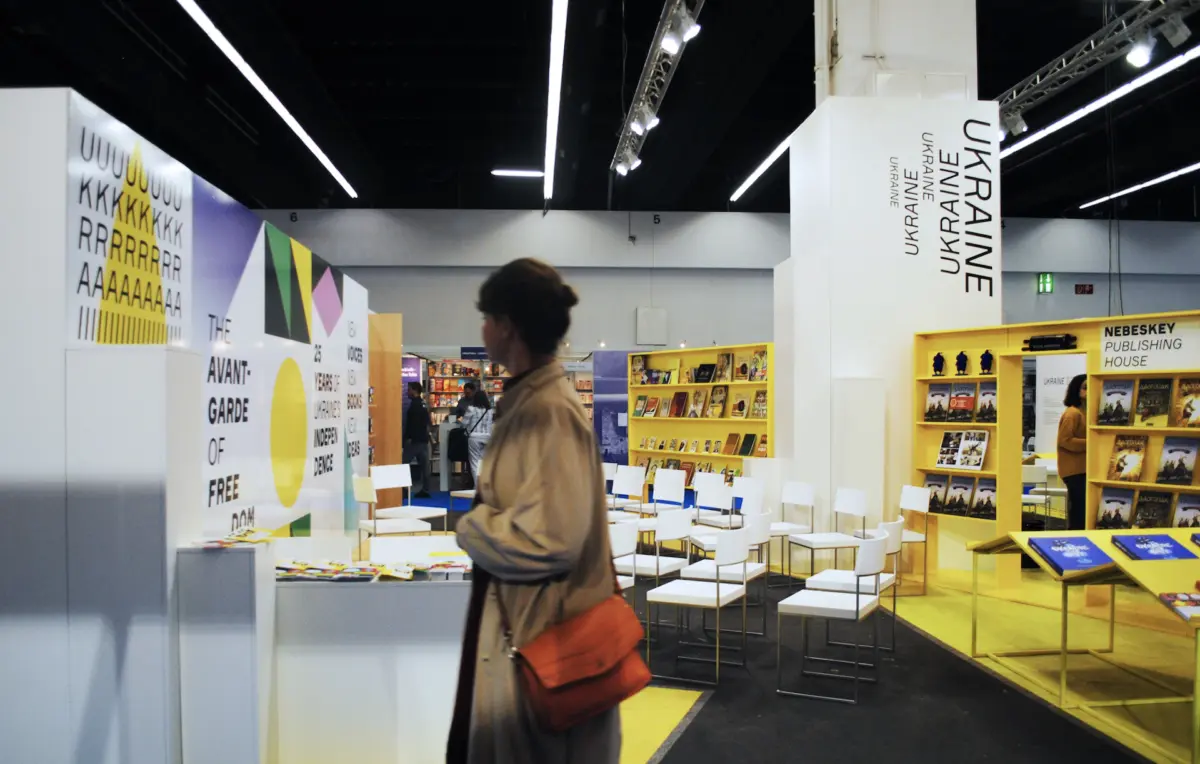
Through programs such as Translate Ukraine, the UBI has catalyzed global interest. In 2026 alone, the initiative supported the translation and publication of 100 Ukrainian titles spanning 33 countries. Furthermore, to combat the historical scarcity of qualified literary professionals, the Translating Ukraine Alliance Council works internationally to cultivate and train a new generation of translators specializing in Ukrainian-to-English conversions.
Global Publishers and Academic Strongholds
The footprint of Ukrainian literature abroad is expanding, spearheaded largely by independent presses. In North America, the Harvard Ukrainian Research Institute (HURI Books) stands as the preeminent institutional publisher, releasing rigorous academic scholarship alongside translated works of Ukrainian literature.
The Ukrainian Book Challenge
Moving beyond academia and institutional grants, grassroots mobilization has taken center stage via the Ukrainian Book Challenge. Initiated by HURI Books and championed by cultural figures like Dr. Volodymyr Yermolenko, president of PEN Ukraine, the campaign harnesses the power of social media and community networks.
The mechanics of the challenge are intentionally straightforward:
- Readers buy at least one book in English about Ukraine—or a translated work by a Ukrainian author—once a year.
- Participants post a photograph of their purchase on social media platforms using the hashtag #UkrainianBookChallenge.
- Participants tag five friends, challenging them to buy a Ukrainian book for their personal shelf, community center, school, or local public library.
As noted by scholars and organizers on the campaign’s official portal:
"Every book sold is a vote for Ukrainian culture, because what Russia’s war on Ukraine is really about is eradicating Ukrainian culture and erasing Ukrainian identity as a result."
Future Outlook: A Rich Heritage Claiming Its Global Stage
The war on Ukrainian culture is ultimately a war fought on the terrain of human memory and imagination. By attempting to incinerate millions of books and silence Ukrainian writers, the aggressor seeks to paint a picture of a nation without history, culture, or independent identity—a tabula rasa ripe for imperial annexation.
Yet, this strategy is failing. The quantitative metrics of survival—ranging from the 100 foreign-language translations supported across 33 countries in 2026 to the exponential rise of grassroots reading challenges—prove that Ukrainian culture possesses extraordinary resilience.
Publishers require hard sales data and sustained consumer demand to justify long-term financial investments in foreign literature. Initiatives like the Ukrainian Book Challenge and podcasts like The Ukraine Shelf provide precisely this momentum, turning casual readers into active participants in cultural preservation.
Ultimately, every translated volume placed on a library shelf or bookstore display alters the mental maps of the global public. It reframes Ukraine not merely as a frontline nation defined solely by war and suffering, but as what it has always been: a vibrant European state anchored in an ancient, rich, and unyielding cultural heritage.