Executive Overview
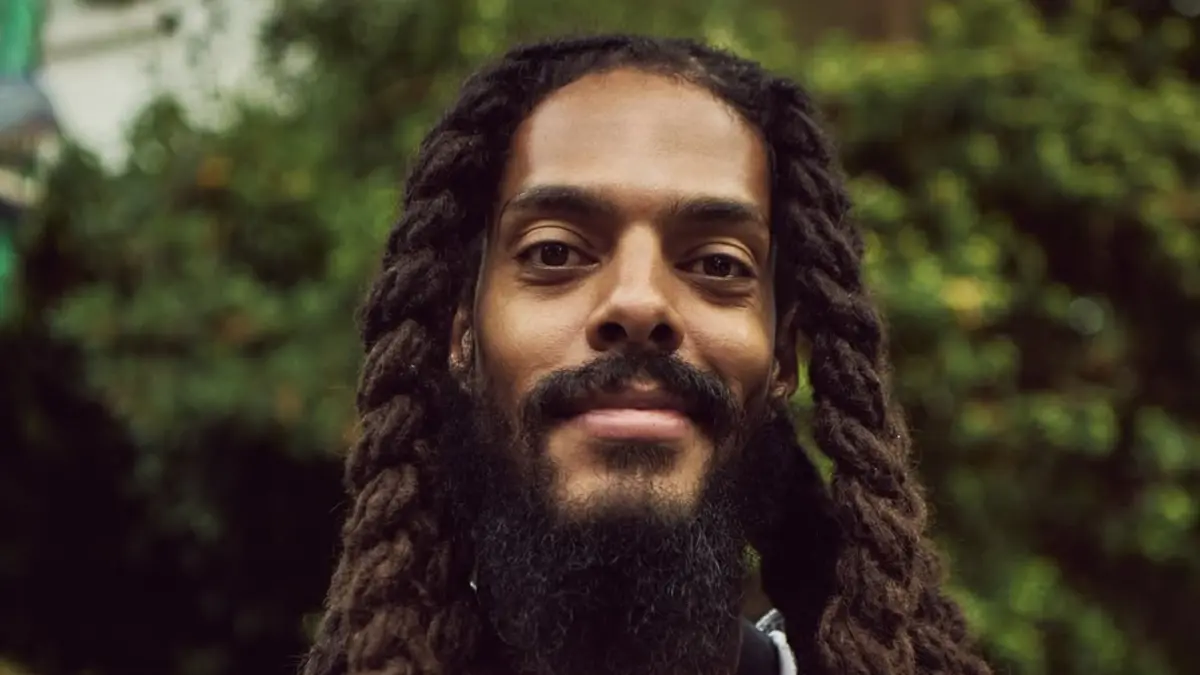
British punk-grime duo Bob Vylan—comprising frontman Bobby Vylan (born Pascal Robinson) and drummer Bobb Vylan—have successfully had a temporary travel ban to Germany lifted following a robust legal challenge. The ban, which came to light in June when Robinson was detained at a Berlin airport, denied entry, and swiftly deported back to the United Kingdom, was rooted in fierce international backlash over the band’s incendiary performance at the Glastonbury Festival.
During their live-streamed set at the prestigious UK festival, Robinson led concertgoers in politically charged chants, including "death, death to the IDF" and "from the river to the sea, Palestine must be free." These actions ignited a firestorm of global controversy, drawing accusations of antisemitism from various political groups and watchdog organizations—allegations that Robinson has vehemently rejected, subsequently launching defamation proceedings against specific critics.
While German federal police initially justified the entry prohibition by labeling Robinson a direct threat to public security and order—citing leaked internal documents that alleged the dissemination of "antisemitic narratives and Hamas propaganda"—the ban dissolved almost as quickly as it materialized. Faced with imminent legal action from the band’s representation and an absence of a viable domestic legal framework to sustain the prohibition, German authorities quietly reversed their decision.
This high-profile incident underscores the escalating tensions across Europe regarding freedom of expression, political dissent, and the legal parameters surrounding public commentary on the Israel-Hamas conflict. For Bob Vylan, the reversal is being heralded not merely as a personal victory for mobility, but as a critical judicial pushback against what they describe as institutional attempts to intimidate and silence artists advocating for Palestinian rights.
Detailed Chronology of Events
The Catalyst: Glastonbury 2025 and the Live BBC Broadcast
The sequence of events leading to Robinson’s detention in Berlin began months prior on the festival stages of Somerset, England. Bob Vylan, known as much for their blistering socio-political commentary as for their genre-bending musical output, took to the stage at the Glastonbury Festival. Amid a charged set, frontman Bobby Vylan addressed the audience regarding the humanitarian crisis and ongoing military actions in Gaza.
Guiding the tens of thousands in attendance, Robinson initiated call-and-response chants of "death, death to the IDF" (referencing the Israel Defense Forces) and the ubiquitous slogan "from the river to the sea, Palestine must be free." Because the performance was broadcast live to millions of households via the BBC, the audio-visual impact was instantaneous and polarizing.
While segments of the audience and progressive political allies praised the band for utilizing their platform to draw attention to Palestinian suffering, mainstream political figures, Israeli advocacy groups, and Jewish community organizations condemned the rhetoric. Critics argued that calling for the "death" of a national military force crossed the line from political critique into incitement, while the phrase "from the river to the sea" was denounced by many as an antisemitic dog whistle calling for the eradication of Israel.
The Berlin Airport Detention
The localized fallout from Glastonbury quickly transcended British borders. In June, Pascal Robinson flew to Berlin for a personal and professional trip to visit friends and musical collaborators. Upon touching down at a Berlin airport, however, he was intercepted by federal border and security officials.
Rather than being permitted to pass through customs, Robinson was temporarily detained in a holding facility, subjected to formal questioning, and informed that he was considered persona non grata under German immigration and public security directives. Without being allowed to enter the city, he was placed on a return flight to the United Kingdom.
The enforcement of the ban caught the band and their management off guard, prompting immediate inquiries into the legal mechanisms behind the exclusion. While initial explanations from local law enforcement vaguely referenced the Glastonbury performance, comprehensive details regarding the interdiction remained opaque until investigative journalists intervened.
Leaked Police Reports and the Intercept Investigation
The true scope of the German state’s rationale remained shielded until reporters at The Intercept obtained and published internal German police documentation detailing the decision-making process behind Robinson’s exclusion.
The leaked police file alleged that Robinson had disseminated "antisemitic narratives and Hamas propaganda" during his festival appearances. Furthermore, the dossier argued that the frontman’s on-stage rhetoric possessed the capacity to "radicalise certain segments of the population" within Germany and could potentially serve as an "ideological justification" for extremist groups or lone-actor terrorists. Consequently, the report concluded that Robinson constituted a tangible "threat" to Germany’s "public security and public order," serving as the legal cornerstone for the temporary travel restriction.
The Legal Counter-Offensive and Sudden Reversal
Armed with the contents of the leaked police file, Bob Vylan’s legal counsel immediately set out to challenge the validity of the exclusion order. Attorneys prepared a comprehensive filing for the German administrative courts, arguing that the border prohibition lacked substantive legal backing, violated European freedom of movement and expression principles, and relied on unfounded extrapolations regarding the musician’s political speech.
However, before the formal litigation could wind its way through the German court system, the federal police abruptly backed down. Recognizing the fragility of their evidentiary file and facing the prospect of a high-profile courtroom defeat that could expose systemic overreach, the authorities formally rescinded the travel ban. Bob Vylan was notified that all members of the duo were once again free to travel to Germany for both leisure and professional engagements without fear of detention or denial of entry.
Supporting Context & Metrics: Global Repercussions for the Duo
The German travel ban is just one node in a complex web of logistical and legal fallout that Bob Vylan has navigated in the wake of their 2025 festival appearances. The band’s uncompromising stance has triggered a cascading series of professional hurdles across multiple international jurisdictions:
- United States Visa Hurdles: In the months following the Glastonbury broadcast, the band encountered severe administrative delays and visa complications when attempting to secure entry into the United States for scheduled tour dates, largely attributed to heightened scrutiny over foreign nationals flagged for anti-militarist or politically sensitive rhetoric.
- Domestic and International Investigations:
- In the United Kingdom, police forces reviewed the Glastonbury footage following formal complaints. However, investigators ultimately determined that the on-stage comments did not meet the legal threshold required to pursue criminal charges under UK hate speech or public order statutes.
- In the Netherlands, Dutch prosecutors opened a parallel inquiry into similar pro-Palestine remarks made by Robinson during a live performance in Amsterdam. Much like their British counterparts, Dutch authorities concluded that criminal proceedings were unwarranted, preserving the boundaries of protected artistic expression.
- Defamation Counter-Actions: Standing firm against critics who labeled him an anti-Semite, Robinson initiated formal defamation proceedings in the UK against several commentators and public figures who made explicit claims linking his artistic persona to proscribed terrorist organizations.
- The Transnational Crackdown on Pro-Palestine Speech: Germany, in particular, has maintained some of the strictest legal and administrative postures in Europe regarding public demonstrations, slogans, and commentary concerning the Middle East conflict. The deployment of immigration controls against foreign artists reflects a broader European trend where national security apparatuses increasingly scrutinize cultural figures whose political expression touches upon sensitive geopolitical fault lines.
Official Statements and Responses
The resolution of the travel ban has prompted strong, reflective statements from both the band and observers monitoring the intersection of state power and artistic freedom.
Bob Vylan’s Official Statement
Upon receiving confirmation that the German federal police had dropped the ban, Bob Vylan released a joint statement articulating their perspective on the ordeal:
"Once the police file was received, it appeared there truly was no legal basis for denial of entry. Before our lawyers could formally file a case with the German courts, the police decided to remove the travel ban, allowing all members of Bob Vylan to travel freely to Germany for work and/or leisure.
This is once again another attempt to silence and intimidate those that oppose the ongoing genocide in Palestine. Forcing a reversal by the German authorities is a clear display of how important it is to challenge these intimidation tactics wherever they are found."
Pascal Robinson’s Response to Police Dossier Claims
Addressing the specific accusations leveled against him in the leaked German police report—namely, that he posed a threat to national security and propagated extremist talking points—frontman Bobby Vylan offered a direct rebuttal to The Intercept:
"It’s frankly absurd to suggest that I’m a threat to German national security. It’s equally absurd to claim that we spread propaganda on behalf of any proscribed organisation."
Legal scholars and civil liberties advocates have similarly weighed in, noting that while European nations possess legitimate mandates to combat genuine incitement to hatred and terrorism, stretching these definitions to encompass polemical punk rock performances risks establishing a dangerous precedent for censorship against touring international artists.
Future Outlook
With the German travel ban officially rescinded, Bob Vylan are poised to resume their international touring schedule without the immediate threat of border interdiction. The duo, celebrated for their high-energy live shows and unyielding socio-political ethos, intends to book upcoming European dates, including stops in Germany, to connect with their fan base.
Nevertheless, the episode leaves lingering questions regarding the long-term impact of geopolitical tensions on the global music industry. As governments across Europe grapple with how to regulate political discourse in the public square—and particularly cultural events broadcast across digital platforms—artists who utilize their stages for political protest find themselves operating in an increasingly precarious legal landscape.
For Bob Vylan, the successful defense of their mobility serves as both a vindication of their legal rights and a rallying cry for the broader artistic community. As they return to the studio and the stage, the duo’s standoff with European border authorities will likely remain a watershed moment in ongoing debates concerning free speech, state security, and the global politics of the Palestinian solidarity movement.