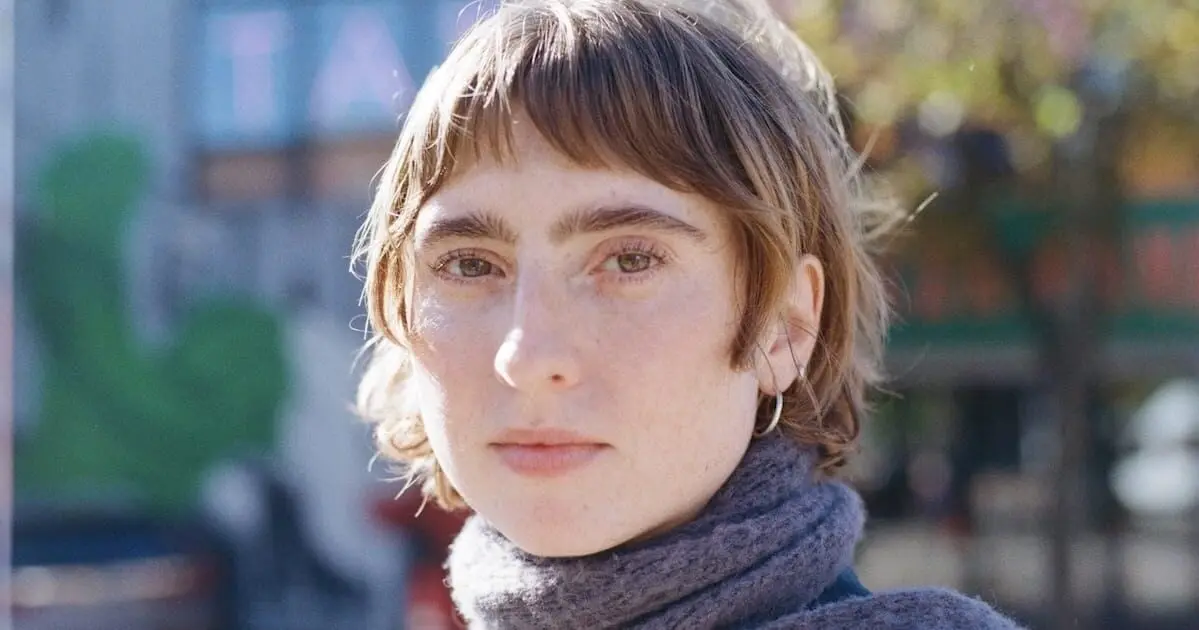
Executive Overview
In the contemporary landscape of independent music, where brevity and immediate gratification often dictate artistic trajectories, Toronto-based cellist, composer, and songwriter Kyla Marlena offers a compelling counter-narrative. With the impending release of her debut full-length album, Hold Time, arriving via Idee Fixe, Marlena steps out from the collaborative shadows of her classical pedigree to stake her claim as a singular voice in modern chamber-pop and contemporary classical-infused songwriting.
The campaign for Hold Time reaches its narrative and sonic crescendo with the release of her latest single, "In Paint." Accompanied by a striking visual co-directed, shot, and edited by Jo Hirabayashi, the track encapsulates the thematic architecture of the entire record: an obsessive, delicate, and ultimately cathartic examination of time, permanence, and the psychological weight of human behavioral patterns.
Derived from the opening lyric—"Mark my words in paint and make sure nothing changes"—the single explores the paradoxical human desire to halt the relentless progression of time while simultaneously yearning for personal transformation. Drawing deeply from her classical training and years spent as a ubiquitous touring and session collaborator, Marlena has constructed an artistic vehicle that is as structurally rigorous as it is emotionally volatile. As Hold Time prepares for its official release on Friday, November 6th, the music industry is taking notice of an artist whose technical proficiency is matched only by her fearless embrace of musical unpredictability. This report examines the genesis of "In Paint," the broader conceptual framework of Hold Time, Marlena’s transition from sideman to central auteur, and the cultural implications of her arrival on the Idee Fixe roster.
Detailed Chronology: The Road to Hold Time
The Classical Foundation and the Life of a Collaborator
Long before the conceptualization of Hold Time, Kyla Marlena’s musical identity was forged in the rigorous discipline of classical music. Trained as a cellist, Marlena spent formative years navigating the classical performance circuit, an environment that demands precision, technical mastery, and strict adherence to historical interpretations. However, her creative curiosity quickly spilled past the boundaries of the traditional orchestral canon.
Over the past decade, the Toronto music community has quietly relied on Marlena’s versatility. As a sought-after session player and live contributor, she has leant her rich tone, intuitive harmonic sense, and dynamic range to countless projects across various genres, ranging from indie rock to avant-garde composition. Yet, life as a collaborator often requires an artist to sublimate their own compositional voice in service of another’s vision. For Marlena, the accumulation of these experiences served as an extended residency—a behind-the-scenes masterclass in arrangement, production, and the realities of the touring ecosystem.
The Genesis of Hold Time
The pivot toward a solo career did not happen overnight; rather, it was a gradual distillation of ideas accumulated during late-night drives on tour, quiet moments in hotel rooms, and the introspective pauses forced upon artists during global periods of societal stasis. Marlena began conceptualizing what would become Hold Time with a clear objective: to merge the structural elegance of her classical background with the confessional immediacy of contemporary singer-songwriter traditions.
Signing with the influential independent label Idee Fixe provided the ideal institutional home for Marlena’s idiosyncratic vision. Known for championing artists who defy easy genre categorization—bridging the gaps between experimental pop, neo-classical, and art-rock—Idee Fixe recognized in Marlena an artist capable of executing a fully realized artistic statement right out of the gate.
The Rollout and the Arrival of "In Paint"
As the release date of November 6th drew closer, Marlena orchestrated a methodical rollout for Hold Time, designed to showcase the album’s multifaceted nature. Following early tastes of her compositional style, the release of "In Paint" serves as the definitive thesis statement for the record.
Released alongside an official music video co-directed by Jo Hirabayashi, "In Paint" immediately captured the attention of critics and peers alike. The track’s release strategy emphasizes both visual and auditory storytelling, establishing a symbiotic relationship between the lyricism of the song and the stark, moody aesthetics of the accompanying video. With physical LP editions and digital downloads made available for pre-order via Bandcamp, the release has positioned Marlena as one of the most anticipated new figures in Canadian independent music for the fourth quarter.
Supporting Context & Metrics: Analyzing the Sound and the Scene
The Architecture of "In Paint": Musical Dissonance and Psychological Tension
To fully appreciate "In Paint," one must examine how Marlena translates complex psychological states into physical instrumentation. The song takes its title and thematic impetus from its opening line: "Mark my words in paint and make sure nothing changes." It is a plea for permanence in a world governed by entropy.
In her own commentary on the track, Marlena articulates the core conflict of the song:
"‘In Paint’ is about the tension between wanting to outgrow our ingrained patterns and fearing the loss of control that comes with that, as well as the added complexity of navigating that alongside another person."
This tension is not merely a lyrical conceit; it is structurally embedded in the song’s arrangement. Marlena utilizes instrumentation as a psychological mirror. Throughout the track, the various musical elements operate with a calculated distance. As she notes:
"There’s a lot of unease and dissonance in that, which the instrumentation mirrors. We rarely play on top of one another, but there’s a constant sense, almost a threat, that we might."
This compositional restraint creates a palpable atmospheric anxiety. The listener is kept on edge, waiting for the musical safety net to fail. When that tension finally erupts in the final movements of the song, it functions not as a disaster, but as a long-awaited release. It is a moment of pure wish fulfillment where the music manages to resolve an emotional stalemate that the lyrics alone could not conquer.
The Toronto Independent Music Ecosystem
Marlena’s emergence must also be contextualized within the thriving, hyper-collaborative ecosystem of Toronto’s independent music scene. Toronto has long served as a fertile breeding ground for artists who blur the lines between classical composition and indie-pop sensibilities—think of contemporaries who draw on chamber arrangements and art-rock textures.
However, Marlena’s work stands apart due to the sheer authenticity of her orchestral integration. Her cello is not merely an auxiliary texture or a decorative sonic flourish layered on top of standard guitar-bass-drums arrangements; it is a foundational pillar of the songwriting process. The interplay between traditional song structures and avant-garde string arrangements gives Hold Time a cinematic scope that elevates it above standard singer-songwriter fare.
Official Statements and Artistic Vision
The transition from sideman to primary auteur requires a distinct psychological and artistic shift. In promotional materials and press notes accompanying the rollout of Hold Time, critics and label representatives have emphasized the remarkable degree of musical maturity Marlena displays on her debut.
Industry observers have noted that while many debut albums suffer from over-production or an uncertain identity, Hold Time exhibits a remarkable sense of self-possession. Marlena’s classical background has granted her a technical vocabulary that allows her to break rules effectively. She understands the conventions of harmonic progression and counterpoint well enough to subvert them intentionally.
In discussing the overarching themes of Hold Time, Marlena has frequently returned to the concept of time—not as an abstract, philosophical construct, but as a physical force that leaves wear, tear, and beauty in its wake. The album title itself is an imperative: a command to halt, to preserve, to examine a fleeting moment before it dissolves into memory.
This thematic obsession is mirrored in the visual component of "In Paint." Co-director, shooter, and editor Jo Hirabayashi worked closely with Marlena to capture the claustrophobia and release inherent in the song. The visual language of the video relies on prolonged framing, subtle lighting shifts, and intimate close-ups that mirror the song’s sonic spaciousness and sudden eruptions of energy.
Future Outlook: The Horizon for Kyla Marlena
As the calendar approaches November 6th and Hold Time makes its way into the hands of listeners and critics worldwide, the trajectory for Kyla Marlena shifts from anticipation to realization. The release of her debut album marks the end of her foundational chapter as a behind-the-scenes collaborator and opens the door to a prominent career as a solo recording artist and bandleader.
Commercial and Critical Projections
Given the critical warmth greeting singles like "In Paint," Hold Time is positioned to make a significant impact on year-end lists and critical roundups for independent music. Idee Fixe’s targeted distribution strategy—focusing on high-fidelity vinyl pressings and direct-to-fan engagement via Bandcamp—ensures that Marlena will cultivate a dedicated, loyal listenership among connoisseurs of sophisticated chamber-pop and contemporary classical crossover.
Live Performance and Tour Prospects
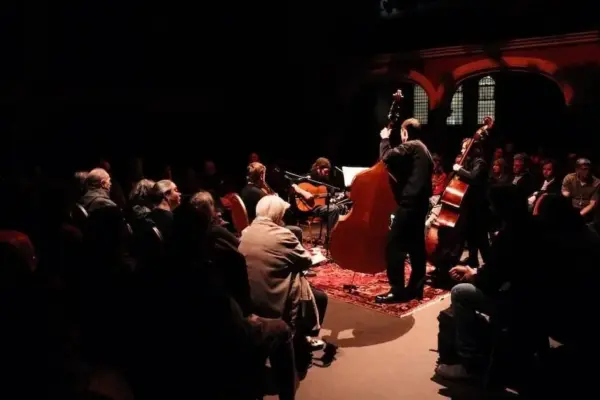
The natural next frontier for Marlena will be translating the intricate, emotionally dense arrangements of Hold Time into a live performance environment. Given the heavy reliance on dynamic tension, space, and string arrangements, her upcoming live iterations will likely present fascinating logistical and artistic challenges. Whether performing in intimate listening rooms, art galleries, or traditional concert halls, Marlena’s transition to the front of the stage offers audiences a rare opportunity to witness an accomplished instrumentalist claiming her rightful place in the spotlight.
In an era characterized by sonic transience, Kyla Marlena has built something meant to endure—etched, much like the lyrics of her breakthrough single, in paint.