Executive Overview
For over four decades, Thomas Harris’s chilling creation—the brilliant, cultured, and profoundly dangerous former forensic psychiatrist Dr. Hannibal Lecter—has held an unyielding grip on the global cultural imagination. While literary enthusiasts trace his origins back to Harris’s 1981 novel Red Dragon, it was Jonathan Demme’s landmark 1991 cinematic adaptation of The Silence of the Lambs that permanently scorched the character into the public consciousness. Anthony Hopkins’s iconic, lip-smacking delivery regarding liver, fava beans, and a "nice Chianti" established a gold standard for cinematic villainy that subsequent projects—ranging from Brett Ratner’s 2002 Red Dragon reboot to Bryan Fuller’s visually poetic NBC television series Hannibal (2013–2015) and CBS’s Clarice (2021)—have continually wrestled with.
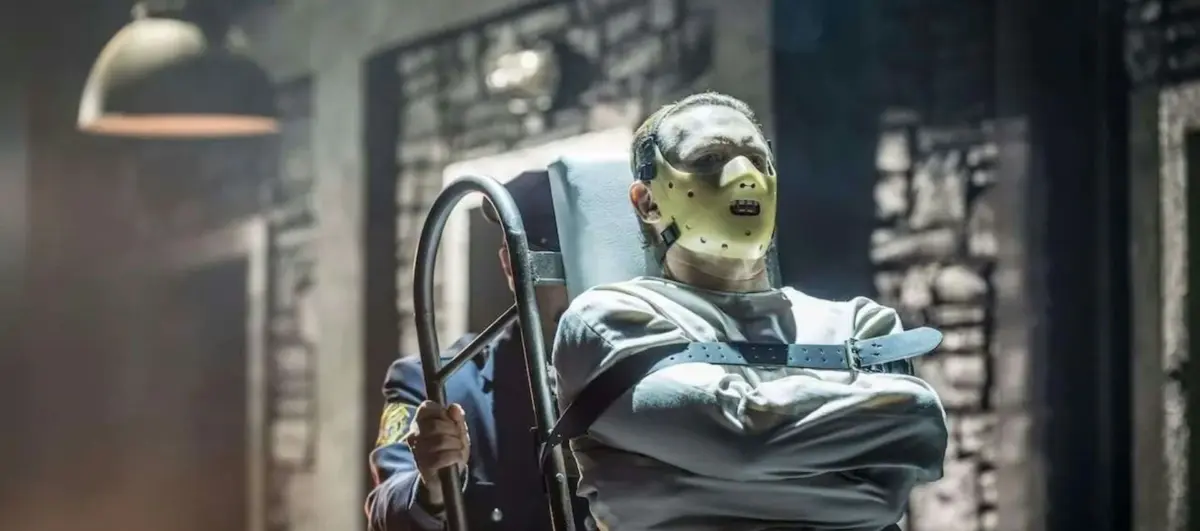
Now, in a bold and unprecedented theatrical evolution, The Silence of the Lambs has crossed the threshold from screen to stage. Currently embarking on a major UK and Ireland tour running from October 2026 through June 2027, this new stage adaptation tests whether the claustrophobic terror of federal manhunts and psychiatric wards can thrive in the immediate, breathing presence of a live audience.
Directed with a keen eye for multimedia integration and spatial fluidity, the production offers a fascinating case study in adaptation theory. It balances the "knowing expectations" of a fan base raised on Demme’s film with innovative staging techniques, striking psychological proximity between its leads, and a long-overdue tonal reimagining of one of horror history’s most controversial antagonists: the serial killer known as Buffalo Bill.
Detailed Chronology: The Evolution of a Cultural Phenomenon
To understand the weight and significance of the current theatrical run, it is vital to trace the lineage of Thomas Harris’s universe through its various media iterations.
- 1981: Thomas Harris publishes Red Dragon, introducing the world to Dr. Hannibal Lecter, an incarcerated serial killer consulted by the FBI to help catch another murderer, the "Tooth Fairy."
- 1986: Michael Mann directs Manhunter, the first cinematic adaptation of Red Dragon, featuring Brian Cox as an understated, clinical version of the doctor (spelled "Lecktor").
- 1988: Harris releases the sequel novel The Silence of the Lambs, focusing on FBI trainee Clarice Starling and her psychological chess match with Lecter to capture the skin-stealing killer Buffalo Bill.
- 1991: Jonathan Demme’s cinematic adaptation of The Silence of the Lambs sweeps the Academy Awards, winning the "Big Five" (Best Picture, Actor, Actress, Director, and Adapted Screenplay). Anthony Hopkins and Jodie Foster cement their places in film history.
- 2001–2002: Ridley Scott directs the cinematic sequel Hannibal (2001), followed by Brett Ratner’s remake of Red Dragon (2002), further solidifying Hopkins as the definitive face of the character.
- 2013–2015: Bryan Fuller reinvents the mythos for television with NBC’s Hannibal, starring Mads Mikkelsen and Hugh Dancy. The series focuses heavily on high-art aesthetics, surrealism, and the homoerotic subtext between Lecter and FBI profiler Will Graham.
- 2021: CBS attempts a procedural television continuation with Clarice, focusing on Starling’s post-Lambs career, though it struggles to find its footing and lasts only a single season.
- October 2026 – June 2027: The Silence of the Lambs makes its historic stage debut, touring major venues across the United Kingdom and Ireland, offering a fresh structural and psychological paradigm for the narrative.
Supporting Context & Metrics: Staging Psychological Terror
Adapting a story deeply reliant on rapid cinematic editing, sweeping cross-country investigations, and extreme close-ups into a fixed theatrical space presents immense logistical and artistic challenges. Yet, the production team has utilized theatrical artifice to conquer these limitations, employing advanced staging and multimedia elements to keep the narrative kinetic.
Spatial Fluidity and Mixed Realities
The production’s set design deftly maneuvers between disparate geographical locations without breaking the tension. Audiences are seamlessly transported from the sterile, high-security confines of the asylum where Lecter is housed, to the bustling, hyper-disciplined environment of the Quantico FBI training facility, to Jack Crawford’s tense office, and finally into the suffocating, subterranean darkness of Buffalo Bill’s house.
Rather than relying on clunky blackouts and heavy set changes, the staging permits characters to inhabit overlapping, symbolic worlds. In one of the production’s most arresting and psychologically charged sequences, Buffalo Bill—played by Sam Jackson—sits perched directly atop Hannibal Lecter’s cage, meticulously sewing his infamous skin suit while Clarice and Lecter discuss him below. This staging choice places Bill both physically and metaphorically hovering over the core dynamic of the story, visualizing his looming threat long before the final confrontation.
Multimedia Integration
To circumvent the static nature inherent in theatrical adaptations of novelistic source material, the production employs striking multimedia techniques:
- Case File Projections: Crucial psychological and forensic details of victims are cast in stark relief across the dark canvas of the stage, immersing the audience in the investigative mindset of the FBI.
- Transparent Screen Technology: During a pivotal sequence featuring a press conference held by Catherine Martin’s mother (played by Jo Mousley), her image is projected onto a fine, gauze-like screen suspended across the stage. As she speaks, the screen grows increasingly transparent, allowing the audience to simultaneously witness the ongoing dramatic action unfolding behind her. This layering prevents narrative bottlenecks and expands the emotional scope of the tragedy.
Official Statements and Critical Perspectives: Redefining Buffalo Bill
One of the most profound and widely discussed shifts in this theatrical adaptation lies in its treatment of the secondary antagonist, Jame Gumb, universally known as Buffalo Bill.
In Jonathan Demme’s 1991 cinematic adaptation, the portrayal of Buffalo Bill ignited immediate and fierce backlash from LGBTQ+ activist groups. Critics argued that the film weaponized queer and trans identities by conflating gender non-conformity, cross-dressing, and psychiatric pathology with murderous deviance.
At the height of the controversy, prominent voices within media advocacy organizations mobilized against the film. A representative from the LGBTQ+ media rights group GLAAD articulated the core grievance of the protest movement at the time, noting:
"He has a poodle named Precious, he sews, he wears a nipple ring, he has an affected feminine voice, and he cross-dresses. He completely promotes homophobia."
In the decades since, cultural criticism has increasingly re-evaluated this depiction through a modern lens, often diagnosing the character’s cinematic traits as leaning heavily into transphobia. The backlash was so potent that industry historians frequently view Demme’s subsequent 1994 film Philadelphia—a groundbreaking drama concerning the mistreatment of a gay man dying of AIDS—as a deliberate corporate and artistic apology to the LGBTQ+ community for the ripples caused by The Silence of the Lambs.
The Theatrical Pivot
Recognizing the regressive cultural baggage attached to previous iterations, this new stage production consciously steps back from the controversies of the 1991 film. Rather than relying on the coded tropes that framed Bill as predatory due to his gender expression, the play reimagines him through the lens of profound, arrested development.
On stage, Buffalo Bill is portrayed as fundamentally childlike. He is frequently depicted sitting cross-legged as if trapped in a classroom, or pacing the stage in his underwear—a visual motif that underscores his incomplete, fractured nature rather than serving as a malicious caricature. This subtle yet vital shift redirects audience pity and horror toward his psychological isolation and abuse, successfully detoxifying a narrative element that had long marred the legacy of the original film.
Performances: Balancing Homage and Innovation
The actors tasked with stepping into the legendary shoes of Hopkins and Jodie Foster face an unenviable burden of audience expectation. Yet, both John Partridge and Mollie Gallagher manage to honor their cinematic predecessors while carving out distinct physical and vocal identities.
- John Partridge as Hannibal Lecter: Pacing the stage with a predatory, feline agility, Partridge clearly relishes the role. While he drops knowing vocal nods to Hopkins—most notably in his clipped, mocking pronunciations of "F…B…I" and his chilling whisper of "Quid pro quo, Clarice"—he refuses to fall into simple mimicry. Partridge injects a restless physical energy into the doctor that contrasts sharply with Hopkins’s more stationary, calculating stillness, altering the physical dynamics of incarceration.
- Mollie Gallagher as Clarice Starling: Gallagher captures the distinct vocal cadence of Jodie Foster, maintaining a husky tone and regional inflection that pays homage to the film. This vocal choice holds thematic weight within the text, directly mirroring how Hopkins’s Lecter weaponized classism against Clarice, mockingly mimicking her West Virginian, Appalachian background and interrogating her working-class lineage ("What is your father, dear? Is he a coal miner?").
Furthermore, the physical proximity enforced by the stage alters the psychological dynamic between the characters. By housing them in close theatrical quarters, the production fosters an undeniable, claustrophobic tension and intimacy that was inherently distanced in the sweeping cuts of the cinematic medium.
Future Outlook: The Legacy of Lecter on Modern Stages
As The Silence of the Lambs continues its extensive theatrical tour across the UK and Ireland through mid-2027, its broader implications for literary and cinematic adaptation are clear.
While purists may debate whether the production breaks entirely new ground—given its necessary reliance on the iconic visual shorthand established by Demme’s film—its successes point toward a promising future for horror theater. By embracing multimedia projection, fluid spatial design, and socially conscious revisions of dated character tropes, the production proves that grand-scale thrillers can successfully transition from the silver screen to the boards of live theater.
For dedicated fans of Thomas Harris’s universe, the production offers a rare, visceral thrill: seeing a familiar nightmare re-animated with new blood, heightened theatricality, and physical immediacy. For newcomers unacquainted with the cinematic history, it stands as a taut, deeply engaging piece of dramatic storytelling that proves some monsters never truly die—they merely find new stages to haunt.