Executive Overview
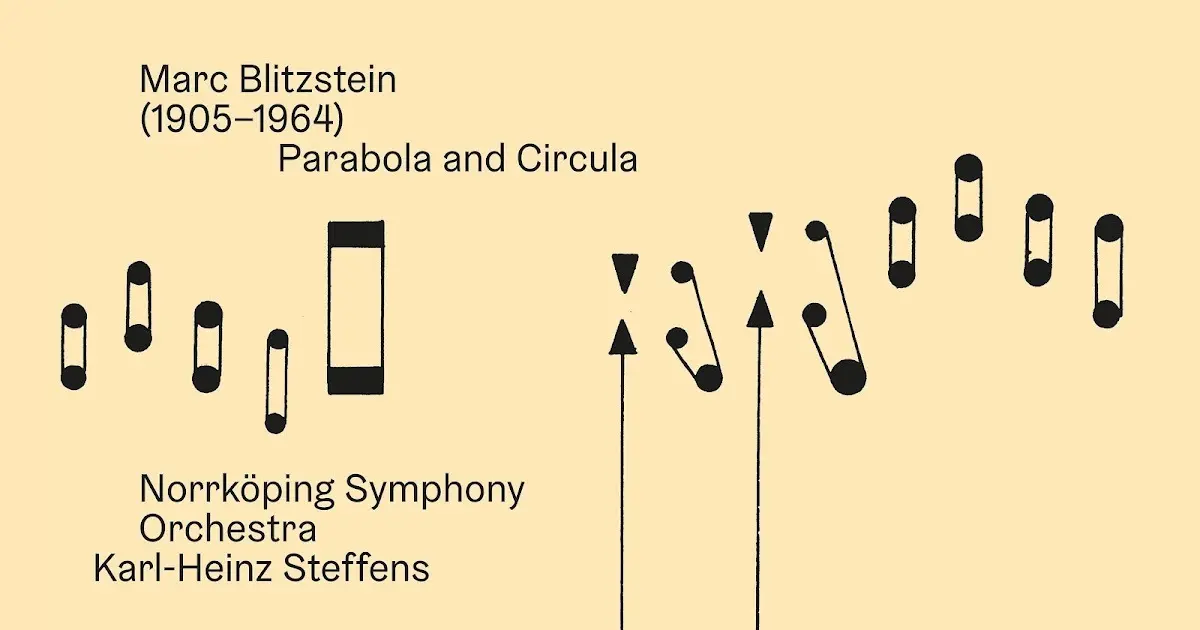
Nearly a century after its conception, a fascinating lost artifact of interwar American modernism is finally making its way to the global stage and into permanent audio documentation. On November 6, 2026, the prestigious classical label Capriccio will release the world premiere recording of Marc Blitzstein’s 1929 chamber opera, Parabola and Circula.
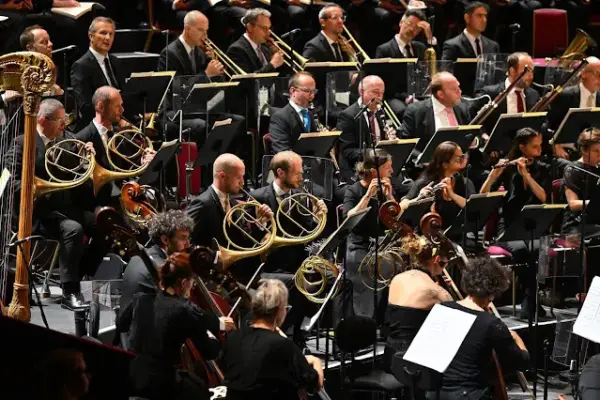
This long-awaited release captures the historic live performance given at the Berlin Philharmonie on September 21, 2025, during the renowned Musikfest Berlin. Conductor Karl-Heinz Steffens leads the Norrköping Symphony Orchestra, alongside vocalists Aleksander Nohr and Mari Eriksmoen, breathing vibrant life into a score that has languished in obscurity for nearly a hundred years.
More than just a recording of a forgotten opera, this release marks the inaugural launch of a sweeping new compact disc series curated by the Bauhaus-Archiv / Museum für Gestaltung. The initiative is designed to recover, document, and celebrate the rich, deeply intertwined, yet largely overlooked musical history of the legendary Bauhaus movement.
For musicologists, cultural historians, and lovers of 20th-century avant-garde art, the arrival of Parabola and Circula is nothing short of a revelation. It bridges a critical missing link between American modernist composition, European constructivism, and the theatrical experiments of the Weimar era.
Detailed Chronology: From Bauhaus Aspirations to 21st-Century Recovery
To understand the magnitude of Parabola and Circula, one must trace the timeline of its creation, its near-miss with history in Dessau, and the meticulous archival detective work that led to its 21st-century revival.
1927–1931: The European Apprenticeship of an American Modernist
Marc Blitzstein remains a towering yet strangely elusive figure in 20th-century music. While his name frequently evokes his 1937 pro-union masterpiece, The Cradle Will Rock, or his transformative English adaptations and translations of Kurt Weill and Bertolt Brecht’s The Threepenny Opera and Rise and Fall of the City of Mahagonny, his own substantial early output has remained largely shrouded in myth.
Having studied composition at the prestigious Curtis Institute of Music in Philadelphia, Blitzstein traveled to Europe to refine his craft. His journey included a notoriously brief and unsuccessful stint studying with Arnold Schoenberg in Berlin—where the two strong-willed musicians failed to find common artistic ground—followed by far more fruitful mentorship under the legendary pedagogue Nadia Boulanger in Paris.
Between 1929 and 1933, Blitzstein traveled extensively across the European continent, embarking on a notable concert tour of Germany alongside his close friend and contemporary, Aaron Copland. The music Blitzstein produced during these formative years was heavily colored by the prevailing currents of European modernism. Works such as his Piano Sonata (1927) and Piano Concerto (1931) exemplified a distinctly aggressive, "Boulanger-influenced" American modernism—music that Blitzstein himself famously characterized as "wild, dissonant, and percussive."
1929–1930: The Bauhaus Dream Deferred
It was precisely during this period of intense creative exploration that Blitzstein composed Parabola and Circula. Originally, the one-hour opera was slated for an ambitious world premiere in 1930 in direct collaboration with the avant-garde Bauhaus institution in Dessau.
Had the production gone forward, it would have stood as a premier testament to the interdisciplinary synergy between music, constructivist design, and avant-garde theater championed by the school. However, the political and administrative ground beneath the Bauhaus was rapidly shifting.
The year 1930 proved to be a watershed of instability for the school. Hannes Meyer was ousted as director of the Bauhaus, swept aside by mounting political pressures and ideological friction. He was succeeded by architect Mies van der Rohe, who systematically refocused the school’s mission away from sociopolitical and multi-disciplinary radicalism toward rigorous architectural instruction and design discipline. In the ensuing administrative chaos, Blitzstein’s collaborative production was shelved, the score tucked away, and the opera faded into virtual oblivion.
2023–2025: The Bauhaus Music Initiative and Modern Revival
Nearly a century later, the cultural tides shifted once again. Beginning in 2023, the Bauhaus-Archiv / Museum für Gestaltung embarked on an ambitious, multi-year research and performance initiative titled Bauhaus Music. Its core mission was to unearth, analyze, and perform the neglected musical dimensions of the Bauhaus legacy—a school historically celebrated for its architecture, typography, and visual arts, but whose sonic life has remained a blind spot in music history.
The inaugural 2023 festival commemorated the legendary Bauhaus Week of a century prior, showcasing masterworks by Igor Stravinsky, Paul Hindemith, Kurt Weill, and Stefan Wolpe. Following a successful 2024 edition centered on the topical theme of Freedom, the project reached its historical zenith in September 2025.
At the prestigious Musikfest Berlin, the Norrköping Symphony Orchestra, under the dynamic leadership of Karl-Heinz Steffens, took the stage at the Berlin Philharmonie to deliver the long-delayed world premiere of Parabola and Circula. The performance shattered nearly a century of silence, proving that Blitzstein’s youthful modernist experiment possessed enduring dramatic and musical viability.

Supporting Context & Metrics: The Anatomy of a Masterpiece
To fully appreciate the significance of this release, it is necessary to examine the artistic framework of the opera itself, as well as the institutional metrics driving the broader Bauhaus-Archiv campaign.
Plot and Aesthetic Structure of Parabola and Circula
Running approximately one hour in length, Parabola and Circula is a fascinating exercise in theatrical personification and geometric abstraction. Rather than utilizing human archetypes in a traditional narrative, Blitzstein sets his opera in an abstract universe populated entirely by geometric shapes.
The plot centers on a tragic love story between two fundamental mathematical entities: a parabola and a circle. Living in what initially appears to be idyllic domestic harmony with their adopted children, Rectangle and Point, the unconventional family unit soon faces external pressure. Their peer group begins to interrogate and critique their unconditional love, arguing forcefully that such devotion ultimately curtails the individual lovers’ independence and creative freedom.
As doubt begins to fester within Parabola’s psyche, the philosophical dispute spirals out of control, ultimately erupting into a structural and emotional catastrophe that culminates in Circula’s tragic death. Through this bizarre yet compelling premise, Blitzstein brilliantly bridges the cold precision of geometric abstraction with the visceral, redemptive human emotions that form the beating heart of musical theater.
Project Metrics and Timeline at a Glance
- Composition Date: 1929 (Originally planned for Dessau premiere in 1930)
- World Premiere Performance: September 21, 2025 (Musikfest Berlin, Berlin Philharmonie)
- Official CD Release Date: November 6, 2026 (Capriccio Label)
- Ensemble: Norrköping Symphony Orchestra
- Conductor: Karl-Heinz Steffens
- Principal Vocalists: Aleksander Nohr, Mari Eriksmoen
- Contextual Initiative: Inaugural release of the Bauhaus-Archiv New CD Series
- Upcoming Festival Highlight: Bauhaus Music 2026 Festival in Berlin (November 13–14, 2026), themed "I Feel Air from Another Planet"
Official Statements and Institutional Perspectives
The recovery and recording of Parabola and Circula represent a massive collaborative triumph between musicologists, cultural institutions, and international performing arts organizations.
While the project represents a milestone for Capriccio’s catalog—a label renowned for its dedication to unearthing rare repertoire and historical documentation—it stands as the crown jewel of the Bauhaus-Archiv’s ongoing rehabilitation of the school’s sonic history.
Speaking on the motivations behind the Bauhaus Music initiative, curators at the Bauhaus-Archiv / Museum für Gestaltung have consistently emphasized that sound, music, and acoustic experimentation were never peripheral to the Bauhaus mission; rather, they were embedded in its holistic approach to sensory perception.
The upcoming 2026 festival edition, scheduled for November 13 and 14 in Berlin, will continue this intellectual exploration under the motto "I Feel Air from Another Planet"—a direct nod to Stefan George’s poetry immortalized in Arnold Schoenberg’s Second String Quartet. This festival will specifically interrogate the complex interplay between music, color, movement, and human perception, themes that run directly through Blitzstein’s early work.
For conductor Karl-Heinz Steffens and the Norrköping Symphony Orchestra, mastering the idiom of 1929 American-in-Berlin modernism required navigating a dense thicket of percussive rhythms, shimmering string textures, and demanding vocal lines. Reviewers of the 2025 live premiere noted the remarkable cohesion the orchestra brought to a score that has no direct historical performance tradition to lean upon, establishing a definitive interpretive baseline through their collaboration.
Future Outlook: A New Era for Forgotten Modernism
The release of Parabola and Circula on November 6, 2026, is poised to trigger waves across the classical music recording industry and academic circles alike.
1. Broadening the Blitzstein Canon
For too long, Marc Blitzstein has been shoehorned into musical history as a footnote—either as the populist voice behind The Cradle Will Rock or as Kurt Weill’s principal American popularizer. By dragging his aggressive, avant-garde European period into the light, this recording shatters that flat, one-dimensional narrative. It forces music critics and historians to reckon with Blitzstein as an ambitious, internationally-minded modernist capable of engaging with the most radical artistic currents of the Weimar Republic.
2. The Legacy of the Bauhaus-Archiv CD Series
By anchoring this world-premiere recording as the flagship launch of a brand-new CD series, the Bauhaus-Archiv is establishing a permanent acoustic museum alongside its physical archives in Berlin. As the Bauhaus Music project continues to unearth forgotten scores, ballets, and incidental music generated within the orbit of Walter Gropius, Hannes Meyer, and Mies van der Rohe, this new recording series will serve as the definitive audio library for the movement’s sonic expressions.
3. Implications for Contemporary Programming
Orchestras and opera houses looking to diversify their repertoires away from standard 19th-century staples will find Parabola and Circula an enticing proposition. Running at a concise one hour, featuring a lean chamber-orchestra scoring, and offering a provocative conceptual narrative merging geometry and tragedy, the work is ideally suited for modern, black-box opera houses and progressive festival programming.
As the classical world counts down to the November 2026 release date, the resurrection of Marc Blitzstein’s geometric tragedy serves as a poignant reminder that history is never fully written. Buried in archives, waiting for the right ensemble, the right conductor, and the right institutional vision, masterpieces from the 20th century are still waiting to be born.