Executive Overview
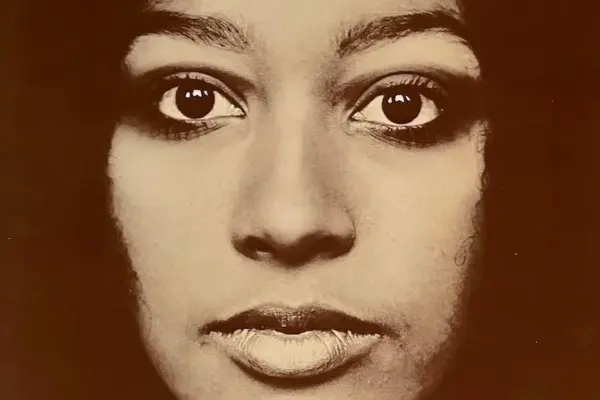
To generations of Northern Soul enthusiasts, the name Irma Thomas evokes a standard of vocal mastery that equals—and occasionally surpasses—her legendary contemporaries. Yet, despite an illustrious career spanning more than seven decades, Thomas has frequently been denied the mainstream international acclaim and commercial ubiquity enjoyed by peers such as Aretha Franklin, Etta James, and Gladys Knight.
Affectionately and accurately dubbed the "Soul Queen of New Orleans," Thomas possesses an instrument described by critics as possessing the "sadly sweet voice of a fallen angel." Her impact on the architecture of American rhythm and blues, soul, and roots music is profound, rippling through covers by global icons like The Rolling Stones and inspiring generations of British blues pioneers. From her early breakout hits on New Orleans independent labels to her Grammy-winning artistic triumph in the wake of Hurricane Katrina—and her recent 2025 collaborations with electro-funk powerhouse Galactic—Thomas’s journey is a masterclass in resilience, artistic integrity, and peerless vocal interpretation. This comprehensive retrospective examines the trajectory of a true American music royalty, interrogating why global commercial success routinely bypassed an artist universally revered by musicians themselves.
Detailed Chronology: From Ponchatoula Prodigy to Global Royalty
Early Beginnings and the New Orleans R&B Boom
Born in Ponchatoula, Louisiana, in 1941, Irma Thomas demonstrated prodigious vocal talent from an early age, quickly becoming a fixture in her local community. Her journey into professional music began at the remarkably young age of 13 when she auditioned for Specialty Records. Though that initial opportunity did not immediately yield a lasting partnership, it signaled the arrival of a generational voice.
It was local bandleader Tommy Ridgley who catalyzed her professional trajectory by securing her a recording contract with Ron Records, an independent label specializing in the burgeoning sounds of New Orleans R&B. Founded by Joe Ruffino to champion regional talent, Ron Records placed Thomas in stellar company, rubbing shoulders with luminaries such as Professor Longhair and Mac Rebennack—who would later find worldwide fame as Dr. John.
Thomas wasted no time establishing her identity. Her debut single, "(You Can Have My Husband But Please) Don’t Mess With My Man," peaked at No. 22 on the Billboard R&B chart. The track immediately showcased her artistic confidence, revealing a fully formed vocal persona that blended sharp, assertive lyrical delivery with deep, emotive phrasing.
The Imperial Years and the Rolling Stones Controversy
Seeking an even broader canvas, Thomas transitioned to the Minit label, where she collaborated with visionary producer and arranger Allen Toussaint. Toussaint penned the blues-soaked masterpiece "It’s Raining" (1962) for her. The following year, she recorded "Ruler Of My Heart," a composition by Aaron Neville that would subsequently be covered to great acclaim by Otis Redding and Norah Jones.
The year 1964 marked a commercial high-water mark, yielding four Top 100 R&B hits for Thomas on the Imperial label. This purple patch began with the heart-wrenching "Wish Someone Would Care," a track penned by a visibly distraught Thomas as her first marriage dissolved. Interestingly, the single was backed by the crisp, uptempo snare-drum shuffle of "Breakaway" (written by Jackie DeShannon and Sharon Sheely), which later became a major hit for Tracy Ullman.
Next came "Anyone Who Knows What Love Is (Will Understand)," co-written by Randy Newman—an emotional tour de force. It was backed by the gospel-infused "Time Is On My Side," a recording that would become inextricably linked with The Rolling Stones. The British rock icons copied Thomas’s arrangement note-for-note, right down to the spoken ad-libs, for their second album. In a cruel twist of fate, many casual listeners assumed Thomas had stolen the song from the Stones. The accusation deeply offended Thomas, prompting her to stubbornly refuse to perform the track live for decades.
Her 1964 chart run concluded with "Times Have Changed" and the standout track "He’s My Guy." During this era, Thomas’s popularity soared to the point where she was frequently cast on compilation albums as an R&B ambassador, her pristine recordings serving as the gold standard of the genre.
Label Shuffles and the Path to the Swamp
In 1968, Thomas recorded what would be her final R&B chart hit of the era: a cover of Otis Redding’s "Good For Me," cut at Muscle Shoals for the legendary Chess Records. Regrettably, her tenure with Chess was short-lived; a sustained partnership with a major label of that caliber could have profoundly altered her international profile.
Spells with Canyon, Roker, and Cotillion followed before she linked up with Swamp Dogg’s visionary Fungus Records. This partnership birthed the 1973 masterpiece In Between Tears, an idiosyncratic, immersive soul record that unfortunately languished in obscurity for far too long before finding the critical reappraisal it richly deserved.
Following a multi-year residency in Los Angeles, Thomas returned permanently to New Orleans. Alongside her husband, Emile Jackson, she opened her own nightclub, The Lion’s Den, regularly fronting the house band. Her ongoing integration into the city’s live circuit was bolstered by regular appearances at the New Orleans Jazz & Heritage Festival (established in 1970), cementing her local sovereignty and generating lucrative, steady live performance opportunities.
The Rounder Records Era and Hurricane Katrina
As the record industry shifted, Thomas continued to adapt. In 1978, she signed with Maison de Soul, releasing "Hip Shakin’ Mama" as a direct nod to the dancefloor, alongside Soul Queen Of New Orleans, an album updating her classic catalog for the disco era.
A pivotal career chapter opened in 1986 when Thomas signed with Rounder Records. This partnership yielded a succession of critically lauded albums, including The New Rules (1986), The Way I Feel (1988), Live: Simply The Best (1991), and True Believer (1992)—records that solidified her status as living blues royalty.
Then, in August 2005, catastrophe struck. Hurricane Katrina flooded 80 percent of New Orleans, destroying hundreds of properties, including The Lion’s Den. Amidst personal and communal devastation, Thomas channeled her grief into art. She entered Dockside Studios in Maurice, Louisiana, to record After The Rain. Her 18th studio album became a watershed moment: it won the Grammy Award for Best Contemporary Blues Album, making Thomas the first female artist to win the category since Etta James.
Supporting Context & Metrics
Cultural Resonance and Modern Adaptations
While commercial radio charts in the United States often failed to reflect her immense talent, Thomas’s footprint within popular culture remained indelible:
- The Black Mirror Effect: British satirist and writer Charlie Brooker championed "Anyone Who Knows What Love Is (Will Understand)," featuring the haunting ballad across seven pivotal episodes of the Netflix sci-fi anthology series Black Mirror.
- Collaborative Scope: Over the decades, Thomas has leant her voice to projects spanning diverse genres, from traditional blues with B.B. King to modern funk-jazz fusions with Galactic (exemplified by tracks like "Lady Liberty"). In 2011, she featured prominently on actor and musician Hugh Laurie’s blues tribute album, Let Them Talk, delivering a stunning rendition of the steel-driving song "John Henry."
- Global Influence: Icons such as Otis Redding, Mick Jagger, Bonnie Raitt, Boz Scaggs, and Eric Clapton have openly cited her as a foundational influence. Furthermore, music historians note that Thomas’s searing rendition of "I Need Your Love So Bad" served as the primary blueprint for Peter Green’s definitive 1968 recording with Fleetwood Mac.
Official Statements and Reclamations
The long-overdue reconciliation between Irma Thomas and her stolen history reached a poignant climax at Jazz Fest 2024. Invited to share the stage with The Rolling Stones, Thomas joined Mick Jagger to perform "Time Is On My Side"—the very track that provided the British band with their first stateside Top 10 hit sixty years prior.
During the performance, Jagger publicly and graciously acknowledged the band’s deep debt to Thomas, affording her the global platform to officially and symbolically reclaim the song as her own. It was a monumental moment of restorative justice within the annals of popular music history, closing a decades-old wound caused by music industry oversight and cross-Atlantic appropriation.
Future Outlook: The Everlasting Reign of "The Teacher"
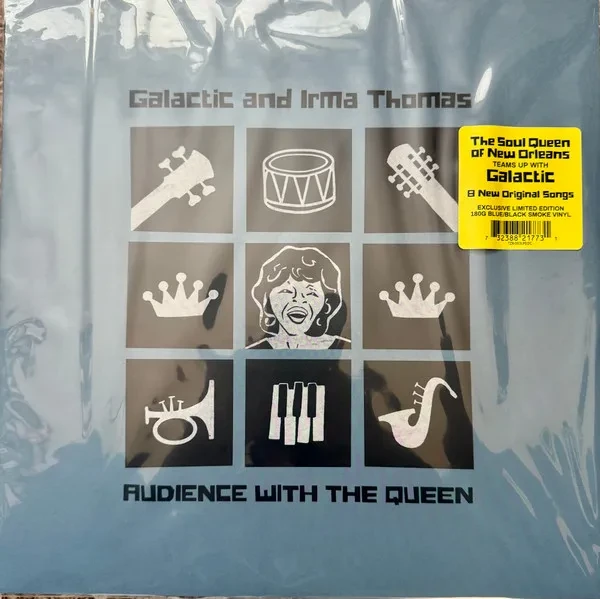
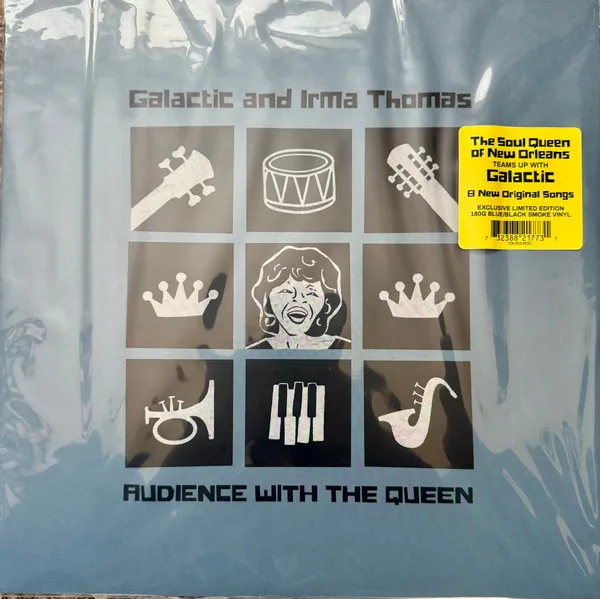
Far from resting on her laurels as a legacy act, Irma Thomas continues to push forward artistically. In 2025, she further expanded her boundary-pushing discography with the release of Audience With The Queen, a collaborative project with New Orleans electro-funk trailblazers Galactic, released via Tchoup-Zilla Records. This fusion of classic southern soul and forward-thinking modern grooves proves that Thomas’s artistic curiosity remains entirely unbowed by time.
Irma Thomas often refers to herself as "The Teacher," a title earned through decades of uncompromising vocal delivery, emotional transparency, and unflinching resilience. For any student of popular music seeking a definitive masterclass in how to command the architecture of rhythm and blues, the curriculum begins and ends with the enduring, majestic catalog of Her Majesty, Irma Thomas.