Executive Overview
The modern music industry is a hyper-accelerated ecosystem driven by viral hits, shifting streaming algorithms, and the constant demand for fresh content. Yet, beneath the glittering surface of stadium tours and Spotify charts lies a complex, often misunderstood engine room: music publishing. While artists and fans frequently obsess over the creative acts of writing and performing, the financial lifeblood of a composition—its royalties, licensing fees, and global micro-payments—depends entirely on the meticulous work of music publishers.
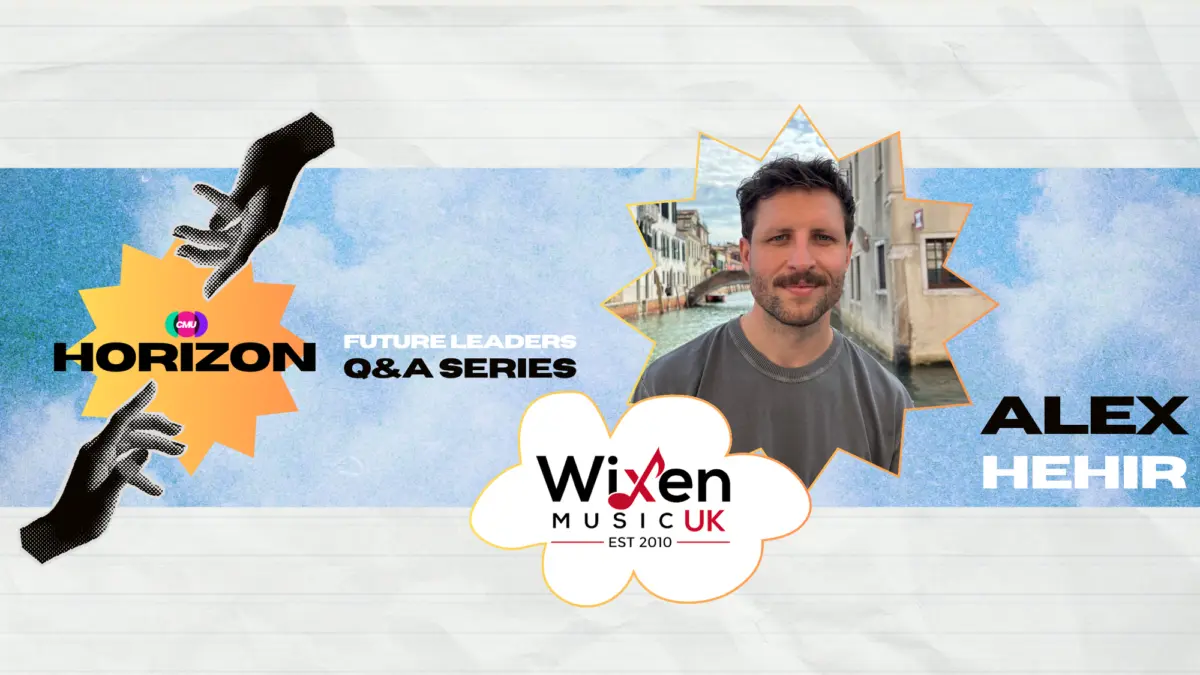
As part of the ongoing Horizon series, which connects with the music industry’s current and next generation of leaders, this publication sat down with Alex Hehir, Managing Director of Wixen Music UK. Operating as the UK arm of one of the world’s most respected independent music publishers, Hehir oversees client relationships, intricate data handling, royalty investigations, and artist-and-repertoire (A&R) strategies.
Known for its fierce artist-first ethos, Wixen Music UK punches above its weight through an internationally connected, tightly knit team. In this exclusive, wide-ranging interview, Hehir lifts the lid on a sector that is frequently shrouded in jargon. He shares candid insights into his unconventional career trajectory—ranging from loading gear at grassroots venues to coordinating festival operations—and offers actionable advice for early-career professionals aiming to thrive in an increasingly competitive landscape.
From navigating the evolving digital pipeline of global royalty collection to adopting a mindset of relentless advocacy, Hehir’s perspective serves as both a masterclass in business operations and a rallying cry for proactive, human-led artist support.
Detailed Chronology: From Grassroots Chaos to Managing Director
To understand where the music industry is heading, it is often instructive to look at where its leaders began. For Alex Hehir, a passion for music was the catalyst that sparked a lifelong career in the business, long before he ever looked at a publishing royalty statement.
The Grassroots Foundation
Hehir’s entry into the industry did not begin in a corporate boardroom or an elite legal office. Instead, it started at the grassroots level—quite literally—by frequenting and working at his local independent venue, the now-defunct White Rabbit.
"I guess my very earliest experiences didn’t feel like skill building at the time but were just born out of a hunger to be close to music as a fan," Hehir reflects. "Everything started at my local venue… which was the first step into what you might now call ‘networking’."
During his university years, Hehir deepened his practical involvement by founding a local promotion outfit with friends. Dubbed Above The Waves Promotions, the fledgling enterprise aimed to bring touring bands to Southampton. However, their baptism of fire arrived on the eve of their very first show.
"The day before our first show the venue owner went AWOL and closed without telling us," Hehir recalls. Demonstrating the resourcefulness that would later define his executive career, Hehir and his peers pivoted instantly. They repurposed a friend’s house, resulting in two punk bands playing chaotic, unforgettable sets straight out of a residential kitchen. "It became the silliest, most-fun gig in the world, but it was a real baptism of fire into the chaotic world of live events."
Branching Into Live Operations and Higher Education
While studying for a music business degree—which provided a broad structural overview of the industry, even if music publishing was barely touched upon—Hehir sought out hands-on experience across the live sector. He loaded venues, promoted gigs, managed festival operations, and even coordinated travel logistics.
This diverse background allowed him to secure a professional internship at Vision Nine, a prominent experiential marketing and events company. Working as an operations assistant for major UK festivals like Boardmasters and NASS, Hehir gained a holistic view of the entertainment machine.
"Seeing everything from who booked the headliners through to who planned where the fences would be placed on the site-map was eye-opening," he notes. Although these early roles were rooted in live entertainment rather than intellectual property rights, they forged an invaluable, multi-faceted understanding of how the broader entertainment industry operates.
Stepping Into Independent Publishing
Eventually, Hehir’s career converged with music publishing when he joined Wixen Music UK. There, he had the opportunity to learn under the mentorship of industry veterans, most notably company founder Randall Wixen. Rising through the ranks to become Managing Director, Hehir now leads a focused team of six, balancing high-level corporate strategy with granular data analysis and creative A&R development.
Supporting Context & Metrics: The Anatomy of Modern Music Publishing
Music publishing remains one of the least understood sectors of the entertainment business. While the public understands that record labels market recordings, the distinction between master rights (sound recordings) and publishing rights (underlying compositions and lyrics) frequently causes confusion.
The Royalty Pipeline
At its core, a music publisher’s primary duty is to protect, administer, and monetize compositions on behalf of songwriters and composers. According to Hehir, anyone wishing to enter the field must first master a singular, fundamental concept: understanding the pipeline from a song being written to a writer getting paid.
This pipeline involves tracking multiple streams of revenue across global territories, including:
- Mechanical Royalties: Generated when physical products (vinyl, CDs) or digital reproductions (streaming downloads, interactive streams) are made.
- Performance Royalties: Generated when music is broadcast, performed live, or played publicly in venues, bars, radio, television, and digital platforms.
- Sync Licensing Fees: Generated when a composition is synchronized with visual media, such as films, television shows, commercials, and video games.
- Print and Lyric Licensing: Generated through the reproduction of sheet music or digital lyric displays.
The Digital Challenge
In the modern digital landscape, the volume of data generated by global streaming has exploded exponentially. Music is being consumed, broadcast, and performed in more places than ever before—from TikTok trends to background streams in global retail chains.
Consequently, the primary challenge facing modern publishers is not just collecting money, but keeping track of where clients should be earning royalties amidst an ocean of unstructured data.
"This is where data handling has become crucial," Hehir explains. "As a company, we are always developing new tools to assist our work and ensuring we can capture and distribute good metadata."
However, Hehir issues an important caveat regarding automation and artificial intelligence in the workplace: technological tools are only as effective as the human intellect directing them.
"These tools can help us be more efficient and accurate, but only if we know where to point them. Nothing can beat intimate human knowledge of our writers and our catalogues. Energy is always best focused on understanding our clients, their songs, and their history."
Official Statements & Industry Insights
During our exclusive interview, the Managing Director of Wixen Music UK shared candid perspectives on leadership, career development, and the shifting dynamics of the contemporary music business. Below are key excerpts detailing his philosophy on talent development, professional networking, and industry trends.
On the Role of a Modern Managing Director
"I’m Managing Director of Wixen Music UK Ltd, an independent and creative music publisher and neighbouring rights representative. We work with artists, songwriters, publishing catalogues, musicians and labels to ensure they are compensated for the use of their music. Immaculate royalty collection is the central pillar of our work, and our creative proactivity serves to enable our clients to grow their income streams."
On Day-to-Day Operations
"We’re a small team with a broad remit and international network, so the cliché that every day is different is very true here. In my position specifically, I oversee various key areas: client relationships, data handling and delivery processes, royalty investigation, A&R discussions, and proactive outreach… There’s a real balance of creative and technical projects which keeps things fresh; after a busy week in the spreadsheets, there’s nothing better than sitting down and chatting about new music."
On Building a Professional Network
"Build a community of genuine connections. Be friendly, be open, and be dependable. Creating trust is probably the most important thing, so don’t offer to do something you don’t intend on following through with. The publishing sector is extremely collaborative; there will always be external writers and companies that you need to work with. Be helpful when someone needs something so that they’ll support you in return. Good people attract good people, always be kind. Finally, be a loud and vocal fan of music—it’s cool to be excited by what you work with."
On Grassroots Infrastructure
"It’s probably accurate to say it’s becoming increasingly competitive for a shrinking number of opportunities at established companies. But I think the flip side is that there are so many more independent companies, independent artists, and the teams around them that are desperate for proactive support. The opportunity might not be an internship or position at a large company anymore, but it can definitely be supporting a manager in their workload a couple of days a week or working with a new artist to handle one part of their world. Obviously, as someone who first started in a local music venue, I’d say it’s crucial these spaces stay open for nurturing artists and careers alike."
Future Outlook: Trends, Challenges, and Advice for the Next Generation
As the music industry looks toward the horizon, early-career professionals face a landscape defined by both unprecedented technological capability and profound economic pressure for creators.
The Return to Human Connection
As automated tools, synthetic media, and generative AI alter the production landscape, Hehir predicts that authentic human relationships will become even more valuable.
"Human connection is only going to become more important," Hehir states. "Artists will need teams around them that can help cut through the noise and connect with people."
Fervently Chasing Every Penny
Making a sustainable living as an artist or songwriter has never been easy, and economic pressures on creators continue to mount. In response, Hehir argues that the gold standard for a music publisher is unwavering advocacy.
"No musician I know ever got into music because they dreamed of scouring a spreadsheet for missing payments, so be the one to take that off their hands and give them the time and space to write, record, and perform. If everyone is equipped with the same tools and technology, then being the person that cares the most might be what sets you apart."
Actionable Takeaways for Newcomers
For those looking to break into music publishing or artist management, Hehir offers concrete recommendations:
- Target Your Experience: Align your skill set with your ambitions. If you are applying for a data-heavy royalty role, prioritize analytical competencies over creative portfolio pieces, and vice-versa.
- Engage with Industry Initiatives: Attend regional and national music conferences that prioritize education and accessibility. Hehir specifically highlights organizations and events such as Fast Forward (London), Sound City (Liverpool), and Launchpad (Leeds) as vital networking hubs for early-career professionals.
- Master the Fundamentals: Understand the comprehensive financial ecosystem of copyright, licensing, and distribution from end to end.
- Manage Personal Expectations: In Hehir’s final piece of advice—one that he wishes he had received at the start of his own journey—aspiring leaders should remain resilient. "Be inspired by your peers but don’t compare yourself harshly to them. Success in this industry certainly isn’t linear, and if you stay consistent you’ll be celebrating your own wins before you know it."
Combined with a practical productivity hack like tackling difficult tasks head-on ("Eat The Frog"), Hehir’s blueprint proves that sustainable success in the music business is built not on overnight viral moments, but on rigorous dedication, unwavering dependability, and a genuine, unyielding love for music.