Executive Overview
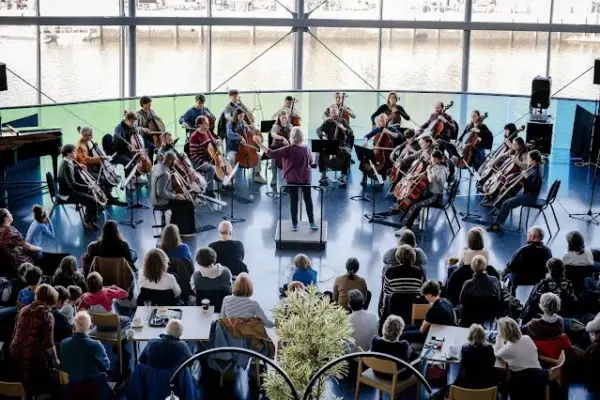
For thirty years, the Samling Institute for Young Artists has occupied a unique and vital space in the ecosystem of classical music, quietly yet profoundly revolutionizing the trajectory of early-career singers and collaborative pianists. Founded on the premise that raw vocal talent requires not just technical instruction, but deep theatricality, emotional resonance, and rigorous mentorship, Samling has grown from a visionary local initiative into a world-renowned institution. Its groundbreaking educational framework—most notably the Samling Academy—has fundamentally transformed the landscape for classical vocalists growing up in North East England, turning a historically underserved region into a crucible for international operatic and concert talent.
As the organization marks its monumental 30th anniversary, it does so not with quiet introspection, but with a vibrant, star-studded testament to its legacy. On Friday, November 6, Samling alumni and esteemed collaborators will descend upon London’s legendary Wigmore Hall for an anniversary gala performance. This landmark event encapsulates everything the Institute stands for: technical brilliance, uncompromising artistic integrity, and a pioneering integration of classical song and dramatic literature. Featuring a celebrated lineup of international soloists alongside the next generation of Samling scholars, and bolstered by the presence of award-winning actor Adrian Lester, the gala serves as both a celebration of past achievements and a powerful manifesto for the future of vocal art.
Detailed Chronology: Thirty Years of Vocal Innovation
The Genesis of a Vision (1996)
When the Samling Institute was established in 1996, the classical music landscape in the United Kingdom was heavily centralized. Aspiring young singers, particularly those hailing from regions outside the cultural hubs of London and the South East, faced immense structural barriers to entering the upper echelons of the profession. High training costs, a lack of access to world-class mentors, and isolation from major performance circuits meant that countless brilliant voices went undiscovered.
Samling was founded to bridge this gap. From its inception, the leadership recognized that masterclasses alone—often fleeting encounters with famous artists—were insufficient for deep artistic development. Instead, Samling pioneered an immersive, residential model. Young singers and collaborative pianists were brought together in a supportive, intensive environment where they could work undisturbed with master teachers, vocal coaches, and directors.
Expanding the Horizon: The Birth of the Samling Academy
As the masterclass programmes gained international acclaim, the Institute turned its attention closer to home. Recognizing that the journey of a classical singer begins long before conservatoire audition panels, Samling launched the Samling Academy.
Designed specifically for young people aged 14 to 21 growing up, studying, or living in North East England, the Academy dismantled geographical and socioeconomic barriers to elite classical training. Through regular sessions, workshops, and mentorship from Samling artists, the Academy provided local teenagers with a pathway that simply did not exist before. It fostered local talent, demystified the classical music industry, and proved that world-class artistic potential could flourish anywhere, provided the soil was properly tended. Over the past three decades, the Academy has directly impacted hundreds of young North Easterners, many of whom have gone on to grace the stages of the Royal Opera House, Glyndebourne, and major European opera houses.
The Integration of Drama and Text
A defining milestone in Samling’s institutional history was its radical departure from traditional vocal pedagogy. While most institutions treat acting as an afterthought—something to be layered onto a singer during opera staging rehearsals—Samling placed acting and close textual analysis at the absolute center of its teaching ethos.
This philosophy manifested in a structural innovation unique to Samling: every single intensive programme includes a distinguished stage actor on its leadership team. By treating art song and opera not merely as vocal exercises, but as dramatic monologues set to music, Samling taught generations of singers how to read between the lines of a score, understand the psychological underpinnings of poetry, and command a stage with the presence of a classical tragedian. This holistic approach has become the Institute’s trademark, earning it reverence among casting directors and conductors worldwide.
Supporting Context & Metrics: The Anatomy of a Milestone Gala at Wigmore Hall
The celebration on November 6 at Wigmore Hall is not merely a retrospective concert; it is a masterclass in programming that illustrates the transcendent power of music to tell stories, bridge epochs, and heal divisions.
Repertoire and Artistic Vision
The evening’s repertoire has been meticulously curated to showcase the multifaceted nature of the human voice and the collaborative synergy between singers and pianists.
- Franz Schubert – Shepherd on the Rock (Der Hirt auf dem Felsen, D. 965): This late masterpiece by Schubert requires extraordinary vocal agility, breath control, and expressive depth. The performance is elevated by the inclusion of guest clarinettist Eliott Berdugo, whose instrument acts as a literal and emotional counter-voice to the soprano, weaving a pastoral dialogue of haunting beauty.
- Antonín Dvořák – Gypsy Songs (Cikánské melodie, Op. 55): Featuring the iconic "Songs My Mother Taught Me," this song cycle demands an intoxicating blend of folk-inflected rhythmic freedom and soaring lyrical line, testing the expressive palette of the performers.
- Robert Schumann – Andersen Lieder, Op. 40: Setting the darkly romantic fairy tales and poetic visions of Hans Christian Andersen, Schumann’s cycle requires a profound psychological investment from the performers, perfectly aligning with Samling’s theatrical ethos.
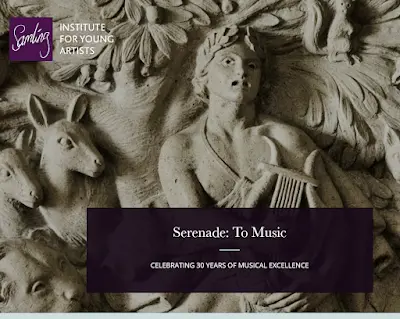
- Ralph Vaughan Williams – Serenade to Music: The evening reaches its emotional zenith with a special, intimate arrangement of Vaughan Williams’ ecstatic love letter to art itself. Scored here for eight solo voices and piano, this piece serves as a symbolic gathering of the Samling family, demonstrating how individual voices merge into a singular, harmonious community.
The Dramatic Thread: Adrian Lester and Poetry
True to Samling’s multidisciplinary DNA, the musical items are bound together by spoken word. Acclaimed stage and screen actor Adrian Lester—fresh from his triumph in the Royal Shakespeare Company’s production of Cyrano de Bergerac—serves as the evening’s dramatic anchor.
Lester, who earlier this year officially joined the Samling Artist Programme as a coach, curates a sequence of readings that parallel the themes of the musical works. His recitations feature masterworks of English and Irish verse by poets such as Andrew Marvell, Walter de la Mare, Seamus Heaney, and Carol Ann Duffy. By juxtaposing these texts with the Romantic and early 20th-century scores, Lester illuminates the shared poetic impulse that drives both actors and classical singers.

The Performers: A Tapestry of Talent
The roster for the Wigmore Hall gala reads as a roll call of international excellence and rising promise, demonstrating the complete pipeline of Samling’s educational model.
- Established Alumni:
- Nardus Williams (British Soprano): Known for her luminous tone and intelligent musicianship on opera and concert stages across Europe.
- Cláudia Ribas (Portuguese Mezzo-Soprano): Celebrated for her rich timbre and dramatic intensity.
- Euan McDonald (Scottish Tenor): A versatile lyric tenor making waves in both concert and operatic repertoire.
- Felix Gygli (Swiss Baritone): Recognized for his commanding stage presence and nuanced interpretations of German Lieder.
- Jonathan Ware (American Pianist) & Alfred Fardell (British Pianist): Two of the most sought-after collaborative pianists of their generation, whose artistry forms the bedrock of the vocal performances.
- Next-Generation Samling Academy Scholars:
- Tia Radix-Callixte (Soprano)
- Lauren Bagge (Mezzo-Soprano)
- Benedict Munden (Tenor)
- Fabian Tindale Geere (Baritone)
By placing these recent Academy graduates side-by-side with seasoned international alumni, Samling highlights the continuity of its tradition—a living, breathing chain of mentorship where excellence is passed directly from one generation to the next.
Official Statements and Institutional Perspectives
Reflecting on the thirty-year milestone, leadership and alumni alike emphasize the transformative, community-building nature of the Institute.
Kären4. Forsyth, Founder and Artistic Director of Samling Institute, noted in recent reflections on the anniversary:
"When we began thirty years ago, our goal was simple: to give talented young singers a sanctuary where they could pursue perfection without compromise. Over the decades, what has emerged is something much larger than us—a global family of artists who support one another, challenge one another, and carry forward a deep respect for text, truth, and music. To see our Samling Academy graduates sharing the stage at Wigmore Hall with artists who have conquered the world’s major opera houses is the ultimate vindication of our mission."
Actor and coach Adrian Lester, reflecting on his work with the Samling Artist Programme, underscored the critical intersection of acting and singing:
"The boundary between the spoken word and the sung word is entirely artificial. When a singer understands the emotional architecture of a poem the way an actor does, the music suddenly unlocks in a completely new dimension. Working with Samling’s young artists is a profound privilege because they possess not just extraordinary vocal instruments, but a fierce, genuine hunger to understand the human stories behind the notes."
Future Outlook: The Next Thirty Years of Vocal Stewardship
As the Samling Institute for Young Artists steps past its third decade, its mission is more critical than ever. In an arts funding climate that is increasingly volatile—particularly in regional areas of the United Kingdom—institutions like Samling serve as essential cultural lifelines.
Looking forward, the Institute has committed to expanding its outreach through the Samling Academy, ensuring that young people in North East England continue to receive world-class mentorship regardless of their socioeconomic background. Plans are underway to deepen international artistic exchanges, expand digital masterclass initiatives to reach rural schools, and further integrate cross-disciplinary training involving drama, literature, and movement.
The anniversary gala at Wigmore Hall is not a monument to the past; it is a launchpad. It proves that classical vocal art, when taught with rigor, empathy, and theatrical imagination, remains one of the most powerful mediums for human connection. As the final notes of Vaughan Williams’ Serenade to Music echo through Wigmore Hall on November 6, they will carry not just the history of thirty remarkable years, but the ringing promise of countless voices yet to be discovered.
For full event details, ticket information, and to learn more about the legacy of the Samling Institute for Young Artists, visit the official Samling Website.