Executive Overview
Electronic music has long mined the past for texture, nostalgia, and emotional resonance. Yet, few contemporary producers possess the geographical trajectory, classical conservatory training, and lived resilience required to bridge the gap between early 20th-century Arabic musical traditions and cutting-edge sound design. Enter Jana Saleh, a Beirut-born, London-based multi-instrumentalist, producer, and composer whose debut album, I Only Have Eyes For You, stands as a monumental achievement in modern experimental electronica.
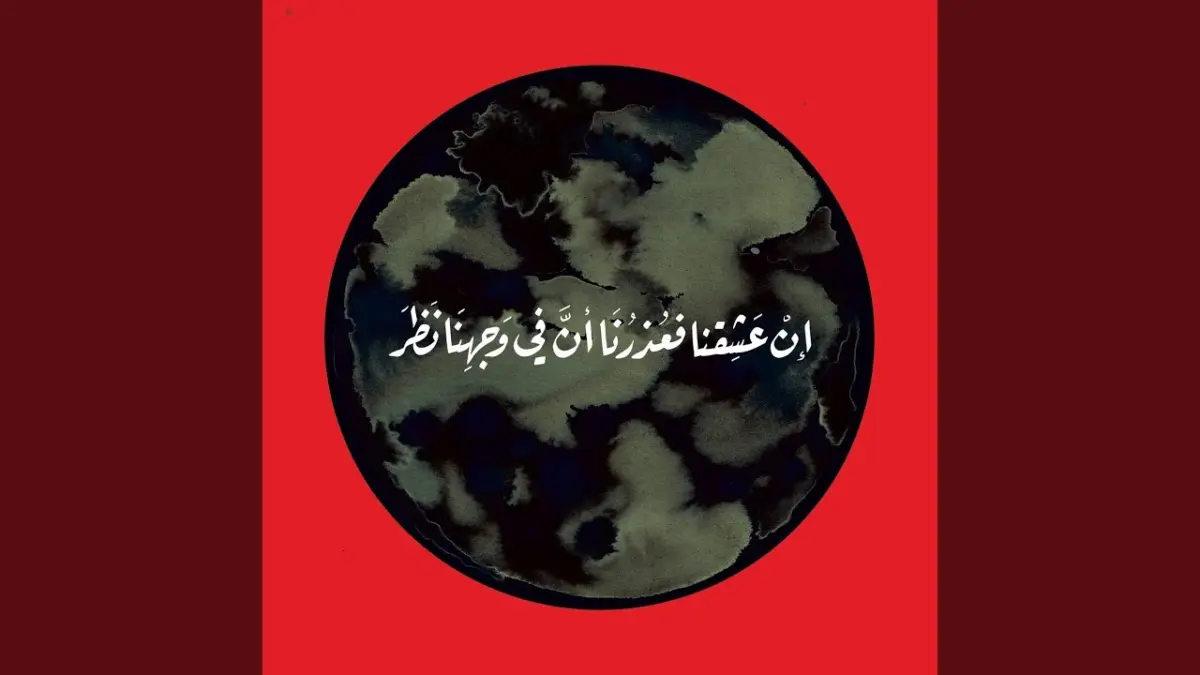
Released on October 15 via the London-based independent label Mais Um, the album is a continuous, 32-minute sonic odyssey divided into seven interconnected movements. Its opening salvo, “Al Maktaa al Awwal (Verse 1)”—which translates directly to "the first section"—serves as both an artistic manifesto and an emotional anchor. Built around a rare, ghostly vocal fragment of the legendary Egyptian singer and composer Mohamed Abdel Wahab pulled from the 1933 musical film al-Warda al-Baida (The White Rose), the track sets the tone for an album that interrogates memory, displacement, and the transcendent mechanics of tarab.
Tarab—the state of musical ecstasy and communal rapture achieved when performers and listeners feed off one another in a shared physical space—has traditionally been the exclusive domain of acoustic ensembles and live vocalists. Saleh’s radical intervention is to translate this organic, unquantizable emotional state into the synthesized language of drum machines, modular synthesizers, and computerized sound staging.
This release is not merely an exercise in archival curation or nostalgic pastiche; it is the culmination of a four-decade life journey defined by displacement, rigorous classical mentorship, high-level music technology development, and survival against the backdrop of geopolitical catastrophe. With production credits that span experimental electro-acoustic touring in North America, indie-rock co-production in Beirut, and now avant-garde club music in the UK, Saleh has crafted one of the most intellectually rigorous and sonically arresting debut albums of the decade.
Detailed Chronology: From the Conservatories of Beirut to the Studios of London
To understand the intricate architecture of I Only Have Eyes For You, one must trace the winding, geographically dispersed trajectory of its creator. Jana Saleh’s story is one of continuous reinvention across borders, institutions, and sonic mediums.
Formative Years in Beirut and Classical Rigor
Born in Beirut in 1980, Saleh was immersed in a city of deep cultural contradictions—one caught between cosmopolitan artistic vibrancy and the scars of ongoing conflict. Displaying an early and prodigious aptitude for music, she began formal piano training under Boghos Gelalian.
Gelalian was no ordinary instructor; as the esteemed musical adviser to the Rahbani brothers—the legendary songwriting and composing duo who largely shaped the monumental repertoire of Fairuz—he transmitted a deep, uncompromising understanding of Middle Eastern modal structures interwoven with Western classical discipline. Under Gelalian’s tutelage, Saleh developed a formidable technical foundation that would later allow her to deconstruct the very traditions she was taught to master.
The Berklee Experiment and North American Odyssey
Seeking to expand her technical vocabulary into the realm of modern film scoring and sound synthesis, Saleh relocated to the United States to attend the prestigious Berklee College of Music in Boston. This transition marked a pivotal shift from traditional acoustic composition to the frontiers of electronic sound generation.
Following her time at Berklee, Saleh spent a transformative decade based in New York City. During this period, she operated at the intersection of avant-garde computer music and commercial Caribbean genres. She toured North America as part of an innovative electro-acoustic duo alongside Richard Boulanger, a pioneer of Csound—the pioneering computer music programming language developed at MIT and Bell Labs. This collaboration forced Saleh to master the mathematical and algorithmic underpinnings of digital synthesis, treating frequencies and waveforms as plastic materials to be molded by hand.
Simultaneously, Saleh applied her organizational and administrative acumen within the music industry, running new media operations for VP Records, the iconic reggae and dancehall label based in Queens, New York. This dual life—performing academic, highly technical computer music by night while steering digital strategies for global roots music by day—forged her unique capacity to bridge high-concept sound art with infectious rhythmic propulsion.
Return to Beirut, the B-ROOT Studio, and the 2020 Disaster
Drawn back to her Mediterranean roots, Saleh returned to Beirut, a city experiencing a vibrant independent music renaissance. She established B-ROOT, a recording studio that quickly became a vital creative hub for Lebanon’s burgeoning alternative scene. In addition to her solo work and DJ residencies across Beirut’s underground clubs, Saleh lent her production expertise to the wider ecosystem, co-producing the debut album of Mashrou’ Leila, the indie-rock band that would go on to achieve international acclaim.
However, this golden era of creative output was abruptly shattered on August 4, 2020. The catastrophic Beirut port explosion—one of the largest non-nuclear explosions in history—devastated vast swathes of the city. Saleh’s home and her beloved B-ROOT studio were caught in the blast radius, resulting in the total destruction of her physical workspace, vintage equipment, and personal archives.
Rebuilding in London and Radio Al Hara
Displaced by the tragedy, Saleh relocated to London later in 2020. Stripped of her physical studio but armed with her laptop, her technical expertise, and an unyielding resolve, she began rebuilding her creative practice in the British capital.
Integrating into London’s diverse electronic underground, she established a monthly residency on Radio Al Hara, the independent online radio station that has served as a vital cultural lifeline for the Arab diaspora and global avant-garde communities. It was within this period of post-traumatic dislocation and metropolitan adaptation that the blueprints for I Only Have Eyes For You were drawn.
Supporting Context & Metrics: Deconstructing Tarab and Technical Craft
The intellectual engine driving Saleh’s debut album is an intensive, multi-year research project into the mechanics of tarab. To fully grasp the audacity of her project, one must understand what tarab represents within Arabic musical culture.
The Science of Tarab
Unlike Western musical traditions, which often prioritize fixed compositions and harmonic progression, tarab is an interactive, participatory state of ecstasy. It occurs when a master vocalist (such as Umm Kulthum or Sabah Fakhri) and their accompanying instrumental ensemble (playing instruments like the oud, nay, or kanun) engage in a feedback loop of emotional escalation with the audience. As the singer stretches a microtonal note or improvises a vocal ornament (mawal), members of the audience audibly respond (tarab), prompting the musicians to push further into rhythmic and melodic improvisations. The room becomes a singular, living organism.
Replicating this acoustic alchemy inside the sterile, rigid grid of a digital Digital Audio Workstation (DAW) presents an immense technical hurdle. How do you program a sequencer to capture the human wobble of longing, the unquantizable rubato of a heartbroken vocal line, or the collective breath of a packed concert hall in 1933 Cairo?
The Versions EP as a Testing Ground
Saleh first tested her hypothesis on her critically acclaimed Versions EP. For that project, she systematically took apart rare, archival live recordings of mid-century Arab icons—including Umm Kulthum, Zaki Nassif, and Sabah Fakhri. Rather than simply sampling them for a standard dance beat, she forensically analyzed their audio stems, isolating the raw vocal deliveries and crowd reactions. She then rebuilt entire sonic worlds around them using her own analog synthesizers, acoustic percussion, live drums, and deep sub-bass frequencies.
The EP proved that historical Arabic vocal performances could be successfully transplanted into contemporary electronic frameworks without losing their emotional gravity.
I Only Have Eyes For You and "Al Maktaa al Awwal (Verse 1)"
This methodology reaches its zenith on I Only Have Eyes For You. The album functions as a single, uninterrupted 32-minute listening experience, divided into seven movements.
The opening movement, “Al Maktaa al Awwal (Verse 1),” introduces the listener to this world. The track is built around a salvaged vocal fragment of Mohamed Abdel Wahab—the titan of Egyptian cinema and song—originally recorded for the 1933 musical film al-Warda al-Baida (The White Rose). Saleh specifically lifted the vocal from “Gafnouhu Allam Al Ghazal,” a timeless romantic composition featuring lyrics by the renowned Lebanese poet Bechara Al Khoury.
The word ghazal in the song’s title references the classical Arabic poetic form dedicated to themes of beauty, intense longing, and the agonizing ache of separation from a beloved. Saleh mirrors this thematic sorrow through her instrumental arrangement. Every synth pad, programmed drum pattern, and bassline was performed and programmed entirely by Saleh herself, creating a ghostly dialogue across nearly a century. The voice of Abdel Wahab floats above a hypnotic, contemporary rhythmic chassis, sounding at once ancient and resolutely futuristic.
Production and Release Architecture
Released on October 15 via Mais Um, the album has been strategically curated for multiple listening environments. Understanding the dual life of modern electronic music—where listeners oscillate between headphone introspection and warehouse club immersion—the label issued the project in three distinct formats:
- The Album Version: The continuous 32-minute suite designed for deep, immersive listening.
- The Club Edit: A streamlined, rhythm-forward iteration optimized for sound systems and DJ sets.
- The Radio Edit: A concise encapsulation tailored for broadcast media.
The meticulous sonic fidelity of the release is the result of a transatlantic collaboration. Alex Venguer, renowned for his pristine mixing work across acoustic and electronic genres, handled the mixdown, ensuring that the fragile, historic vocal stems sat comfortably alongside heavy, modern sub-frequencies. The mastering was executed by Oscar Zambrano, whose acute attention to dynamic range preserves the microtonal nuances of the Arabic vocals while delivering the punch required for contemporary club spaces.
Official Statements and Critical Reception
The arrival of I Only Have Eyes For You has sent ripples through the international experimental music community, drawing praise for its fearlessness, technical sophistication, and emotional depth.
While full-length official statements from the artist remain focused on the immersive, tactile experience of the music itself, production notes provided by Mais Um emphasize the album’s core thesis:
"Saleh’s work does not merely sample the past; it communes with it. By dissolving the boundaries between archival Middle Eastern acoustic performance and modern electronic sound design, I Only Have Eyes For You asks how memory survives physical and geopolitical destruction."
Music critics and curators have similarly lauded Saleh’s ability to bypass the tired tropes of "oriental electronic fusion"—a genre that has historically relied on superficial exoticism or lazy Orientalist tropes. Instead, critics note that Saleh approaches Arabic musical heritage with the rigor of an ethnomusicologist, the technical mastery of a computer music pioneer, and the raw vulnerability of an artist who has survived the destruction of her home.
The single "Al Maktaa al Awwal (Verse 1)" has received early critical acclaim on independent radio networks across Europe and the Middle East. Reviewers have highlighted the track’s uncanny ability to evoke tarab within a four-on-the-floor framework, noting that Saleh’s synthesizers mimic the weeping bends of traditional stringed instruments, creating a seamless bridge between the Cairo of 1933 and the London underground of 2024.
Future Outlook: A New Paradigm for Arab Electronic Music
As Jana Saleh looks toward the future, the release of I Only Have Eyes For You marks a defining milestone in a career defined by restless innovation. By successfully mapping the emotional contours of tarab onto modular synthesizers and club-ready drum programming, she has opened up an entirely new methodological playbook for producers working at the intersections of non-Western musical heritage and Western electronic music infrastructure.
The implications of Saleh’s work extend far beyond her own discography. In an era where global electronic music scenes are increasingly seeking alternatives to Eurocentric club tropes, artists from the Global South are reclaiming their archives not as static museum exhibits, but as living, malleable building blocks for future sound systems.
With her monthly residency on Radio Al Hara continuing to serve as a laboratory for new sonic explorations, and with I Only Have Eyes For You establishing her as a major force in experimental electronic music, Saleh is poised to take her immersive live sets on the road. For listeners lucky enough to witness her translate these multi-movement suites from the studio to the stage, one thing is certain: the ancient ache of the ghazal has found a powerful, enduring home in the digital age.
Listeners can stream and purchase "Al Maktaa al Awwal (Verse 1)" directly via Bandcamp, and pre-order the complete album, I Only Have Eyes For You, at this link.