Executive Overview
The intersection of rock-and-roll provocation and corporate brand protection has once again yielded a high-stakes legal showdown. Legendary emo-rock outfit My Chemical Romance (MCR) recently found themselves at the center of an intellectual property dispute initiated by Pro Silver Star, the corporate management entity that oversees the world-famous Dallas Cowboys Cheerleaders (DCC) brand.
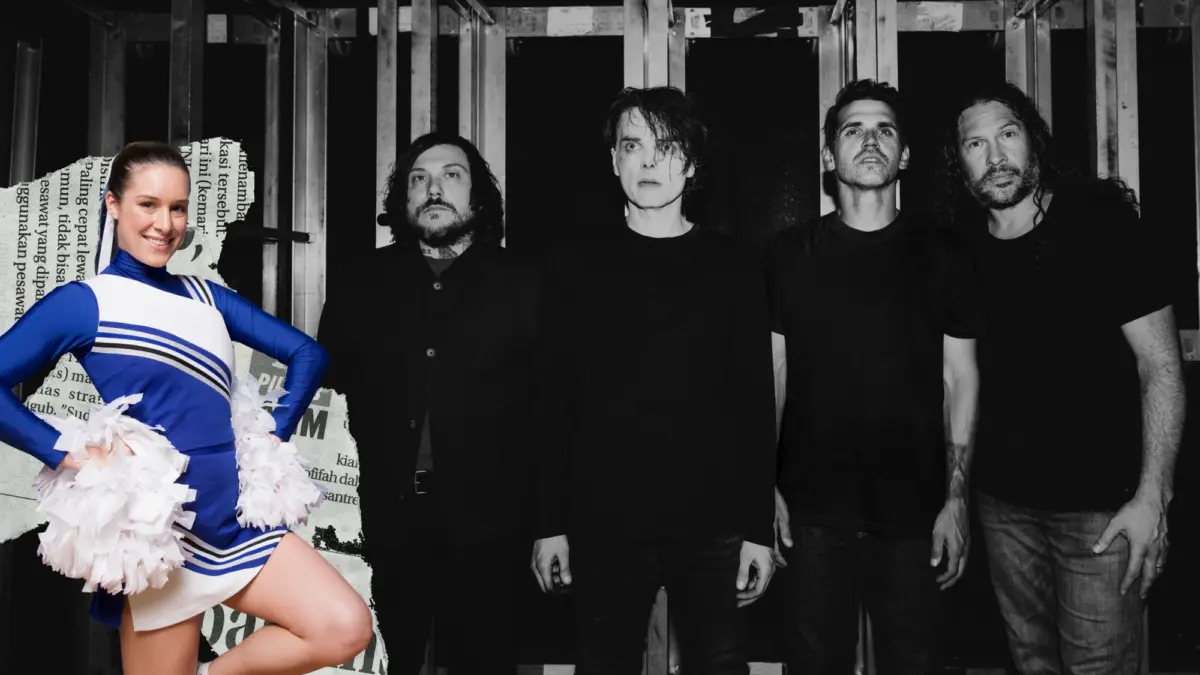
The conflict arose during the band’s high-profile Hollywood Bowl residency—part of their sweeping 20th-anniversary celebrations for their landmark 2006 conceptual album, The Black Parade. During a performance of their fan-favorite track "Teenagers," a troupe of backup dancers executed a choreographed routine dressed unmistakably as members of the legendary NFL cheerleading squad. The performance, which began with traditional pom-pom choreography, culminated in a simulated, theatrical gun battle between the band members and the dancers, complete with the costumed performers being "shot" and dramatically crawling off the stage.
Pro Silver Star swiftly launched legal proceedings in federal court, citing false association, trade dress infringement, and trademark dilution by tarnishment. Rather than dragging the matter through a protracted constitutional debate over first-amendment protections and artistic expression, My Chemical Romance opted for expediency. The band quickly agreed to alter the controversial costumes for the remainder of their Hollywood Bowl run.
This controversy highlights the precarious balancing act modern artists face when incorporating recognizable, hyper-monetized corporate symbols into subversive or violent performance art. As copyright and trademark holders grow increasingly aggressive in policing their trade dress, the MCR case serves as a warning bell for performers navigating the fine line between satirical commentary, artistic appropriation, and actionable trademark infringement.
Detailed Chronology of the Dispute
The Hollywood Bowl Residency and the "Teenagers" Performance
The sequence of events leading to the legal confrontation began unfolding under the bright lights of the historic Hollywood Bowl. My Chemical Romance was in the midst of a critically acclaimed run of celebratory concerts honoring the enduring cultural legacy of The Black Parade.
During their live setlist, the band launched into "Teenagers," a scathing critique of American youth culture, violence, and institutional paranoia. To amplify the song’s themes, the production featured a specialized dance troupe. According to court documents, these performers were outfitted in exact replicas of the Dallas Cowboys Cheerleaders’ iconic uniform elements: pristine white boots, signature white shorts, a blue blouse tied up above the midriff, and a distinctive white vest accented with bright blue stars.
The performance leaned heavily into regional and cultural irony. As the dancers executed synchronized routines across the stage, MCR frontman Gerard Way leaned into the microphone and addressed the audience with a pointed, tongue-in-cheek remark: "Thank you, Dallas."
The tone of the performance then pivoted dramatically. Props resembling rifles were handed to the dancers, initiating a staged, chaotic firefight between the band and the cheerleaders. The routine concluded with the dancers dramatically depicting gunshot wounds, collapsing, and dragging themselves off the stage. While intended as theatrical subversion, the imagery proved to be the catalyst for immediate corporate retaliation.
Legal Salvo and Rapid Settlement
Last week, Pro Silver Star filed a comprehensive legal complaint against the band. The filing laid out explicit grievances, detailing how the performance directly undermined the pristine, family-friendly, and highly curated image of the Dallas Cowboys Cheerleaders brand.
The legal arguments focused heavily on consumer confusion. The complaint noted that audience members—many of whom captured the performance on mobile devices—were left with the distinct impression that the actual Dallas Cowboys Cheerleaders had endorsed or participated in the performance. Social media platforms quickly flooded with posts and commentary expressing shock that the professional NFL squad would engage in a simulated stage execution.
Alex Spiro, the high-profile attorney representing Pro Silver Star, moved swiftly to narrow the scope of the dispute. In statements following the initial filing, Spiro emphasized that his clients were fundamentally non-litigious and harbored no animosity toward My Chemical Romance’s musical output, political messages, or overarching artistic ambitions.
Remarkably, the cheerleading brand did not demand alterations to the band’s setlist, narrative arcs, stage choreography, or the presence of gun-toting performers. Their demand was remarkably singular: the dancers simply could not wear the official Dallas Cowboys Cheerleaders uniform while doing it. Stressing that the universe of alternative costume designs is virtually limitless, Spiro positioned the lawsuit as a straightforward defense of a heavily invested intellectual property asset.
Faced with mounting legal pressure and the imminent danger of injunctions that could disrupt their lucrative residency, My Chemical Romance’s legal representation moved quickly. According to reports from TMZ, the band capitulated before the matter could escalate to a preliminary injunction hearing, agreeing to revise the dancers’ wardrobe ahead of the final shows of the Hollywood Bowl run.
Supporting Context & Metrics: Trademark Law Meets the First Amendment
Had the legal battle between My Chemical Romance and Pro Silver Star proceeded to a full trial, it would have reignited one of the most intellectually complex debates in American jurisprudence: the friction between intellectual property rights and First Amendment protections for free speech and artistic expression.
The Mechanics of Trade Dress and Dilution
At the heart of Pro Silver Star’s lawsuit were three primary legal pillars:
- False Association: The claim that consumers were misled into believing a commercial or organizational tie existed between the Dallas Cowboys Cheerleaders and My Chemical Romance.
- Trade Dress Infringement: Protection extending beyond word marks and logos to encompass the total visual image—including color schemes, garment cuts, and styling—that signifies a brand’s source to the public.
- Trademark Dilution by Tarnishment: The argument that associating a famous mark with unwholesome, violent, or controversial contexts (such as a simulated gun battle and death sequence) damages the brand’s reputation and commercial value.
The Dallas Cowboys Cheerleaders brand is not merely a regional entertainment asset; it is a global multi-million-dollar commercial enterprise. The organization invests heavily in maintaining strict quality control over its uniforms, public appearances, and media representations. From a trademark perspective, allowing a punk-adjacent rock band to dress performers in the exact uniform to depict a violent shootout dilutes the distinctiveness of the brand and exposes the corporate entity to unwanted reputational risks.
The Rogers Test and Artistic Relevance
In disputes where trademarks intersect with creative works, American courts frequently apply the Rogers Test. Stemming from a landmark 1980s legal battle involving legendary actress and dancer Ginger Rogers (Rogers v. Grimaldi), this judicial standard protects artistic works from standard trademark claims unless the use of the mark has no artistic relevance to the underlying work whatsoever, or, if it has some artistic relevance, it explicitly misleads consumers as to the source or content of the work.
In the MCR case, defense attorneys would likely have argued that utilizing the quintessential American cheerleading uniform—specifically that of America’s Team—possessed profound artistic and satirical relevance to a song addressing American youth, media saturation, and violence.
However, Pro Silver Star’s legal team seized upon the second prong of the test: consumer confusion. By highlighting numerous social media posts where fans genuinely believed the real cheerleaders were on stage with the band, the plaintiffs aimed to prove that the performance had crossed the line from protected artistic commentary into actionable, explicit misdirection. Because the band settled out of court, legal scholars are left wondering how modern federal judges would apply the Rogers test to increasingly immersive, boundary-pushing live musical theater.
Official Statements and Legal Perspectives
The resolution of the dispute shed light on the pragmatic strategies employed by modern brand protection lawyers. Alex Spiro’s public commentary underscored a measured, surgical approach to intellectual property enforcement—one designed to protect corporate assets without casting the brand as an anti-artistic censor.
"My Chemical Romance is a legendary band with immense cultural impact, and we harbor no ill will toward their music, their artistic ambitions, or the socio-political messages they choose to convey on stage," Spiro noted during discussions surrounding the settlement.
"Our clients did not ask the defendants to change their setlist, their narrative structure, their politics, their choreography, or even their decision to put gun-toting performers on stage. We simply requested that they not wear the Dallas Cowboys Cheerleaders uniform while doing it. Given that the universe of alternative costume designs is effectively unlimited, this was a reasonable boundary to draw to protect our intellectual property."
Conversely, representatives for My Chemical Romance and their management team maintained a strategic silence, channeling their energy into complying with the settlement terms and ensuring the Hollywood Bowl residency continued without further operational hurdles. By acquiescing swiftly, the band avoided the public relations nightmare of an ongoing legal feud with one of the most litigious and protective sports franchises in the United States.
Broader Industry Implications and Future Outlook
The clash between My Chemical Romance and the Dallas Cowboys Cheerleaders does not exist in a vacuum. It points to a growing trend of aggressive brand policing across both traditional entertainment and digital media platforms. As corporate entities increasingly realize that their trade dress and visual identity can be co-opted for satire, criticism, or shock value, legal teams are deploying trademark law with unprecedented velocity.
Parallels in the Digital Creator Economy
This tightening of corporate control is not limited to stadium-filling rock bands. As the MCR controversy played out in California, a remarkably similar legal battle was quietly unfolding in the digital creator space.
Security conglomerate Allied Universal filed a federal lawsuit against prominent YouTube content creator Chad Lebaron. The grievance centered on video sketches produced by Lebaron, in which a character dressed in an authentic Allied Universal security uniform engages in heavily inappropriate behavior.
According to the security firm’s complaint, Lebaron’s satirical sketches linked the corporate brand directly to:
- Sexual misconduct and predatory behavior
- Abuse of authority and official harassment
- Overt criminal conduct
Allied Universal argued that these portrayals are fundamentally inconsistent with the professionalism, integrity, trustworthiness, and authority required of security personnel. Much like Pro Silver Star, the security firm brought forth claims of trademark infringement and trademark dilution by tarnishment.
The juxtaposition of these two cases—one involving a multi-platinum rock band at the Hollywood Bowl, the other a standalone YouTuber—signals a definitive shift in the media landscape. Corporations are no longer willing to look the other way when their uniforms, logos, and visual identifiers are utilized in parodies that cross into controversy or perceived reputational damage.
What Lies Ahead for Live Performance and Satire?
For touring musicians, theatrical producers, and digital creators, the message is clear: the traditional protections of artistic expression and parody are facing stiffer headwinds than ever before. While the First Amendment and doctrines like the Rogers Test provide historical safeguards for creative works, the financial costs and operational disruptions of defending a federal trademark lawsuit often outweigh the artistic value of using a specific, trademarked uniform or brand asset.
As My Chemical Romance adjusts their staging for future tour dates, substituting generic or custom-designed star-spangled outfits for the disputed Dallas Cowboys Cheerleaders replicas, the rock world takes note. The "Black Parade" may march on, but it will do so with a heightened awareness that corporate America’s legal teams are watching from the sidelines, ready to penalize any unauthorized encroachment on sacred brand territory.