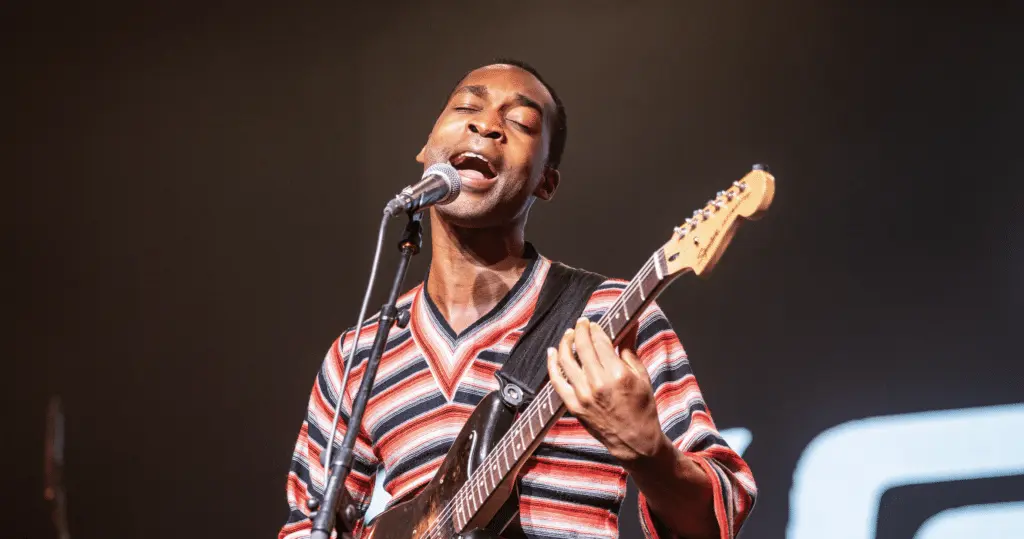
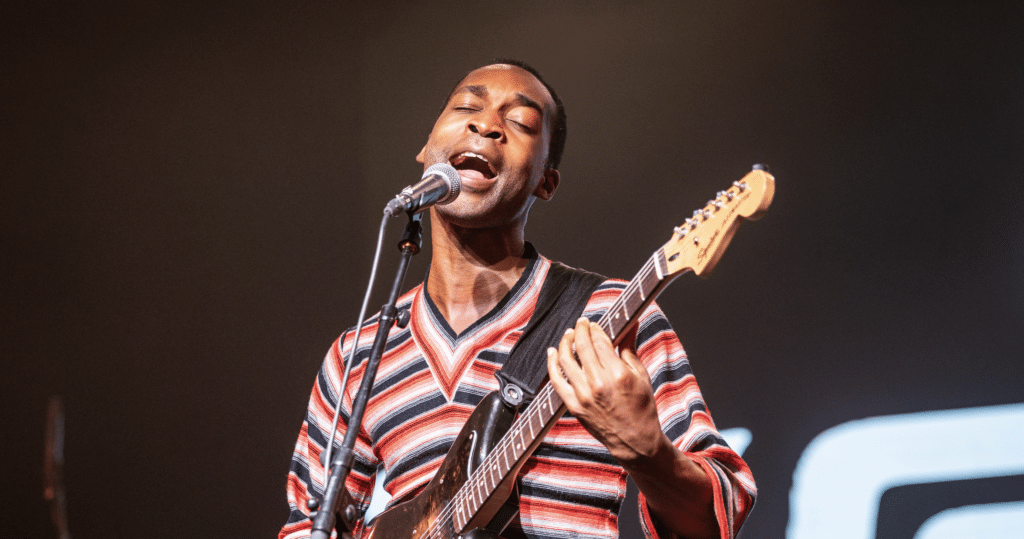
With just two stellar studio albums to his name, Maryland-born, UK-adopted soul troubadour Jalen Ngonda has rapidly ascended from a tireless busker to a heavyweight modern soul superstar. Armed with a faultless, soaring falsetto that effortlessly bridges the gap between mid-century American rhythm and blues and contemporary studio craft, Ngonda’s music feels as though it was lifted straight from the golden vaults of Motown or Stax Records.
Currently out on the road captivating audiences across the United Kingdom in support of his critically acclaimed sophomore record, Doctrine Of Love, Ngonda represents a rare breed of artist: one deeply reverent of musical history yet fiercely committed to organic, uncalculated artistic evolution. Signed to Brooklyn’s premier soul sanctuary, Daptone Records—a match so fitting it feels predestined—Ngonda has cultivated an aesthetic defined by rich instrumentation, pristine vocal control, and a profound emotional honesty.
Yet, beneath the glossy surface of retro-soul revivalism lies an artist with a remarkably diverse sonic palette. In an exclusive interview conducted amid his current UK tour, Ngonda sat down to pull back the curtain on his creative process, dispel internet myths about his listening habits, and meticulously unpack the legendary voices that forged his unmistakable vocal identity.
Detailed Chronology: From Maryland Roots to British Stages
To understand Jalen Ngonda’s musical DNA, one must trace a transatlantic journey defined by a relentless work ethic, geographic relocation, and an insatiable appetite for sonic discovery.
Born in 1994, Ngonda grew up in a household steeped in musical diversity. While his father’s CD collection and heavy hip-hop inclinations introduced him to mainstream titans like Michael Jackson and Prince, Ngonda’s true awakening to classic soul happened organically. Surrounded by family members in a modest household, the young artist found himself immersed in the sounds of 1960s R&B and pop.
As a teenager in Maryland, Ngonda’s education in music discovery was hands-on and grassroots. Rather than relying solely on internet algorithms or digital streaming playlists, his primary mode of research involved visiting local record stores or raiding the closets and crates of older relatives. "My aunt would give them to me," Ngonda recalls of his early record-digging days. "Well, I’d just take them… She’d be like, ‘Yeah, go ahead. It’s been in the closet for 10, 15 years.’"
Seeking a broader canvas for his burgeoning artistry, Ngonda eventually made the pivotal decision to relocate across the Atlantic to Liverpool, England. It was within this historic British musical hub—a city forever linked to rock and roll royalty—that his career truly began to crystallize. Playing an endless circuit of live gigs, busking on street corners, and logging grueling hours in recording studios, Ngonda’s vocal cords underwent a rigorous natural transformation.
Initially singing primarily in a rich, grounded baritone during his early twenties, the relentless vocal exercise expanded his range dramatically. By 2018 and 2019, Ngonda realized he could effortlessly scale heights previously out of reach. This newfound vocal freedom directly inspired his songwriting, leading him to pen tracks that showcased his luminous upper register—a stylistic shift that would ultimately catch the attention of Daptone Records and cement his status as a premier voice in modern soul.
Supporting Context & Metrics: Deconstructing the Sound and the Myth
In contemporary music journalism, shorthand labels are frequently weaponized, and Ngonda has not been immune to them. A persistent, oft-repeated misquote claims that the singer refuses to listen to any music recorded past 1972—a notion Ngonda dismisses with clear frustration. While his artistic compass is heavily calibrated by the mid-century traditions of soul, rock, and pop, his real-world influences span far wider.
The Anatomy of the Falsetto
Ngonda’s utilization of his upper register is frequently cited by critics and producers as his signature weapon—what his collaborators affectionately refer to as "the moneymaker." However, Ngonda is quick to strip away the analytical pretension often assigned to male falsetto singers.
"Me singing falsetto is in no way a statement or anything like that… I don’t really think about the whole masculine thing. I’m singing high. All that’s just a bunch of bullshit to me. It’s contrary to what people think a singer should sound like based on their gender. It’s just music. There are male flute players, and the flute sounds very high."
This pragmatic approach extends to his studio sessions with Daptone Records. Rejecting the idea that he is creatively shackled to a strict "house sound," Ngonda emphasizes that songwriting remains an organic, unfiltered dialogue. "When we get in a room, we just write," he explains. "We don’t think about the whole Daptone sound… The goal is just to make a good song. We just think about the music first."
Official Statements: The Pantheon of Influences Shaping Jalen Ngonda
During his conversation, Ngonda detailed the specific vocalists and artists who served as the architectural pillars of his sound, revealing a surprising blend of male soul crooners, rock innovators, and powerhouse female vocalists.
1. Eddie Kendricks (The Temptations)
As a young boy sitting in front of the television, Ngonda experienced his first major vocal epiphany courtesy of Eddie Kendricks, the legendary falsetto lead singer of The Temptations. Hearing tracks like "The Way You Do the Things You Do" and "Just My Imagination (Running Away With Me)" brought home on a CD by his father, Ngonda initially made a telling assumption: "When I first heard the song, I thought it was a woman singing the lead, but it was a dude. I’ve always loved the tone of his voice."
2. Frankie Lymon & The Teenagers
Expanding his early doo-wop and early-soul education, Ngonda gravitated heavily toward the pioneering adolescent star Frankie Lymon. Drawing inspiration not from a single standout track but across Lymon’s entire recorded output with The Teenagers, Ngonda found a kindred spirit in Lymon’s youthful, soaring vocal agility.
3. Russell Thompkins Jr. (The Stylistics)
As his vocal range matured during his move to Liverpool, Ngonda dove deeper into the sophisticated Philadelphia soul of The Stylistics. Albums featuring timeless masterpieces like "Betcha by Golly, Wow" and "Stop, Look, Listen (To Your Heart)" became the soundtrack to his British immersion, further refining his appreciation for delicate, emotionally resonant falsetto delivery.
4. Prince
Growing up in a household where Prince was a daily staple, Ngonda viewed the Purple One not merely as a star, but as a foundational musical fixture of his upbringing. "I’ve known Prince my whole life. I was born in ’94 and my dad is a huge Prince fan," Ngonda notes. While Prince utilized his stratospheric falsetto across a wildly expansive sonic spectrum encompassing funk, rock, and new wave, Ngonda views this boundary-pushing versatility as a mandatory blueprint for any serious artist.
5. Alex Turner (Arctic Monkeys)
Geographical relocation often breeds unexpected creative cross-pollination. When Ngonda arrived in Liverpool, the city was reverberating with the sounds of modern British rock, most notably the Arctic Monkeys’ landmark album, AM. Ngonda developed a profound appreciation for Alex Turner’s distinct lyrical cadence and vocal delivery, proving that his musical appetite extends well beyond traditional American soul bounds.
6. The Power of Female Vocalists
Perhaps the most revealing insight into Ngonda’s vocal style is his acknowledgment that female icons have ultimately exerted a deeper structural impact on his singing than their male tenoring counterparts. Naming luminaries such as Billie Holiday, Peggy Lee, Aretha Franklin, and Dionne Warwick, Ngonda highlights how the emotive weight and phrasing of these legendary women seeped into the core of his musical expression. Combined with foundational influences like Phil Spector’s girl-group productions and The Beatles, these elements form the bedrock of Ngonda’s peerless songwriting framework.
Future Outlook
As Jalen Ngonda presses forward with his extensive UK tour, the trajectory of his career points toward sustained, international acclaim. Doctrine Of Love has solidified his reputation as a generational talent, proving that classic soul music, when executed with genuine reverence and modern emotional intelligence, remains as vital and urgent as ever.
Refusing to be boxed into a singular retro gimmick, Ngonda’s refusal to stagnate ensures that his future musical output will continue to surprise listeners. Whether exploring the gritty depths of a baritone or soaring into the heavens with his trademark falsetto, Jalen Ngonda is not merely recreating the golden eras of the past—he is actively writing the next chapter of soul music history.
Tickets for Jalen Ngonda’s ongoing UK tour are available now through major ticketing outlets.