Executive Overview
The global streaming landscape has officially entered a new, high-stakes arena: sport. However, the battle lines are not being drawn on the pitch, the court, or the track. Instead of spending billions on live match broadcasting rights—a territory aggressively guarded by legacy telecommunication and broadcasting behemoths like Sky, TNT, and the BBC—major streaming services are executing a strategic pivot toward "sports-adjacent" programming.
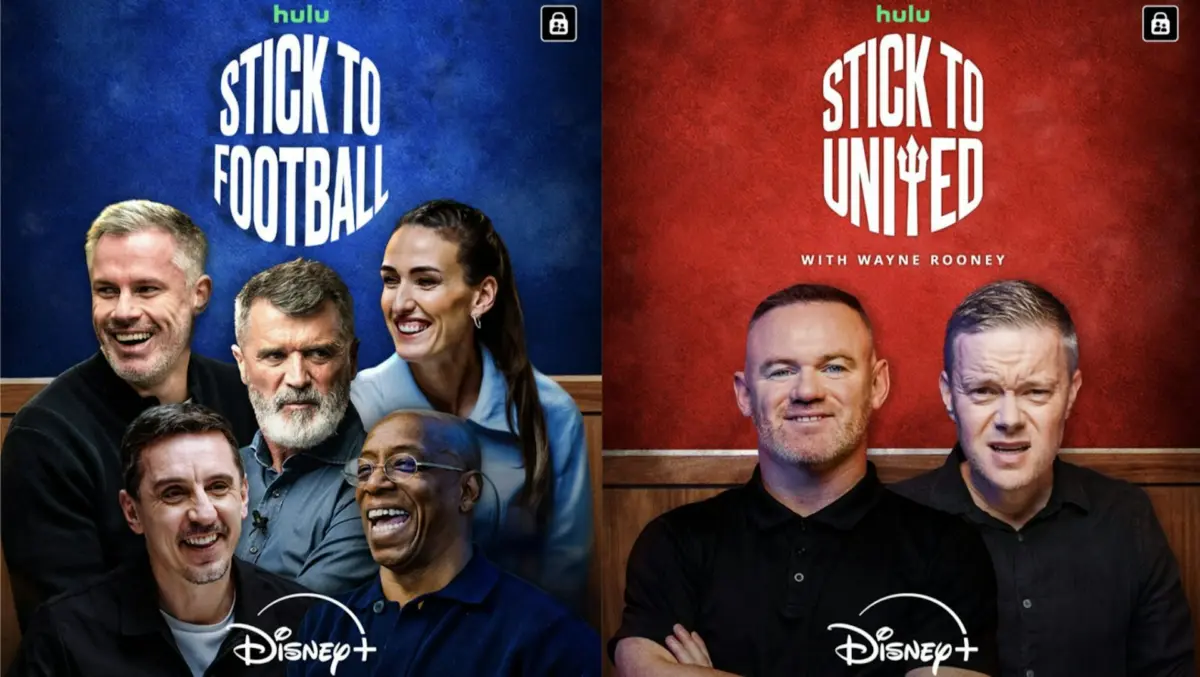
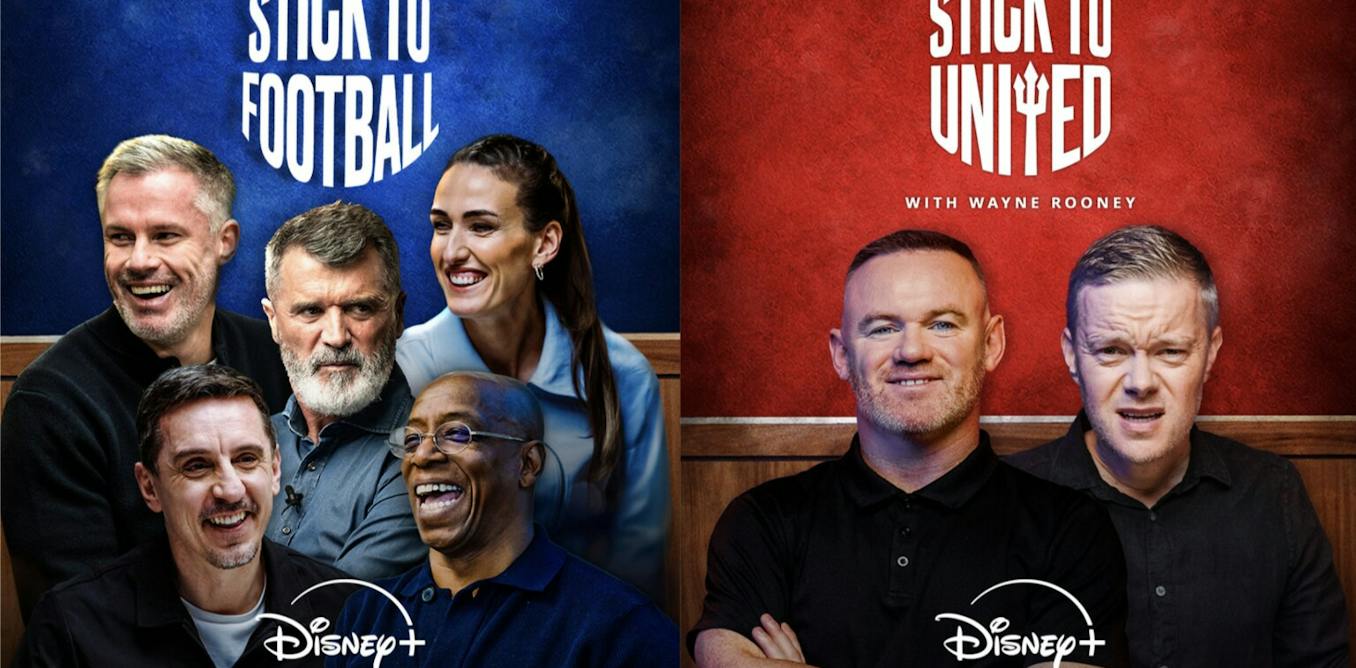
Recent high-profile acquisitions signal a seismic shift in how media companies capture sports fandom. Disney+ has secured a landmark licensing deal with former England defender Gary Neville’s burgeoning football media empire, The Overlap. This partnership brings high-profile talk shows like Stick to Football and a newly minted Manchester United-focused series co-hosted by Wayne Rooney and digital creator Mark Goldbridge directly onto the platform. This move mirrors Netflix’s aggressive strides into sports commentary, highlighted by its acquisition of Gary Lineker’s popular podcast, The Rest is Football, which expanded its daily World Cup coverage into a consistent, multi-weekly fixture during the regular season.
Yet, a curious paradox defines this multi-million-dollar land grab: subscribers tuning in to watch these shows will not witness a single minute of live Premier League action, nor will they catch a game-winning goal.
As traditional subscription-video-on-demand (SVOD) markets face domestic saturation, platforms are leveraging the immense cultural cachet of sports personalities, pundits, and fan-driven digital creators to build daily viewing habits. By bypassing the prohibitive costs of live broadcast rights, streamers are rewriting the rules of sports engagement. This deep dive investigates the economic mechanics, cultural shifts, and long-term consequences of this streaming evolution, examining how the death of the traditional "Grandstand" era is reshaping media consumption across the United Kingdom and beyond.
Detailed Chronology: The Evolution of Sports-Adjacent Streaming
The migration of sports culture from live stadiums to digital and streaming platforms has unfolded across distinct phases over the past decade, transforming passive viewers into active, daily consumers of sports media content.
1. The Documentary Boom (2018–2022)
The modern era of sports streaming began not with live matches, but with cinematic, behind-the-scenes docuseries. Netflix’s launch of Formula 1: Drive to Survive in 2019 proved to be a watershed moment. By treating high-octane motorsport through the lens of interpersonal drama, political backstabbing, and psychological pressure, the platform resurrected global interest in Formula 1, breathing new life into a sport whose television ratings had begun to stagnate.
Encouraged by this success, streamers rushed to replicate the formula across golf (Full Swing), tennis (Break Point), and association football. However, these polished, club-approved narratives also introduced a new dynamic: the erosion of independent, investigative sports journalism in favour of carefully curated PR.
2. The Podcast-to-Platform Pipeline (2023–2025)
As video podcasts and independent YouTube channels captured millions of dedicated, highly engaged followers, major streaming platforms realized that static documentaries were no longer enough to maintain year-round subscriber retention. Content creators operating outside traditional broadcasting constraints—such as Gary Neville’s The Overlap and YouTube creator-led setups—proved they could generate continuous, low-cost engagement.
Rather than commissioning one-off series, streamers began acquiring entire production slates and existing digital brands. This period blurred the lines between independent digital audio-visual content and corporate-backed streaming libraries, establishing the blueprint for appointment-to-view digital talk formats.
3. The Pundit-Led Acquisitions (2026 and Beyond)
The current phase is defined by direct corporate consolidation of star-studded punditry. Disney+’s acquisition of The Overlap content catalog and Netflix’s multi-year commitments to elite-level football pundits mark the crystallization of this strategy. Streamers are no longer just buying shows; they are buying personalities. By integrating high-profile figures like Gary Neville, Wayne Rooney, and Gary Lineker directly into their home interfaces, streaming services are attempting to solve their ultimate nemesis: subscriber churn.
Supporting Context & Metrics: The Economics of Modern Sports Broadcasting
To understand why streamers are prioritizing talk shows over live matches, one must examine the staggering financial architecture of contemporary sports broadcasting, particularly within the United Kingdom.
The Staggering Cost of Live Rights
Live sport remains the ultimate fortress of appointment-to-view television in an increasingly fragmented digital media environment. According to Ofcom’s comprehensive Media Nations reporting, sport makes up a staggering 70% of all television programming spend across the UK, driving billions of pounds in capital investment:
- The Premier League Outlay: Domestic broadcasting rights for live Premier League matches and highlights remain firmly anchored by traditional giants Sky, TNT, and the BBC, who fork out a combined £1.67 billion per year for access.
- The Broader Sports Landscape: When factoring in Sky’s multi-million-pound investments in international cricket, Formula 1, and golf, its total content bill eclipses all rivals.
- Public Service Broadcasters: Even free-to-air channels—the BBC, ITV, Channel 4, and Channel 5—splash out approximately £700 million annually on sports programming, heavily prioritizing it over original drama and comedy because it guarantees communal, real-time viewing figures.
The Streaming Saturation Crisis
For subscription services, the financial runway for raw subscriber acquisition has plateaued. Ofcom data indicates that UK household subscription penetration hit roughly 68%—a figure virtually identical to post-pandemic levels recorded in 2021.
With market saturation setting in, platforms can no longer rely solely on organic growth or blockbuster scripted dramas like Stranger Things or The Mandalorian to capture new demographics. Instead, they are eyeing the massive demographic of sports fans who are priced out of Sky’s premium bundles or simply lack the time to sit through a 90-minute football match, yet remain voracious consumers of sports commentary, analysis, and debate.
Changing Viewing Habits
In the UK, the average person spent roughly four and a half hours a day watching video content at home over the past year. Crucially, 84% of this in-home viewing still occurs via the traditional television set—not necessarily through linear broadcast channels, but through smart TV interfaces, streaming apps, and platforms like YouTube, whose top-tier content increasingly mirrors conventional broadcast television production values.
Official Statements and Industry Insights
The structural transformation of sports media has triggered intense debate among sports economists, media scholars, and journalism ethicists.
Industry analysts point out that sports-adjacent content offers a low-risk, high-return mechanism for streaming executives. Unlike live match broadcasting, which carries immense auction risks and strict geo-blocking limitations, digital talk formats and interview series can be monetized globally with minimal overhead.
However, media academics have voiced growing concerns over the concentration of narrative control. In her forthcoming academic study, Sports Journalism in the UK, media researcher Dr. Jones notes that the commercialization of sports commentary has fundamentally altered the relationship between media institutions and sports governing bodies:
"With prestige documentaries and creator-led platforms allowing sports leagues, clubs, and high-profile pundits to present an uncritical, highly sanitized portrayal of their operations, the traditional role of sports reporters as independent narrators has been severely eroded. While figures like Gary Neville and Mark Goldbridge possess the undeniable charisma and production value to keep audiences thoroughly entertained, they are fundamentally ill-equipped—and financially disincentivized—to offer the rigorous, investigative scrutiny that massive sporting institutions like FIFA demand."
This sentiment is echoed by media watchdogs who observe that the commercial imperatives of streaming giants prioritize fan engagement over journalistic accountability, transforming sports journalism from a public watchdog into an arm of entertainment marketing.
Future Outlook: Winners, Losers, and the Fragmented Horizon
As the streaming wars enter this new phase focused on personality-driven sports content, the media ecosystem is dividing into starkly defined winners and losers.
The Winners: Elite Football and Global Super-Brands
The undisputed winners of this new paradigm are the apex predators of the sporting world: the Premier League, elite European football clubs, and globally recognized sports stars. These entities possess the universal brand recognition necessary to command attention across infinite digital feeds. For them, the partnership with streamers like Disney+ and Netflix acts as a perpetual marketing engine, keeping their brands relevant in the minds of global consumers 365 days a year.
The Losers: Marginalized Sports and Diverse Programming
Conversely, sports operating outside the commercial elite face an existential crisis. Disciplines that were once staples of British public service broadcasting—such as county cricket, domestic swimming, hockey, and amateur athletics—have been systematically pushed to the margins.
Furthermore, the rising prominence of women’s sport, while a welcome cultural development, has followed a narrow commercial trajectory. Media attention and streaming investment remain heavily concentrated on a select few disciplines—specifically women’s football, cricket, rugby union, and tennis. As the author notes, audiences are unlikely to see a breakout streaming hit titled The Rest is Hockey.
The death-knell has also sounded for the eclectic, multi-sport programming diversity that older generations recall from iconic institutions like the BBC’s Grandstand. Streaming algorithms, driven by engagement metrics and user data, will never recreate a scheduling agenda that forces viewers to discover niche sports.
Conclusion: What Lies Ahead
The future of sports broadcasting is undoubtedly larger, louder, and more saturated. Viewers will be inundated with an endless stream of digital commentary, debate, and club-sanctioned content, particularly centered around football, as streaming platforms race to monetize every waking hour of fandom.
Yet, this expansion comes with a hidden cost. As sports culture becomes increasingly commodified by subscription algorithms and pundit-driven empires, the onus falls back on the individual consumer. If audiences desire critical, fearless investigative journalism and wish to witness the broad, diverse tapestry of global sport rather than a monolithic stream of elite football chatter, they will have to work much harder to seek it out for themselves.