Executive Overview
For over a decade and a half, the Norwegian musical collective Müster has operated in the interstitial spaces of contemporary sound, defying the neat categorizations favored by record store listing editors and algorithm-driven streaming platforms. Formed originally in 2010 to fulfill a prestigious composition commission for the Kongsberg Jazz Festival, the band has evolved through distinct permutations, shedding configurations and absorbing new instrumental vocabularies without ever settling long enough to be pinned down.
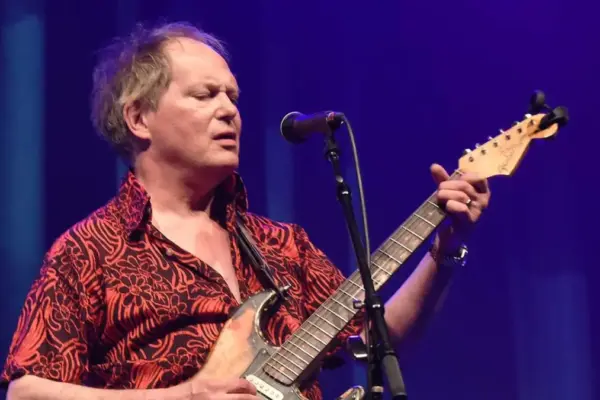
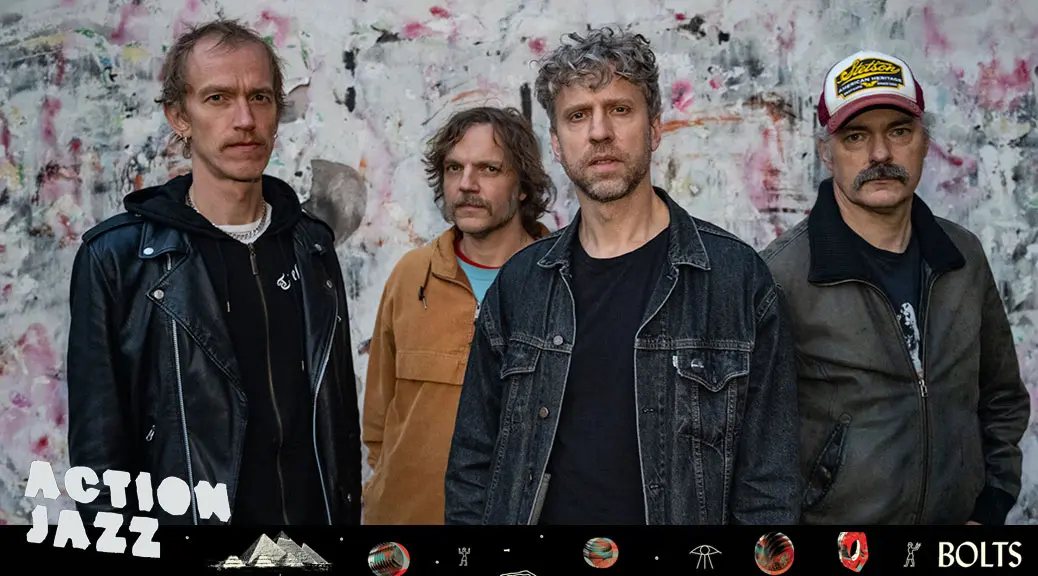
When Müster first materialized on stage in Kongsberg, the lineup featured the restless visionary Ståle Storløkken at the Rhodes electric piano, notably operating without a guitarist. Over the subsequent sixteen years, through shifting personnel and relentless sonic interrogation, the band settled into a stable, highly combustible quartet. Today, that roster features guitar virtuoso Hans Magnus Ryan (who stepped into Storløkken’s foundational role a dozen years ago), anchoring a rhythm section comprising bassist Nikolai Hængsle and powerhouse drummer Kenneth Kapstad.
When the Norwegian music industry finally caught up to their previous studio output, Springs, they struggled to categorize it, ultimately tossing the record into the "open class" nomination bracket simply because no existing genre box could contain it. To accurately describe Müster requires looking beyond traditional genre boundaries; heavy rock, avant-garde punk, and free jazz collide on the outer rim of the jazz galaxy, forming a volatile nebula entirely of their own making.
Now, Müster returns with their latest full-length album, Bolts. Recorded over four intensive, unvarnished days at Bergen’s Duper Studio, Bolts represents a radical departure from the method of its predecessor. Eschewing the multi-studio overdubs, external guest contributions, and extensive post-production reconstruction that defined Springs, Bolts captures four musicians operating with raw, unfiltered immediacy. Released via the recently resurrected Action Jazz imprint—a boutique label co-founded by the band’s driving force, Kjetil Müster—the record is a masterclass in spontaneous composition and structural discipline. As the band prepares to take this uncompromising sonic architecture into the legendary, history-laden confines of Germany’s MPS Studio, Bolts stands as a definitive statement from a group that refuses to compromise its artistic vision for commercial convenience.
Detailed Chronology: The Evolution of Bolts and the Duper Studio Sessions
To understand the singular impact of Bolts, one must trace the developmental arc of Müster’s studio methodology. Their previous album, Springs, was a patchwork of expansive ambition. It incorporated supplemental saxophone lines, additional percussion textures, and auxiliary guitar tracks recorded in disparate locations before being handed over to producer/engineer Jørgen Træen to shape and assemble. It was a constructed world, built brick by brick through sonic engineering.
With Bolts, the band executed an artistic 180-degree turn. The entire record was cut live over four concentrated days at Duper Studio in Bergen—the exact acoustical chamber this iteration of the band has utilized since their critically acclaimed release, Inner Earth. The most significant narrative of Bolts, however, is not what happened during those four days, but what happened immediately afterward: nothing.
There was no second studio booked. There was no ancillary programming injected into the mixes. There were no belated playing credits handed out to Træen, who still lent his master touch to mixing and mastering the sessions, but who now shared production duties directly with Kjetil Müster. The creative architecture of Bolts boils down to a stark exercise in curatorial restraint: two men sitting in a room, forced to choose what to keep from four days of pure, unadulterated playing, with zero foreign elements admitted after the four band members stopped playing their instruments.
This commitment to organic immediacy dictates the physical and psychological journey of the listening experience, particularly across the dynamic divide enforced by the vinyl format.
Supporting Context & Metrics: The Vinyl Divide and the Geography of Sound
The physical medium chosen for Bolts profoundly influences its narrative structure. The vinyl release splits the album’s five core compositions into a deliberate two-and-three sequence, fundamentally altering the character and psychological weight of the tracks compared to their sequential presentation on digital formats.
Side One: The Descent
Side one functions as a relentless, long-form descent into the abyss, offering the listener zero moments of aesthetic relief.

- "Desert Ride" opens the side as the longest piece on the album, applying sustained pressure to the listener’s nervous system from the outset. Dropping the needle on this track in any independent record store would immediately alert a discerning buyer to the heavy, uncompromised nature of the artifact they hold. Nikolai Hængsle’s subterranean basslines and Kenneth Kapstad’s ferocious, hyper-articulate drums hold the floor down with tectonic force, while Kjetil Müster works a hypnotic, repeating figure over the top. Soon, Hans Magnus Ryan seizes the melodic reins, taking the motif further and further out into the stratosphere.
- "Small Bubbles of Light" follows immediately without pause. It opens in a shroud of mystery, dripping with progressive rock inflexions. It feels akin to a deep-space cruiser stumbling unexpectedly upon an ancient jazz planet where the cosmic noise has finally settled. Two massive pieces flow directly into one another, denying the audience a single breath of recovery time.
Side Two: After the Fall
Lifting the tonearm, flipping the disc, and dropping it into the first groove of side two reveals a starkly different landscape.
- "Not a Signal but a Door" stands as the shortest piece on the record. Featuring a deceptively simple, haunting melody unfurled over heavy, plodding drums right at the edge of the vinyl, it wanders across the sonic terrain like a lunar rover searching for water. This sequencing choice highlights the limitations of the compact disc format; on a CD, this track is buried mid-sequence and reads merely as an incidental breather. Placed at the vanguard of side two, however, it lands with devastating emotional resonance.
- When attempting to place Müster within a lineage, critics often search the archives for historical ancestors. Early Krautrock pioneers like Can, the terrifying cosmic theatrics of Magma, or the cerebral prog-jazz dissonance of Van der Graaf Generator all come to mind. Yet, upon closer inspection, none of these historical touchstones truly connect. Müster has arrived at a sonic vocabulary entirely of their own invention.
- "Rippling Circles" shatters the pastoral calm of the previous track with frenetic, concussive drumming. A saxophone-like timbre overrides the stability of the mix, collapsing into a thrashing wall of sustained drone and industrial noise. The record has officially ventured far off the map.
- "Bearings" emerges as the ultimate sonic discovery on the record. Showcasing electric guitar work that channels the hypnotic, sun-baked psych-rock territory of Brian Ellis and Jonas Munk, it acts as the spiritual and structural partner piece to "Torsional Pendulum" from their previous outing. The track builds relentlessly toward a seismic conclusion that never quite resolves; the proverbial hand comes down, the players are abruptly pulled away from their inputs, and the instruments are left violently droning into the unyielding vinyl run-out groove.
To experience Bolts on vinyl is to understand a clear thematic binary: Side one is the descent into darkness; Side two is how you navigate the strange, alien world once you have landed.
Official Statements and Institutional History: The Revival of Action Jazz
The survival and physical distribution of music as uncompromising as Bolts is directly tied to the improbable resurrection of the Bergen-based independent label Action Jazz. Founded originally in 2003 by Kjetil Müster, alongside Ando Woltmann of the alternative rock band King Midas and graphic designer Nick Alexander, the label initially published a modest pair of records before falling completely silent for twenty-one years.
In 2024, however, Action Jazz underwent a Lazarus-like revival. The founders dusted off the historical catalog, picked up the narrative threads precisely where they had been abandoned two decades prior, and injected fresh life into the imprint. Today, the label serves as the proud home for cutting-edge Norwegian improvisational royalty, carrying critically acclaimed releases from Gard Nilssen’s Acoustic Unity and his sprawling Supersonic Orchestra, alongside the apocalyptic jazz-rock of Müster.
What began as a boutique, passion-project hobby has transformed into a vital going concern. Action Jazz provides the indispensable infrastructure required to ensure that a record entirely devoid of commercial compromise, radio-friendly formatting, or pop concessions can exist in the physical world in its purest possible form.
Future Outlook: Four Norwegians at Full Volume in the Black Forest
Never ones to rest on their laurels, Müster is already eyeing their next monumental challenge. In September, the quartet will pack their gear and transport the volatile sonic architecture of Bolts straight into the legendary MPS Studio in Villingen, Germany.
For audiophiles and jazz historians, the MPS Studio is hallowed ground. Housed in a listed villa nestled deep within the Black Forest, this is the legendary room where visionary producer Hans Georg Brunner-Schwer famously recorded piano titan Oscar Peterson in an intimate, home-studio environment. To this day, the historic Bösendorfer grand piano sits precisely on its original microphone placement markings, retaining the ghost of a golden era in European jazz recording.
Now, that sacred, wood-paneled sanctum is about to experience something entirely foreign: four uncompromising Norwegians unleashing their instruments at full volume within its historic walls. One can only wonder what the ancient acoustic panels of the Black Forest villa will make of Müster’s auditory assault.
As a listener suspended somewhere in the upper stratosphere—hands off the controls, hold full, waiting for the turbulence to subside—the anticipation is palpable. Müster has engineered a record that defies gravity and categorization alike, leaving audiences waiting eagerly to see where this ferocious machine ultimately puts them down.