Executive Overview
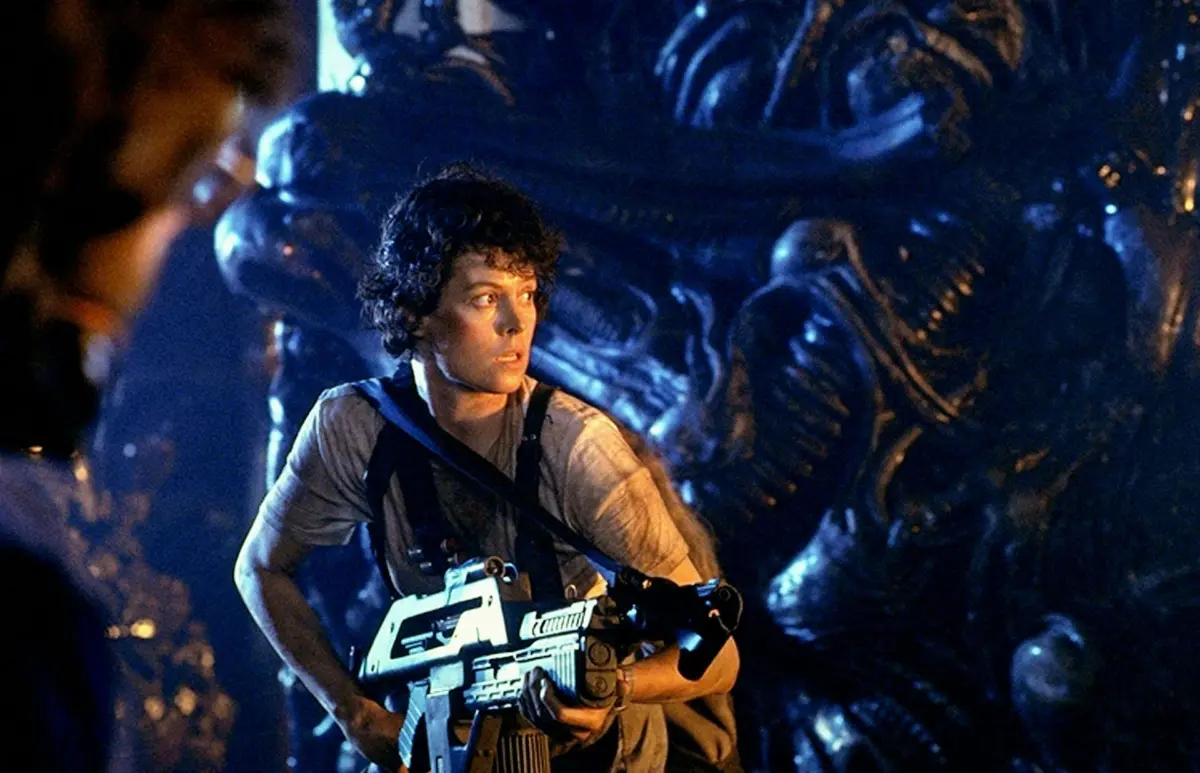
As James Cameron’s masterclass in sci-fi action and suspense, Aliens, approaches its landmark 40th anniversary in August, cultural retrospectives are inevitable. Released in 1986 as a high-octane sequel to Ridley Scott’s claustrophobic 1979 masterpiece Alien, Cameron’s film replaced the singular, creeping dread of the original with a terrifying numerical scale: instead of one bio-mechanical xenomorph terrorizing a lone merchant vessel, hundreds of the creatures swarm a doomed colony, hunting down an elite squad of colonial space marines.
Yet, beyond the pulse-pounding action, acidic blood, and iconic power loader showdowns, Aliens presents a fascinating technological time capsule. Set in the year 2179—precisely 153 years into our future—the film sketches a universe rich with interstellar transit, hypersleep chambers, and planetary terraforming.
When evaluated through the lens of modern technological progress, however, the film’s prognostications reveal a curious paradox. Some innovations depicted in the cinematic universe—such as wearable biosensors, motion-tracking systems, and mechanized exoskeletons—have direct parallels in contemporary 21st-century engineering. Other concepts, like automated sentry guns and human-like androids, mirror developments currently unfolding on modern battlefields and in AI laboratories.
Conversely, the film entirely misses major technological pivots of our era, such as ubiquitous personal mobile devices, advanced computer vision networks, and unmanned aerial drones. Furthermore, technologies foundational to the Alien universe—such as Faster-Than-Light (FTL) propulsion, sustained human stasis (hypersleep), and large-scale planetary terraforming—remain stubbornly confined to theoretical physics and science fiction.
As we examine the world of Aliens four decades after its theatrical debut, we explore a foundational question: How well did a 1980s blockbuster predict the trajectory of human innovation, and what does its technological worldview reveal about our own century?
Detailed Chronology: The Timeline of Innovation
To understand the technological context of Aliens, it is necessary to contextualize the timeline established by the filmmakers. Set in 2179, the movie takes place 153 years after its release date in the mid-1980s. To fully grasp the temporal distance of this leap, consider moving backward 153 years from the present day: we land in 1873, an era defined by horse-drawn carriages, nascent steam-powered streetcars, and gas lighting. The typewriter with a Qwerty keyboard had not yet hit the consumer market, and electricity was a luxury confined to industrial laboratories.
[1873] ──── (153 Years Past) ──── [1986: Aliens Release] ──── (153 Years Future) ──── [2179: Film Setting]
  Steam & Gas                       Gritty Industrial Sci-Fi                              Hypersleep & Synthetics
When the Colonial Marine vessel USS Sulaco drops out of transit to investigate the silent atmosphere of LV-426, the technology utilized by the characters reflects an industrial, utilitarian philosophy rather than sleek, utopian futurism.
The Industrial Aesthetic and Low-Tech Ergonomics
The gritty, worn-in aesthetic established by Ridley Scott in 1979 was amplified by Cameron, who drew heavy visual inspiration from the hardware, camouflage, and operational cadence of the Vietnam War. Company executives at the Weyland-Yutani Corporation use clunky, physical business cards to trigger primitive, low-resolution video calls, and brandish physical computer printouts during tense boardroom showdowns.
For modern audiences accustomed to pocket supercomputers, ubiquitous smartphones, and cloud-integrated holographic displays, the complete absence of personal electronic devices in Aliens can be jarring. One must deduce that personal electronics either fell out of favor by the late 22nd century or that the film’s creators prioritized tactile, physical storytelling props over speculative communication tech.
The Tracking and Surveillance Paradox
An intriguing exception to this analog aesthetic is the film’s localized tracking technology. The colonial marines rely heavily on wrist-mounted biosensors, wearable cameras, and directional motion detectors that emit a distinct, anxiety-inducing electronic ping. These devices feel remarkably current, bearing a strong conceptual kinship to modern tactical HUDs, smartwatches, and wearable health monitors.
However, from the perspective of modern artificial intelligence and surveillance architecture, a glaring omission stands out: the lack of computer vision and smart camera networks. In a multi-million-dollar terraforming colony like Hadley’s Hope, one would expect a pervasive web of AI-driven security cameras capable of autonomously tracking life signs, movement patterns, and environmental anomalies. Today, municipal algorithms monitor crowds and vehicular traffic in real time across global metropolises. Had Weyland-Yutani installed a robust smart-camera infrastructure, the fate of the colony’s 100-plus settlers might have unfolded very differently.
Supporting Context & Metrics: Exoskeletons, Robotics, and AGI
Moving beyond basic data processing, Aliens presents advanced robotics and mechanical engineering that actively intersect with modern research and development laboratories.
+------------------------+---------------------------------+-----------------------------------+
| Technological Feature  | Representation in 'Aliens' (2179) | Modern Real-World Equivalent (2026)|
+------------------------+---------------------------------+-----------------------------------+
| Mechanical Exoskeleton | Caterpillar P-5000 Work Loader| Industrial heavy-lifting robots & |
|                        | (Cargo/Combat hybrid)           | medical walking-assistance units  |
+------------------------+---------------------------------+-----------------------------------+
| Automated Defense      | Remote-controlled ceiling-      | Autonomous front-line combat      |
|                        | mounted Sentry Guns             | systems and robotic gun emplacements|
+------------------------+---------------------------------+-----------------------------------+
| Synthetic Androids     | Bishop (Autonomous, human-like  | Humanoid robotics research &      |
|                        | cognition, soft robotics frame) | proto-AGI language models         |
+------------------------+---------------------------------+-----------------------------------+
Exoskeletons and the Power Loader
Perhaps the most iconic mechanical piece of equipment in the film is the Caterpillar P-5000 Work Loader. Operated by Ellen Ripley (Sigourney Weaver) in the climactic showdown against the Alien Queen, the loader is a massive wearable exoskeleton designed primarily for heavy industrial cargo handling.
While heavy factories today typically rely on autonomous, remote-controlled bridge cranes or unmanned automated guided vehicles (AGVs) to keep human workers out of hazardous environments, wearable exoskeletons are a rapidly growing sector. Current real-world exoskeletons are considerably smaller and lighter than the P-5000 loader. They are successfully deployed in medical settings to help paralysis victims walk again, and commercial variants are increasingly utilized by logistics workers and outdoor enthusiasts to reduce physical strain. However, converting a warehouse lifting rig into a combat-ready bipedal weapon remains an invention unique to cinematic expediency.
Automated Sentry Guns
When the marines establish a defensive perimeter inside the Hadley’s Hope complex, they deploy automated, tripod-mounted sentry guns capable of tracking targets and dispensing suppressive fire with terrifying ammunition-counter readouts.
While automated defense platforms have existed for decades (such as naval Phalanx CIWS systems), the ongoing conflict in Ukraine has dramatically accelerated the proliferation of ground-based robotic combat systems and automated turret emplacements. Devices bearing a striking resemblance to the film’s automated sentry guns are currently tested and deployed on modern front lines. Ironically, despite their heavy usage in 21st-century warfare, unmanned aerial drones—now ubiquitous in modern conflict zones—are entirely absent from the military doctrine depicted in Aliens.
Synthetics, Soft Robotics, and AGI
At the pinnacle of the film’s technological hierarchy sits Bishop, portrayed by Lance Henriksen. Referred to in-universe as a "synthetic," Bishop possesses cognitive functions approaching human-level versatility—a concept known today as Artificial General Intelligence (AGI). Furthermore, Bishop explicitly operationalizes Isaac Asimov’s foundational Three Laws of Robotics, asserting that his programming prevents him from harming a human being or allowing one to come to harm through inaction.
From a materials science perspective, Bishop’s physical architecture foreshadows modern research into soft robotics. Rather than relying exclusively on rigid metals and electrical actuators, contemporary roboticists are developing flexible, biomimetic materials driven by fluid dynamics and pressurized air. Synthetics like Bishop likely utilize a hybrid framework: rigid internal endoskeletons combined with soft, flexible actuation systems designed to mimic organic tissue.
Official Statements & Industry Perspectives
The enduring cultural footprint of Aliens has frequently prompted analysis from computer scientists, robotics engineers, and futurists attempting to separate cinematic license from engineering reality.
Industry analysts often point out a fundamental commercial irony regarding the film’s reliance on human labor in deep-space environments. During a retrospective panel evaluating the technological realism of 1980s sci-fi cinema, prominent automation researchers noted the primary economic paradox of the Alien franchise:
"If corporations like Weyland-Yutani possess the manufacturing capability to construct autonomous, emotionally stable, and physically proficient synthetic humans capable of complex medical surgeries, combat maneuvers, and interpersonal diplomacy, why deploy fragile, emotional, and biologically expensive human workforces to hostile extra-solar colonies?"
This sentiment highlights a profound narrative conundrum. If artificial general intelligence and synthetic humanoids were advanced enough to populate the stars, human workers would theoretically be rendered economically redundant for hazardous terraforming duties.
Yet, roboticists frequently temper public expectations regarding the timeline for true human-level synthetics. While social media is routinely flooded with viral demonstrations of bipedal humanoid robots performing backflips or sorting warehouse boxes, leading AI researchers argue that general autonomy, common-sense reasoning, and genuine ethical constraints—such as Asimov’s laws—remain many decades away from commercial maturity. The androids of Aliens still represent an idealized horizon of robotics rather than an imminent commercial product.
Future Outlook: The Indomitable Human Factor
As we look toward the real-world horizon of 2179 and beyond, many of the grandest technological ambitions of Aliens remain out of reach. Humanity has yet to develop propulsion systems capable of traversing interstellar distances within a standard human lifespan. Sustained human hypersleep (stasis) remains limited to experimental clinical trials involving emergency rapid hypothermia, far from the multi-decade voyages depicted in the films. Similarly, planetary terraforming is still strictly a theoretical concept discussed in academic papers rather than an applied engineering discipline.
Yet, the deepest takeaway from Aliens is not found in its metal hulls, pulse rifles, or synthetic blood. It is found in its thematic thesis on human agency.
The film poses a quiet, philosophical question about the value of biological life in an increasingly automated cosmos. Why did Weyland-Yutani prioritize human colonists over swarms of synthetic laborers? Perhaps corporate conglomerates view human life as an endlessly expendable, self-replicating, and ultimately cheaper commodity.
However, the film’s narrative offers a more profound, optimistic rebuttal. Despite all of humanity’s biological frailties, emotional vulnerabilities, and logistical inefficiencies, biological sentience proves to be remarkably resilient. When the automated systems fail, when the synthetic crew members are torn in half, and when the military hardware is overwhelmed by an alien hive, it is Ellen Ripley—relying on wild improvisation, fierce maternal instinct, and sheer unyielding willpower—who outwits the xenomorph threat.
As Aliens celebrates its 40th anniversary, it serves not only as a monument to cinematic tension, but as a reminder that no matter how advanced our silicon chips, exoskeletons, and artificial intelligences become, the defining catalyst of survival remains the unpredictable, indomitable spirit of humanity.