Executive Overview
As global temperatures continue to shatter historical records and unprecedented wildfires devastate communities across continents, a dark shadow is creeping across public discourse. It is not merely the physical heat that poses an existential threat, but a psychological contagion known colloquially as "climate doom."
Characterized by the fatalistic belief that humanity is entirely doomed, that runaway global heating is already irreversible, and that personal or collective emission-reduction efforts are ultimately futile, this narrative has thoroughly saturated the modern media ecosystem. Far from acting as a clarion call to arms, climate doom functions as a potent catalyst for apathy, generating pervasive feelings of helplessness and despair that cause citizens to psychologically switch off from the defining crisis of our era.
Worse still, the relentless deployment of fear-based hyperbole—phrases like "climate apocalypse" or "point of no return"—frequently alienates politically conservative or right-leaning demographics, who increasingly view such rhetoric as a manipulative tactic designed to induce panic rather than foster constructive debate.
To combat this psychological roadblock, a new empirical study involving 521 participants representative of the UK population has investigated a groundbreaking countermeasure: psychological inoculation.
By exposing individuals to weakened, harmless doses of emotional manipulation found in climate doom headlines alongside targeted educational reinforcement, researchers successfully "prebunked" the toxic effects of fatalism across the entire political spectrum. The findings demonstrate that psychological inoculation does not breed generalized cynicism toward environmental issues; rather, it equips citizens with critical cognitive defenses.
Inoculated individuals proved markedly more adept at identifying manipulative framing, more inclined to flag and dislike panic-inducing content, less likely to amplify doom-laden posts on social media, and ultimately better insulated against the paralyzing defeatism that stifles meaningful climate action.
Detailed Chronology: Unpacking the Science of Prebunking
To understand how researchers arrived at these transformative insights, it is necessary to trace the conceptual evolution and experimental execution of psychological inoculation in the context of modern environmental communication.
The Rise of the Fatalism Trap
For decades, traditional climate communication relied heavily on crisis framing. Environmental activists, journalists, and policymakers frequently leveraged urgent, catastrophic imagery to jolt a complacent public into awareness. While effective in grabbing headlines, this strategy has reached a point of diminishing returns, particularly in an era dominated by hyper-accelerated social media algorithms optimized for emotional engagement and negativity bias.
By the early 2020s, communication scholars began noticing a dangerous pivot in public sentiment. Rather than inspiring mobilization, an escalating barrage of unmitigated doom narratives began triggering widespread eco-anxiety and cognitive paralysis.
Researchers realized that fatalism had quietly become a sophisticated discourse of climate delay. When citizens are convinced that the house is already fully engulfed in flames and cannot be saved, the logical conclusion is to abandon all efforts to salvage the structure.

Developing the Experimental Framework
Recognizing that traditional post-exposure fact-checking and debunking efforts consistently lag behind the viral velocity of digital misinformation, a team of behavioral scientists sought a proactive alternative. They turned to inoculation theory, a psychological model originally developed in the 1960s by social psychologist William J. McGuire, which draws a direct parallel between biological immunization and cognitive defense.
Just as a physical vaccine introduces a weakened pathogen to stimulate the body’s immune system to produce antibodies, psychological inoculation exposes individuals to a diluted, refutable instance of a misleading narrative or manipulative technique. This early, controlled exposure prompts the mind to generate counterarguments and cognitive "antibodies," rendering the individual significantly more resilient when subsequently confronted with full-strength manipulation in the wild.
The Experimental Design
To test whether this medical analogy could successfully neutralize climate doom, the researchers designed a rigorous online experiment utilizing a demographically representative sample of 521 UK participants. The step-by-step chronology of the experiment unfolded as follows:
- The Intervention Phase: Participants were randomly split into two distinct groups. Half of the cohort served as the experimental group, watching a specialized educational video detailing how news headlines employ emotional manipulation, followed by a short explanatory text linking these tactics to climate discourse. The control group watched an entirely unrelated instructional video on how to draw a human face. Both groups then answered a brief comprehension check to ensure engagement.
- The Social Media Simulation: Following the intervention, all participants were exposed to a simulated social media feed. This feed deliberately mixed climate doom headlines ("Wildfires are blazing, and the worst is yet to come: We’re doomed!"), non-doom climate headlines, and entirely neutral, unrelated everyday news items.
- The Behavioral and Attitudinal Assessment: As they scrolled through the feed, participants’ interactions—such as likes, dislikes, and sharing intentions—were meticulously recorded. Afterward, they rated how manipulative they perceived each headline to be and completed standardized self-assessments detailing their future intentions to adopt pro-climate behaviors (e.g., reducing long-chain carbon footprints, transitioning toward plant-based diets).
Key Empirical Takeaways
The quantitative results of the experiment yielded several critical breakthroughs:
- The Manipulation Penalty: Participants universally recognized doom-laden climate content as significantly more manipulative than standard, fact-based climate reporting. Furthermore, a direct inverse correlation emerged: the higher an individual rated the manipulative intent of a doom headline, the lower their expressed intention to engage in pro-environmental actions.
- Universal Political Efficacy: Crucially, the protective effects of psychological inoculation crossed traditional partisan boundaries. Right-leaning, centrist, and left-leaning participants alike benefited equally from the prebunking intervention.
- Enhanced Digital Hygiene: Inoculated participants displayed superior digital hygiene. They were significantly more likely to actively flag and dislike doom-laden content and markedly less prone to sharing such posts within their personal digital networks, thereby short-circuiting the algorithmic spread of eco-fatalism.
Supporting Context & Metrics
To fully grasp the gravity of these findings, one must examine the broader socio-technological ecosystem in which climate messaging operates today. The convergence of algorithmic curation, political polarization, and psychological vulnerability has created a perfect storm for the proliferation of climate fatalism.
The Social Media Negativity Bias
Empirical research across cognitive and computer sciences demonstrates that digital platforms inherently favor emotionally charged content, with negative emotions—particularly fear, anger, and despair—outperforming positive or neutral framing in driving user engagement, comments, and shares.
When applied to environmental journalism, this dynamic creates a perverse incentive structure: sensationalized "apocalyptic" framing generates clicks and viral reach, while nuanced reporting on technological advancements, policy wins, and localized adaptation strategies gets drowned out in the noise.
The Quantitative Toll of Eco-Anxiety
Surveys conducted by international psychological associations over recent years reveal staggering metrics regarding the mental health toll of climate narratives:
- Over 60% of young adults globally report feeling "very worried" or "extremely worried" about climate change.
- More than 45% report that their feelings about climate change negatively impact their daily functioning and outlook on the future.
- Crucially, clinical and behavioral studies indicate that unmitigated despair does not translate into civic engagement; instead, it correlates heavily with withdrawal, political cynicism, and civic disengagement.
| Metric / Dimension | Traditional Crisis Framing | Solution-Oriented / Inoculated Framing |
|---|---|---|
| Primary Emotional Response | Panic, helplessness, paralysis | Empowerment, agency, constructive urgency |
| Impact on Pro-Climate Intentions | Suppresses action (induces fatalistic delay) | Sustains or enhances motivation to reduce emissions |
| Cross-Partisan Appeal | Low (frequently perceived as left-wing panic rhetoric) | High (broadly accepted across political spectrum) |
| Viral Amplification Risk | Extremely high on social media algorithms | Reduced through critical engagement and flagging |
Official Statements & Expert Insights
The implications of this research extend far beyond academic journals, directly challenging the strategic playbooks of environmental NGOs, political communicators, and major journalistic institutions.
Dr. Sarah Linwood, lead researcher on the study, emphasized the urgent need for a strategic pivot in how society talks about planetary boundaries:
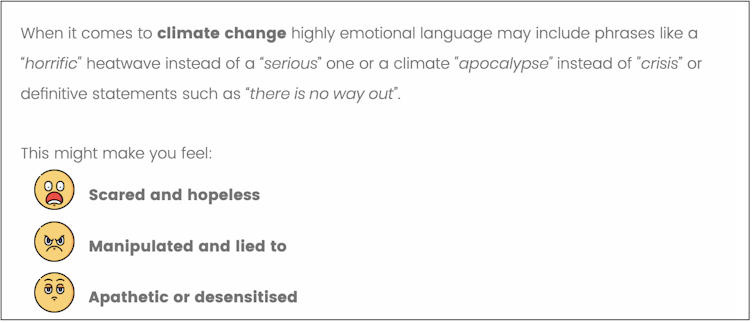
"For years, climate communication has operated under the assumption that scaring people half to death is the only way to get their attention. Our research shatters that outdated paradigm. When people are constantly bombarded with messages telling them the game is already lost, they don’t buy solar panels or vote for green policies—they tune out entirely. Psychological inoculation gives us a vital tool to armor the public against this manipulative fatalism, restoring agency without sugarcoating the immense scientific realities of the crisis."
Environmental psychologist Dr. Marcus Vance weighed in on the political dimensions of prebunking:
"One of the most profound discoveries of our work is that climate doom is not just psychologically damaging; it is politically toxic. Right-leaning audiences immediately sniff out the hyperbole and view it as emotional blackmail. By prebunking the manipulative framing of doom, we bridge a dangerous partisan divide. We remove the emotional weaponization from the debate, allowing citizens of all political stripes to engage with empirical climate realities through a lens of pragmatic problem-solving rather than ideological warfare."
Media ethicists have similarly praised the findings, urging newsrooms to reevaluate their editorial practices. Professor Elena Rostova noted:
"Journalists carry a heavy ethical burden. Writing headlines that scream ‘We are doomed’ might drive immediate web traffic, but it acts as a tax on the public’s mental health and political will. We must transition decisively toward solution-focused journalism—not out of naive optimism, but out of a rigorous commitment to effective, evidence-based public information."
Future Outlook: Redefining the Future of Climate Communication
As humanity navigates the critical inflection points of the 21st century, the battle against climate change will increasingly be fought not only in laboratories and legislative chambers, but in the human mind.
The success of psychological inoculation in mitigating climate doom points toward a transformative path forward for educators, media organizations, and public health advocates alike. Scaling these prebunking interventions—through interactive digital toolkits, media literacy curricula in schools, and public service announcements—can create a digitally resilient populace capable of consuming news without falling prey to emotional exploitation.
Furthermore, communicators must fundamentally recalibrate their toolkits. Moving away from the paralyzing rhetoric of inevitable collapse does not mean downplaying the severity of scientific warnings; rather, it means pairing stark ecological truths with robust, actionable pathways for mitigation and adaptation. By emphasizing human ingenuity, technological breakthroughs, and collective agency, society can transform eco-anxiety from a paralyzing liability into a powerful engine for sustained, systemic transformation.
The science is definitive: humanity is not doomed unless it chooses to be paralyzed by the belief that it is. Through proactive cognitive defenses and a renewed commitment to constructive, solution-oriented discourse, the global community can finally close the door on climate doom and unlock the boundless potential of human action.