Reviewed by Bruno Irace
Additional reporting by Record Collector Magazine
Executive Overview
There are stadium concerts, and then there are cultural interventions. On Friday, July 10, 2026, My Chemical Romance crossed that threshold at a sold-out Wembley Stadium, transforming London’s historic venue into an authoritarian dystopia. Touring their seminal 2006 masterpiece The Black Parade in its entirety alongside a blistering retrospective of deep cuts and fan-favourite anthems, the New Jersey outfit proved that emo is no longer a fleeting teenage coping mechanism. Instead, it has matured into a canonical rock institution.
What began as a last-minute impulse decision—swapping a planned seat in the stands for a frantic, floor-level resale standing ticket—unfolded into a masterclass in modern theatrical rock production. Blending post-Soviet imagery, political satire, nuclear-war aesthetics, and unyielding emotional resonance, the band did not simply revisit their legacy. They rebuilt its world from the ground up at stadium scale.
From the authoritarian regime of the fictional nation of “Draag” to a historic live debut of the deep cut "Zero Percent," the evening was an exercise in absolute sensory immersion. Supported by stunning art direction, guest opera vocalists, and a blistering setlist that bridged two decades of evolution, this was a night where tens of thousands of strangers melted into a single, breathing organism. This is the definitive account of how My Chemical Romance conquered Wembley Stadium and proved that the parade will never truly die.
Detailed Chronology: The Fall and Rise of Draag
The Preshow and the Descent into Draag
I nearly didn’t go. Having recently traveled to Milan for an exhausting, exhilarating weekend of Foo Fighters and System Of A Down, I had initially convinced myself I could wait until November to catch My Chemical Romance on their Bangkok stop. Another major reunion with the soundtrack of my adolescence could surely wait.
Apparently not.
The gravitational pull of hearing one of the defining bands of my youth proved irresistible. Shedding my initial plans to passively review the show from a comfortable seat, I hit the secondary market at the eleventh hour for a standing ticket on the pitch. Sitting through My Chemical Romance simply did not feel right. I needed to be inside the crowd, submerged in the emotion and the collective breath of the room.
Stepping onto the pitch at Wembley Stadium for the very first time changed everything. While the historic venue carries the immortal ghosts of Queen and countless other legends, standing down on the turf felt intensely physical—bigger, louder, and paradoxically more intimate despite being surrounded by tens of thousands of bodies.
Then, the world of Draag revealed itself.
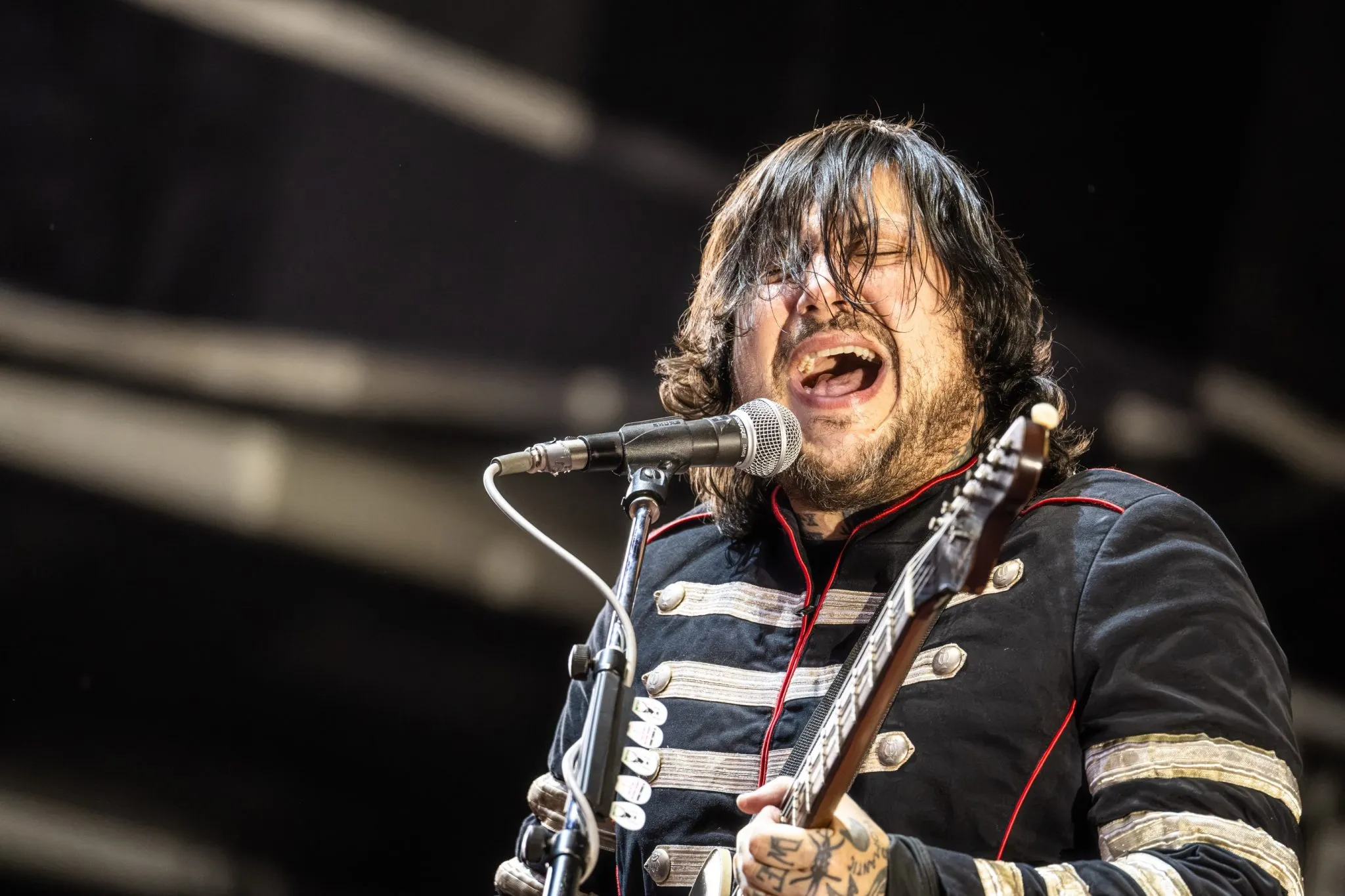
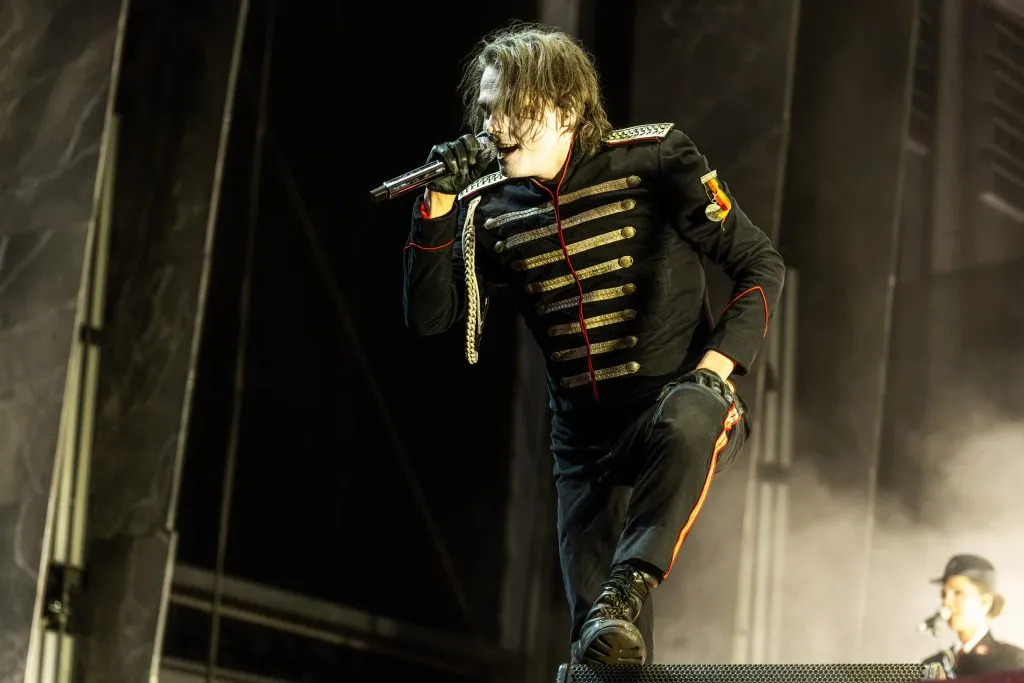
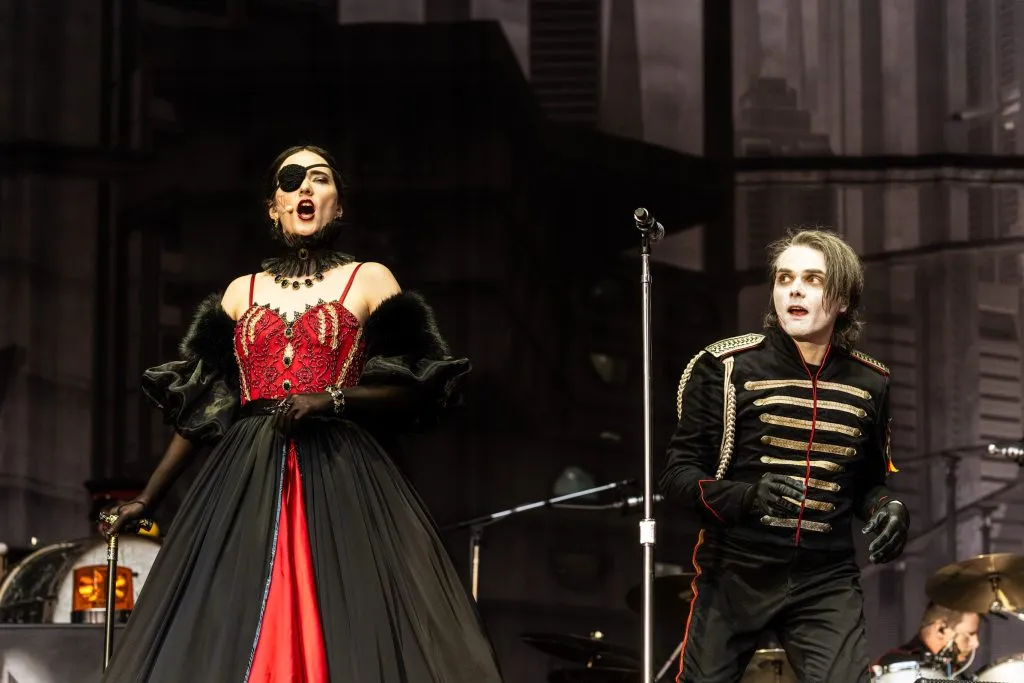
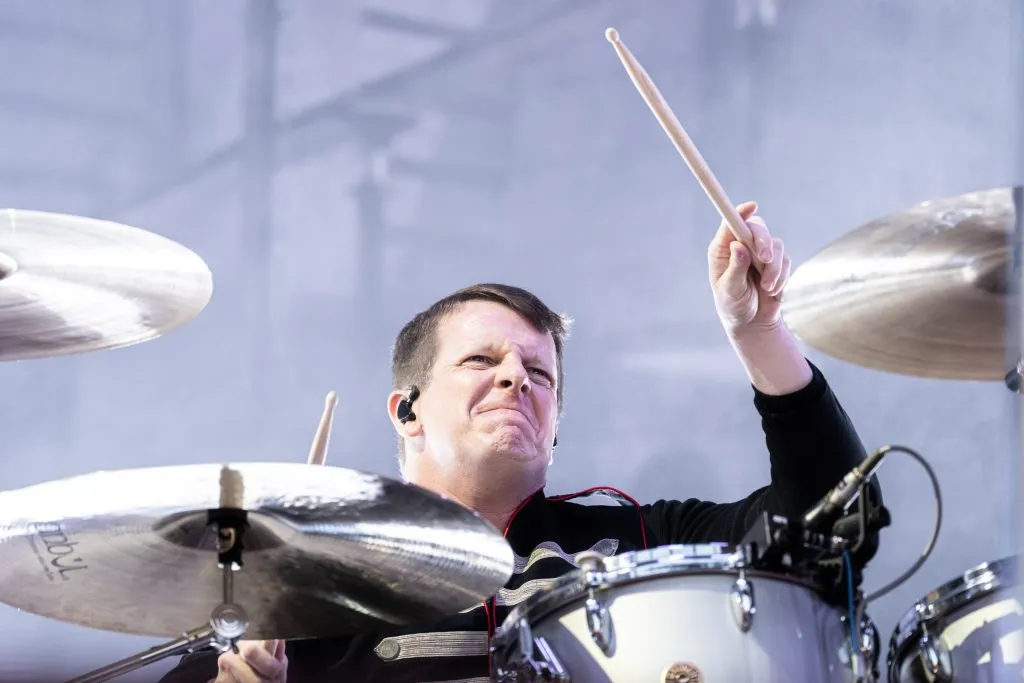
Before the band took the stage, Vera Lynn’s haunting wartime standard We’ll Meet Again drifted through the PA, quickly overtaken by a marching-band procession. This segued into Over Fields, the fictional national anthem of the authoritarian state of Draag. Wembley was instantly transformed into a totalitarian regime characterized by strict military uniforms, chilling propaganda broadcasts, and theatrical menace. This was not a standard rock concert; it was a piece of high-concept dystopian theatre. Actors, dancers, soldiers, and officials populated the stage, while giant screens projected grim state messaging. Accompanied by controlled pyro, staged violence, and a post-Soviet nuclear-winter atmosphere, it was political satire and grand emo opera executed with absolute sincerity.
Rebuilding The Black Parade
When the music finally struck, the band didn’t just play The Black Parade; they inhabited it.
The End. bled directly into Dead!, triggering an immediate, instinctive reaction from the crowd, who matched every pause, drum fill, and guitar line with ferocious vocal support. This Is How I Disappear and The Sharpest Lives followed with genuine sonic bite, showcasing a rhythm section operating with ruthless tightness.
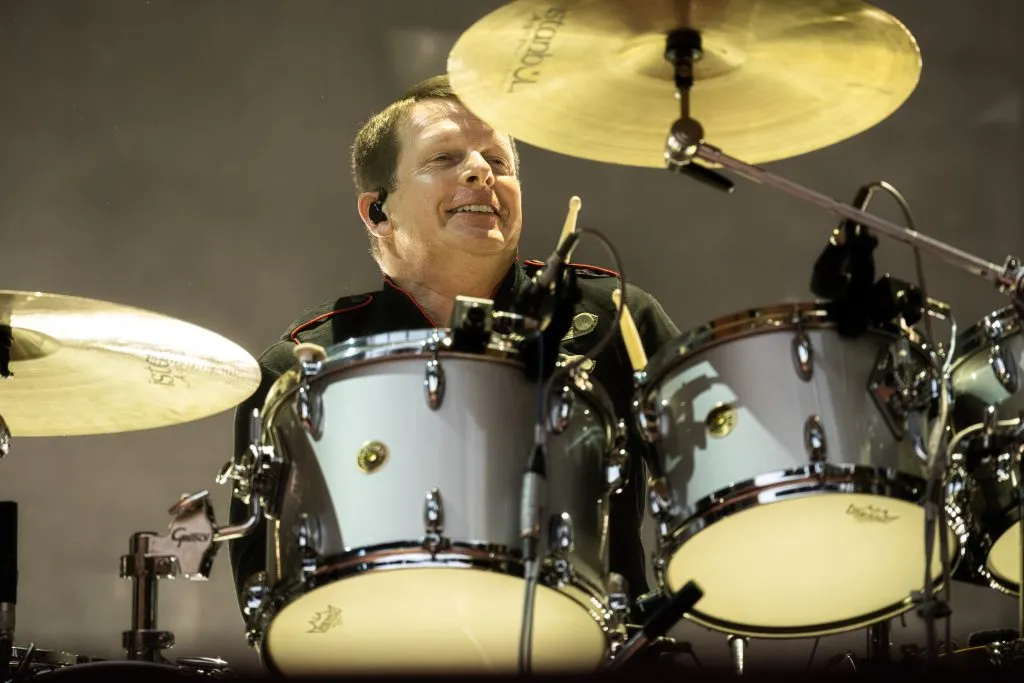
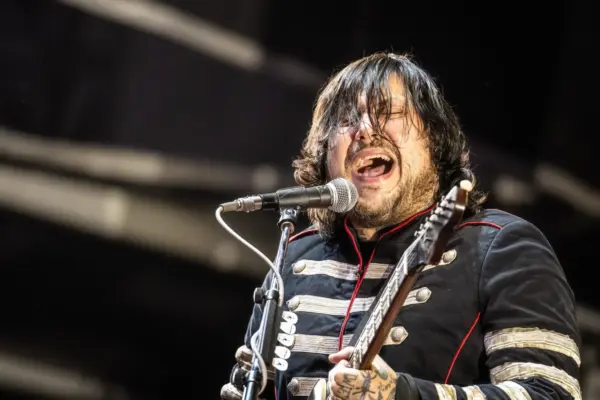
Gerard Way’s vocals remain an absolute marvel. Fragile one moment, dripping with theatrical venom the next, his voice cut through the cavernous stadium with the exact urgency that made these songs feel like a lifeline nearly twenty years ago. The years have only refined his performance; he now possesses an innate understanding of dramatic space and pacing.
Then came the piano chords.
The opening notes of Welcome To The Black Parade were enough to make Wembley erupt before Way had even delivered the first lyric. People around me sang as though the song had been locked inside our chests for decades, waiting for this exact shared catharsis.
Yet, the emotional peak of the sequence wasn’t just bombast. I Don’t Love You brought the stadium down from its initial high, thousands of voices whispering and crying out a chorus of devastation that felt intensely personal. House Of Wolves restored the swagger before Cancer stripped the production completely bare. Stripped of fire and actors, those quiet moments proved that beneath the grand artifice lies timeless songwriting.
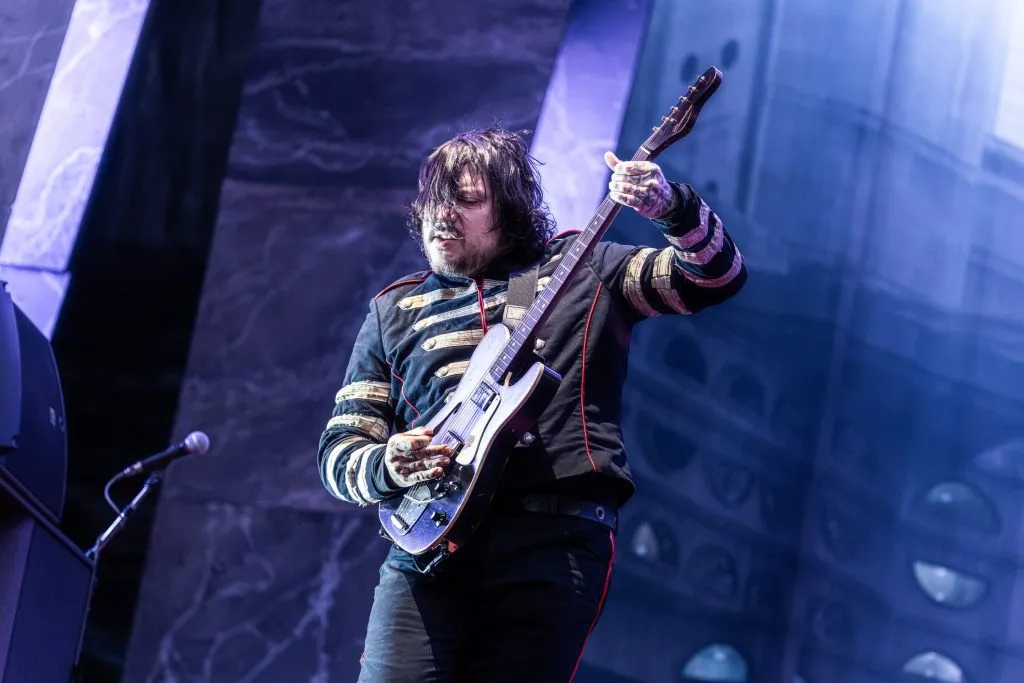
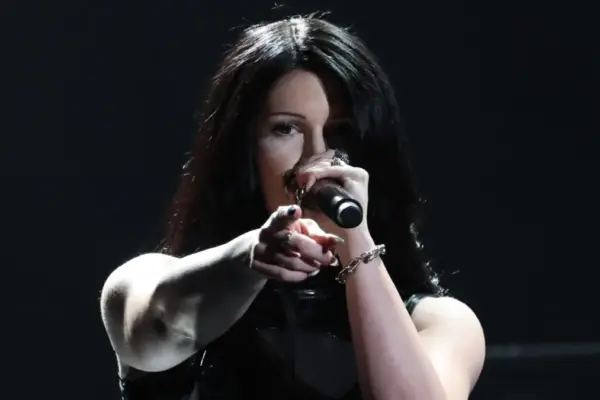
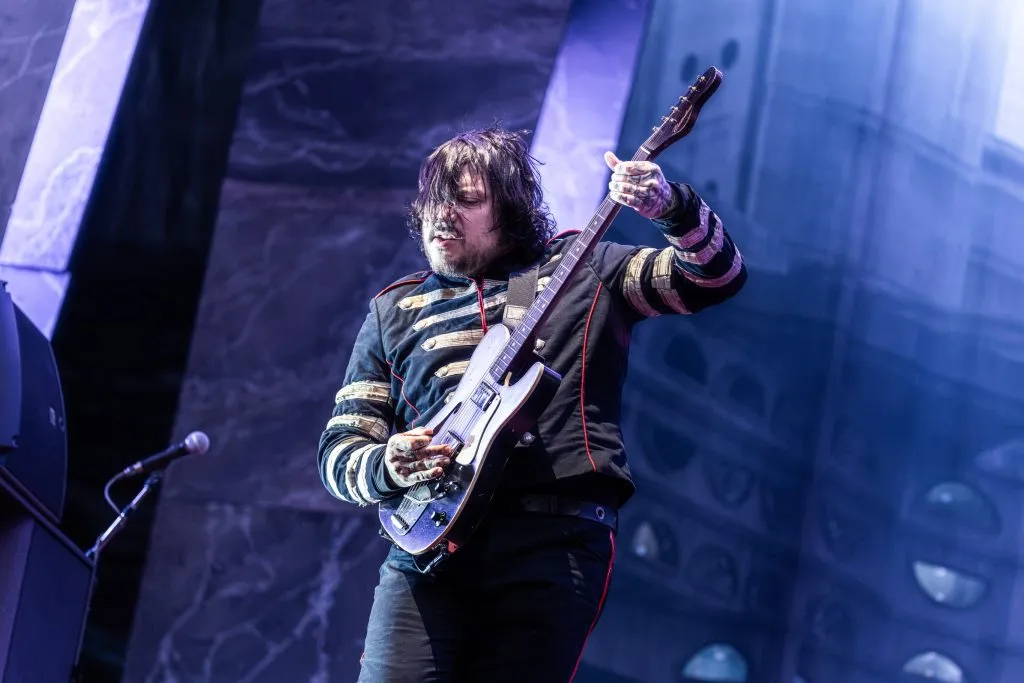
Mama brought the full theatrical machinery roaring back to life, featuring guest opera vocalists Lucy Joy Altus and Charlotte Kelso, whose soaring additions pushed the performance into gothic madness. Flames licked the sky, fireworks shattered the dusk, and the fictional regime of Draag appeared to collapse into cinematic warfare. Tracks like Sleep, Teenagers, and Disenchanted unspooled with cinematic precision before culminating in Famous Last Words.
It was during this anthem that the night achieved true magic. Without warning, a stranger standing beside me hoisted me onto his shoulders. Suddenly, I was suspended above the pitch, looking across a sea of thousands screaming the chorus underneath cascading fireworks. We had never met. He had no obligation to give me a better view. Yet, in that fleeting moment, he gifted me one of the most unforgettable memories of my concert-going life. That is the enduring power of live music: it transforms strangers into co-authors of your personal history.
The first act drew to a close with The End. reprise, followed by the macabre spectacle of Blood, featuring a haunting appearance by the character Columbina who danced around a motionless Gerard Way.
The B-Stage Shift and Uncharted Territory
While the main stage was a monument to grand-scale theatre, the B-stage—positioned in the center of the standing floor—was an exercise in pure, unfiltered connection. Transitioned by Clarice Jensen’s haunting cello piece From A to B, the band materialized within touching distance of their fans.
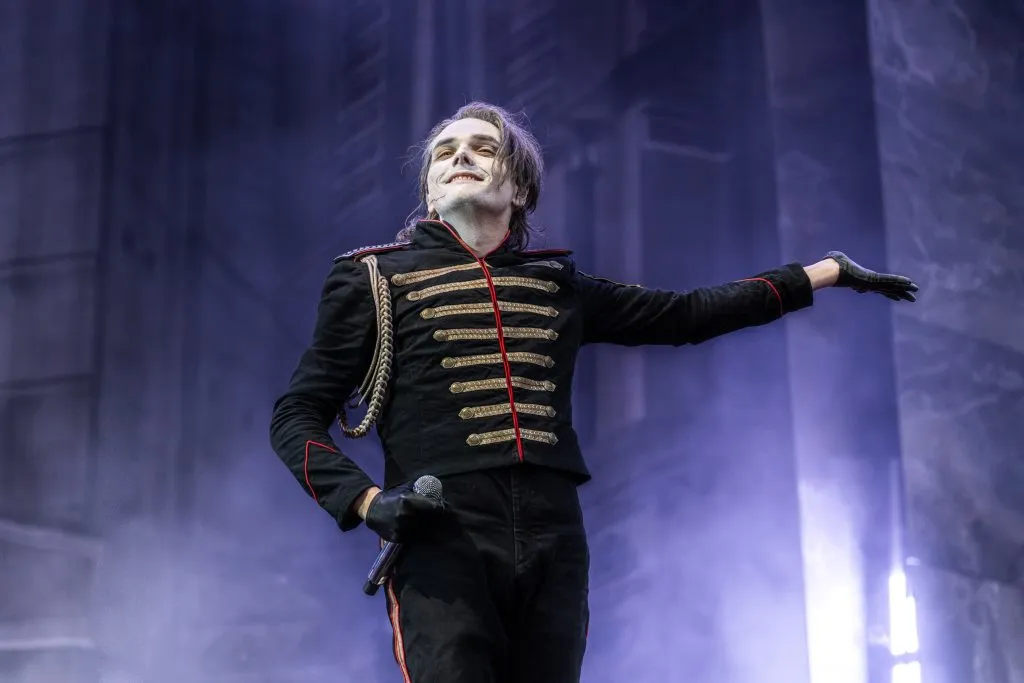
When I’m Not Okay (I Promise) kicked off, Wembley morphed into the world’s largest teenage bedroom. Small, joyful mosh pits erupted across the floor—devoid of early-2000s malice, but throbbing with joyous, unadulterated energy. Deep cuts like To The End and My Way Home Is Through You thrilled the die-hards, while Summertime offered a tender breathing room before Na Na Na (Na Na Na Na Na Na Na Na Na) flooded the stadium with Technicolor punk energy. Fittingly, the song was dedicated to legendary costume designer Colleen Atwood, honoring the immense craft behind the band’s visual identity.
Another massive highlight arrived with The Ghost Of You, delivered with sweeping, widescreen emotion. But the true shocker of the evening came next: Zero Percent, a rare B-side from The Black Parade era, received its historic first-ever live performance. The collective gasp and roar of recognition from the front rows created an electric ripple through the venue, proving that My Chemical Romance still had surprises left in their arsenal.
Following S/C/A/R/E/C/R/O/W, the evening closed its main emotional arc with Helena. By this point, I had naturally fallen into step with two girls I had met only hours prior. We stood with arms locked around one another, singing "So long and goodnight" into the London night air. Different backgrounds, different timelines, entirely separate lives—all collapsing into a singular moment of communal grace.
The night concluded with a stunning, tour-debut piano-and-strings arrangement of Demolition Lovers, bringing the dystopian epic to a deeply tender, cinematic close.
Supporting Context & Metrics
To understand the scale of what My Chemical Romance achieved at Wembley Stadium on July 10, 2026, one must look at the production metrics and cultural footprint:
- Venue Capacity: ~90,000 attendees (completely sold out).
- Production Footprint: Utilized a multi-tier stage design incorporating a main dystopian theatrical set and a central B-stage for intimate crowd engagement.
- Special Guests: Featuring operatic vocalists Lucy Joy Altus and Charlotte Kelso, alongside cellist Clarice Jensen.
- Setlist Milestone: Featured the world live debut of the deep-cut track Zero Percent.
- Visual Direction: Costumes and set design heavily inspired by post-Soviet aesthetics, dystopian fiction, and historical military regalia, curated alongside nods to high-concept costume design (notably dedicated to Colleen Atwood).
Official Statements & Critical Reception
While official press releases from the band’s management have remained deliberately enigmatic—leaning heavily into the fictional lore of Draag rather than traditional promotional PR—critics and cultural commentators have been universal in their praise.
Music industry analysts have noted that The Black Parade tour represents a new gold standard for legacy album retrospectives. Rather than coasting on nostalgia or playing the record statically from front to back without context, My Chemical Romance treats their historical catalog as a living, breathing theatrical script.
Reviewers across European music publications have highlighted the rare combination of high-art production and raw emotional authenticity. As noted in contemporaneous reviews from major European music circuits, the band has successfully navigated the treacherous waters of rock nostalgia by refusing to pander, choosing instead to elevate their past work into grand, multidisciplinary art.
Future Outlook: What Lies Beyond the Parade?
With the North American and European legs of The Black Parade tour capturing global headlines, all eyes now turn toward the band’s upcoming international dates, including the heavily anticipated November stop in Bangkok.
The inclusion of rarities like Zero Percent and newly arranged deep cuts like Demolition Lovers suggests that My Chemical Romance is not viewing this tour as a final victory lap, but rather as an active, evolving creative chapter. Rumours continue to swirl within fan communities regarding whether these elaborate conceptual tours might eventually manifest in new studio material or extended visual media projects tied to the world of Draag.
For now, however, the lasting takeaway from Wembley Stadium is simple: My Chemical Romance has transcended the limitations of their genre. They have proven that alternative rock and emo can command stadium-sized spaces not through tired gimmickry, but through uncompromising artistic vision, obsessive attention to detail, and an unbreakable bond with an audience that refuses to grow out of them.
As the dust settled on the Wembley turf and the thousands dispersed into the London night, one truth remained blindingly clear: The Black Parade didn’t just march through our teenage years. It marched right alongside us into adulthood, and it shows no signs of stopping.