Executive Overview
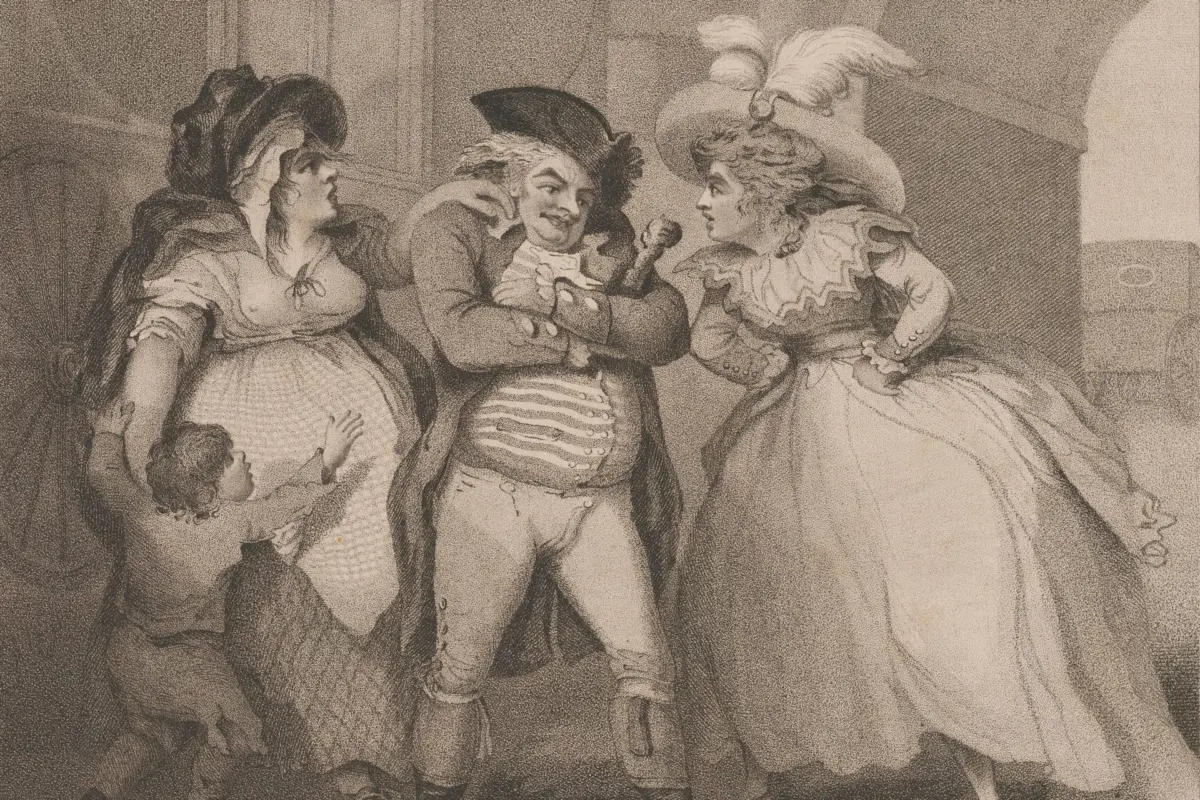
When modern audiences encounter the concept of bigamy, it is frequently wrapped in the comforting garb of farce. From Ray Cooney’s frantic 1983 West End hit Run For Your Wife—where a mild-mannered London cabby desperately balances two lives across the city—to lighthearted cinematic tropes, bigamy has long been coded as a comic juggling act. Yet, beneath the veneer of theatrical door-slamming and frantic scheduling lies a historical reality defined not by laughter, but by devastation, coercion, and profound cruelty.
Recent historical research, detailed comprehensively in academic works such as Double Trouble and Double Lives, reveals that historical bigamy was rarely a benign, mutually agreed-upon solution to broken marriages. Instead, it was an offense that triggered profound emotional trauma, systemic legal violence, and calculated financial fraud. Far from being a victimless workaround for a society that lacked accessible divorce laws, bigamy was steeped in deliberate deception, betrayal, and tears.
From the grim courtrooms of early modern England to the Victorian era’s rigid social codes, the footprint of bigamy is marked by weeping wives, brutal judicial corporal punishment, penal transportation, and, in its most predatory manifestations, calculated financial ruin. This investigative look unmasks the true history of bigamy, challenging cultural myths and exposing the stark, often painful realities faced by those caught in its web.
Detailed Chronology: The Evolution of Bigamy and Its Legal Framework
To understand how bigamy was perceived, practiced, and punished, one must trace its journey through centuries of changing legal codes and societal structures. The trajectory of bigamy spans from capital offenses to register-office subterfuge, illuminating the shifting anxieties of the state regarding marriage, gender, and social order.
The 17th Century: The Shadow of the Gallows
Bigamy was formally codified as a felony in England in 1604, reflecting a growing state and religious interest in controlling marital unions. Under the early statutes, the crime carried a potential death sentence.
While actual executions for bigamy were relatively rare, the looming threat of the gallows cast a dark shadow over the proceedings. The tears shed in early 17th-century courtrooms were often expressions of absolute terror. Defendants recognized that stepping into a courtroom meant risking their lives simply for contracting a second union, regardless of the emotional state of their first marriage.
The 18th Century: Branding and Counterfeit Grief
As the 18th century progressed, the administration of justice evolved, shifting away from capital punishment toward physical branding and public humiliation. Convicted bigamists during this era were routinely branded on the hand—a permanent, physical mark that signaled their criminality to the community.
Court records from this period provide intimate, heartbreaking glimpses into the human cost of the crime. Historical source material depicts an overwhelming amount of weeping. Sometimes these tears were shed behind the scenes: the quiet, devastating reaction of a deserted first wife or a deceived second wife upon discovering her husband’s betrayal. At other times, tears were weapons of contrition, deployed by bigamists begging for forgiveness or leniency from judges.
Not all victims, however, were swayed by performance. In an 18th-century case that drips with cynicism, an unmoved wife suspected her husband, William Bury, of manufacturing his grief. Believing he had simply "spit on his fingers" to fake tears before the magistrate, she aggressively pushed for his prosecution anyway, ensuring he faced the full wrath of the law.
The 19th Century: Transportation, Imprisonment, and Spatial Evasion
The 19th century witnessed systemic shifts in how bigamy was handled by the criminal justice system. Capital punishment was entirely off the table for this offense, but the state maintained harsh punitive measures.
- Penal Transportation: During the early 19th century, roughly a quarter of all convicted bigamists—amounting to some 254 individuals—were sentenced to penal transportation, torn from their families and shipped across the globe to Australia.
- Incarceration Realities: Even as transportation declined, prison sentences remained punishingly severe. While cultural mythologies sometimes suggest lenient wrist-slaps—such as a frequently cited case involving a man named Thomas Hall, whom historian Lawrence Stone initially claimed received a single day in prison—closer archival analysis reveals the truth: Hall was actually sentenced to four grueling months behind bars.
- The Logistics of Deception: Because the 19th-century legal system pursued bigamists with vigor, perpetrators had to go to extraordinary lengths to avoid detection. Analysis of bigamous marriage locations demonstrates that offenders rarely dared to marry in the same church twice unless they believed they were legally entitled to do so or possessed immense local influence. Instead, bigamists put vast geographical distance between their ceremonies, particularly in rural settings. By the mid-19th century, many exploited the relative anonymity and privacy offered by newly established register offices.
The 20th Century: Modernity, Shorter Sentences, and Romance Fraud
Entering the 20th century, the legal pendulum finally began to swing toward shorter custodial sentences, reflecting a broader modernization of criminal jurisprudence. However, this era also witnessed the professionalization of marital deception.
With the rise of mass media and early correspondence networks, predatory individuals realized that bigamy could serve as a lucrative career. The century’s records highlight serial fraudsters who weaponized marriage for economic gain, exploiting the systemic vulnerability of working-class women.
Supporting Context & Metrics: Challenging the "Victimless Crime" Myth
For decades, certain social historians—most notably Lawrence Stone—framed bigamy through an empathetic lens, describing instances of men abandoning their first wives to marry a second as "divorce by mutual consent." Under this interpretation, if a first wife agreed not to prosecute her deserting husband in exchange for ongoing financial support, the arrangement was viewed as a practical, victimless workaround for a society that barred easy legal divorce and condemned unmarried cohabitation.
However, a closer look at historical metrics and trial evidence shatters this comfortable illusion.
The Physical and Logistical Impossibility of Dual Lives
The notion that bigamy was an accepted, easy-going societal norm collapses under the weight of basic logistics. Maintaining two households simultaneously was overwhelmingly complicated, physically exhausting, and financially ruinous for working-class families.
Consider the case of a 20th-century bigamist who attempted to manage two families by frantically bicycling across London. Earning a modest weekly wage of just £2 and 7 shillings, he found maintaining two separate homes utterly unsustainable; the arrangement collapsed under its own financial and physical weight within a matter of months.
Deception as Proof of Guilt
If bigamy were truly an accepted social solution to marital breakdown, deception would have been entirely unnecessary. Yet, the trial records are saturated with lies. Bigamists consistently lied about their marital status or allowed new partners to assume they were legally free to marry.
While some offenders acted out of desperate personal circumstances—such as George Harrower, prosecuted in 1816 whose first wife was confined to a lunatic asylum, or Benjamin Griffiths, whose wife committed adultery with his nephew and who in 1847 married the woman caring for his children—many others were driven by pure exploitation.
Some men engaged in fleeting dalliances, such as John Mase Smith, who set a morbid speed record by abandoning his second wife at 5:00 AM on the morning after his bigamous 1849 wedding to return to his first.
At the extreme end of the spectrum were professional predators. John Woodgate Kinsella, prosecuted in 1900, 1908, and 1918, used lonely-hearts newspaper advertisements to dupe more than a dozen young, working-class women into marriage, systematically stripping them of their life savings before abandoning them. In the context of modern criminology, Kinsella was an early practitioner of romance fraud—a predatory criminal archetype that continues to plague digital platforms today.
Official Statements and Archival Insights
Historians and legal experts studying the intersection of gender, class, and family law emphasize that the romanticized, comedic view of bigamy erases the profound trauma inflicted upon deceived spouses.
"The historical record is clear: bigamy was not a harmless joke or a quiet, mutual understanding. It was a severe breach of trust that left a trail of financial destitution and emotional devastation, particularly for women who entered into second unions in good faith, only to find their lives upended by legal and social ruin."
— Archival Research Summary on Historical Marriage Offenses
Legal scholars point out that the shock experienced by second spouses upon discovering a prior marriage was genuine, visceral, and socially catastrophic. In an era where a woman’s legal identity, economic security, and social standing were inextricably bound to legitimate marriage, discovering one’s union was legally void—and one’s status reduced to that of a concubine or unwitting adulterer—wiped out lifetimes of respectability in a single afternoon.
Future Outlook: Lessons from the Archives
As contemporary legal systems continue to evolve around issues of family law, domestic fraud, and interpersonal deception, the history of bigamy offers a sobering cautionary tale.
The cultural persistence of the "comic bigamist"—from 19th-century theatrical farces to 20th-century sitcoms—demonstrates society’s historical discomfort with confronting the darker realities of domestic exploitation. By reframing bigamy not as a quirky historical loophole, but as a form of interpersonal deception akin to modern romance fraud, modern scholarship forces a reckoning with the vulnerabilities of the past.
Future historical and sociological investigations will undoubtedly continue to unearth the hidden stories of those who suffered under the weight of dual lives. Ultimately, the history of bigamy is not about the logistics of running two homes, nor is it about the punchlines of theatrical farce. It is about the human cost of deceit—the tears of the abandoned, the trauma of the deceived, and the long, difficult path toward genuine equity and transparency in human relationships.