Executive Overview
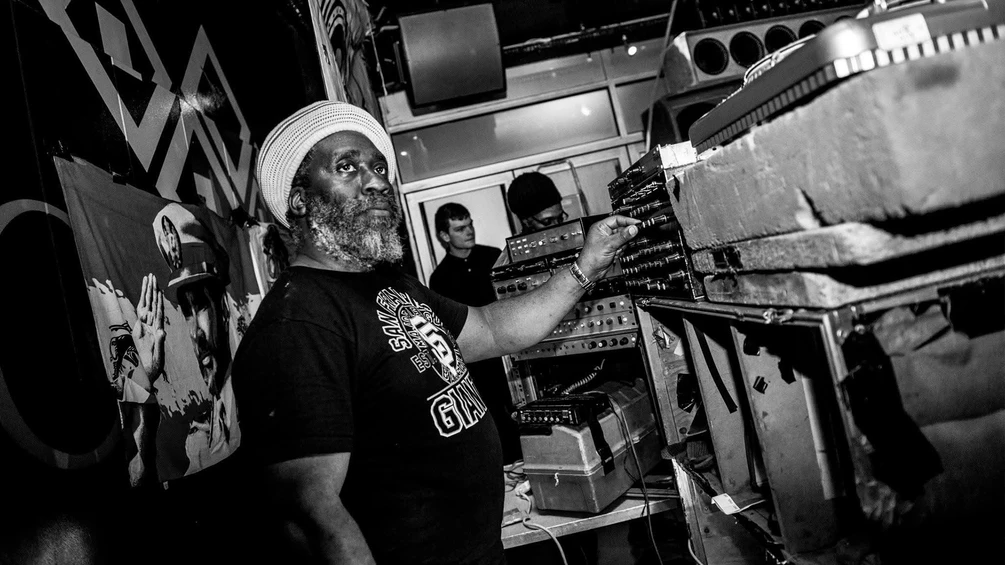
For nearly half a century, the thunderous, hand-built speaker stacks of Channel One Sound System have delivered heavyweight dub reggae straight to the soul of the UK. Operated by brothers Mikey Dread (Michael Bailey) and Jah T (Trevor Bailey), Channel One represents far more than just a musical outfit; they are a totemic institution of British sound system culture. Since the 1980s, their annual pilgrimage to the corner of Leamington Road Villas and Westbourne Park Road during the Notting Hill Carnival has become a rite of passage for generations of music lovers.
As Notting Hill Carnival prepares to celebrate its monumental 60th anniversary, the cultural weight of Channel One’s legacy has never been more profound. Emerging from the post-Windrush Caribbean diaspora, sound systems transformed from underground sanctuaries of resistance into global cultural phenomena. Channel One’s 47-year journey—spanning 38 countries, prestigious university campuses, and gritty warehouse raves—tells a story of unity, spiritual liberation, and unyielding cultural persistence. In an era marked by rapid gentrification, stringent licensing crackdowns, and shifting urban landscapes, Mikey Dread and Jah T remain steadfast guardians of a living tradition, proving that the consciousness vibration of roots rock reggae is as vital today as it was in the decades of its inception.
Detailed Chronology: From Admiral Bailey to Global Icons
The story of Channel One is deeply rooted in familial heritage, cultural evolution, and historical milestones that trace the trajectory of Black music in Britain.
The Genesis and the Spark of 1973
The Bailey brothers’ immersion into sound system culture began in earnest in 1973. As teenagers, Mikey and Jah T experienced the transformative power of amplified music at Notting Hill Carnival for the very first time. This pivotal year followed the visionary intervention of director Leslie “Teacher” Palmer, who integrated sound systems directly into the Carnival framework. Palmer’s strategy successfully coaxed young Caribbean crowds out of underground shebeens—clandestine spaces where marginalized communities sought sanctuary from state surveillance and systemic racism—and onto the open streets.
The introduction of sound systems to the Carnival route marked a profound tectonic shift. It provided a generation of young Black Britons with a sonic platform to step out of the shadows, dance freely, and assert their cultural identity in the public sphere. For teenage Mikey and Jah T, the experience planted a seed. "Like most young people, of course, we were excited about it," Mikey recalls. "Anyone wanting to get involved with sound systems and music overall would feel the same. We thought, ‘Yeah, if we can get to do this in a few years’ time, then why not?’"
Inheriting the Mantle (1979)
That ambition materialized in 1979 when the brothers inherited their father’s Admiral Bailey sound system. Recognizing a new chapter, they renamed the outfit Channel One Sound System, paying direct homage to the legendary Kingston, Jamaica recording studio where seminal reggae anthems like Sister Nancy’s ‘Bam Bam’, The Mighty Diamonds’ ‘Right Time’, and Delroy Wilson’s ‘It’s A Shame’ were brought to life.
By 1983, Channel One made their official Carnival debut. Hauling a massive, custom-built setup inside a 22-foot, 7.5-tonne truck, they set up camp in a cavernous, open-front garage. "The speaker stacks sounded really good and we would still be going until 9:45 PM," Mikey recalls. "The place just got jammed." That very corner became their permanent home from the 1980s onward, anchoring the dub reggae movement at the heart of West London.
Breaking Borders: The University Tours
Rather than confining their music solely to traditional urban enclaves, Channel One boldly expanded their footprint across the United Kingdom. Throughout the 1980s, the sound system embarked on extensive tours of polytechnics, colleges, and student unions, playing to audiences who had never before experienced the physical, chest-rattling impact of a sound system.
Traveling from Wolverhampton, Bradford, Swansea, Carlisle, and Northumberland to Essex, Bath, Bournemouth, and Exeter, Channel One shared bills with acts like Bad Manners, Aswad, and Misty in Roots. Mikey fondly remembers playing at conservative academic strongholds, such as Westfield University (where Margaret Thatcher once studied). There, wealthy students—future leaders of the nation—would crowd around the towering, seven-foot speaker boxes, eagerly throwing themselves into the bass and shattering cultural barriers through shared sonic euphoria.
Fusing Ravers and Rastas
As British youth culture fractured and reformed during the late 1980s, Channel One found themselves at the unexpected intersection of reggae and the burgeoning warehouse rave scene. While ravers experimented with ecstasy in the "second rooms" of underground parties, skinheads influenced by Rock Against Racism and multi-racial crowds gathered around the sound system’s stacks.
"You were bringing people into a different environment to what they’re used to, so you’re fusing people together—white ravers, Asians and Black people, not just rastas," Mikey notes. "It was good because you’re crossing the border. You know you’ve done your work when you’ve tapped into a different type of audience."
Supporting Context & Metrics: The Cultural and Social Architecture
To fully grasp the magnitude of Channel One’s legacy, one must examine the socio-political backdrop of Notting Hill Carnival and the architectural mechanics of sound system culture.
The Crucible of Resistance
Notting Hill Carnival was established in 1966 not merely as a street festival, but as a joyful symbol of anti-colonial resistance and a direct response to racial tensions in post-WWII London, including the 1958 Notting Hill race riots. The Westway flyover and Acklam Road—where Channel One first played Carnival—served as literal battlegrounds for the Black British civil rights movement.
This tension reached a boiling point during the 1976 Carnival, when attendees fought back against aggressive police brutality and the discriminatory weaponization of the "SUS" (suspected person) laws, which permitted officers to stop and search individuals on mere suspicion. Thousands of young Black people were targeted, sparking a fierce riot. Mikey recalls fleeing the scene toward Westbourne Grove:
"The riots were in full force but the music never stopped. There were sound systems on each corner and they couldn’t stop every single one. I couldn’t tell you what records were playing. You’re just trying to get away."
Global Footprint and Scale
- 60 Years: The milestone anniversary of Notting Hill Carnival, cementing its status as the world’s second-largest street festival.
- 2 Million: The estimated number of annual attendees who flood West London each August Bank Holiday weekend.
- 38 Countries: The global reach of Channel One Sound System, having exported British-Caribbean sound system culture across continents.
- 47 Years: The duration of Mikey Dread and Jah T’s continuous operation of Channel One since taking the helm in 1979.
Official Statements and Institutional Battles
Sound system culture has frequently faced systemic opposition from municipal authorities and affluent gentrifiers. Channel One’s resilience has been tested—and proven—through landmark legal battles.
The 2014 Licensing Victory
In 2014, affluent local residents attempted to drive Channel One out of Notting Hill Carnival, citing "excessive noise" and petitioning Westminster Council to revoke their spot. Recognizing that the removal of Channel One would open the floodgates for the systematic erasure of sound systems city-wide, the global sound system community mobilized.
A public change.org petition gathered over 8,500 signatures in defense of Channel One, alongside fellow threatened crews Sir Lloyd and Killawatt. The overwhelming public pressure forced the authorities to back down, resulting in Westminster Council granting permanent licenses to the historic sound systems.
"The sound system community came together from all over the world and [authorities] realised how powerful the movement was," Mikey reflects. "We hadn’t done anything wrong. When we won the license, the residents got up and walked out, but some of them decided, ‘Well, it’s not really a bad thing after all.’ Their children were enjoying it and they’re now bringing their children to see us at Carnival."
Mikey remains acutely aware of what was at stake. He emphasizes that sound systems are the beating heart of Carnival: "Half of Carnival wouldn’t be there if sound systems were stopped. Carnival just wouldn’t look the same."
Future Outlook: Passing the Torch to the Next Generation
As Channel One prepares for the 60th-anniversary celebrations—kicking off with a warm-up session at Village Underground on Friday night, followed by their legendary street performances on Sunday, August 30th, and Monday, August 31st—the question of legacy looms large.
Mikey Dread is realistic about the passage of time. Sound system culture requires relentless physical labor, financial investment, and ideological dedication. The future of the movement now rests squarely on the shoulders of younger practitioners.
"They come to engage and learn," Mikey says of the younger generations flocking to their sets. "I have to have faith in them. Our generation of sound systems kept things alive for decades, but we won’t be around forever, so they’ve got to come up and do good. It’s now up to the new generation to really put their stamp on it. If they want Carnival to carry on for the next 60 years, that will be down to them. Keeping that corner going so long has been hard graft, so it’s even more important they take note and know their role as time goes on."
Yet, Channel One’s mission extends far beyond historical preservation; it remains deeply personal and communal. They bridge generational divides, offering elders a portal to their youth in the 1970s while initiating Gen Z into the transcendental frequency of roots reggae.
Reflecting on the improbable journey from inheriting their father’s Admiral Bailey system to commanding crowds across 38 nations, Mikey offers a humble assessment of how his parents would view their success: "I think he would be proud. He’s not known, and our mother’s not known how far the sound system has come along, or all the countries we’ve played in. It’s come a long way."
When asked if Channel One has any elaborate surprises planned for Carnival’s diamond jubilee, Mikey delivers the ultimate cool, understated response: "There’s nothing special I can do. People just come down for a nice day. It’s already special."
As the basslines prepare to rattle the West London airwaves once more, Channel One stands as an enduring monument to unity, spiritual elevation, and the unbreakable power of music.