Executive Overview
For the general public, the phrase “humanitarian nursing” often conjures up cinematic imagery: frontline clinicians rushing into disaster-stricken war zones, erecting makeshift field hospitals, and aggressively triaging wave after wave of trauma casualties under the threat of impending danger. While crisis and emergency response are vital components of the field, they represent only a fraction of what modern humanitarian nursing entails.
Today, humanitarian nursing is a sophisticated, highly strategic global discipline. It encompasses long-term community health interventions, responses to chronic resource deficiencies, containment of infectious disease outbreaks, and the care of displaced populations fleeing geopolitical instability or climate-induced crises. It requires stepping far outside the predictable, resource-rich environment of the modern hospital and entering a world defined by volatility, cross-cultural complexities, and systemic infrastructural gaps.
For Registered Nurses (RNs) looking to transcend the boundaries of traditional clinical settings, humanitarian nursing offers a profound opportunity to enact systemic change on a global scale. However, transitioning into this field demands more than just clinical competence; it requires targeted postgraduate education, high-acuity crisis experience, profound cultural humility, and psychological resilience. This comprehensive guide outlines the rigorous pathway required for nurses seeking to transform their clinical capabilities into an engine for global impact.
Detailed Chronology: The Evolution of Modern Humanitarian Nursing
To understand the trajectory of a humanitarian nurse, it is helpful to trace the developmental milestones and experiential phases that define this career path. Transitioning from a domestic clinical nurse to an international humanitarian specialist is rarely an overnight leap; rather, it is a deliberate, multi-stage evolution.
[Phase 1: Foundational Practice]
  └── Acquired via 2–5 years in high-acuity/emergency domestic settings.
[Phase 2: Advanced Academic Specialization]
  └── Pursuing a Master of Nursing or targeted postgraduate certifications.
[Phase 3: Cross-Cultural & Field Exposure]
  └── Engaging in localized volunteer work, medical missions, or rural health deployments.
[Phase 4: Operational Deployment]
  └── Contracting with NGOs, UN agencies, or international disaster relief frameworks.
[Phase 5: Leadership & Strategy]
  └── Transitioning into nurse coordination, health policy advising, or program management.
Phase 1: Foundational Clinical Practice (Years 1–5)
Every effective humanitarian nurse begins at the bedside. The initial phase of this career journey centers on mastering core clinical competencies within domestic healthcare systems. Nurses must log extensive hours in environments that test their critical thinking, such as Emergency Departments (ED), Intensive Care Units (ICU), and acute care facilities. During this period, the nurse develops intuitive clinical instincts, learning how to assess rapidly deteriorating patients, prioritize interventions autonomously, and function cohesively within high-stress multidisciplinary teams.
Phase 2: Advanced Academic Specialization
Once clinical fundamentals are firmly established, prospective humanitarian nurses typically pivot toward advanced education. Enrolling in postgraduate programs—such as a Master of Nursing with specializations in global health, public health, disaster relief, or emergency care—equips clinicians with the academic frameworks necessary to understand macro-level health disparities. This phase bridges the gap between individual bedside care and population-level health interventions, teaching nurses how to manage logistics, coordinate care with limited supplies, and apply evidence-based strategies in austere environments.
Phase 3: Field Exposure and Cultural Immersion
Armed with clinical experience and advanced education, the nurse enters the preparatory field phase. This involves stepping out of comfort zones through domestic rural and remote healthcare deployments, community health clinics, or international medical volunteer missions. This phase is critical for mastering resourcefulness; nurses learn how to deliver safe, effective care when sophisticated medical equipment and diagnostic machinery are absent. Simultaneously, clinicians cultivate cultural awareness, learning to navigate language barriers, local belief systems, and socioeconomic health determinants.
Phase 4: Operational Deployment with Global Organizations
Having successfully navigated foundational practice, education, and field exposure, the nurse is positioned for formal deployment. At this stage, professionals secure roles with international Non-Governmental Organizations (NGOs), United Nations agencies (such as the WHO or UNICEF), or government-run foreign aid programs. Deployments may range from three-month emergency responses in disaster-hit regions to year-long postings managing chronic healthcare deficits in refugee settlements.
Phase 5: Leadership, Advisory, and Policy Roles
After years of boots-on-the-ground deployments, experienced humanitarian nurses often transition into macro-level leadership roles. They become Nurse Coordinators, Field Directors, and Clinical Health Advisors. In these capacities, they no longer just treat individual patients; they design healthcare delivery systems, negotiate with local governments and rebel factions for humanitarian access, train local healthcare workers, and shape global health policies.
Supporting Context & Metrics: The Reality of Global Health Disparities
The demand for skilled humanitarian nurses is driven by compounding global crises. According to the United Nations High Commissioner for Refugees (UNHCR), global forced displacement has reached unprecedented historic highs, with over 110 million people forcibly displaced worldwide due to persecution, conflict, violence, human rights violations, and climate shocks.
Key Drivers of Humanitarian Nursing Need:
- Displacement and Refugee Crises: Prolonged conflicts in regions such as the Middle East, East Africa, and Eastern Europe have overwhelmed local health infrastructures, leaving millions of displaced individuals without access to primary or emergency care.
- Climate Change and Natural Disasters: Extreme weather events—including catastrophic flooding, prolonged droughts, and intense seismic activity—frequently disrupt sanitation networks, triggering cholera outbreaks, vector-borne diseases, and widespread acute malnutrition.
- Fragile Health Systems: In many low-income and post-conflict nations, the ratio of healthcare workers to population density falls drastically below World Health Organization (WHO) safety thresholds, making external nursing reinforcements critical during health emergencies.
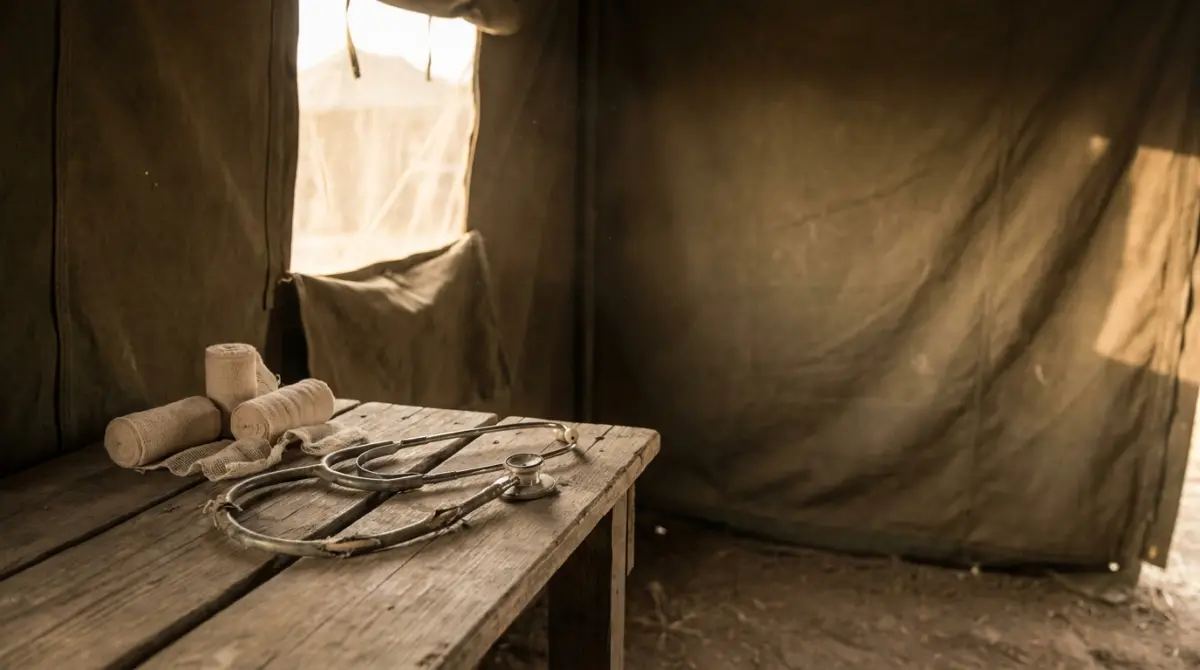
When nurses deploy to these regions, they encounter environments vastly different from the sterile, well-stocked ICUs of high-income nations. Resources are constrained; pharmaceuticals may be limited to basic analgesics, oral rehydration salts, and broad-spectrum antibiotics; and diagnostic confirmation often relies entirely on clinical acumen rather than advanced laboratory panels.
Core Pillars of Professional Development for Humanitarian Nurses
To thrive within these challenging ecosystems, registered nurses must systematically build specific skill sets across multiple domains.
1. Advanced Academic Credentials
While clinical intuition is non-negotiable, academic rigor provides the conceptual framework needed for population-level interventions. A Master of Nursing or targeted postgraduate qualifications in public health and disaster relief teaches nurses how to analyze epidemiological data, manage supply chains under duress, and implement scalable public health campaigns. Advanced education also refines administrative and leadership capabilities, preparing nurses to direct interdisciplinary teams composed of both international aid workers and local healthcare providers.
2. High-Acuity Clinical Adaptability
Humanitarian organizations routinely prioritize candidates with deep experience in high-acuity environments. Emergency departments, ICUs, and remote rural clinics force nurses to think on their feet. In a humanitarian field clinic, a nurse may be the primary diagnostic and therapeutic decision-maker. The ability to perform rapid, accurate physical assessments, triage mass casualties with minimal equipment, and make autonomous life-or-death decisions is a prerequisite for field deployment.
3. Cultural Competency and Cross-Cultural Communication
Providing care across cultural divides requires immense humility and emotional intelligence. A humanitarian nurse must understand that health, illness, and healing are perceived differently across cultures. Socioeconomic vulnerabilities, historical trauma, gender dynamics, and religious beliefs directly impact how communities interact with healthcare systems. Effective nurses bridge these gaps by:
- Recognizing and mitigating personal biases.
- Working sensitively alongside local interpreters and community elders.
- Earning the trust of patients and families through respectful, patient-centered communication.
- Collaborating respectfully with local indigenous healthcare practitioners to ensure sustainable care delivery.
4. Public Health and Epidemic Preparedness
Beyond individual bedside treatment, humanitarian nursing is deeply rooted in preventative medicine. Nurses must be well-versed in global health issues, including infection control protocols, water, sanitation, and hygiene (WASH) standards, vaccination campaigns, and outbreak management for infectious diseases such as Ebola, cholera, and measles. By implementing community-based educational initiatives, humanitarian nurses help mitigate health risks before they escalate into full-scale epidemics.
Official Perspectives: Navigating the Emotional and Operational Realities
The transition from a controlled hospital environment to the unpredictable front lines of global health is fraught with intense operational hurdles and psychological demands. Humanitarian nursing is undeniably rewarding, but it is equally demanding.
The Psychological Toll of Crisis Response
Industry veterans frequently emphasize that the hardest part of humanitarian nursing is rarely the clinical work itself; rather, it is the emotional and psychological toll of bearing witness to human suffering on a mass scale. Nurses regularly care for populations reeling from profound trauma, loss of loved ones, gender-based violence, and forced displacement.
Furthermore, operating in resource-constrained settings forces clinicians to make agonizing triage decisions—allocating scarce resources to those with the highest probability of survival while watching preventable morbidities unfold due to structural limitations. Consequently, cultivating psychological resilience, establishing peer-support mechanisms, and utilizing debriefing sessions are essential practices for sustaining a long-term career in the field.
Navigating Physical and Logistical Deprivation
Living and working conditions during international deployments can be exceptionally austere. Humanitarian nurses often endure:
- Extended periods away from home, family, and domestic support networks.
- Living in shared, basic quarters within active conflict zones or disaster recovery camps.
- Constant exposure to security risks, geopolitical instability, and logistical bottlenecks that delay essential medical shipments.
Despite these hardships, the profound sense of purpose, professional autonomy, and human connection found in humanitarian work inspires thousands of clinicians to build lifelong careers supporting the world’s most vulnerable populations.
Future Outlook: The Next Generation of Global Health Professionals
As the geopolitical and environmental landscape continues to shift, the nature of humanitarian nursing is evolving. Modern humanitarian organizations are placing an increased emphasis on localization—empowering local healthcare workers, shifting leadership of humanitarian responses to indigenous organizations, and utilizing international nurses primarily as mentors, educators, and specialized technical advisors rather than direct care providers.
For nursing students and early-career RNs eyeing the horizon, the message is clear: the pathway to global impact begins with intentional preparation. By combining rigorous clinical experience in high-acuity settings with advanced postgraduate education, cultural humility, and a deep understanding of global health systems, today’s nurses can position themselves at the forefront of international humanitarian action.
Whether responding to acute natural disasters, bolstering fragile health systems, or advocating for health equity among displaced populations, the modern humanitarian nurse remains an indispensable agent of global healing—turning clinical expertise into lasting, borderless impact.