Executive Overview
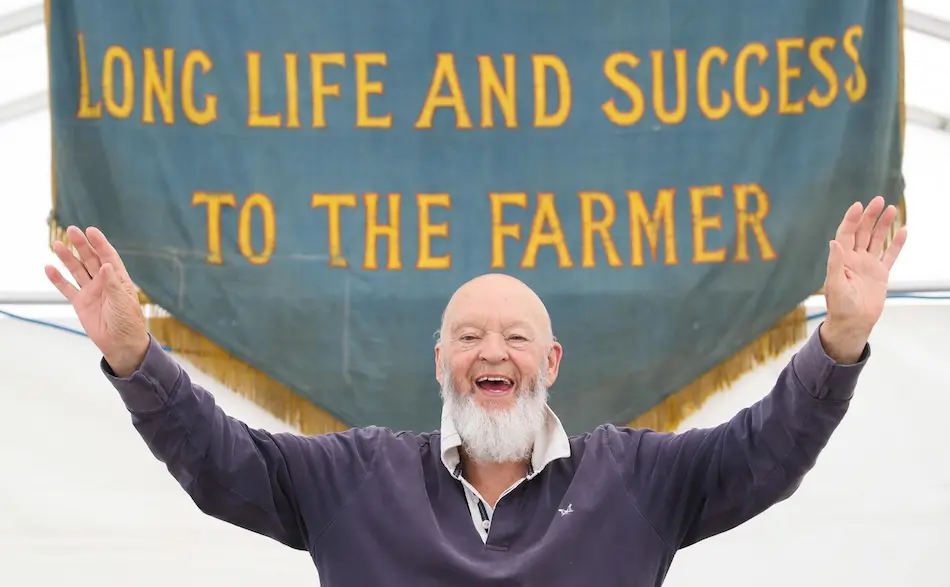
To understand the cultural fabric of modern Britain is to understand Worthy Farm, a sprawling expanse of Somerset dairy land that, for a few days every summer, transforms into the beating heart of global counterculture. At the center of this modern mythology sits Sir Michael Eavis—dairy farmer, visionary, Methodist, and reluctant impresario.
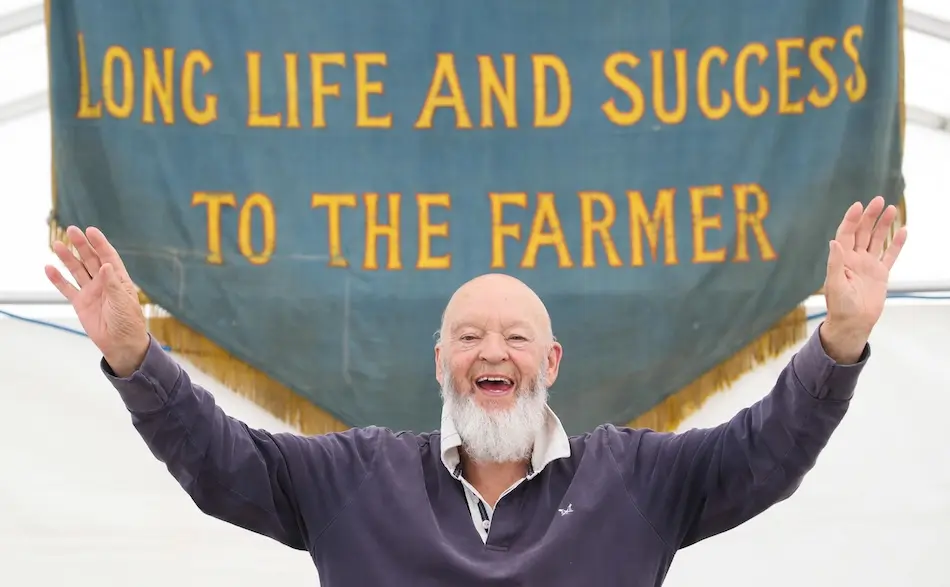
On October 17, 2025, marking his landmark 90th birthday, Eavis sat down at his home in Pilton for an exclusive, reflective interview with Rik Mav. Spanning over half a century of festival lore, agricultural stewardship, political activism, and community building, the milestone offers a rare vantage point on one of the twentieth and twenty-first centuries’ most remarkable cultural triumphs.
From battling local magistrates and navigating the existential threats of the early decades to watching Worthy Farm cheddar populate supermarket shelves across the United Kingdom, Eavis remains remarkably spry. As the festival navigates its designated fallow year, the dairy farmer-turned-cultural icon reflects on a life lived entirely on his own terms—proving that a humble beginning in Somerset could blossom into the greatest music festival the world has ever seen.
Detailed Chronology: From 1970 to a Global Phenomenon
The trajectory of Glastonbury Festival is inextricably linked to the personal and professional evolution of Michael Eavis. What began in 1970 as the Pilton Pop, Folk & Blues Festival has matured into a multi-generational institution that defines the British summer.
1970: The Genesis
Inspired by a performance by Led Zeppelin at the 1970 Bath Festival of Blues and Progressive Music, a 35-year-old dairy farmer named Michael Eavis decided to host his own event at Worthy Farm. Charging just £1 for admission—which famously included free milk from the farm—around 1,500 people gathered to watch artists like T. Rex. It was a modest countercultural gathering, yet it planted the seeds for an empire.
The Decades of Turmoil and Trial
Throughout the 1970s, 1980s, and 1990s, the festival was far from the polished, corporate-free utopia it is often perceived as today. It was a chaotic, high-stakes gamble. Eavis found himself locked in perpetual warfare with local authorities, parish councils, magistrates, and the police.
Mass trespasses, security breaches, drug concerns, and public safety threats routinely brought the event to the brink of permanent closure. In a particularly tense era, the chairman of the local magistrates issued a blunt ultimatum: "If you do this again, you’ve had it." Yet, it was precisely this friction—this fierce resistance against institutional pushback—that forged the resilience of the festival. Eavis admits that the grueling fights with the establishment were foundational to its ultimate success.
The Modern Era and Global Hegemony
Entering the 21st century, Glastonbury solidified its status as an undisputed titan of the international live music landscape. The implementation of a secure perimeter fence in 2002 ended the era of gatecrashing, transforming the event into a professionally managed behemoth without losing its soul. Today, the festival sells out its hundreds of thousands of tickets in mere minutes, a demand so astronomical that Eavis notes they could easily sell a million tickets and still fill every slot.
Supporting Context & Metrics: Beyond the Music
While headliners like Neil Young—whom Eavis fondly cites as his top act from the most recent festival—dominate media coverage, the true story of Glastonbury and the Eavis family extends far beyond the Pyramid Stage.
Agriculture and Commerce: The Worthy Farm Legacy
Long before he was booking legendary rock acts, Eavis was a Somerset dairy farmer, and that agricultural identity remains his bedrock. The milk produced by Worthy Farm’s prized herd is supplied directly to Wyke Farms, where it is crafted into iconic Worthy Farm cheddar.
In a testament to how far the brand has traveled, Eavis recounts a spontaneous journey to Scotland. Stepping off a train in Glasgow, he noticed a Co-op supermarket directly across the road. Driven by curiosity, he walked inside to inspect the dairy shelves—only to find Worthy Farm cheddar stocked prominently across them. From Pilton pastures to Scottish storefronts, the agricultural footprint of the enterprise is vast.
Social Philanthropy and Housing in Pilton
Perhaps the most enduring non-musical legacy of Sir Michael Eavis is his fierce commitment to his local community. Recognizing the housing crisis facing rural villages and young families priced out of the property market, Eavis spearheaded the development of 52 social housing units in Pilton.
Built specifically for local people to ensure they could afford to stay in the village where they grew up, the housing initiative has received widespread acclaim. Former England football star Gary Lineker notably visited the development, shining a national spotlight on the project through a widely circulated interview.
For Eavis, these homes represent his deepest pride. Driving out of the village on a sunny day, watching the light glint off the houses, he reflects on the sheer improbability of it all. It is a tangible tribute that would undoubtedly make his mother proud.
Political Consciousness and Methodism
Glastonbury has never shied away from socio-political commentary, serving as a platform for Greenpeace, Oxfam, WaterAid, and countless political speakers and campaigners. Eavis attributes this unwavering commitment to social justice directly to his Methodist upbringing. The ethos of looking out for one’s neighbor, fighting for the marginalized, and maintaining a moral compass has steered the festival’s identity through changing political landscapes.
Official Statements & Reflections
During his milestone 90th birthday interview, Sir Michael Eavis offered intimate reflections on his journey, his health, and his ongoing creative collaborations:
-
On reaching 90 and looking back:
"I feel very well actually. It all feels like the culmination of more than 50 years of work… It’s been really good, though. It’s all been a long story of excitement. That’s probably what’s keeping me going!"
-
On the enduring creative spirit during a fallow year:
"It does [have a fallow year] – but we’re keeping busy. I’ve seen both Joe Rush and Arcadia in the last week, which gave me great pleasure as I still really enjoy working with such creative people."
-
On youthful struggles versus eventual triumph:
"I think the main thing is that, in those days, I was always at war with the council and the village and the local magistrates and the police. And it came good. Which is extraordinary, really. But the fight was really what made it work, there’s no doubt about that. It was certainly worth it!"
-
On his birthday celebration plans:
"I’m having a party in the village, with family and local people. The plan is to sing three songs with my band." When nudged about whether My Way is on the setlist, he responds with a characteristic grin: "That’s a good guess! … Yeah, I think it would be fair to say that [I did it my way]."
Future Outlook: The Everlasting Pulse of Worthy Farm
As Glastonbury enters its designated fallow year—a vital agricultural breathing space allowing the land at Worthy Farm to recover—the cultural machinery behind the scenes shows no signs of slowing down.
Sir Michael Eavis’s 90th birthday is not merely a celebration of an individual life; it marks the endurance of a singular vision that defied local skepticism, bureaucratic hostility, and financial uncertainty to become a global sanctuary for art, music, and community.
Even at nine decades old, Eavis remains deeply engaged with the artists, designers, and visionaries who build the festival’s fantastical landscape—from Arcadia’s immersive fire-breathing installations to Joe Rush’s dystopian mechanical sculptures. The festival will return, as it always does, carrying forward the political conscience rooted in Methodism and the steadfast community spirit nurtured in Pilton.
Sir Michael Eavis built an empire out of mud, music, and milk, proving that with enough tenacity, a Somerset dairy farmer can rewrite the rules of modern culture. As he prepares to take the stage at his village party to sing his three secret songs, one thing is certain: he truly did it his way.