Executive Overview
In the contemporary landscape of institutional marketing, higher education has long relied on a predictable, homogenous visual playbook. For decades, prospective students across the United States have been greeted by glossy, algorithmically friendly brochures featuring identical tropes: smiling young adults lounging lazily on manicured quadrangles, clutching pristine hardback textbooks, or staring thoughtfully into glowing laptop screens. While comforting, these commercial clichés routinely fail to capture the profound, often gritty realities of modern non-traditional higher education.
Nowhere is this disconnect more glaring than within the sprawling, dynamic ecosystems of comprehensive community and multi-campus college districts. In the bustling heart of the Dallas-Fort Worth Metroplex, Dallas College serves as an economic and cultural bedrock for hundreds of thousands of North Texas families. Its student body is not a demographic monolith of fresh high-school graduates; rather, it is a complex, mosaic-like community of adult learners returning to the classroom after decades in the workforce, first-generation scholars navigating unfamiliar academic bureaucracy, and young adults balancing full-time employment across two or three separate jobs just to fund their tuition. For these individuals, a college campus is not a leisure-oriented playground of self-discovery—it is a high-stakes bridge to upward socioeconomic mobility, financial survival, and generational transformation.
Seeking to bypass the tired tropes of traditional marketing and authentically honor this reality, Dallas College initiated a bold visual experiment known as the "Future-Self" campaign. To anchor this ambitious project, the institution tapped the local creative powerhouse David Loi Studios, working in close strategic partnership with the marketing minds at Alpha Business Images (ABI). Their core mandate was deceptively simple on paper yet exceptionally complex in execution: forge a tangible, hauntingly real encounter between contemporary students and their future professional potential.
The resulting campaign—built on a foundation of rigorous optical physics, meticulous composite plate photography, and deeply human storytelling—has effectively revolutionized how educational institutions communicate value. By deploying a surreal, narrative-driven device where a student’s present struggles and future triumphs coexist within a single frame, the collaboration transcended conventional advertising. This comprehensive investigative report examines the genesis, technical execution, emotional resonance, and broader industry implications of the Dallas College "Future-Self" campaign.
Detailed Chronology: From Concept to Campaign Launch
Phase I: Conceptualization and the Birth of the "Living Mirror"
The genesis of the "Future-Self" campaign began months before a single strobe light flashed inside a temporary Dallas College soundstage. Marketing leadership at the institution, alongside strategists from ABI, recognized that conventional recruitment materials were failing to spark deep emotional engagement among non-traditional learners. They needed an anchor concept that could collapse time—a visual metaphor that could bridge the chasm between the exhausting present of a tired sophomore and the empowered future of a seasoned professional.
David Loi, founder and lead photographer at David Loi Studios, embraced the challenge. Rejecting stock imagery and digital shortcuts, Loi and his creative partners envisioned a narrative device straight out of modern fable: a living mirror where past, present, and future collide.
"We wanted to avoid the clichés of the ‘inspirational’ brochure," explains Loi. "We wanted something that felt like a surreal, beautiful encounter with one’s own potential—a way to collapse time and show everyone what it actually feels like to get a life-changing education."
The conceptual framework demanded that every execution feature a real Dallas College student standing before a mirror. In their physical reflection, however, they would not see their current exhaustion or their immediate hurdles. Instead, they would gaze into a fully realized future: an aspiring engineer hunched over introductory calculus formulas would lock eyes with a seasoned professional wearing a hardhat and clutching regional structural blueprints; an adult single mother returning to school after raising children would meet the gaze of a proud graduate stepping across a commencement stage; a part-time line cook would see a master executive chef commanding the pass of a high-end restaurant kitchen.
Phase II: The Geometry of Illusion on Set
Translating this conceptual framework from a writer’s room into photographic reality required a masterclass in optical physics and spatial geometry. In professional commercial photography circles across North Texas, high-end portraiture is frequently treated as a contact sport. On the set of the "Future-Self" shoot, it proved to be an unforgiving test of technical precision.
To achieve the seamless illusion of a single mirror reflecting two distinct eras, the production crew utilized composite plate photography. Every final image in the campaign was constructed from multiple individual exposures captured from the exact same, completely immovable tripod position.
The technical margin for error was razor-thin. If the camera angle, focal length, or lighting grid shifted by even a fraction of an inch between the "present-self" plate and the "future-self" plate, the two subjects would fail to align during post-production, instantly shattering the visual illusion.
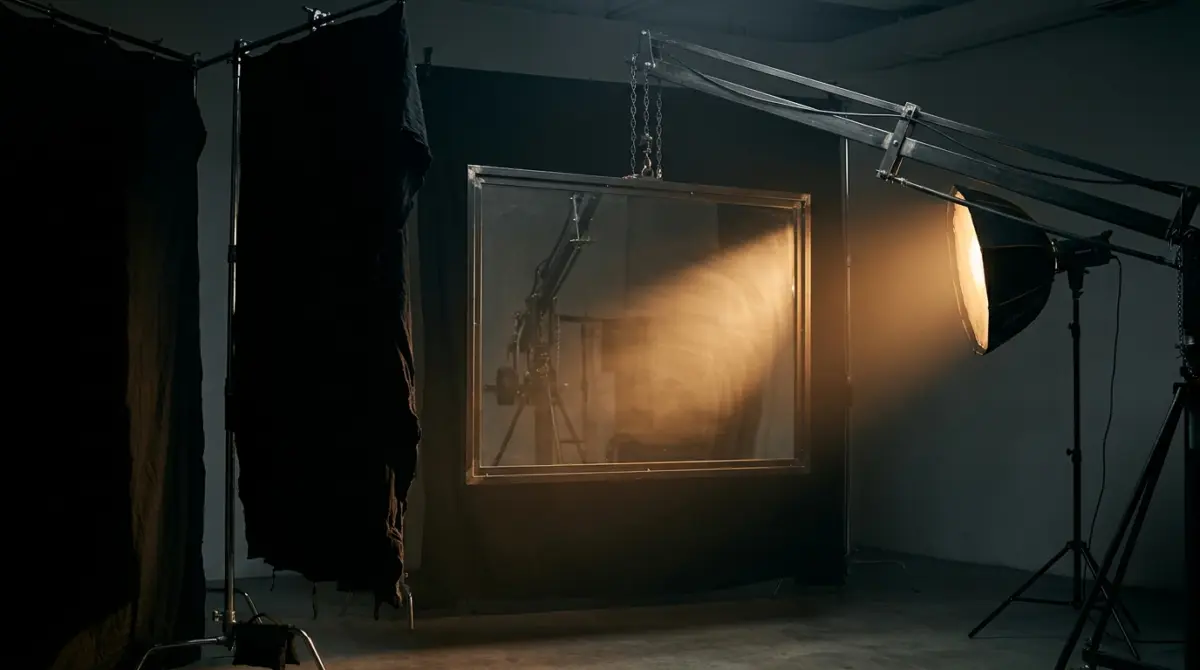
Furthermore, working with physical mirrors within a commercial studio environment is notoriously treacherous. Glass is entirely non-discriminatory: while it gracefully reflects the subject’s imagined future, it also acts as a wide-angle receiver for every stray studio light, loose power cable, equipment stand, and roaming crew member in the vicinity.
To solve this, the studio team spent grueling hours "flagging" the environment. They erected towering black curtains and light-blocking C-stand boards around the entire perimeter of the set to eliminate unwanted ambient reflections. The operational objective was surgical control: command the environment so absolutely that the camera lens recorded nothing except the raw, intentional narrative constructed within the frame.
Phase III: High-Stakes Tethered Shooting and Real-Time Scrutiny
Adding to the adrenaline on set was the strict adherence to tethered shooting. As David Loi clicked the shutter, raw, unedited high-resolution plates immediately populated massive monitors positioned just outside the working perimeter. These screens were actively monitored by institutional representatives from Dallas College and strategic supervisors from ABI.
Every micro-adjustment—the subtle tilt of a model’s chin, the intentional straightening of a chef’s collar, or the shifting fall of a shadow across an eye—was scrutinized in real-time by institutional stakeholders.
“There’s a unique, compounding pressure when the client is watching live on set,” Loi admits. “Every frame is laid bare before the people whose brand is on the line. But as those composite plates began locking together on screen, you could physically feel the room shift. They weren’t just watching a technical photography exercise; they were witnessing their institutional mission statement materialize in high definition.”
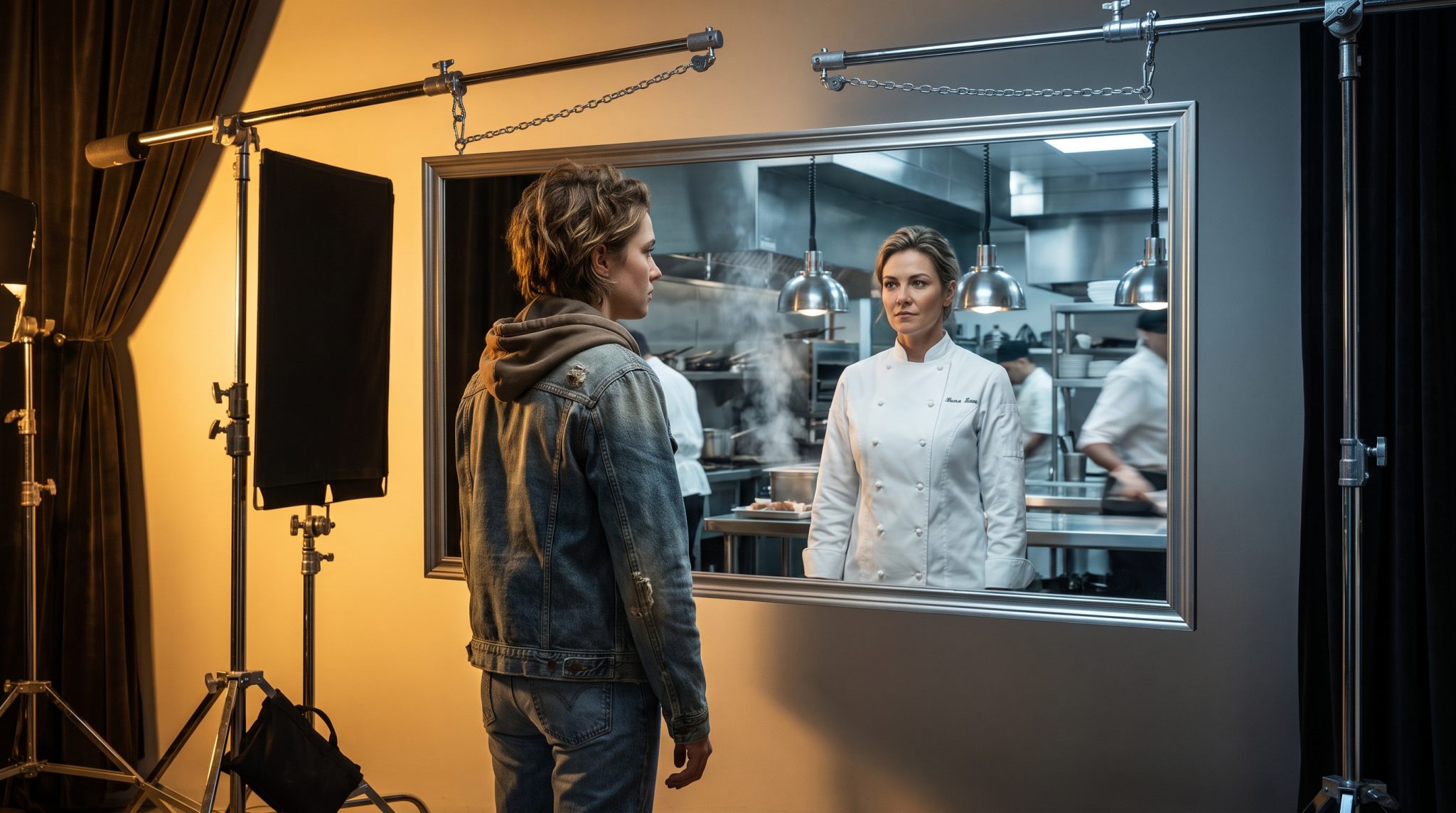
Over the course of a multi-day shoot, more than a dozen distinct student stories were captured, each operating as a self-contained visual short film highlighting the unique motivations driving North Texas’s next generation of professionals.
Supporting Context & Metrics: Reimagining Community College Demographics
To fully understand the cultural impact of the "Future-Self" campaign, one must examine the demographic and socio-economic realities of Dallas College and the broader North Texas region. As one of the largest community college systems in the United States, Dallas College serves over 70,000 credit students and tens of thousands of continuing education learners annually across seven primary campuses.
Demographic Realities of North Texas Higher Education
- Non-Traditional Majority: More than 60% of Dallas College’s student body consists of part-time learners who must balance their coursework with demanding family responsibilities and full-time employment.
- First-Generation Focus: A significant plurality of enrolled students are the first in their immediate families to navigate the higher education landscape, facing unique psychological and structural barriers.
- Economic Mobility Engine: According to regional economic impact studies, degree and certificate completers from Dallas College experience an average post-graduation wage increase exceeding 30%, serving as a critical engine for regional workforce development.
The Psychology of Proximity in Educational Marketing
Traditional advertising often relies on abstract inspiration—vague promises of "success" or "better tomorrows" floating in an undefined future. Psychological research into adult learning theory, however, emphasizes the concept of temporal proximity. When a long-term goal feels abstract, psychological distance increases, leading to higher attrition rates among non-traditional students facing immediate financial or familial pressures.
By placing the future self directly inside a tangible, physical reflection rather than off on a distant horizon, the Dallas College campaign actively mitigated this psychological barrier. When a student sees their future self looking back at them with absolute, undeniable clarity, the neurological distance between current struggle and future achievement collapses. The goal ceases to be a distant fantasy and transforms into an inevitable destination.
Official Statements and Industry Reception
The launch of the "Future-Self" campaign across billboards, transit shelters, digital channels, and campus facilities throughout the Dallas-Fort Worth Metroplex drew immediate praise from both marketing professionals and educational administrators.
Dr. Joe May, former Chancellor of Dallas College (whose tenure laid much of the groundwork for modernizing the institution’s outreach), noted during early stakeholder presentations that marketing in higher education must evolve beyond mere recruitment.
"We are not selling a product; we are facilitating a transformation," institutional leadership emphasized during the campaign rollout. "Our students carry immense burdens. They do not need platitudes; they need proof that their sacrifices are compounding toward a concrete reality. David Loi Studios and ABI understood that truth and translated it into art."
From the creative agency perspective, the project represented a masterclass in collaborative execution. Representatives from Alpha Business Images praised the seamless integration between high-concept storytelling and institutional messaging.
"In an era where every brand is racing to utilize cheap, generic, AI-generated stock imagery, taking the path of high-craft, practical photography was a bold risk," noted an ABI campaign strategist. "That commitment to authenticity is precisely why the campaign resonated so deeply. The public can instantly smell artifice. What we produced here was undeniably, powerfully real."
Industry publications and commercial photography forums quickly took notice, highlighting the technical rigor required to pull off complex mirror composites without relying on digital shortcuts or artificial intelligence generation. The campaign has since been cited in regional marketing seminars as a benchmark for how public institutions can elevate their brand equity through daring, narrative-driven visual arts.
Future Outlook: The Legacy of "Future-Self"
As higher education faces mounting economic pressures, shifting public perceptions regarding the value of degrees, and an influx of automated content, the success of the Dallas College "Future-Self" campaign offers a clear roadmap for the future of institutional storytelling.
1. The Death of the Stock Photo
The campaign serves as an emphatic warning to marketing departments relying on homogenized, subscription-based stock libraries. Audiences—particularly Gen Z and pragmatic adult learners—demand hyper-local representation and raw authenticity. Future marketing campaigns in higher education will likely pivot toward bespoke, documentary-style, and high-concept narrative photography that reflects the actual lived experiences of their student populations.
2. The Fusion of Art and Institutional Strategy
The successful partnership between Dallas College, David Loi Studios, and Alpha Business Images demonstrates the immense value of deep creative collaboration. When institutional strategists grant specialized artists the technical freedom to execute ambitious visions without diluting the core message, commercial art transcends advertising and enters the realm of cultural resonance.
3. Sustaining the Momentum
For Dallas College, the "Future-Self" campaign is not merely a seasonal recruitment drive, but a foundational brand philosophy. As the institution continues to expand its workforce training programs, baccalaureate offerings, and community outreach initiatives, the visual lexicon established by the living mirror series will continue to inform how the college communicates with North Texas.
Standing on set during the final hours of production—surrounded by heavy-duty C-stands, black light-blocking flags, tangle-free cables, and the steady, relentless hum of the Dallas metropolis outside—the production team realized the project had far exceeded its initial corporate brief.
What began as a regional college marketing commission ultimately evolved into a clear, unvarnished mirror held up to the entire community. When prospective students across North Texas look into the eyes of the individuals captured in these frames, they realize an essential truth: they are not merely gazing at a costumed chef, an infrastructure engineer, or a proud graduate. They are looking directly at a version of themselves that has become, finally and undeniably, real.