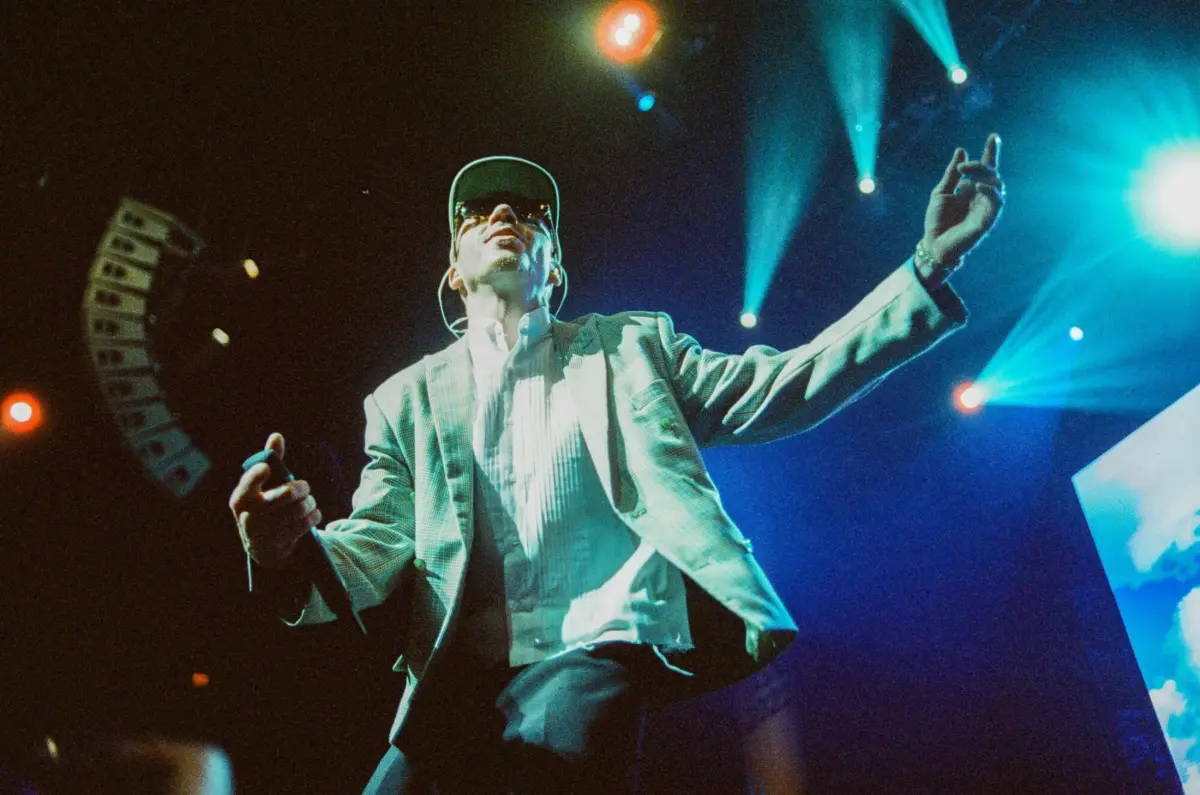
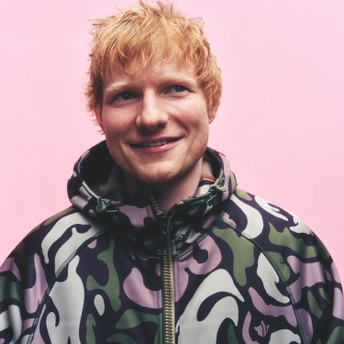
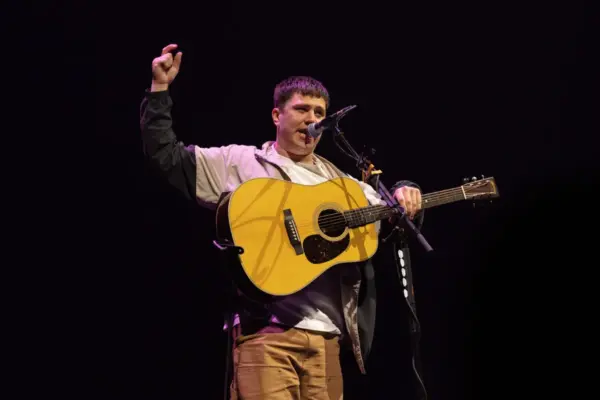
In an era where the intersection of pop culture and geopolitical activism is increasingly volatile, rapper Macklemore has found himself at the center of a raging storm following a series of outspoken, pro-Palestinian performances at New Jersey’s MetLife Stadium. Serving as an opening act for global superstar Ed Sheeran during his expansive Loop tour over the weekend of September 4–5, 2026, the 43-year-old artist—born Benjamin Haggerty—utilized his high-profile platform to champion the people of Gaza and the West Bank. Chanting "Free Palestine" and performing his provocative 2024 protest track "Hind’s Hall," Macklemore catalyzed an immediate chain reaction of political outrage, industry condemnation, and impassioned free-speech defense.
The repercussions were swift and severe. The Israeli-American Council (IAC) launched a formal petition demanding his removal from the remaining dates of Sheeran’s stadium tour. Simultaneously, high-profile music icons such as pop star P!nk and 1980s new-wave pioneer Boy George publicly rebuked the rapper, aligning themselves with organizations calling for accountability and patron refunds.
This unfolding controversy transcends a simple clash of personalities or a momentary lapse in concert etiquette. It exposes deep fractures within the international entertainment community regarding the limits of artistic expression, the appropriateness of utilizing multi-artist concert bills for geopolitical advocacy, and the profound polarization surrounding the ongoing Israel-Hamas conflict. As the music industry watches to see whether Ed Sheeran or his management team will take administrative action against Macklemore, the episode serves as a watershed moment for how artists navigate the perilous landscape of global politics on stadium stages.
Detailed Chronology: The MetLife Stadium Showdown
Friday, September 4: The Opening Salvo
The controversy ignited on the first night of Ed Sheeran’s two-night residency at MetLife Stadium in East Rutherford, New Jersey. Performing before an audience exceeding 89,000 screaming fans, Macklemore took a decisive and unexpected departure from standard setlist banter. Rather than focusing solely on his commercial hits, he directly addressed the crowd to explain his motivation for joining the tour.
"A big part of the reason why I wanted to do this tour in the first place is so I could stand up in stadiums like this and say two words that are very near and dear to my heart: ‘Free Palestine,’" Macklemore declared to the massive crowd. "I said, ‘Free Palestine!’ I want those words to be loud and clear, so that people from Gaza all the way to the West Bank know that we have not forgotten about them."
The statement was immediately followed by a live rendition of "Hind’s Hall," a song released in 2024 that directly confronts United States foreign policy, condemns the Israeli military campaign in Gaza, and honors the pro-Palestinian student protests proliferating across college campuses. The song’s title serves as a memorialized reference to Hamilton Hall at Columbia University, which student activists temporarily occupied and renamed in honor of Hind Rajab, a five-year-old Palestinian girl tragically killed by Israeli forces in Gaza.
Macklemore concluded his Friday set by openly acknowledging the internal anxiety he experienced prior to stepping onto the stage. He confessed that the fear of jeopardizing his professional comfort and the comfort of the audience had weighed heavily on him during his flight to New Jersey. However, he framed his willingness to overcome that fear as an existential prerequisite for his career: "And if I let that fear I felt on the plane yesterday stop me from speaking my heart in order to keep my own comfort and the audience’s comfort, that is the day I no longer continue to be on stage."
Expanding his platform beyond the Middle East, he added a sweeping litany of international and domestic grievances: "So, I say ‘Free Palestine!’ I say, free America, free Cuba to the Congo to Sudan to Iran, and all the people in America who have to live in fear because of this terrorist organization ICE."
Saturday, September 5: Doubling Down and Clarifying Intent
Rather than scaling back his rhetoric in the wake of mounting backstage pressure and industry chatter, Macklemore doubled down during his second opening set on Saturday evening. Recognizing the gravity of his remarks and the potential for misinterpretation among diverse concertgoers, he attempted to draw a fine line between geopolitical critique and religious or ethnic animus.
"To all of my Jewish brothers and sisters: criticism of Israel, criticism of apartheid, being against genocide in no way is a criticism of you," Macklemore told the audience, before reprising his chants. "My message is for peace; love for all human beings to be treated with dignity, respect, and equality. So I say Free Palestine, I say Free Lebanon, I say Free Cuba, I say Free Congo, Free Sudan, I say Free all people in America living in fear of this terrorist organization ICE. None of us will be free until we are all free."
Later that evening, Macklemore took to X (formerly Twitter) to share video footage of his Saturday speech, reinforcing his steadfast refusal to back down with a definitive declaration: "Wanting all humans to be treated equal should never be controversial."
Supporting Context & Metrics: The Conflict and the Concert Platform
To fully grasp the magnitude of the backlash, one must examine the staggering human cost of the conflict that served as the catalyst for Macklemore’s remarks, as well as the unique economics of a modern stadium tour.
The Geopolitical Reality
The ongoing military campaign in Gaza was triggered on October 7, 2023, by a devastating cross-border assault led by Hamas. During the invasion, Hamas and allied militant groups killed nearly 2,000 Israelis and foreign nationals—predominantly civilians—and abducted more than 250 hostages, dragging them back into the Gaza Strip.
In the wake of these atrocities, the Israeli government launched a sweeping, multi-front military retaliation aimed at dismantling Hamas. Israel has consistently denied allegations of genocide brought against it in international courts, maintaining that its operations are an act of national self-defense aimed at eradicating a terrorist organization that systematically uses civilian infrastructure as human shields.
The humanitarian toll of the subsequent conflict has been catastrophic. According to comprehensive reports from international humanitarian organizations and local health ministries, the Palestinian death toll in Gaza has surpassed 73,000 individuals, with nearly 174,000 others sustaining severe injuries. Large swaths of the territory have been reduced to rubble, displacing millions and creating a man-made humanitarian crisis characterized by acute shortages of food, clean water, and medical supplies. It is against this backdrop of immense suffering and global polarization that Macklemore chose to platform his activism.
The Concert Economy and the Stadium Stage
From an operational perspective, an opening act on a major stadium tour—such as Ed Sheeran’s massive Loop tour—operates within a tightly managed commercial ecosystem. Stadiums like MetLife house tens of thousands of ticket-holders who have paid premium prices for entertainment, escapism, and communal musical experiences rather than political discourse.
Critics and advocacy groups argue that utilizing this captive, multi-million-dollar commercial infrastructure as an unannounced political soapbox violates an implicit social contract between the artist, the headliner, and the ticket-buying public. Conversely, defenders of free expression maintain that artists have historically used their platforms to bear witness to historical atrocities, and that art devoid of social conscience loses its cultural vitality.
Official Statements and Industry Fallout
The fallout from Macklemore’s weekend performances quickly extended far beyond social media debates, drawing sharp denunciations from organized advocacy groups and prominent entertainment figures.
The Israeli-American Council (IAC) Petition
The most organized institutional pushback came from the Israeli-American Council, which swiftly mobilized a formal petition drive calling for Macklemore’s immediate termination from the remaining eight U.S. stadium dates where he is scheduled to support Ed Sheeran through early November.
The petition pulls no punches in challenging the appropriateness of the rapper’s actions:
"This was an Ed Sheeran concert — not a political rally, not a protest, and not an activist event," the IAC statement reads. "The issue is not whether Macklemore has the right to hold political views. The question is where the line should be drawn when an opening act uses a global concert platform to advance a one-sided political agenda. This becomes even more troubling when the message relies on selective imagery, biased messaging, and disputed claims presented to a massive audience as fact, without context or complexity."
P!nk and Boy George Weigh In
The rap artist also faced direct censure from fellow musicians, illustrating deep divisions within the pop and rock community regarding how to respond to the Israel-Hamas war.
Pop superstar P!nk signaled her disapproval by quietly reposting an Instagram Story over the weekend originally published by the watchdog group StopAntisemitism. According to reports from TMZ, the reposted material sharply criticized Macklemore’s stage remarks, amplified community outrage, and argued that concertgoers who attended the stadium shows expecting music rather than geopolitical lectures were owed formal apologies and ticket refunds.
Meanwhile, Culture Club frontman Boy George took a more aggressively satirical and antagonistic approach. Boy George, who recently released an AI-generated pro-Israel reggae song titled "We Will Dance Again," shared an artificial intelligence-generated image depicting Ed Sheeran wearing a customized t-shirt bearing the slogan "Whack Mack No More." The British pop icon doubled down on his hostility on X, explicitly distancing himself from the headliner by writing: "I have never been an @EdSheeran fan and nothing has changed."
Ed Sheeran’s Silence
Despite the escalating pressure, intense media scrutiny, and public appeals from various factions, Ed Sheeran maintained a strategic silence. As of press time, neither Sheeran nor his official representatives had issued a public statement addressing Macklemore’s stage comments, the IAC petition, or the broader controversies swirling around the tour. Inquiries sent by Billboard to Sheeran’s public relations team regarding whether the opening act would be dismissed or retained went unanswered.
Future Outlook: Implications for Live Music and Tour Management
As Ed Sheeran’s Loop tour prepares to move forward with its scheduled itinerary across the United States, Macklemore’s high-profile protest has set a precarious precedent for the live entertainment industry.
Several critical questions now loom large over the remainder of the tour and the broader concert landscape:
Tour Continuity: Will Ed Sheeran and his concert promoters succumb to external pressure from groups like the IAC, or will they protect artistic freedom of expression by keeping Macklemore on the bill? Terminating an opening act midway through a major tour carries significant logistical, financial, and contractual complexities.
The Evolution of Venue Policies: Concert venues and event promoters may increasingly feel compelled to draft explicit clauses regarding political neutrality or speech restrictions within supporting artist contracts to mitigate public relations crises and avoid alienating segments of their ticket-buying base.
The Polarizing Cost of Celebrity Activism: Macklemore’s willingness to risk his commercial standing highlights an ongoing shift among contemporary artists who feel morally obligated to speak out on international human rights issues, regardless of career repercussions. However, as the reactions from figures like P!nk and Boy George demonstrate, such actions risk fracturing artist camaraderie and alienating peers who view unprompted political monologues on pop stages as divisive rather than unifying.
Ultimately, Macklemore’s weekend at MetLife Stadium will be remembered not merely as an isolated concert incident, but as a defining flashpoint in the ongoing struggle to reconcile global human rights advocacy with the multi-billion-dollar machinery of commercial pop music. Whether this serves as a cautionary tale or a catalyst for more overt political discourse on tour remains to be written as the remaining dates of the tour approach.