Executive Overview
As the academic and cultural landmark of University College London (UCL) approaches its bicentennial anniversary, the institution and the wider scientific community are increasingly looking back to honor the brilliant minds that forged its storied legacy. Among these luminaries stands Dame Kathleen Lonsdale (1903–1971), a monumental figure whose pioneering breakthroughs in X-ray crystallography fundamentally reshaped our understanding of organic chemistry and molecular structure. Lonsdale was not merely a participant in the scientific revolution of the 20th century; she was its architect, shattering entrenched gender barriers as the first female professor at UCL and the first woman ever elected as a Fellow of the Royal Society.
Yet, to remember Lonsdale solely through the lens of her laboratory achievements is to miss the breadth of a profoundly multidimensional existence. A lifelong pacifist, passionate prison reformer, and fierce advocate for women’s rights, Lonsdale navigated a world torn apart by global conflict, leveraging her formidable intellect and moral clarity to champion peace during the height of the Cold War and the atomic age. Her legacy is a testament to the intersection of rigorous scientific inquiry, ethical responsibility, and civic courage.
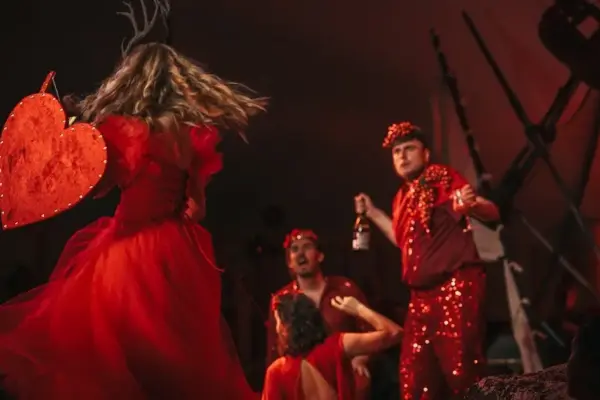
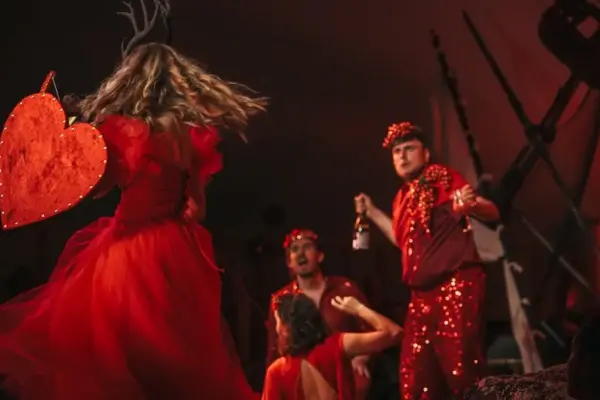
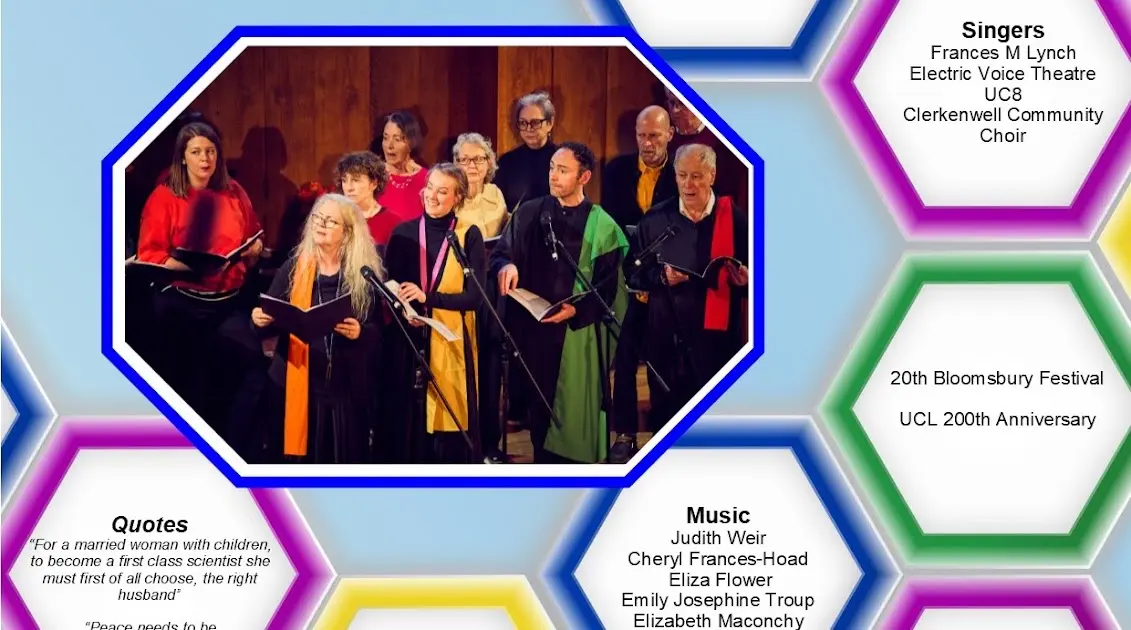
To celebrate this eclectic and groundbreaking life, the innovative Electric Voice Theatre is set to return to London’s historic Conway Hall on October 15, 2026, as a major highlight of the 20th Bloomsbury Festival. Titled The Peaceful Crystallographer – and other songs, the multidisciplinary performance will weave together choral music, historical narrative, and community engagement. Featuring young a cappella singers from UC8 (University College London) and the Clerkenwell Community Choir, the production will explore Lonsdale’s multifaceted journey through a rich tapestry of Irish folk songs, music-hall tunes, stirring anthems, and ethical hymns.
Following the performance, audiences will be invited to deepen their engagement through an expert panel discussion featuring prominent science historian Dr. Patricia Fara and Zoë Waller, Professor of Drug Discovery, Pharma & Bio Chemistry at UCL. This article provides a comprehensive exploration of Dame Kathleen Lonsdale’s life, the cultural significance of the upcoming production at Conway Hall, and the enduring resonance of her scientific and humanitarian legacy.
Detailed Chronology: The Life and Times of Dame Kathleen Lonsdale
To truly appreciate the magnitude of Kathleen Lonsdale’s contributions, one must trace a timeline defined by resilience, intellectual audacity, and an unwavering commitment to truth—both in the physical sciences and in human society.
Formative Years and Academic Breakthroughs (1903–1929)
Born Kathleen Yardley in Newbridge, County Kildare, Ireland, in 1903, she was the youngest of ten children. Her early life was marked by the shifting political landscapes of the British Isles and Ireland before her family relocated to England when she was a child. Displaying an exceptional aptitude for mathematics and the physical sciences, she entered Bedford College for Women (then part of the University of London) at the remarkably young age of sixteen. Initially studying mathematics, she quickly shifted her focus to physics, graduating with a Bachelor of Science degree in 1922 with top honors.
Her academic brilliance caught the attention of Sir William Henry Bragg, the Nobel laureate who, along with his son Lawrence, pioneered the field of X-ray crystallography. Bragg invited Yardley to join his pioneering research group at University College London and later at the Davy Faraday Research Laboratory of the Royal Institution.
During this era, the structural composition of organic molecules remained heavily theorized rather than empirically proven. Working alongside Bragg, Yardley applied X-ray diffraction techniques to map molecular structures. In 1929, in a crowning achievement of early structural chemistry, she definitively proved that the benzene ring is flat and hexagonal, settling a fierce, decades-long scientific debate. This breakthrough did not just solve a chemical riddle; it laid the foundational methodologies for modern organic chemistry and structural biology.
Marriage, Motherhood, and Scientific Eminence (1930–1945)
In 1927, she married Thomas Lonsdale, an engineer and physicist who supported her ambitions in an era when domestic expectations routinely forced women out of the workforce. Lonsdale famously quipped regarding the realities of her dual life:
"For a married woman with children, to become a first-class scientist she must first of all choose the right husband."
Despite raising three children—Jane, Nancy, and Brian—Lonsdale maintained an unrelenting research schedule. During the 1930s, she advanced her work on thermal vibrations in crystals, developing what is now known as the "Lonsdaleite" (hexagonal diamond), a rare allotrope of carbon found naturally in meteorite impacts. Her work was so influential that she was awarded a Doctor of Science (D.Sc.) degree from the University of London in 1936.
World War II brought immense challenges, but Lonsdale’s resolve only deepened. When her husband and family faced the Blitz, and academic institutions scrambled to adapt, she continued her research while taking on civil defense duties. Her scientific eminence was formally recognized in 1945 when she and microbiologist Marjory Stephenson became the first two women ever elected as Fellows of the Royal Society (FRS)—a barrier that had stood for nearly three centuries since the Society’s founding in 1660.
Pacifism, Imprisonment, and Activism (1945–1959)
The conclusion of World War II and the atomic bombings of Hiroshima and Nagasaki profoundly affected Lonsdale. Raised as a member of the Plymouth Brethren, she had converted to the Religious Society of Friends (Quakers) in the mid-1930s, drawn to their testimonies of peace, equality, and social justice.
As a vocal pacifist, Lonsdale refused to register for wartime civil defense duties that directly or indirectly supported military objectives, leading to her arrest and a brief imprisonment at Holloway Prison in 1943. Rather than shying away from controversy, she used the experience to fuel a lifelong crusade for prison reform, writing extensively about the dehumanizing conditions faced by incarcerated women.
.jpg)
In the postwar era, Lonsdale turned her warning gaze toward the nuclear arms race. In her influential 1957 book, Is Peace Possible?, she explored the terrifying implications of nuclear physics, wealth inequality, and international conflict. She traveled the globe advocating for nuclear disarmament, speaking at scientific and political forums across the Iron Curtain, and embodying the ethos of the scientist-citizen who refuses to remain neutral on matters threatening human survival.
UCL Professorship and Global Legacy (1960–1971)
In 1949, Lonsdale returned to University College London as a reader in crystallography, eventually becoming UCL’s first female professor in 1953 when she was appointed to the Chair of Chemistry and Head of the Department of Crystallography. Under her leadership, UCL became a global hub for crystallographic research.
Beyond her departmental duties, Lonsdale served as the first female president of the International Union of Crystallography (1966–1969) and president of the British Association for the Advancement of Science (1967–1968). She continued active research and public advocacy until her passing from cancer in 1971. Today, her name lives on not only through her foundational chemical theorems and the mineral Lonsdaleite, but through the countless scientists—particularly women—whose paths she cleared.
Supporting Context & Metrics: The Cultural and Musical Framework
Bringing a life as rich and multifaceted as Kathleen Lonsdale’s to the stage requires an equally dynamic artistic approach. Electric Voice Theatre, renowned for its inventive fusions of science, history, and vocal music, has constructed The Peaceful Crystallographer – and other songs as a sonic biography that mirrors the texture of her world.
A Musical Tapestry of Eras and Ideologies
The performance on October 15, 2026, at Conway Hall is carefully curated to reflect the cultural touchstones of Lonsdale’s life and the radical history of the venue itself. The musical program spans several centuries and styles:
- Folk and Popular Heritage: Integrating Irish folk songs that honor her birthplace in County Kildare alongside music-hall numbers popular during her youth and early working years.
- Contemporary and Classical Works: Featuring compositions by modern luminaries such as Judith Weir and Frances-Hoad, which capture the structural precision and rhythmic elegance of crystallographic lattices.
- Historical Contemporaries: Showcasing pieces by women composers who navigated the male-dominated musical establishment concurrently with Lonsdale’s scientific rise, including Elizabeth Maconchy, Shena Fraser, and Clara Novello Davies.
- Conway Hall Radicals: Embracing the venue’s rich history as a bastion of free thought, humanism, and radical reform through works by historical figures Eliza Flower and Emily Josephine Troup.
Collaborative Performance Forces
The production gains its vibrant community energy through a unique partnership between professional interpreters and local vocal ensembles:
- Electric Voice Theatre: Providing the core narrative and vocal artistry.
- UC8: A dynamic young a cappella ensemble hailing directly from University College London, bridging the historical gap between Lonsdale’s era and today’s student body.
- Clerkenwell Community Choir: Adding a robust, communal warmth that underscores Lonsdale’s deep ties to social activism and collective human endeavor.
Contextualizing Conway Hall
The choice of Conway Hall as the venue is deeply symbolic. Operated by the Conway Hall Ethical Society (formerly the South Place Ethical Society), the venue has served since the late 19th century as a London sanctuary for freethought, humanism, scientific rationalism, and progressive social reform. It was here that freethinkers, suffragettes, pacifists, and scientists debated the future of humanity. Hosting The Peaceful Crystallographer within these walls connects Lonsdale’s lifelong crusade for ethical science and nuclear disarmament with the very spiritual and intellectual home of British humanism.
Official Statements and Expert Perspectives
As anticipation builds for the October 2026 production at the Bloomsbury Festival, organizers, historians, and academic leaders have emphasized the profound contemporary relevance of celebrating Lonsdale’s life today.
Reflecting on the mission of Electric Voice Theatre, artistic directors and producers emphasize that storytelling through music offers an immediate, emotional bridge to historical figures who might otherwise remain mere names in academic textbooks. By blending vocal performance with scientific history, the production illuminates how Lonsdale’s intellectual rigor was inseparable from her profound empathy for humanity.
Following the performance, the educational depth of the evening will be anchored by a panel discussion featuring preeminent voices in science history and modern academic leadership:
- Dr. Patricia Fara: A distinguished historian of science and emeritus fellow of Clare College, Cambridge, Dr. Fara has written extensively on the hidden histories of women in science. Her participation will ground Lonsdale’s achievements within the broader institutional and social structures of 20th-century Britain. Speaking on the importance of recovering these historical narratives, Dr. Fara has frequently noted that historical visibility is vital for transforming contemporary institutional cultures.
- Professor Zoë Waller: Holding the chair in Drug Discovery, Pharma & Chemistry at University College London, Professor Waller represents the cutting edge of modern scientific research at the very institution Lonsdale helped transform. Speaking in the context of UCL’s bicentennial celebrations, Waller highlights how trailblazers like Lonsdale created the modern pathways that allow contemporary female scientists to lead world-class research laboratories today.
Future Outlook: The Bicentennial Legacy and Ongoing Inspiration
The staging of The Peaceful Crystallographer – and other songs arrives at a pivotal moment in the institutional life of University College London. As UCL marks its 200th anniversary, the university is engaged in deep introspection regarding its history, its values, and its future trajectory. While institutional histories are often dominated by the narratives of elite male founders and benefactors, the bicentennial has provided a crucial catalyst for centering the contributions of women, minority scholars, and radical thinkers who expanded the university’s moral and intellectual horizons.
The challenges that defined Kathleen Lonsdale’s life—balancing professional ambition with domestic responsibilities, confronting the ethical implications of technological and scientific progress, and advocating for international peace in times of geopolitical hostility—remain acutely relevant in the 21st century. As modern science grapples with the ethical frontiers of artificial intelligence, biotechnology, and global climate anxiety, the archetype of the socially responsible scientist championed by Lonsdale is more urgent than ever.
Event Details At a Glance
- Event The Peaceful Crystallographer – and other songs
- Presented By: Electric Voice Theatre, featuring UC8 and the Clerkenwell Community Choir
- Venue: Conway Hall, 25 Red Lion Square, London, WC1R 4RL
- Date: October 15, 2026
- Festival Context: Part of the 20th Bloomsbury Festival
- Post-Performance Panelists: Dr. Patricia Fara (Science Historian) and Professor Zoë Waller (UCL Department of Drug Discovery, Pharma & Bio Chemistry)
- Ticketing & Information: Full program details and booking information can be accessed directly through the Electric Voice Theatre Website.
Ultimately, the upcoming performance at Conway Hall is much more than a historical retrospective. It is a vibrant, celebratory act of cultural reclamation. By singing her praises, exploring her science, and debating her ethical legacy, Electric Voice Theatre, UC8, the Clerkenwell Community Choir, and their academic partners ensure that Dame Kathleen Lonsdale continues to inspire new generations to pursue scientific excellence with courage, compassion, and an unyielding commitment to peace.