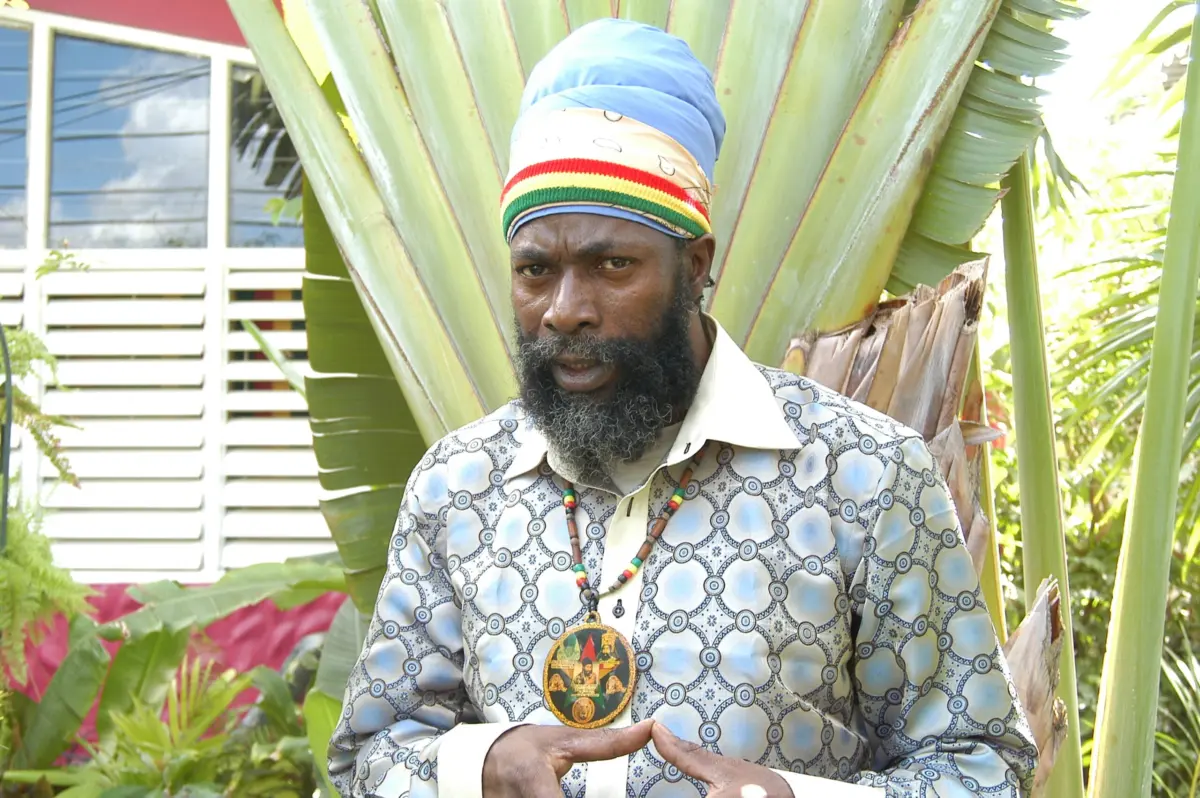
Decades into a career that fundamentally reshaped the sonic and spiritual landscapes of reggae and dancehall, the unyielding energy of "The Fireman" remains untouched by the relentless passage of time. As the Jamaican icon prepares for his eagerly anticipated return to the United Kingdom this September for his first full headline tour in over 13 years, the music world is sitting up and taking notice.
In an exclusive interview conducted by Lily Mercer, Capleton—born Clifton George Bailey III—opens up about the deep spiritual discipline that fuels his legendary, high-octane live performances, the enduring power of his Rastafarian faith, and why true, roots-conscious music can never truly be extinguished.
This historic tour marks the formal conclusion of a prolonged absence from the UK circuit, save for a handful of triumphant festival appearances in recent years. For legions of British fans who grew up on anthems like "Jah Jah City," "That Day Will Come," and "Slew Dem," September represents more than just a concert series; it is a sacred cultural reunion.
In the following deep-dive exploration, we examine the trajectory of Capleton’s career, the socio-political significance of Jamaican music in the UK, the mechanics of transitioning from massive festival stages to intimate headline venues, and what the future holds for an artist who remains an indispensable pillar of global sound system culture.
Detailed Chronology: From St. Mary to Global Dominance
The Formative Years and the Rise of the Fireman
Born in the rural parish of St. Mary, Jamaica, in 1967, Clifton Bailey was raised with a deep respect for community and spirituality. Taking the moniker "Capleton"—a playful nod to a local lawyer whom villagers respected—he migrated to Kingston during the late 1980s, the beating heart of the global dancehall revolution.
In Kingston, Capleton found his footing under the tutelage of veteran selectors and producers. His breakout came in the early 1990s with hardcore dancehall tracks that showcased his unique, gravelly delivery and commanding vocal cadence. However, unlike many of his contemporaries who chased transient chart trends, Capleton’s artistic compass underwent a profound transformation mid-career.
The Spiritual Pivot: Rastafari and Conscious Dancehall
By the mid-1990s, following a deeper spiritual awakening and embrace of the Rastafari faith, Capleton dramatically shifted his lyrical content. He traded raw slackness for conscious fire, championing black liberation, spiritual upliftment, and moral rectitude. This reinvention birthed the persona of "The Fireman" (often referencing divine fire cleansing corruption).
Tracks like "Tour" (1995) crossed over internationally, cementing his status as a global ambassador of conscious dancehall. He became part of a holy trinity of 90s roots revivalists alongside Buju Banton and Sizzla, bridging the gap between traditional roots reggae and the modern digital riddims of dancehall.
The UK Legacy and the 13-Year Hiatus
Capleton’s relationship with the United Kingdom has always been uniquely intense. Throughout the late 1990s and 2000s, British sound systems and stage shows served as crucial platforms for his message. Among the most legendary moments in UK reggae history was his performance at the Stratford Rex alongside fellow icons Buju Banton and Tarrus Riley—a volatile, high-energy showcase that remains etched in the collective memory of British sound system veterans.
However, administrative hurdles, systemic travel restrictions, and a subsequent 13-year ban on full headline tours abruptly severed this direct pipeline. While Capleton made intermittent, triumphant returns for massive festival dates—such as his recent appearance at London’s City Splash—the absence of a dedicated, cross-country headline tour left a gaping hole in the UK live music calendar. Now, the drought is finally over.
Supporting Context & Metrics: The Anatomy of a Live Phenomenon
Festivals vs. Intimate Venues: The Psychology of the Stage
Transitioning from a massive festival stage housing tens of thousands of revellers to an intimate, up-close-and-personal headline tour requires a distinct psychological and physical shift. When asked about planning for the upcoming September dates, Capleton’s perspective underscores his veteran status:
"I’m all over the world, you know what I mean? So, I’m looking forward to this stop in England. It’s somewhere up close and personal. It’s not like a City Splash or a festival with 75,000 or 50,000–60,000. It’s a different kind of energy, a different kind of vibe—more intimate."
In an era dominated by algorithmic streaming and hyper-processed studio vocals, Capleton’s live shows operate on raw, unfiltered kinetic energy. As he frequently emphasizes, "Real energy can’t be faked." The sweat, the jumping, the continuous wave of fire salutes—these are manifestations of a spiritual communion between artist and audience.
The UK Fanbase: A History of Resilience and Shared Heritage
The enduring bond between Capleton and his UK supporters is built upon a foundation of shared history. The UK boasts one of the most vibrant Jamaican diaspora communities in the world, tracing back to the Windrush generation and beyond.
Capleton attributes the strength of this connection not merely to nostalgia, but to the parallel struggles of systematic oppression and social marginalization experienced by working-class Britons and Jamaicans alike:
"England people like positive music, you know, for over the years. They love Dancehall and everything, but the roots and culture—England thing that. People have been through struggles, the oppression systematically, and the music is the voice of the people. It speaks for the less fortunate, it speaks for the people that are oppressed systematically. It gives them soul, direction, and a sense of hope."
Statistically, reggae and dancehall consumption in the UK has experienced a sustained renaissance over the past decade. According to recent trade metrics from the British Phonographic Industry (BPI), vinyl sales and streaming numbers for classic roots reggae and 90s dancehall have surged by over 40% among listeners under the age of 30. This demographic shift indicates that Capleton’s upcoming tour will not only cater to long-time devotees from the Stratford Rex era, but will also introduce a fresh generation of music lovers to the church of dancehall.
Official Statements & Direct Insights
On the Mystical Nature of Live Performance
During his interview with Lily Mercer, Capleton shared an unforgettable anecdote from a past UK outdoor concert—an event featuring fellow veteran Cocoa Tea—illustrating the almost supernatural elements that frequently accompany his performances:
"There was an outdoor show—Cocoa Tea was at that show. When I was on stage, the sky was really dark. Then out of the blue, the sun just burst out of the sky. It was so mystic, people couldn’t believe it. It didn’t come out for long, it’s like the clouds just opened, the sun came out, and the whole place was brightened up for a couple of seconds, then it shut back up. People were talking about that for months. Even to this day, people still remind me about it."
For Capleton, moments like this are proof of the divine frequency operating through his art. Music is not merely entertainment; it is an elemental force capable of shifting psychological states, easing societal sorrow, and sparking collective joy.
On Healing Through Sound
In a world increasingly fractured by economic instability, political polarization, and social isolation, Capleton views the reggae and dancehall tradition as an essential spiritual medicine:
"Whenever there is despair, the music brings hope. Whenever there is sadness, music brings happiness. Wherever there is sorrow, the music will always bring joy. I guess it’s the music, the culture, the message, and everything."
Future Outlook: Carrying the Torch for the Next Generation
As Capleton prepares to touch down in the UK this September, his eyes remain fixed firmly on the horizon. Longevity in the brutal ecosystem of Caribbean music is rare; to remain relevant across four distinct decades requires an unshakeable commitment to craft, physical discipline, and cultural authenticity.
By bridging the generational divide—mentoring younger artists while honoring the foundational elders of sound system culture—Capleton continues to carry the torch for conscious dancehall. The September headline tour is not merely a celebration of past glories; it is a living, breathing testament to the timeless axiom: Music Alone Shall Live.
For those fortunate enough to secure tickets to the upcoming dates, expect nothing less than a spiritual awakening wrapped in booming basslines, soaring chants, and the undiminished fire of a true global icon.
To read the full, unedited conversation with Capleton and explore the Viper Magazine archive of deep-dives into the architects of hip-hop and global culture, visit the official Viper Substack.

![CAPLETON INTERVIEW: “MUSIC ALONE SHALL LIVE" - FAITH AND 40 YEARS OF FIRE [VP.2026 / 012] - Viper Mag](https://www.vipermag.com/wp-content/uploads/2026/08/Capleton-Picture-02-e1787851466100.jpg)
![CAPLETON INTERVIEW: “MUSIC ALONE SHALL LIVE" - FAITH AND 40 YEARS OF FIRE [VP.2026 / 012] - Viper Mag](https://www.vipermag.com/wp-content/uploads/2026/08/Capleton-Picture-05.jpg)
![CAPLETON INTERVIEW: “MUSIC ALONE SHALL LIVE" - FAITH AND 40 YEARS OF FIRE [VP.2026 / 012] - Viper Mag](https://www.vipermag.com/wp-content/uploads/2026/08/Capleton-2023-1.jpg)
![CAPLETON INTERVIEW: “MUSIC ALONE SHALL LIVE" - FAITH AND 40 YEARS OF FIRE [VP.2026 / 012] - Viper Mag](https://www.vipermag.com/wp-content/uploads/2026/08/Capleton-006-scaled.jpg)