Executive Overview
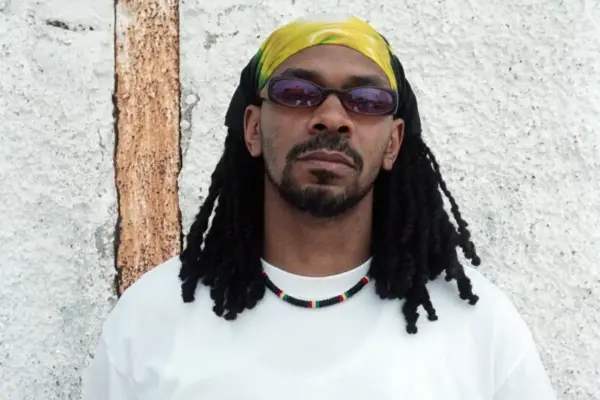
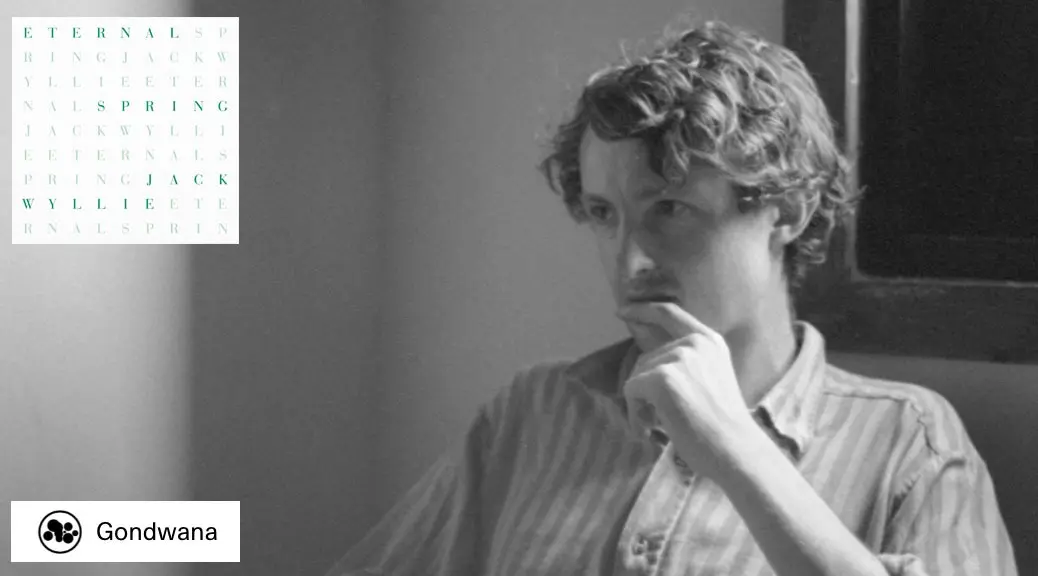
For over two decades, Jack Wyllie has occupied a rare and enviable space in the contemporary musical landscape—one that deliberately resists categorization, comfortably straddling the borders of jazz, ambient electronica, modern classical, and minimalism. As the co-founder of the Mercury Prize-nominated Portico Quartet, and through his hypnotic work with Szun Waves, Paradise Cinema, and various cross-genre collaborations, Wyllie has consistently pushed the boundaries of how acoustic instruments interact with electronic soundscapes. Yet, despite an illustrious career spent shaping some of the most influential envelope-pushing music of the 21st century, the multi-instrumentalist, composer, and saxophonist had never truly placed his own name at the center of a record.
That changes with the release of Eternal Spring.
Far more than a simple vanity project or a brief departure from his group endeavors, Eternal Spring represents a profound artistic and personal milestone. Born out of a distinct period of personal heaviness and lingering gloom, the album is an intentional exercise in healing through creation. Rather than leaning into the dark, labyrinthine experimentalism that characterized some of his earlier exploratory work, Wyllie adopted a remarkably stripped-back yet conceptually rigorous ethos: "I tried to make something beautiful."
The result is a collection of sumptuous, spacious, and restorative soundscapes that weave together contemporary jazz, post-rock, ambient textures, and European classical traditions. Featuring a carefully curated roster of guest artists—including former Portico Quartet rhythm section mates Duncan Bellamy and Milo Fitzpatrick alongside celebrated modern classical figures like Hania Rani, Dobrawa Czocher, and Lotte Betts-Dean—Eternal Spring is a masterclass in emotional resonance. It is music built not to challenge or unsettle, but to cradle, elevate, and offer a quiet, steadfast optimism in a chaotic world.
Detailed Chronology: From Portico to Solo Sanctuary
To understand the emotional and sonic architecture of Eternal Spring, one must trace the evolutionary path that led Jack Wyllie to this exact juncture. His journey has been defined by a restless curiosity and an innate desire to dissolve the rigid walls separating musical genres.
The Formative Years and the Portico Phenomenon
Wyllie first came to international prominence as a core member and co-founder of Portico Quartet, a group that dramatically reconfigured the British jazz landscape in the late 2000s. Emerging with a unique acoustic instrumentation centering around the Hang (a Swiss percussion instrument that produces a resonant, metallic, harp-like timbre), the quartet fused minimalist composition, ambient atmosphere, and driving jazz rhythms. Their 2007 debut album, Knee-Deep in the North Sea, earned a surprise nomination for the prestigious Mercury Prize, instantly placing Wyllie and his bandmates on the global map.
Throughout successive releases with Portico Quartet, Wyllie’s saxophone and keyboard work helped forge a wide-screen, cinematic sound that resonated just as deeply with electronic music fans and ambient devotees as it did with jazz purists. However, the constraints of a band dynamic naturally required compromise and collective vision.
Diversification: Szun Waves and Paradise Cinema
As his career matured, Wyllie sought out additional avenues for spontaneous creation and specialized sonic exploration. Through Szun Waves—his collaborative project alongside producer Luke Abbott and drummer Pompeii—Wyllie leaned heavily into the realm of live improvisation, hardware electronics, and cosmic ambient spaces. This project allowed him to push his soprano and tenor saxophones into distorted, effects-laden environments, stretching the acoustic boundaries of his primary instruments.
Concurrently, his work with Paradise Cinema and various cinematic compositions demonstrated an advanced understanding of mood, space, and narrative pacing. These disparate projects laid the groundwork for an overarching philosophy: music should serve as a dynamic environment rather than a rigid vehicle for technical display.
The Genesis of Eternal Spring
Despite this rich tapestry of collaborative success, the spark for Eternal Spring ignited during a period of personal stagnation. Facing a heavy, lingering psychological gloom, Wyllie did not turn toward abrasive dissonance or cathartic rage—responses common to artists processing distress. Instead, he made a conscious, radical choice to seek out light.
Entering the studio with a foundational directive to prioritize beauty, comfort, and restorative textures, Wyllie began constructing compositions that mirrored the organic cycles of nature. The album gradually took shape over many months, resulting in a cohesive suite of pieces that feels remarkably unified, despite drawing on a dizzying array of global and historical influences.
Supporting Context & Metrics: Sonic Influences and Collaborators
Eternal Spring does not exist in a vacuum; it is deeply informed by a rich lineage of musical pioneers and enriched by a stellar cast of modern collaborators.
A Tapestry of Influences
Wyllie’s career-long resistance to easy categorization stems from a voracious and eclectic appetite for diverse musical traditions. Observers of his work have long noted the distinct lineage of artists who have shaped his approach:

- Arthur Russell: Wyllie shares a profound admiration for the late cellist and composer’s ability to bridge downtown New York avant-garde composition with accessible pop structures, effortlessly extending the natural sound of acoustic instruments through subtle electronic manipulation.
- Minimalist and Modern Classical Masters: Traces of John Adams’ rhythmic propulsion and Keith Jarrett’s exploratory classical leanings surface gently throughout the album’s piano-led configurations.
- Ambient and Pastoral Pioneers: The floating, weightless dreamscapes of Harold Budd and the sophisticated atmospheric pop of Talk Talk inform the record’s tranquil pacing, while the cinematic minimalism of Ryuichi Sakamoto and the ambient electronic production of James Holden provide a modern structural backbone.
The Track-by-Track Aesthetic
The album’s sequencing is a masterclass in emotional pacing:
- "Lightness": Serving as the album’s overture, the track opens with delicate piano and swelling strings before introducing Wyllie’s beautifully judged soprano saxophone. It immediately sets a tone of grace and openness.
- "Magazine": Possesses a distinctly pastoral quality, evoking open green fields and a slower, more deliberate cadence of life.
- "Pavilion": Drifts dreamily into territory reminiscent of Harold Budd’s finest ambient works, allowing notes to linger and decay in vast spatial acoustics.
- "Love Colour": Surrounds warm cello tones and analog synthesizers with an almost sacred, devotional reverence.
- "Actor": Features intricate string and cello arrangements that introduce a distinctly European classical sensibility, deepening the album’s emotional gravity.
- "Yesterday Today": The grand finale featuring Hania Rani and Dobrawa Czocher. It is an involving, immersive piece that leaves the listener enveloped in a warm, comforting serenity.
Collaborative Synergy
The guest list on Eternal Spring is meticulously curated to serve the music rather than act as a commercial draw. The inclusion of former Portico Quartet bandmates Duncan Bellamy and Milo Fitzpatrick grounds the project in a shared history, providing an intuitive rhythmic bedrock. Meanwhile, contemporary classical heavyweights Hania Rani (piano/vocals) and Dobrawa Czocher (cello), alongside acclaimed vocal artist Lotte Betts-Dean, inject multi-hued orchestral and vocal shades into Wyllie’s sonic palette, turning what could have been a solitary exercise into a vibrant, communal conversation.
Official Statements and Artistic Vision
In interviews surrounding the rollout of Eternal Spring, Jack Wyllie has been remarkably candid about the emotional vulnerability that birthed the project. Moving away from the dense, intellectualized structures often associated with contemporary jazz and experimental electronic music, Wyllie sought an elemental purity in his art.
"I tried to make something beautiful," Wyllie noted when discussing the genesis of the record. This simple declaration serves as the manifesto for the entire project. In an industry that frequently rewards irony, relentless complexity, or aggressive sonic disruption, Wyllie’s decision to embrace earnestness and comfort is a quietly defiant act.
Furthermore, speaking on the collaborative dynamic that brought the album to life, Wyllie emphasized the importance of shared intuition:
"When you work with musicians of the caliber of Hania, Dobrawa, Duncan, Milo, and Lotte, you aren’t just giving them notes on a page; you are inviting them into a shared emotional space. The record became a place of refuge—not just for me while writing it, but hopefully for everyone who chooses to sit with it."
Critics and industry analysts have noted that Eternal Spring arrives at a cultural moment uniquely hungry for art that offers psychological sanctuary. As post-pandemic fatigue, digital hyper-connectivity, and global anxieties continue to weigh heavily on the public consciousness, Wyllie’s prescription of open, spacious, and healing compositions feels both timely and necessary.
Future Outlook: Live Performances and Continuing Evolution
With Eternal Spring now established as a critical high-water mark in Wyllie’s career, attention turns toward how this deeply introspective studio creation will translate to the live stage.
The 2026 Tour Dates
Wyllie has announced an exclusive run of intimate live dates designed to capture the delicate, immersive qualities of the record. The initial routing showcases a deliberate choice of acoustically rich, atmospheric venues:
- November 29, 2026: ICA – London, UK
- November 30, 2026: St Michael’s – Manchester, UK
- December 3, 2026: Wonderfruit – Tambon Pong, Thailand
These performances are expected to feature select collaborators from the album, bringing the intricate interplay of piano, strings, saxophone, and electronics into a live, breathing environment. Audiences attending these shows can anticipate an immersive environment where time slows down and the boundary between performer and listener dissolves.
Looking Ahead
As Wyllie looks past the immediate touring cycle for Eternal Spring, the question remains whether this solo venture represents a permanent pivot or merely another fascinating chapter in an endlessly branching career. Given his restless artistic spirit, it is likely that he will continue to split his energies between collaborative endeavors like Szun Waves and his newfound solo identity.
However, one thing is certain: by stepping firmly into the light under his own name, Jack Wyllie has unlocked a new dimension of his artistry. Eternal Spring proves that true avant-garde sophistication does not require alienation or discomfort. Sometimes, the most radical thing an artist can do is offer a hand, open the door to a greener, quieter world, and simply remind us of the healing power of beauty.