By Steve Williams
Published by UK Vibe
Executive Overview
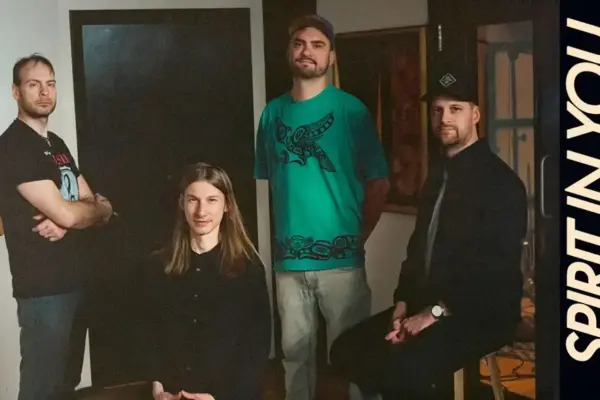
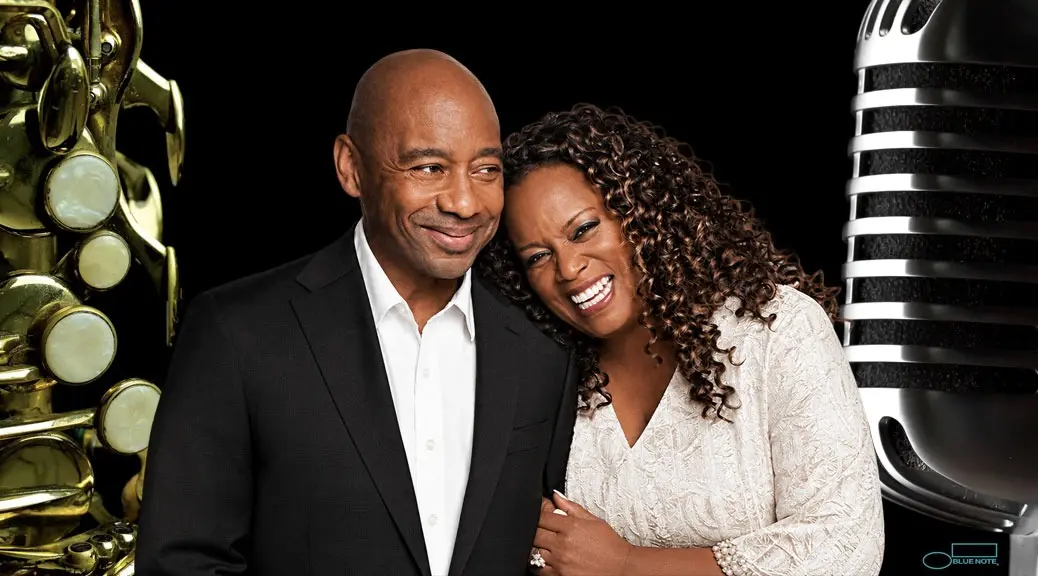
For British jazz enthusiasts, November 21, 2026, marks a solitary, unmissable alignment of towering musical forces. As part of the prestigious EFG London Jazz Festival, the Branford Marsalis Quartet—joined by vocal luminary Dianne Reeves—will touch down for their exclusive United Kingdom performance. Hosted at the brand-new British Airways ARC at Olympia, a state-of-the-art, purpose-built venue towering above the west exhibition hall that opened its doors this past summer, this single-night engagement serves as the centerpiece of the festival’s heavy-hitting John Coltrane centenary celebrations.
The concert anchors an extensive international itinerary running throughout the year, carrying the monumental weight of Coltrane’s enduring genius across North America, Europe, and beyond. Yet, it is the British capital that holds the privilege of witnessing this specific synthesis of master instrumentalists and one of jazz’s most treasured voices. This collaboration is far from a standard tribute revue; it represents a meticulous, deeply respectful reclamation of Coltrane’s iconic 1963 collaboration with baritone balladeer Johnny Hartman.
By mapping Hartman’s vocal blueprint onto Reeves’s commanding, full-bodied contralto, and pairing it with the fierce post-bop elasticity of Marsalis, pianist Joey Calderazzo, bassist Eric Revis, and drummer Justin Faulkner, this project bridges historical divides. It honors a moment when Coltrane—freshly battered by the reactionary critical establishment of the early 1960s—sought refuge in the timeless elegance of the Great American Songbook.
Detailed Chronology: From the Village Vanguard Backlash to the Impulse! Ballads
To understand the profound weight of this centenary project, one must journey back to the turbulent jazz landscape of late 1961. John Coltrane, alongside his boundary-pushing quintet featuring multi-reedist Eric Dolphy, was subjected to a ferocious critical backlash. In the November 1961 issue of DownBeat, critic John Tynan famously dismissed the group’s avant-garde explorations as "anti-jazz"—a venomous epitaph that unfortunately stuck in conservative circles. Reviews of their legendary Village Vanguard residency sparked bitter divisions: Ira Gitler championed their exploratory fire, while others retreated into skepticism.
Faced with this hostile reception, producer Bob Thiele at Impulse! Records executed a brilliant, strategic pivot. He steered Coltrane away from the blistering modal complexities of his live sets and into the studio to record unadorned, emotionally resonant ballads and standards. The resulting sequence was historical: Ballads arrived first, followed by a collaborative masterclass with Duke Ellington, and culminating in the definitive 1963 vocal session with baritone Johnny Hartman.
Hartman remains the sole singer Coltrane ever recorded with as a leader, cementing a six-song tracklist that has haunted jazz history ever since. Decades later, Branford Marsalis is no stranger to unpacking the Coltrane catalog. In 2002, Marsalis launched his independent label, Marsalis Music, by releasing a complete, definitive recording of Coltrane’s A Love Supreme. The following spring, the quartet took that monumental suite to the Bimhuis in Amsterdam, a performance captured on film. While Calderazzo and Revis formed the bedrock of that rhythm section, Justin Faulkner has since stepped into the drummer’s seat, making this his first recorded Coltrane project with the ensemble.
For Dianne Reeves, however, this territory is entirely unprecedented. Despite her towering status in contemporary jazz, she had never recorded any of the Hartman-Coltrane repertoire until now—making this convergence a monumental first in a legendary career.
Vocal Mastery and Historical Lineage: The Art of Dianne Reeves
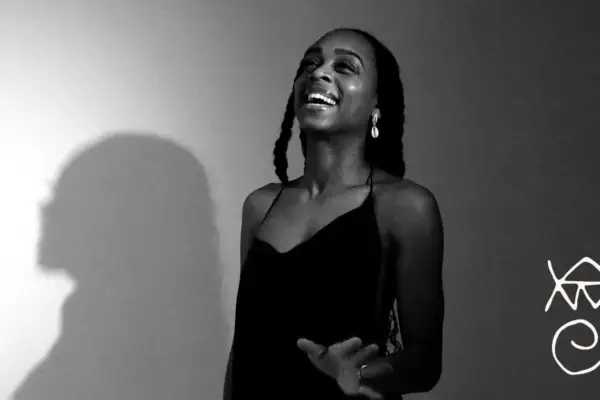
To evaluate Reeves’s entry into this material is to examine an instrument of singular power and precision. Reeves possesses one of the most immediately recognizable voices in modern music: a full, rich contralto boasting formidable weight at the bottom register without a shred of thinning at the top.
Her timing is a masterclass in suspense. Reeves instinctively sits behind the beat, holding her ground and letting a lyrical phrase hang in the air until the resolution arrives deliberately late, landing with heightened emotional impact precisely because of the wait. Vibrato is employed sparingly, reserved exclusively for the tail end of a sustained note; the vast majority of her melodic lines are delivered straight. Her diction is clinical in its exactness, ensuring every syllable of a lyric reaches the listener, while her immense dynamic range is held tightly in reserve, unleashed only during the few critical bars that demand explosive vocal power.

This meticulous approach effortlessly silences any premature comparisons to Johnny Hartman. His warm, resonant baritone and her soaring, grounded contralto are fundamentally different instruments, and the sophisticated arrangements purposefully avoid drawing direct parallels.
This writer’s personal history with Reeves stretches back decades—long before she claimed a recording contract of her own. I remember her early featured vocal on "Ancient Source" and her ethereal, wordless lines weaving across the title track of Sky Islands in 1977. Ten years later, she etched her name in history as the first vocalist signed to the reactivated Blue Note Records, where she recut "Sky Islands."
By 1996, she released The Grand Encounter, featuring jazz titans Clark Terry and James Moody—an album that led to a transcendent live performance at the International Convention Centre in Birmingham on May 28, 1997. Clark Terry stands as the vital genealogical link in this chain; he was the mentor who drilled the standards repertoire into a teenage Reeves. The very songs she breathes new life into on this project are the foundational standards Terry drilled into her decades ago.
Supporting Context & Metrics: Structural Anatomy of the Project
The resulting recorded project is structured across four sides of vinyl, totaling twelve tracks. Reeves lends her voice to precisely six of them—the exact, hallowed six songs recorded by Hartman.
- The Vinyl Sequencing Breakdown:
- Side A: Opens with "Autumn Serenade" and the title track, with Calderazzo providing a sparse, accommodating canvas beneath Reeves’s unhurried phrasing. The side concludes with "Big Nick," featuring Marsalis on soprano saxophone.
- Side B: Features "You Are Too Beautiful" and "Lush Life"—the latter being a notorious litmus test that routinely exposes vocalists lacking interpretive depth. The side then dramatically shifts gears, handing over the reins to "26-2." Here, Marsalis and the rhythm section unleash unmitigated, hard post-bop fire, injecting an aggressive jolt of adrenaline precisely where a traditional ballad record requires shaking up.
- Side C: Mirrors the structural journey of Side B, presenting "My Only Love" and "They Say It’s Wonderful" before dissolving into "Central Park West." Performed as a delicate soprano and piano duet, it stands as the quietest moment on the record and easily the superior of the two soprano outings.
- Side D: Operates outside the primary conceptual framework, offering two classic standards from the broader Coltrane canon alongside an alternative trio take of "Big Nick." Entirely instrumental, it expands the physical scope of the set without altering its core narrative argument.
Corporate lineages further enrich the narrative context. Blue Note’s historical claim on Coltrane rests on a single album as a leader: 1957’s Blue Train. Meanwhile, the immortal Hartman recordings belong to Impulse!, which now operates under the exact same corporate umbrella at Universal Music Group. Blue Note currently houses two distinct artistic gateways into this historic repertoire: a legendary vocalist signed in 1987, and a stellar quartet whose critically acclaimed album Belonging dropped last year, coinciding with a milestone birthday falling mere days after release.
Official Statements and Industry Reception
While industry insiders and purists continue to debate the necessity of revisiting sacred jazz texts, the early critical consensus surrounding this cross-generational partnership has been overwhelmingly enthusiastic.
Prominent jazz critics and festival organizers have lauded the pairing of Marsalis’s razor-sharp intellectual rigor with Reeves’s emotional warmth as a masterclass in stylistic reinvention. Though specific personal highlights—such as Marsalis’s probing soprano excursions—spark nuanced debates among purists regarding tone and texture, the collective consensus views the project as a triumphant balancing act between reverence and innovation.
"This is not about emulation; it is about extension," notes festival programming commentary regarding the collaborative tour. "When Branford and Dianne step onto the stage, they are not attempting to recreate 1963 in amber. They are interrogating the emotional architecture that allowed Coltrane and Hartman to find beauty amidst a storm."
Future Outlook
As the Branford Marsalis Quartet and Dianne Reeves continue their extensive international routing across North America, Canada, and continental Europe well into next year, the British date stands out as a glittering anomaly. Securing a single night for UK audiences amplifies the exclusivity and cultural significance of the November 21 appearance at the British Airways ARC.
For the EFG London Jazz Festival, anchoring its Coltrane centenary celebrations to this performance establishes a high-water mark for the event’s ongoing programming. Whether fans experience the project via its meticulously pressed black and limited-color vinyl editions or witness its raw, unmediated power live in Olympia, the collaboration signals a vital chapter in the living history of jazz. It proves that when master interpreters confront the ghosts of the past, the resulting music does not merely echo history—it commands the present.
Live Event Details
- Event: EFG London Jazz Festival Exclusive
- Artists: Branford Marsalis Quartet and Dianne Reeves Celebrate John Coltrane
- Date: November 21, 2026
- Venue: British Airways ARC, Olympia, London