Executive Overview
For nearly two centuries, the concept of paying to stand shoulder-to-shoulder with meticulously crafted wax replicas of the world’s most celebrated, infamous, and powerful figures has remained a cornerstone of global leisure and tourism. While the premise might occasionally strike modern observers as delightfully eccentric, the legacy of Marie Tussaud’s revolutionary travelling exhibition has endured, evolving from a 19th-century novelty into a multi-billion-dollar entertainment juggernaut.
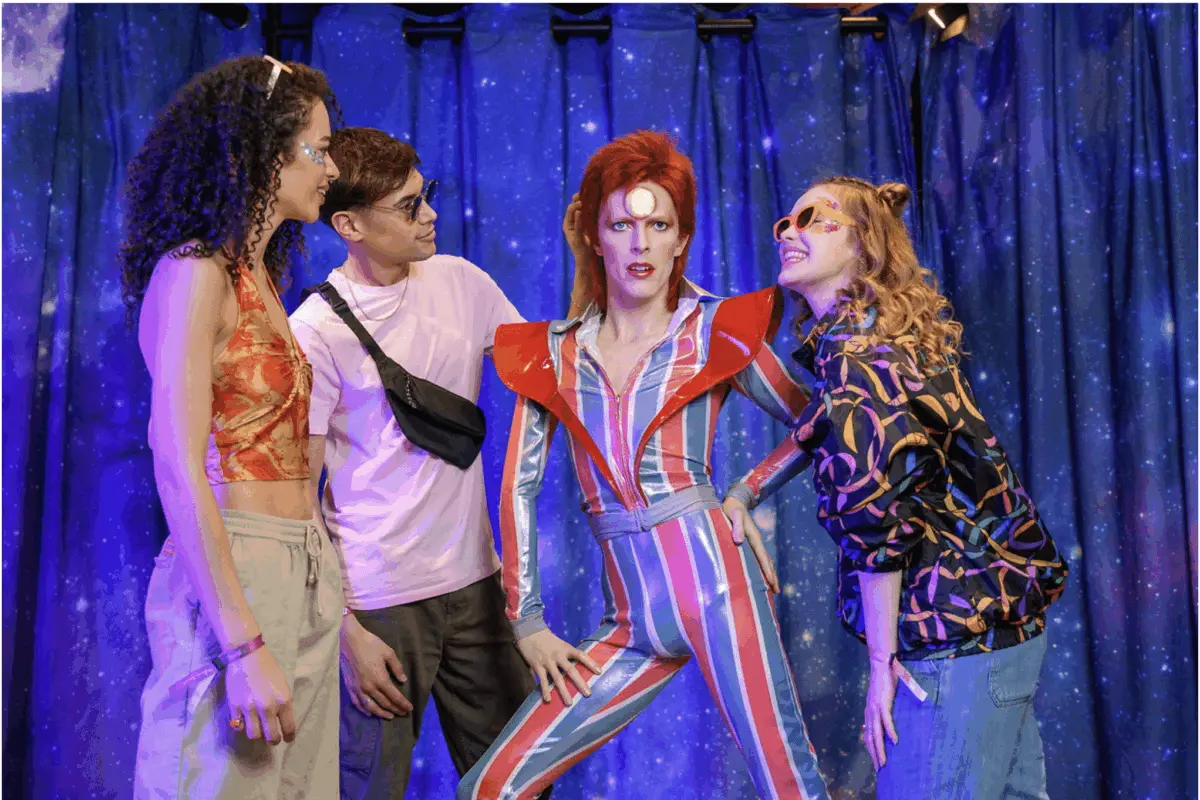
Today, the UK remains the spiritual heartland of this global phenomenon, anchored by its flagship London location on Marylebone Road and its vibrant northern counterpart in Blackpool. Operated by Merlin Entertainments—the leisure giant responsible for major theme parks such as Alton Towers and Thorpe Park—Madame Tussauds has modernised far beyond static portraiture. It now offers fully immersive, multi-sensory zones spanning Hollywood cinema, chart-topping music, elite sports, reality television, and historical pageantry.
This comprehensive guide serves as an authoritative resource for prospective visitors, investigating the rich history, operational mechanics, ticket pricing models, accessibility provisions, and logistical frameworks required to navigate two of the United Kingdom’s most heavily frequented tourist destinations.

Detailed Chronology: From Revolutionary Paris to Victorian London
The history of Madame Tussauds is inextricably linked with political turmoil, artistic brilliance, and relentless entrepreneurial grit. Understanding the modern attraction requires tracing its origins back to the late 18th century.
The Parisian Genesis (1761–1802)
Born Marie Grosholtz in Strasbourg, France, in 1761, the future Madame Tussaud learned the delicate art of wax modeling from Dr. Philippe Curtius, a physician and skilled anatomist who employed wax to illustrate medical anomalies. Grosholtz demonstrated an extraordinary aptitude for the craft. By 1777, at just 16 years of age, she modeled her very first portrait in wax: the French Enlightenment philosopher Voltaire.
As her reputation grew, her subjects expanded to include luminaries such as Benjamin Franklin and Jean-Jacques Rousseau. However, the onset of the French Revolution in 1789 radically altered the trajectory of her life. Due to her royal connections—she had served as an art tutor to Madame Élisabeth, the sister of King Louis XVI—Tussaud was arrested alongside other royalists during the Reign of Terror. Spared the guillotine only because her artistic talents were deemed useful for casting death masks of executed aristocrats and revolutionaries alike, she was forced to mold the likenesses of former friends and patrons, including Marie Antoinette and Robespierre.
The British Tour and Permanent Home (1802–1835)
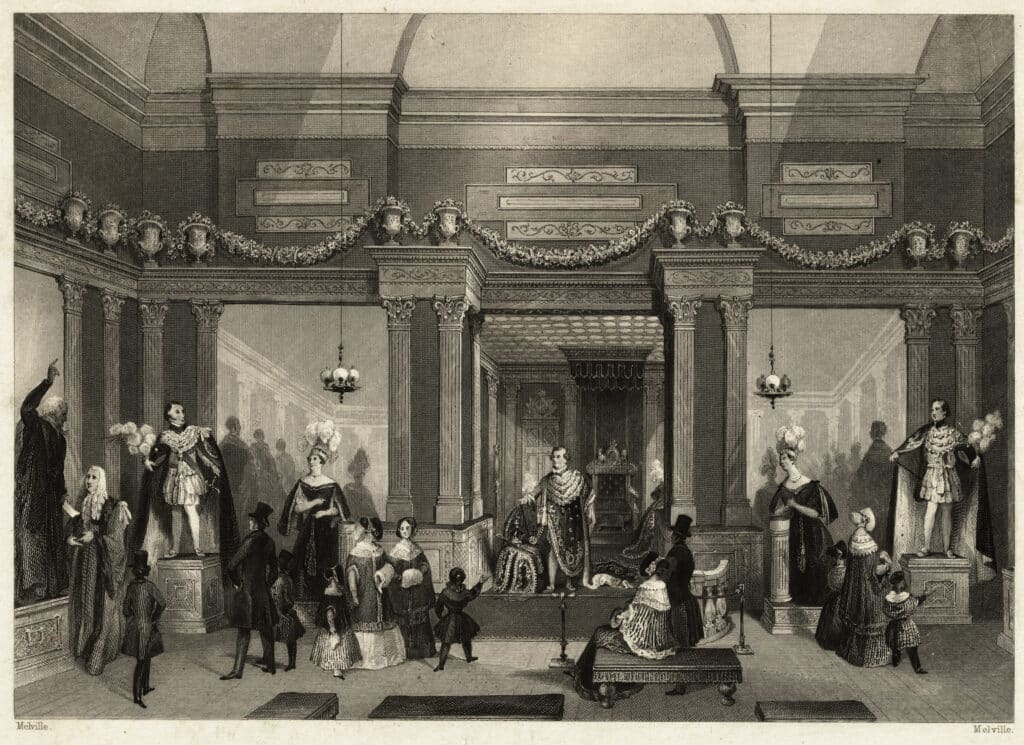
Following the death of Philippe Curtius, Tussaud inherited his extensive collection of wax models. In 1802, capitalizing on the temporary Peace of Amiens, she packed her collection and crossed the English Channel, embarking on an extensive tour of the British Isles. For over three decades, the travelling exhibition captivated audiences across provincial towns and cities.
By 1835, seeking a permanent home for her expanding collection, Tussaud established her first fixed exhibition at the Baker Street Bazaar in London. The venue instantly caught the public imagination, offering a blend of contemporary celebrity culture and the macabre—the latter immortalized by her famous "Chamber of Horrors," which featured relics and models from the French Revolution alongside notorious British criminals.
In 1842, at the age of 81, Marie Tussaud sculpted her own self-portrait in wax. This historic artifact remains on display today, greeting visitors at the very entrance of Madame Tussauds London as a testament to a pioneering female entrepreneur who forged an empire in a man’s world.
Supporting Context & Metrics: The Modern Global Footprint
In the contemporary era, Madame Tussauds has transcended its British roots to become a truly international brand. Under the stewardship of Merlin Entertainments, the attraction operates world-class facilities across Europe, North America, Asia, the Middle East, and Australia.
Location-Specific Innovation
While the brand identity remains consistent—celebrating fame, celebrity, and cultural impact—each facility is meticulously tailored to its regional audience.
- Madame Tussauds London: Spanning multiple floors, the London attraction incorporates high-production sets, interactive Hollywood backlots, royal drawing rooms, and cutting-edge themed environments like the Marvel Super Heroes 4D experience and the interactive music zones.
- Madame Tussauds Blackpool: Tailored specifically to seaside holidaymakers and northern audiences, the Blackpool branch features a distinct lineup of figures, including beloved British television icons, sporting legends, and the fully functional Coronation Street Rovers Return pub experience.
Production and Craftsmanship Metrics
Creating a single wax figure is a monumental undertaking that requires an elite team of sculptors, molders, colorists, and hair stylists. Key metrics defining the modern creation process include:

- Time Investment: A typical wax figure takes approximately 4 to 6 months to complete from initial concept to final unveiling.
- Data Gathering: Sculptors take over 250 precise measurements and reference hundreds of photographs of the subject during sitting sessions.
- Material Precision: Inserting human hair strand by strand can take up to five weeks per head alone. Every tooth, eye, and skin tone shade is meticulously hand-painted to achieve photorealistic accuracy.
- Cost: A single high-end wax figure routinely costs upwards of £150,000 to £300,000 to produce, reflecting the immense artisan labor involved.
Official Statements & Operational Insights
Management at Merlin Entertainments emphasize that the ongoing appeal of Madame Tussauds lies in its ability to adapt to shifting cultural landscapes. Unlike traditional museums where artifacts are static windows into the past, Madame Tussauds is designed as a living, breathing reflection of current pop culture.
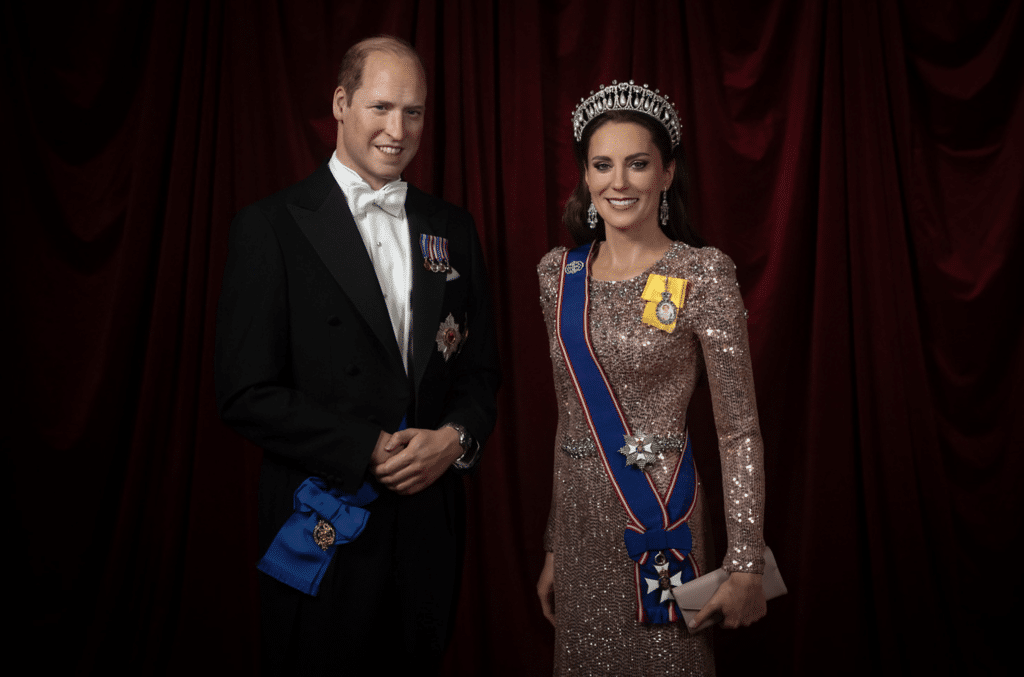
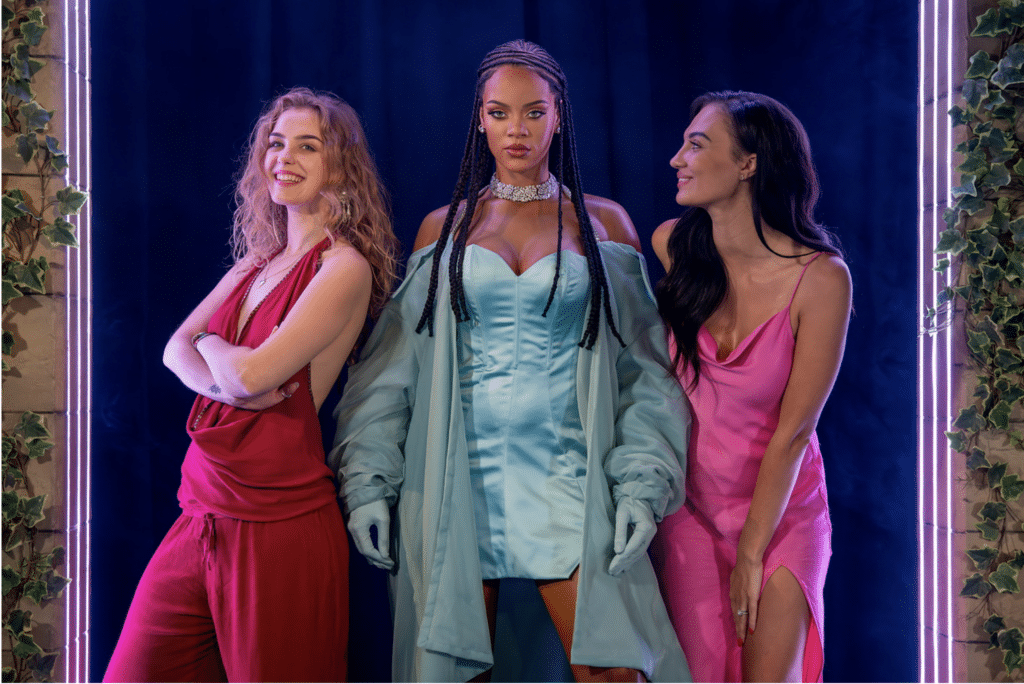
"Our mission has always been to bridge the gap between ordinary people and the icons they admire most," notes a senior Merlin Entertainments spokesperson. "Whether it’s capturing the cultural zeitgeist with figures like Taylor Swift and Beyoncé or honoring national heritage through the Royal Family, Madame Tussauds thrives on relevance. We are not just preserving history; we are capturing moments in real-time."
Operational policies also reflect a heavy emphasis on crowd control, security, and guest satisfaction. Given the immense footfall at both the London and Blackpool sites, management enforces strict pre-booked time-slot ticketing to regulate visitor flow, ensuring that guests can interact with figures without excessive bottlenecks.
Ticket Types, Pricing Models, and Financial Structure
Planning a visit requires understanding the tiered ticketing system and available upgrades across the UK locations.
Standard Admissions
- Adult Tickets (Ages 16+): Standard online advance tickets start at £27, whereas on-the-day purchases range from £39 to £42.
- Child Tickets (Ages 2–15): Priced at £24 online in advance.
- Infants (Under 2): Admitted completely free of charge.
- Carers: Visitors requiring specialized assistance are entitled to a free carer ticket accompanying a valid adult ticket.
Premium Upgrades & Multi-Attraction Bundles
Guests looking to maximize their leisure budget can opt for multi-attraction bundles or specific in-attraction VIP upgrades. These packages often combine Madame Tussauds access with other London landmarks managed by Merlin, such as the Lastminute.com London Eye, SEA LIFE London Aquarium, or the London Dungeon.
Within the attraction itself, premium additions include:
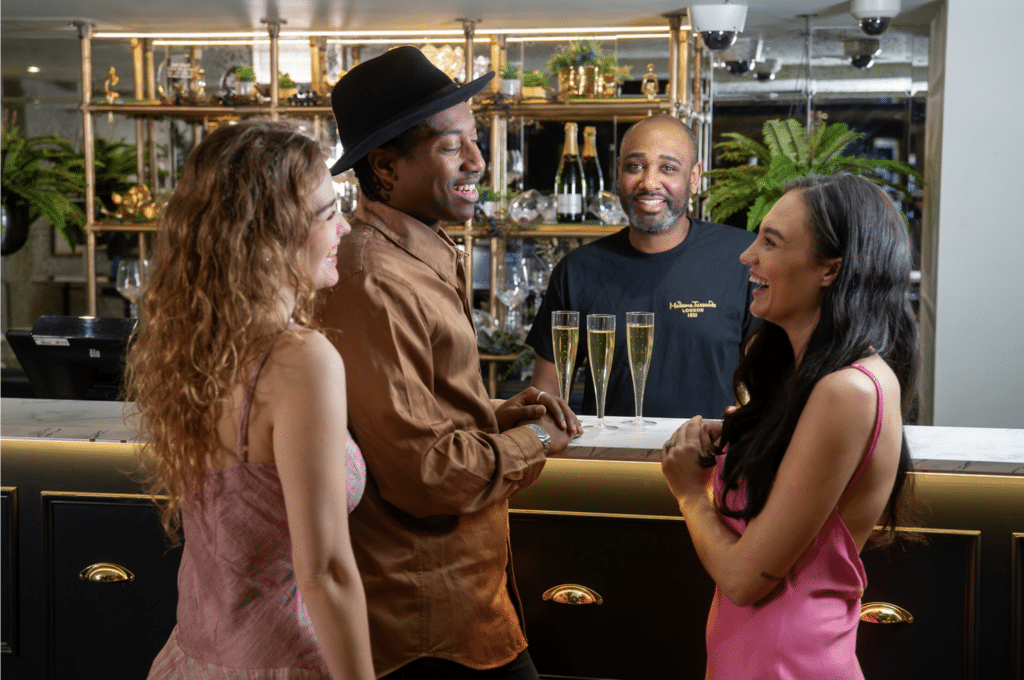
- The 1835 Champagne Bar experience (London)
- Afternoon Tea packages featuring curated culinary spreads
- Chocolate Fondue stations (London)
Food, Beverage, and Hospitality Offerings
While Madame Tussauds does not house formal, full-service sit-down restaurants, both the London and Blackpool locations offer diverse culinary pitstops to sustain visitors through a 1.5 to 2-hour tour:
- Grab-and-Go Kiosks: Strategically placed throughout the zones offering chilled beverages, artisanal snacks, and light bites.
- Themed Spaces: The London site features a dedicated Chocolate Fondue station, while the Blackpool location houses a fully functioning replica of the iconic Coronation Street Rovers Return pub, allowing fans to enjoy a pint in a legendary television setting.
- Afternoon Tea: Guests who book specialized afternoon tea packages can enjoy a traditional British spread integrated into their visiting itinerary.
Accessibility, Health, Safety, and Logistics
Accessibility Standards
Both UK facilities are fully committed to accommodating visitors with reduced mobility and special needs:
- Wheelchair Access: The historic nature of the buildings means strict safety caps apply. Notably, Madame Tussauds London can accommodate a maximum of three wheelchair users in the building simultaneously, making advance booking of dedicated wheelchair slots mandatory (on-the-day wheelchair bookings cannot be guaranteed).
- Assistance Dogs: Fully accredited assistance dogs are welcomed across all public zones.
- Contact Channels: For bespoke inquiries, Guest Services can be reached via dedicated accessibility emails for both London and Blackpool operations.
Health, Safety, and Security Protocols
To ensure the wellbeing of hundreds of daily visitors, robust security measures are enforced at all Merlin properties:
- Mandatory Bag Checks: All visitors are subject to security screening prior to entering the attraction.
- Prohibited Items: Sharp objects, large luggage, illegal substances, and hazardous materials are strictly barred from the premises.
Transportation and Arrival Guide
Madame Tussauds London (Marylebone Road, NW1 5LR)
- By Underground: Baker Street Tube Station is a mere 2-minute walk from the entrance, served by the Bakerloo, Circle, Jubilee, Metropolitan, and Hammersmith & City lines.
- By National Rail: Marylebone Station is approximately a 10-minute walk away.
- By Bus: Numerous Transport for London bus routes stop within a 5-minute walk, including routes 13, 18, 27, 74, 113, 139, 189, 205, 274, and 453.
- By Car: There is no onsite parking. Visitors driving should utilize nearby commercial parking facilities or public car parks via the A40 and Marylebone Road.
Madame Tussauds Blackpool (89 Promenade, FY1 5AA)
- By Car: The Central Car Park is the closest facility, offering ample spaces including designated disabled parking bays.
- By Train & Tram: Blackpool North Station is a 20-minute walk away, with local tram and bus networks providing direct connections to the promenade.
Future Outlook
As Madame Tussauds looks toward the remainder of the decade and beyond, its strategic vision focuses heavily on interactivity, digital integration, and rapid cultural turnaround. The traditional model of sealing historical figures behind velvet ropes is increasingly giving way to fully immersive, gamified environments where visitors can star alongside digital projections, augmented reality features, and hyper-realistic silicone and wax hybrids.
Furthermore, sustainability initiatives across Merlin Entertainments aim to reduce the carbon footprint of manufacturing and maintaining figures, utilizing eco-friendly materials where structurally viable without compromising the world-class artistic standard established by Marie Tussaud nearly 200 years ago.
Whether you are a first-time international tourist touching down in the capital or a domestic family seeking a nostalgic weekend day out, Madame Tussauds remains an essential pillar of British popular culture—a testament to human fascination with celebrity, artistry, and the uncanny valley of wax.