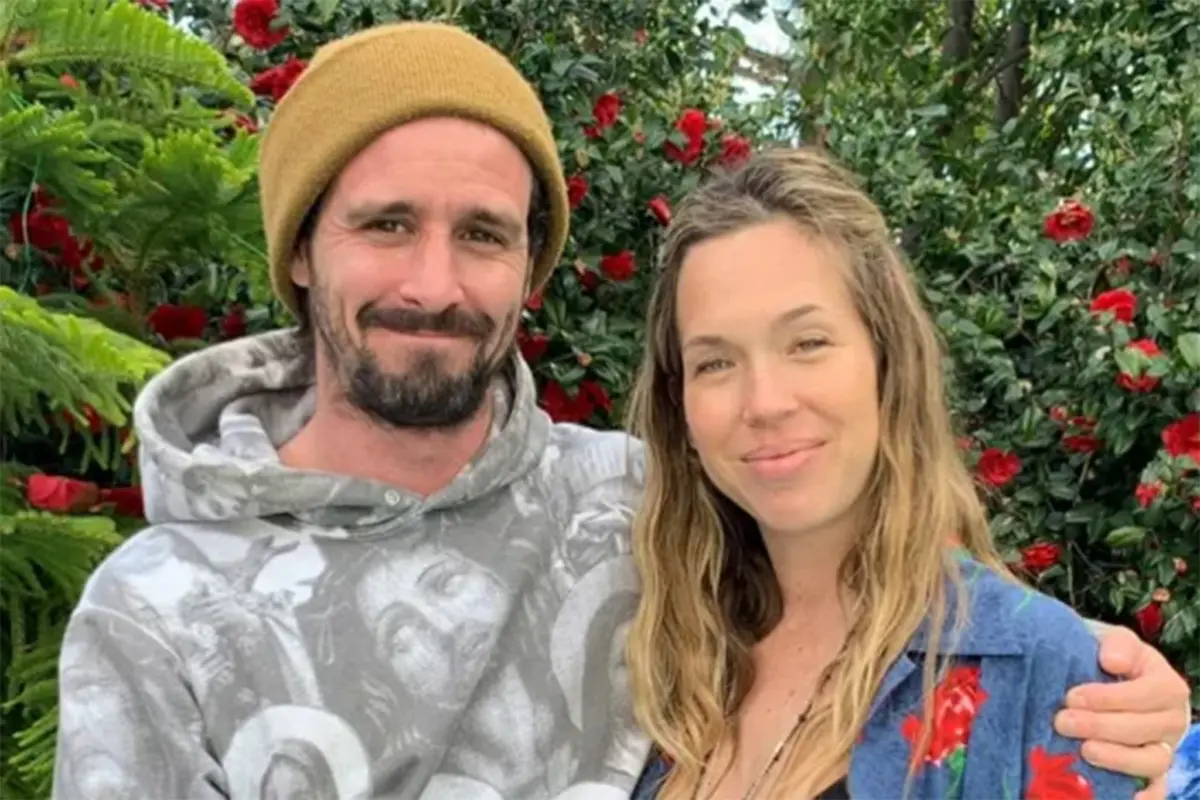
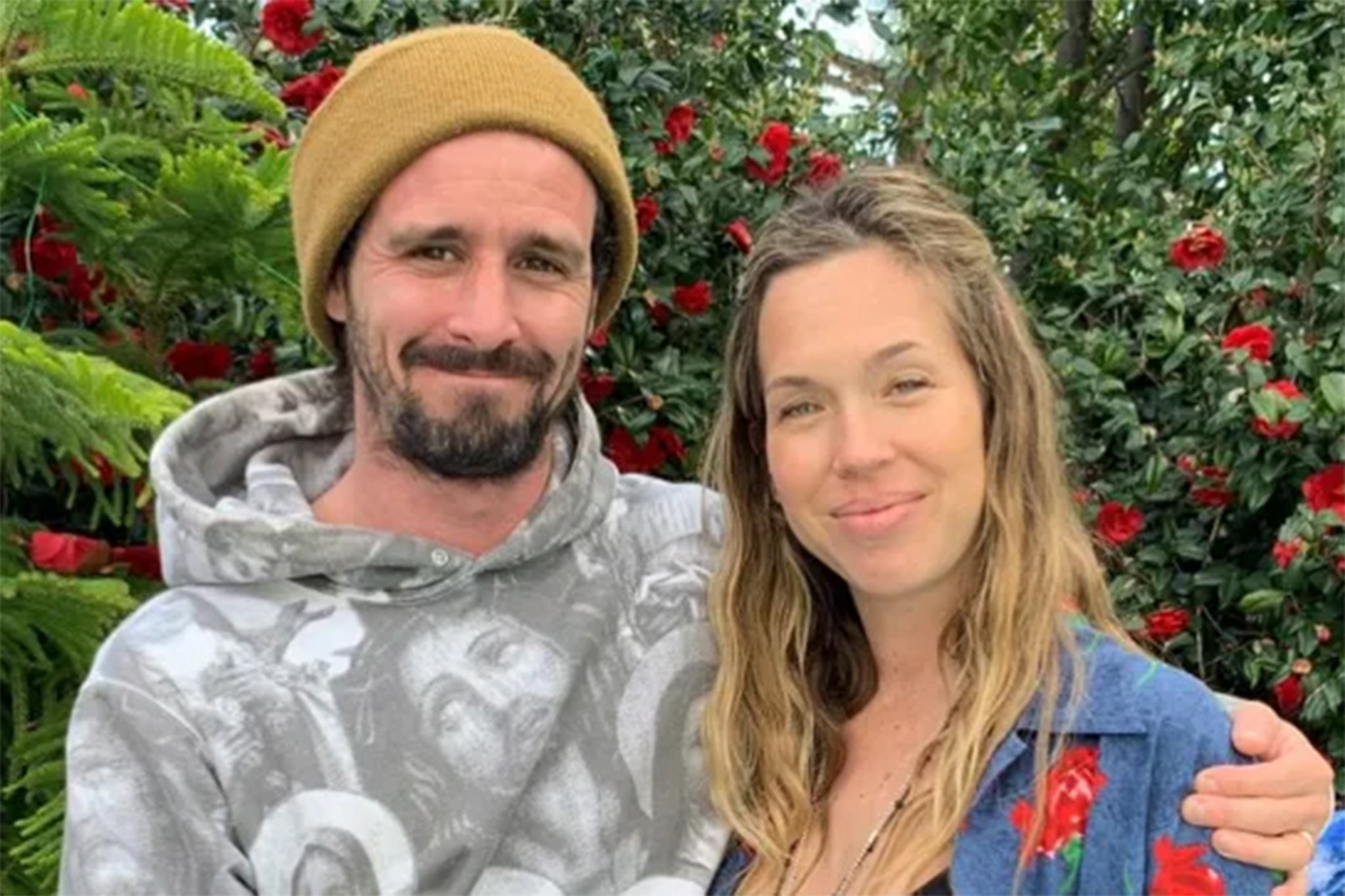
In the fast-paced, high-stakes ecosystem of Hollywood awards ceremonies, moments of remembrance are designed to offer closure, validate legacies, and honor the human capital behind beloved art. Yet, these tightly curated televised tributes frequently court controversy. When the Television Academy failed to feature late actor James Ransone in its live Emmy Awards broadcast In Memoriam segment, it ignited a swift and public backlash from his widow, Jamie “Skipper” McPhee.
Ransone, widely celebrated for his raw and emotionally resonant portrayal of Ziggy Sobotka in the critically acclaimed HBO drama The Wire, died by suicide in December at the age of 46. His absence from the primetime broadcast—following a similar omission from the Academy Awards’ tribute earlier in the year—has once again thrust the complex mechanics of industry award selections into the public spotlight.
While the Television Academy defended its decision by pointing to strict broadcast time constraints and an expansive online registry, industry peers and grieving family members are demanding a deeper reckoning. This incident underscores a persistent friction between the rigid logistics of live television production and the emotional demands of honoring complex artists who have left an indelible mark on both television and film.
Detailed Chronology: From Tragical Loss to Public Backlash
To fully understand the gravity of the recent Emmy controversy, it is necessary to trace the timeline of events beginning with James Ransone’s untimely passing and culminating in the public outcry led by his widow.
December: A Devastating Loss
In December, the entertainment community reeled from the sudden death of James Ransone. Known affectionately by those close to him as "PJ," the 46-year-old actor had carved out a distinctive niche in modern prestige television and horror cinema. News of his death by suicide prompted an outpouring of grief from co-stars, directors, and fans who remembered him as a deeply dedicated, electric performer capable of embodying both chaotic vulnerability and intense humanity.
March: The Oscars In Memoriam Omission
As Hollywood transitioned into awards season, Ransone’s contributions to cinema were similarly overlooked. In March, during the Academy Awards telecast, the film industry’s In Memoriam segment bypassed his name. This omission drew a sharp and poignant rebuke from filmmaker Scott Derrickson, who had directed Ransone in five distinct projects. Derrickson took to social media platform X to voice his frustration, writing:
"The Oscars In Memoriam ignored him but I cannot. He was my friend. I put him in five films. In early January I buried James ‘PJ’ Ransone […] He was a complex, funny, talented, and undeniably reckless person. He was wildly alive and deeply loved."
Despite Derrickson’s public tribute, the broader cinematic establishment offered no immediate adjustment or public acknowledgment regarding the oversight.
September: The Emmy Awards Broadcast and McPhee’s Response
The tension escalated on a Monday evening in September during the Emmy Awards ceremony. As viewers tuned in to watch music artist Noah Kahan perform a stirring rendition of Simon and Garfunkel’s "Bridge Over Troubled Water" alongside the broadcast’s memorial montage, Ransone’s face and name were once again missing from the screen.
Jamie McPhee, watching the aftermath of the ceremony, took to her Instagram Story to voice her profound disappointment.
"My husband @jamesransone was not acknowledged in memoriam at tonight’s Emmys," McPhee wrote, as reported by Entertainment Weekly. "He was also not at the Oscars earlier this year."
Reflecting on her husband’s multifaceted personality, she added:
"PJ was impossible, lovable, intolerable and incredible — depends on who you ask. But without question — he was a great actor."
Initially balancing her criticism with dark humor, McPhee noted that her late husband would likely have found the oversight amusing, stating, "But good news is PJ wouldn’t care. He’d actually think it’s funny."
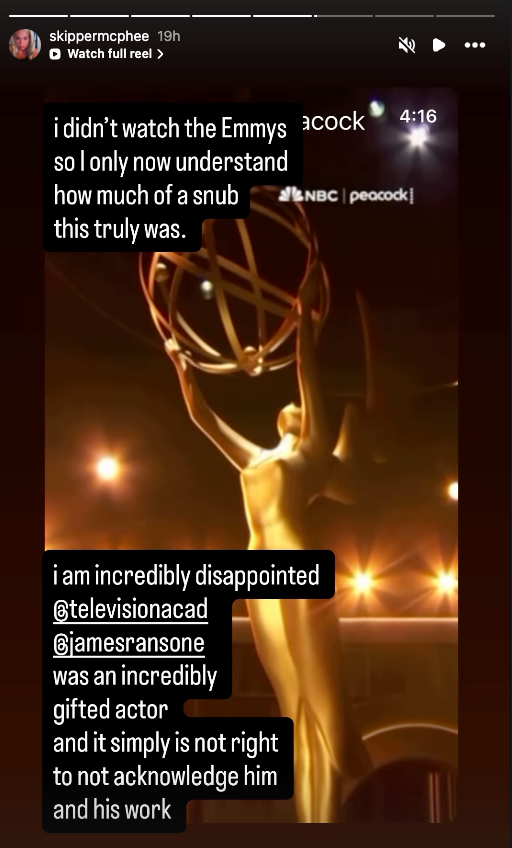
However, after viewing footage of the broadcast on Tuesday, McPhee’s tone shifted to one of sharper critique. Having fully grasped the scope of the omission, she posted a follow-up statement:
"I didn’t watch the Emmys so I only now understand how much of a snub this truly was. I am incredibly disappointed @televisionacad. @Jamesransone was an incredibly gifted actor and it simply is not right to not acknowledge him and his work."
Supporting Context & Metrics: The Mechanics of the In Memoriam Omission
The recurring public outrage over omissions in major entertainment awards show In Memoriam segments is not an isolated phenomenon. Every year, guilds, academies, and producers face an impossible mathematical equation: honoring hundreds of recently departed industry professionals within a broadcast window that typically spans less than three minutes.
The Numbers Game of Television and Film Passings
In any given 12-month cycle, the television and film industries lose hundreds of actors, writers, directors, producers, cinematographers, and craftspeople.
Broadcast Constraints: A live primetime telecast like the Emmy Awards operates under strict network timing, where every second is heavily monetized and budgeted.
Selection Committees: Academy producers rely on specialized committees to curate the live montage, prioritizing individuals who won major awards, served in prominent leadership roles, or achieved sustained, cross-generational household fame during their careers.
The Digital Archive Alternative: To mitigate the exclusion of hundreds of talented contributors, organizations like the Television Academy maintain comprehensive digital registries. These online databases list every registered industry professional who passed away during the voting cycle, ensuring their names are officially recorded, even if they do not appear on television screens worldwide.
James Ransone’s Artistic Footprint
To evaluate why Ransone’s exclusion felt glaring to his peers and fans, one must look at the breadth and impact of his career. Ransone was never merely a background player; he was a vital component of some of the most influential television and cinematic projects of the 21st century.
The Wire (2003): During the landmark second season of David Simon’s HBO masterpiece, Ransone played Ziggy Sobotka. His performance captured the tragic, self-destructive desperation of a dockworker’s son struggling for validation in a declining industrial landscape. It remains one of the most memorable character arcs in television history.
Generation Kill (2008): Ransone reunited with The Wire creator David Simon for this critically acclaimed HBO miniseries, stepping into the boots of real-life Marine Cpl. Josh Ray Person. His performance balanced dark humor with the stark realities of modern warfare.
Horror Cinema and Independent Film: Beyond television, Ransone built a formidable reputation in the horror genre. He starred in Scott Derrickson’s supernatural thriller Sinister (2012) and its sequel Sinister 2 (2015), as well as Ti West’s In a Valley of Violence (2016). He later entered the mainstream horror lexicon by playing the adult Eddie Kaspbrak in It Chapter Two (2019) and appeared in The Black Phone (2021) and its upcoming sequel, The Black Phone 2, marking his final screen appearance.
Given this impressive resume—spanning prestige television, critical miniseries, and financially successful horror franchises—supporters argued that his cultural footprint easily merited inclusion in a live national broadcast.
Official Statements and Institutional Defense
In the wake of McPhee’s public statements, industry watchdogs and media outlets sought clarification from the governing bodies behind the telecast.
The Television Academy’s Response
When approached by The Independent for comment, representatives for the Television Academy did not immediately respond. However, a spokesperson provided an official statement to Entertainment Weekly addressing the logistical realities of the broadcast:
"There is a limit on how many people can be acknowledged on the broadcasts due to the tribute being only a few minutes long during the live ceremony. The Academy presents a more extensive video, listing the hundreds of names of television colleagues we’ve lost in the past year on their website."
Checks confirmed that James Ransone’s name is indeed included within the expanded digital roll call hosted on the official Television Academy website. Nevertheless, for family members and collaborators, a digital registry offers cold comfort compared to the cultural validation of a primetime broadcast mention.
Future Outlook: Reimagining How Hollywood Remembers Its Own
The ongoing controversy surrounding James Ransone—bookended by his omissions from both the Academy Awards and the Emmy Awards—serves as a catalyst for a broader conversation within the entertainment industry. As public expectations shift regarding how cultural institutions honor mental health, tragedy, and niche artistic excellence, pressure is mounting on award show producers to modernize their memorial practices.
Potential Reforms for Awards Broadcasts
Hybrid Digital-Broadcast Formats: Future telecasts could utilize interactive screen technology, allowing viewers to scan a QR code during the live broadcast that seamlessly links to an expansive, dynamic memorial wall featuring every lost artist.
Genre-Specific Recognitions: By partnering with specialized guilds (such as casting directors, stunt coordinators, and regional chapters), academies could distribute more localized or genre-specific tributes, preventing character actors and genre mainstays from falling through the cracks of mainstream primetime broadcasts.
Transparent Criteria: Providing clearer guidelines on how names are selected for the live broadcast versus the digital archive could help manage expectations and reduce the emotional shock experienced by grieving families.
Honoring the Legacy Beyond the Broadcast
While the Television Academy’s defense rests on mathematical limitations, the public outcry proves that an artist’s legacy is ultimately measured not by a thirty-second clip on a broadcast monitor, but by the lasting impact of their work and the fierce loyalty of those who loved them.
Jamie McPhee’s willingness to speak out ensures that James Ransone will not be quietly forgotten by the industry that he helped shape. Whether through the enduring chaos of Ziggy Sobotka on The Wire, his visceral performances in modern horror, or the fierce advocacy of friends like Scott Derrickson and a devoted widow, Ransone’s artistic fingerprint remains firmly etched into the fabric of modern entertainment.
If you or someone you know is struggling or in crisis, help is available. In the United States, you can call or text 988 or chat at 988lifeline.org to reach the Suicide & Crisis Lifeline. If you are in the UK, you can call the Samaritans at 116 123. International resources can be found through Befrienders Worldwide.