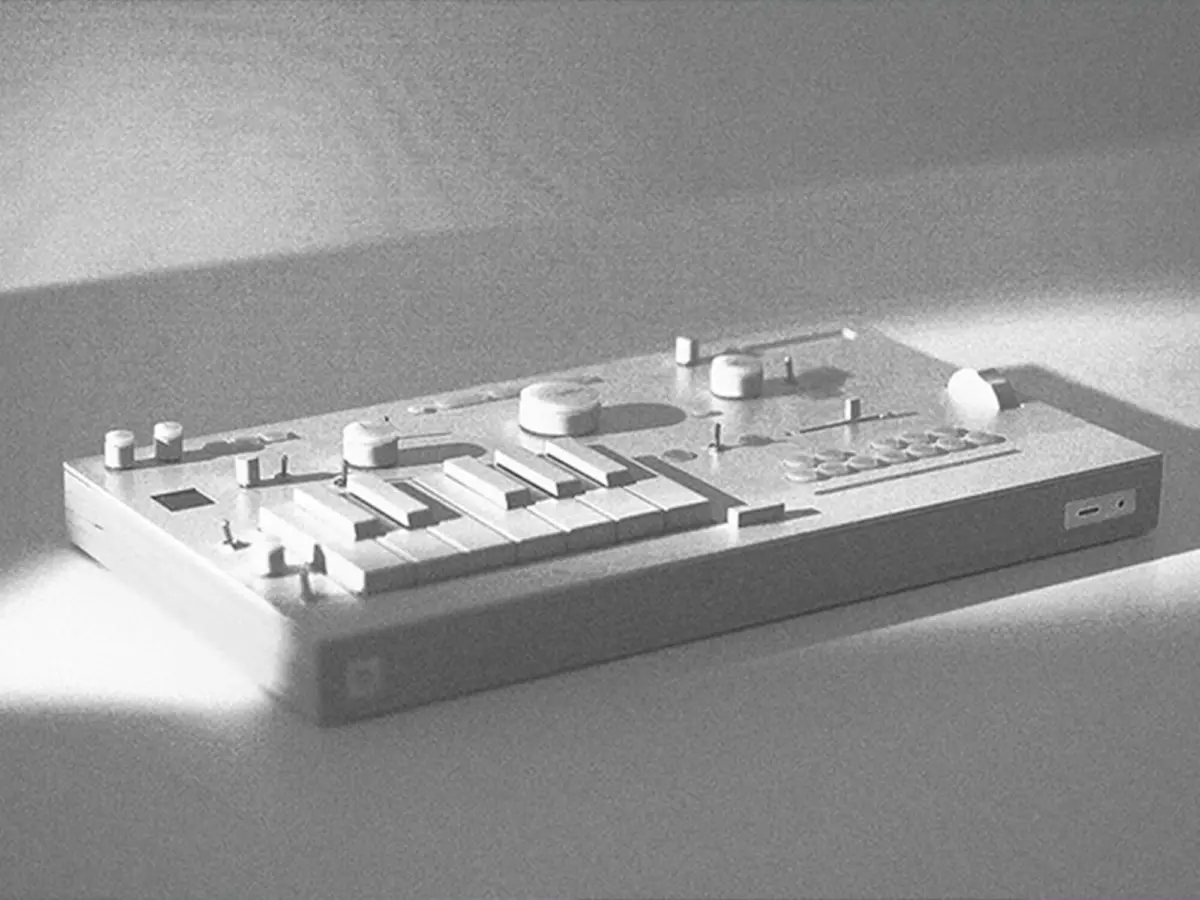
Executive Overview
For years, the electronic music and synthesizer community has been captivated by tantalizing glimpses of a revolutionary instrument. First teased in May 2023 by Argentinian instrument designers Martin Grieco and Rocio Gal, Nopia—a semi-modular MIDI chord generator and synthesizer—became a viral internet phenomenon long before it ever hit production lines. Amassing over seven million views on YouTube, the device sparked fierce anticipation among niche gear enthusiasts, modular synth nerds, and contemporary music producers alike.
Now, following a lengthy and rigorous development cycle that included exhaustive prototype testing late last year, the wait is officially over. Nopia has launched its crowdfunding and pre-order phase via Kickstarter, shattering expectations by obliterating its initial $50,000 funding goal to pull in a staggering $1,412,000 and counting.
Positioned at the intersection of music theory, physical computing, and expressive performance, Nopia is not just another subtractive synth or run-of-the-mill MIDI controller. It is a dedicated hardware ecosystem built around the mechanics of tonal harmony. By mapping out the complex relationships between chord structures—specifically the interplay between the tonal center and the dominant—Nopia allows musicians to interact with the foundational rules of music theory in real-time, tactile ways.
With Early Bird allocations completely sold out, buyers are currently looking at the Nopia MK1 – Kickstarter Standard tier, priced at $699 (a considerable markdown from its projected $899 MSRP). As limited units dwindle and production targets point toward a May 2027 fulfillment window, the music technology landscape is bracing itself for what could be one of the most innovative hardware releases of the decade.
Detailed Chronology: The Evolution of Nopia
To truly understand the weight of Nopia’s current pre-order launch, it is essential to trace the timeline of its development. What began as an ambitious design concept in South America steadily evolved into a global hardware obsession.
May 2023: The Initial Reveal
When Martin Grieco and Rocio Gal first introduced Nopia to the world in May 2023, the reaction was immediate and electric. In an industry saturated with iterative updates to traditional keyboards and standard Eurorack modules, Nopia offered something genuinely distinct. The initial video demonstrations highlighted a sleek, futuristic interface that effortlessly bridged the gap between complex harmonic composition and spontaneous live performance. The internet took notice: short-form clips and deep-dive breakdowns spread across Reddit, specialized gear forums, and YouTube, ultimately racking up more than seven million combined views.
Late 2024: The "Exhaustive Testing Stage"
Following the initial wave of hype, the creators went heads-down into the arduous realities of hardware engineering. Designing a hybrid semi-modular instrument that handles complex microtonal data, onboard synthesis, and a physical strum plate is no small feat. For months, updates were sparse as Grieco and Gal refined the internal architecture. By December 2024, news surfaced that Nopia had entered an "exhaustive testing stage." During this period, early prototypes were subjected to rigorous stress tests, firmware stability checks, and acoustic refinements to ensure the hardware could withstand the demands of professional studio environments and punishing live tours.
Mid-2025: The Kickstarter Launch and Pre-Order Phase
Breaking its long silence with a definitive manufacturing greenlight, the team launched Nopia on Kickstarter. The response was immediate and unprecedented for an independent boutique instrument. Within hours, Early Bird tiers were exhausted. The project flew past its modest $50,000 baseline goal to secure over $1.4 million in backing. With only a limited run of the Kickstarter Standard edition remaining at the $699 price point, the pre-order campaign has transitioned Nopia from a viral internet concept into an imminent physical reality.
Architecture and Design: Decoding the Language of Harmony
What makes Nopia such a disruptive force in modern gear design is its fundamental philosophy. While most synthesizers focus on raw oscillators, filter sweeps, and modulation routings, Nopia approaches sound creation through the lens of musicology and human emotion.
The Philosophy of Tonal Harmony
The instrument revolves entirely around the concept of tonal harmony. Traditional keyboards require the player to manually voice individual chord inversions, which can sometimes create cognitive friction for producers who think in terms of chord progressions rather than individual fingerings. Nopia addresses this by focusing heavily on the relationship between chords—specifically, the dynamic tension and release found between the tonal centre (the home tone of a given key) and the dominant (the fifth note, which drives harmonic momentum).
The Interface: Chord Builder and Tonal Selector
At the core of Nopia’s physical layout is a single-octave chord builder keyboard paired with a distinct 12-button "tonal selector." This interface allows players to instantly establish a key center. Once the key is defined, the device dynamically generates chords that strictly adhere to—or intelligently subvert—the rules of tonal harmony. This design empowers both novices and seasoned composers to explore rich, complex harmonic pathways without getting bogged down by finger-stretching voicings or theoretical calculations.
Sound Engine, Effects, and the Strum Plate
Beneath its harmonic interface lies a robust, multitimbral sound engine. Nopia blends sampled acoustic and electro-acoustic instruments with powerful onboard virtual analog synthesizers, yielding a vast sonic palette that can shift from organic warmth to gritty electronic textures in seconds.
To shape these sounds further, the device incorporates a dedicated five-step effects chain. But perhaps its most physically expressive feature is the multitouch strum plate. This interface invites tactile, organic gestures, enabling players to execute fluid strumming patterns, chromatic movements, and microtonal pitch bends on the fly. It transforms the static act of triggering MIDI notes into a living, breathing performance art.

Supporting Context & Market Metrics
The launch of Nopia arrives at a fascinating crossroads in the electronic music instrument (EMI) market. In recent years, boutique developers and independent creators have increasingly leaned into alternative controllers and generative music tools. Musicians are actively seeking gear that breaks them out of standard DAW (Digital Audio Workstation) grid-editing habits.
Financial Validation and Consumer Demand
The raw numbers behind Nopia’s crowdfunding campaign speak volumes about the state of modern gear acquisition:
- Initial Funding Goal: $50,000 (designed to cover initial tooling, component sourcing, and baseline manufacturing setups).
- Current Total Raised: $1,412,000+ (representing a more than 2,800% over-funding rate).
- Pricing Structure: Early Bird packages (sold out); Nopia MK1 – Kickstarter Standard tier priced at $699 (offered at a $200 discount compared to the projected $899 MSRP).
- Inventory Scarcity: As of writing, the pool of available units is rapidly dwindling, with only a final block of 50 units remaining in the current batch.
Production Realities and Timelines
The developers have been transparent about the road ahead. The capital raised via Kickstarter is earmarked directly to fund the very first official production batch of the Nopia MK1.
Due to the complex, semi-modular nature of the hardware—incorporating specialized circuit boards, custom switches, the multitouch strum plate, and hybrid sound engine architecture—fulfillment is estimated to begin in May 2027. While a roughly two-year wait is substantial in the fast-paced tech world, the creators have promised backers an unprecedented level of transparency. Pre-order customers will receive exclusive, behind-the-scenes access to the manufacturing process, dedicated sound design sessions, and regular engineering updates as the MK1 moves from blueprints to assembly lines.
Official Statements and Vision
To appreciate the emotional resonance embedded in Nopia’s design, one need only look at the philosophy articulated by its creators on the official campaign portal. The instrument is engineered not merely as a tool for audio production, but as a direct conduit for human feeling.
"We’ve all heard music and felt something resonate inside us," reads a statement from the official Nopia Kickstarter page. "We didn’t have to understand the theory or the architecture behind it, we just felt it. Our ears already effortlessly know how to decode sounds into emotion.
Nopia was born out of a single question: Can an instrument tap directly into this quiet miracle? Notes sounding together, and moving through time, build the language of harmony. Nopia is technology crafted to immerse you in that language in real-time."
This manifesto underscores a growing cultural shift in instrument design: moving away from overly clinical, sterile interfaces and toward hardware that fosters intuitive, visceral emotional connections. By removing the cognitive barriers of complex music theory while retaining its profound structural benefits, Nopia invites players to converse directly with harmony.
Future Outlook
As the pre-order window for the Nopia MK1 enters its final hours and the remaining standard units vanish from the Kickstarter platform, the broader music technology industry is watching closely.
If Martin Grieco and Rocio Gal successfully deliver on their ambitious May 2027 fulfillment timeline, Nopia could redefine how hardware manufacturers approach generative chord creation and semi-modular synthesis. It challenges the hegemony of traditional keyboards and mouse-and-keyboard DAW arrangements, offering a compelling alternative for artists seeking serendipity, deep harmonic intelligence, and tactile expression in a single box.
For those lucky enough to secure one of the final units at the discounted $699 price point, the journey ahead will be marked by exclusive engineering updates, intimate looks into the factory floor, and the anticipation of receiving what may well be the most talked-about harmony generator of the decade.
To learn more about the specifications, view demonstration videos, or secure one of the final available units, visit the official Nopia Website or back the project directly via the Official Kickstarter Page.