Fifty years after the quiet passing of one of the twentieth century’s most defining musical architects, the Suffolk coast—a landscape forever intertwined with his life, loves, and labor—is preparing for a profound cultural reckoning. Britten Pears Arts has unveiled an expansive, emotionally charged commemorative season centered around a landmark commemorative weekend (Friday, December 4th to Sunday, December 6th), alongside an array of satellite events stretching from late November through mid-December.
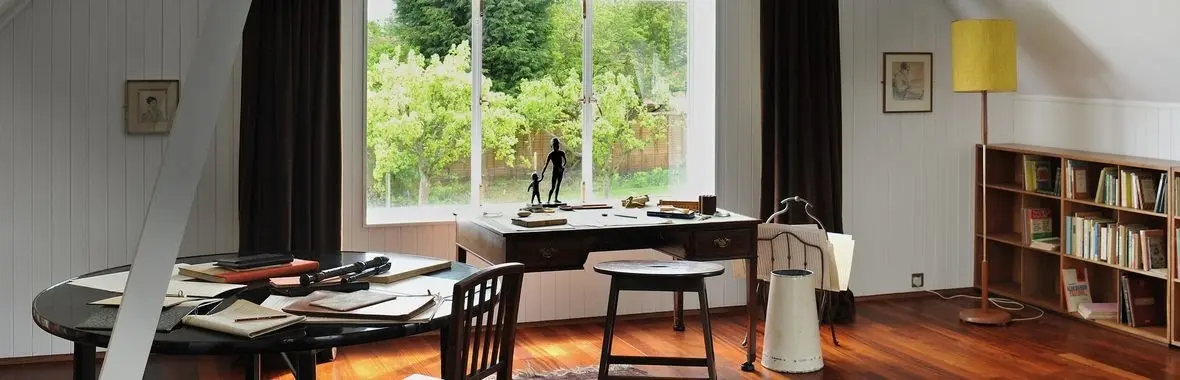
This meticulously curated programme does more than simply gaze backward into the archives of the Red House in Aldeburgh or the vaulted rafters of Snape Maltings. Instead, it places Benjamin Britten’s idiosyncratic musical language into active, urgent dialogue with the past that inspired him, the contemporaries who shaped him, and the rising generation of musicians inheriting his mantle. From intimate chamber recitals and rigorous academic symposia to monumental choral forces tackling Saint Nicolas, and the long-awaited resurrection of an unrealized community opera via the Master of The King’s Music, Errollyn Wallen, this season is both a requiem and a renaissance.
For international audiences, regional enthusiasts, and the scholarly community alike, this winter’s events offer a rare opportunity to re-examine how a singular coastal geography catalyzed works of universal, timeless resonance. As festival organizers, performers, and audiences converge on the Aldeburgh and Snape stages, the overarching question remains: how does a living tradition honor an artistic titan whose shadow still looms so heavily over British classical music? The answer lies not in static preservation, but in bold, uncompromising performance.
Detailed Chronology: A Weekend of Remembrance and Revelation
Friday, December 4: A Spirited Opening
The commemorative weekend commences on Friday, December 4, at the Britten Studio, setting an immediate standard of virtuosic intimacy. At noon, violist Timothy Ridout and pianist James Baillieu take the stage for a compelling opening statement. Their programme pairs Franz Schubert’s wildly popular Arpeggione Sonata with Britten’s Lachrymae—a mesmerizing, deeply reflective set of variations spun from the melancholy threads of Elizabethan composer John Dowland’s music. The pairing underscores Britten’s lifelong fascination with historical idioms, filtering Renaissance aesthetics through a distinctly mid-century, psychological lens. The midday recital is rounded out by Schubert’s graceful, Mozart-inflected Sonatina No. 1, offering listeners an early glimpse into the classical foundations that underpinned both composers’ lyricism.
As dusk settles over the marshes, the intensity shifts. At 7:00 PM in the Britten Studio, acclaimed cellist Guy Johnston joins pianist Melvyn Tan for an evening showcase. At its heart lies Britten’s monumental Cello Sonata, a work originally forged for and premiered alongside the legendary Mstislav Rostropovich. The piece is placed in striking juxtaposition with Felix Mendelssohn’s Cello Sonata No. 2 and Ludwig van Beethoven’s Sonata No. 4. Adding a vital contemporary thread to the evening is a brand-new work by Matthew Kaner, a composer celebrated for the direct emotional clarity and poetic economy of his musical style.
Saturday, December 5: Discourse, Melancholy, and Monumental Choral Forces
Saturday morning pivot from performance to critical reflection. At 11:00 AM in the Britten Studio, Dr. Lucy Walker—an internationally recognized authority on Britten’s life and oeuvre—chairs an analytical and deeply personal panel discussion. Joined by acclaimed mezzo-soprano Alice Coote and violist Timothy Ridout, the session investigates how Britten’s musical DNA continues to challenge, shape, and transform the artists who bring it to life today.
At 4:00 PM, the focus shifts to the bleak, majestic landscapes of the German Romantic canon. Alice Coote, accompanied by pianist Christian Blackshaw, tackles Schubert’s towering song-cycle, Winterreise. Based on Wilhelm Müller’s poetry, the cycle details the desolate, psychological descent of a rejected lover wandering through a frozen wasteland. Coote and Blackshaw’s interpretation promises to draw out the raw, bruising intimacy of Schubert’s score, which aligns closely with Britten’s own preoccupation with alienation, psychological vulnerability, and winter’s chill.
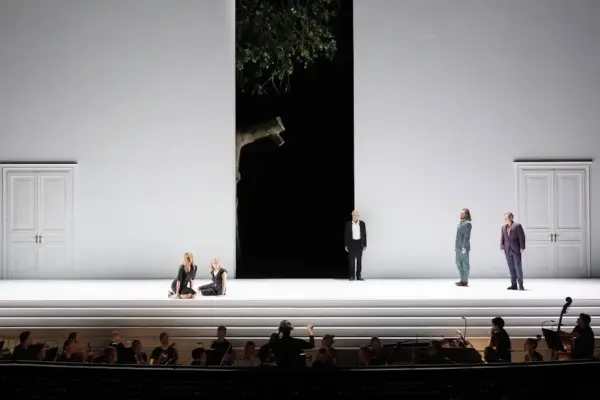
The evening brings the first massive sonic spectacle of the weekend. At 7:00 PM, the Snape Maltings Concert Hall plays host to an extraordinary coalition of musical forces: the Britten Sinfonia, the BBC Singers, the Britten Pears Chamber Choir, and the London Youth Choir (including LYC Boys), all united under the baton of conductor Owain Park.
They will deliver a soaring performance of Britten’s Saint Nicolas, a cantata that balances tender pastoralism with blazing theatricality, narrating the legendary life of the fourth-century bishop who inspired the modern figure of Santa Claus.
The programme is anchored by poignant historical bookends: Britten’s Variations on a Theme of Frank Bridge—a dazzling, affectionate tribute to his beloved teacher—and Estonian composer Arvo Pärt’s heart-stopping Cantus in Memoriam Benjamin Britten. Composed shortly after Britten’s death in 1977, Pärt’s six-minute masterwork utilizes a descending A-minor scale and a single, echoing tolling bell to evoke an inevitable, cascading wave of grief.
Sunday, December 6: Early Masterworks and Regional Youth Showcases
Sunday opens at noon in the historic Jubilee Hall, Aldeburgh, with a masterclass in chamber music balance. Oboist Nicholas Daniel joins violinist Jacqueline Shave, violist Judith Busbridge, and cellist Caroline Dearnley to perform Britten’s Phantasy Quartet. Written in 1932 when Britten was a mere 19-year-old student at the Royal College of Music, the single-movement work instantly announced his arrival as a major compositional voice, blending structural rigor with striking melodic daring.
The programme expands outward into both historical and contemporary realms, featuring Wolfgang Amadeus Mozart’s classic Oboe Quartet, Huw Watkins’s newly minted Oboe Quartet (which received its world premiere earlier this year), and a haunting, exploratory suite of traditional tunes arranged by Jacqueline Shave.
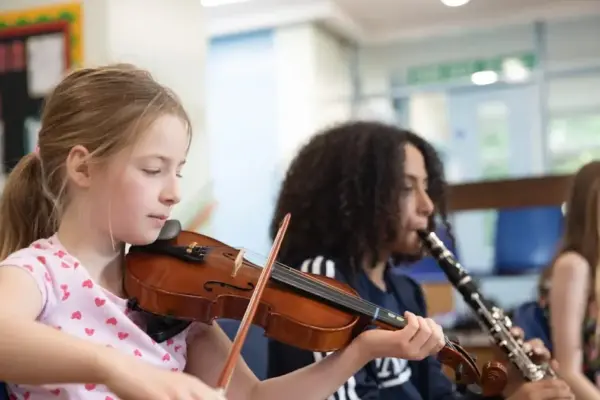
As the sun sets, the spotlight pivots toward the future of East Anglian music. At 7:00 PM at Snape Maltings Concert Hall, an end-of-term showcase celebrates the region’s emerging talent, offering young musicians the unprecedented opportunity to perform on the very stage that welcomed international icons. It is a fittingly hopeful punctuation mark to a weekend steeped in legacy.
Supporting Context & Metrics: The Architecture of Remembrance
To understand the weight of this 50th-anniversary season, one must examine the institutional and historical bedrock upon which it stands. Britten Pears Arts—the unified entity managing the Snape Maltings complex, the Red House, and the Aldeburgh Festival—operates as a unique cultural ecosystem. Founded by Britten and his lifelong partner, tenor Peter Pears, the organization oversees an archive comprising tens of thousands of letters, manuscripts, and audio recordings that trace the contours of twentieth-century British musical modernism.
Event Date
Time
Venue
Featured Work(s) / Focus
Key Artists / Ensembles
Fri, Nov 20
6:30 PM
Orford Church
A Christmas Miracle (World Premiere)
Ensemble X, John Andrews, Hilary Cronin, Andrew Watts
Sat, Nov 21
3:00 / 6:30 PM
Orford Church
A Christmas Miracle (Performances)
Ensemble X, John Andrews, Hilary Cronin, Andrew Watts
Fri, Dec 4
12:00 PM
Britten Studio
Arpeggione Sonata, Lachrymae, Sonatina No.1
Timothy Ridout, James Baillieu
Fri, Dec 4
7:00 PM
Britten Studio
Cello Sonatas (Britten, Mendelssohn, Beethoven) + New Kaner Work
Guy Johnston, Melvyn Tan
Sat, Dec 5
11:00 AM
Britten Studio
Study Session: The Impact of Britten’s Music
Dr. Lucy Walker, Alice Coote, Timothy Ridout
Sat, Dec 5
4:00 PM
Britten Studio
Winterreise (Schubert)
Alice Coote, Christian Blackshaw
Sat, Dec 5
7:00 PM
Snape Maltings
Saint Nicolas, Frank Bridge Variations, Pärt Cantus
Owain Park, Britten Sinfonia, BBC Singers, Choirs
Sun, Dec 6
12:00 PM
Jubilee Hall
Phantasy Quartet, Mozart, Huw Watkins, J. Shave
Nicholas Daniel, J. Shave, J. Busbridge, C. Dearnley
Sun, Dec 6
7:00 PM
Snape Maltings
Regional Youth Music Showcase
East Anglian Young Musicians
Sat, Dec 12
7:00 PM
Snape Maltings
The Canticles (Complete Cycle)
Allan Clayton, Iestyn Davies, Peter Brathwaite, et al.
Beyond the core weekend, the commemorative calendar extends its tendrils in both directions. On Saturday, December 12, Snape Maltings hosts a definitive performance of Britten’s Canticles. Written across a span of nearly thirty years, these five miniature cantatas bridge sacred and secular poetry, standing as intimate monuments to Britten’s compositional evolution and his close collaborative relationships with singers like Peter Pears. The performance features a stellar lineup including tenor Allan Clayton, countertenor Iestyn Davies, and baritone Peter Brathwaite, supported by instrumentalists James Baillieu, harpist Olivia Jageurs, and horn player Richard Watkins.
Official Statements and Artistic Visions
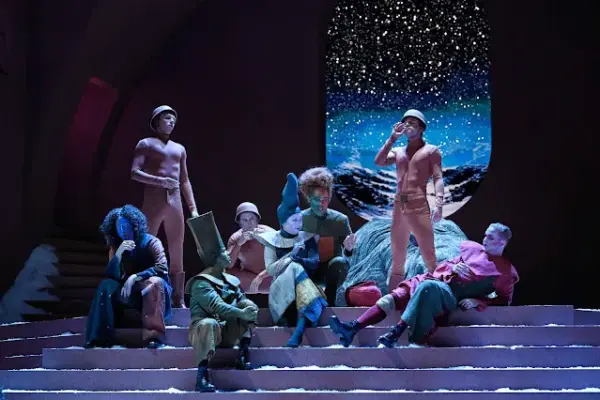
The philosophical heart of the festival is perhaps best observed in the genesis of its opening curtain-raiser: the world premiere of A Christmas Miracle by Errollyn Wallen, the Master of The King’s Music. Staged at Orford Church across November 20th and 21st, the work directly realizes Britten’s long-dormant, unrealized community opera project, A Christmas Sequence.
Developed by Mahogany Opera and co-produced by Britten Pears Arts with support from Jubilee Opera and Orkney Music and Culture, A Christmas Miracle aims to bridge the gap between amateur community participation and high-art professional execution—a core tenet of Britten’s own educational and civic philosophy.
"This is an all-embracing musical adventure," remarked composer Errollyn Wallen when discussing the structural ambition of the piece. "We are pulling together threads of history, community spirit, and the timeless mystery of the Christmas narrative into a tapestry that honors Britten’s original, unfulfilled vision while speaking directly to our contemporary world."
Director Frederic Wake-Walker, collaborating with Wallen for the third time following previous successes like The Lighthouse Wave and Dido’s Ghost, emphasized the collaborative ethos driving the production:
"Britten always believed that music should belong to everyone—from the village hall to the international concert stage," Wake-Walker noted. "In A Christmas Miracle, we have sought to honor that democratic impulse, pairing complex, challenging writing for our professional cast with accessible, participatory moments for the audience and local choristers."
The vocal cast reads like a roll call of contemporary British vocal excellence. Sopranos Hilary Cronin and Emma Tring share the luminous, pivotal role of the Angel Gabriel. They are joined by countertenor Andrew Watts as a commanding Herod, mezzo-soprano Idunnu Münch as Melchior, baritone Robert Gildon as Balthasar, and actor-singer Nick Mercer acting as Preco and Master of Ceremonies. Scored for ten instrumentalists drawn from Ensemble X and expertly steered by conductor John Andrews, the production represents a triumphant realization of archival ghosts.
Future Outlook: Sustaining the Britten Flame in the 21st Century
As the final notes of the December commemorations fade across the North Sea salt marshes, the legacy of Benjamin Britten faces a new era. The half-century mark since his death serves as a vital inflection point. The generation of performers who worked alongside Britten—who received direct coaching from him, who understood the specific, idiosyncratic weight he placed on every syllable and dynamic marking—is gradually passing the torch.
Yet, as evidenced by the rigorous programming of this winter season, Britten’s music is not fossilizing into museum pieces. By pairing his scores with new commissions from living composers like Matthew Kaner and Huw Watkins, and by empowering artists like Errollyn Wallen to complete his unfinished theatrical dreams, Britten Pears Arts is positioning the composer’s catalog as a living, breathing laboratory for modern sound.
Furthermore, the intentional inclusion of regional youth showcases and massive intergenerational choral forces ensures that Britten’s foundational belief in music as a communal necessity remains alive in East Anglia. The challenges facing classical music institutions in the 21st century—shrinking arts funding, shifting audience demographics, and the constant demand for digital reinvention—are met here with a resolute doubling-down on physical presence, local roots, and uncompromising artistic excellence.
Ultimately, this golden jubilee season does not merely mourn a loss; it celebrates an enduring presence. Half a century after his death, Benjamin Britten’s music still speaks with the chilling clarity of a Suffolk winter wind and the enduring warmth of a community gathered in song.