Executive Overview
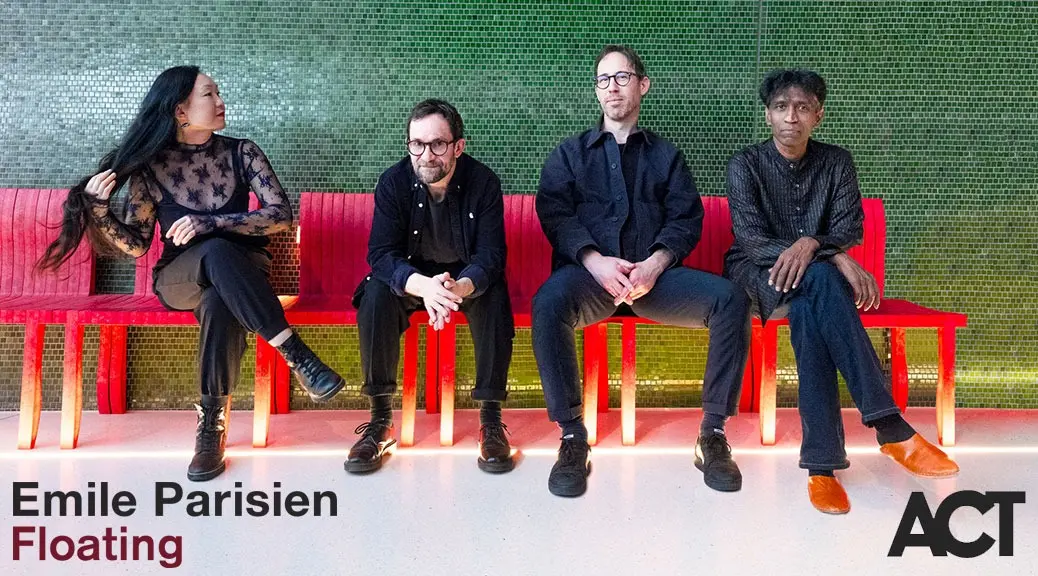
In the upper echelons of contemporary improvised music, a compelling ensemble lineup can often telegraph its artistic ambitions long before a single note is struck. With Floating, acclaimed French soprano saxophonist Emile Parisien has assembled a veritable super-quartet of bandleaders and virtuosos, each bringing a distinct cultural, rhythmic, and harmonic lexicon to the table. Joining Parisien are Israeli pianist Yaron Herman, virtuosic double bassist Linda May Han Oh (noted for her anchoring role in Pat Metheny’s quartet), and master percussionist Prabhu Edouard, whose command of the tabla, traditional vocalizations, and world percussion bridges Hindustani classical heritage with contemporary electronic and acoustic frameworks.
Born out of a high-profile, single-evening carte blanche performance that served as the grand finale of Parisien’s two-year artistic residency at the prestigious Théâtre de la Cité internationale in Paris, Floating has evolved from a transient live experiment into a defining recorded statement. Released on ACT Music, the album challenges conventional jazz configurations—most notably by swapping out the traditional drum kit for the nuanced, dynamically rich palette of the tabla.
The resulting 11-track collection (with a slightly streamlined 180g vinyl variant) is an intricate tapestry of cross-cultural dialogue. It explores the spiritual minimalism of Gurdjieff and de Hartmann, nods to ECM-era touchstones like Anouar Brahem’s landmark Thimar, and showcases deep-seated Middle Eastern and North Indian sensibilities. For jazz critics and purists alike, Floating stands as a masterclass in modern composition, collaborative generosity, and boundary-pushing improvisation, firmly cementing its place in the upper tier of modern European jazz catalogues.
Detailed Chronology and Track-by-Track Analysis
The compositional architecture of Floating is uniquely democratic, placing its primary creative center of gravity firmly at the piano bench. Rather than dominating the writing credits as the titular leader, Emile Parisien delegates a significant portion of the compositional weight to Yaron Herman. Herman penned five of the album’s eleven tracks independently and co-wrote the atmospheric "Portal" alongside Parisien. Parisien himself reserves only two self-penned pieces for the core set: "Bonbon" and "66." This gesture carries a subtle historical resonance; it was Herman’s 2012 release Alter Ego that first introduced Parisien to the ACT Music roster, making this shared compositional space a poignant full-circle moment.
Opening Horizons: From Gurdjieff to Gritty Grooves
The album opens with "Asian Songs & Rhythms, No. 40," a piece drawn from the collaborative piano repertoire fashioned in the 1920s by mystic Georges Ivanovitch Gurdjieff and composer Thomas de Hartmann. Collected during their travels across Central Asia and the Middle East, these ancient melodies find a natural spiritual home in this modern acoustic framework. The Eastern inflections of the melody merge seamlessly with Parisien’s soaring soprano saxophone, while Herman’s piano and Edouard’s tabla construct a mellow, impeccably executed soundscape.
The energy shifts palpably with "Bonbon." Kicking off with a rapid, intricate display of tabla work, the track introduces Parisien’s saxophone with a raw, gritty edge. Edouard remains firmly in the spotlight, driving the rhythmic engine forward. This is immediately followed by Herman’s "Olive Branch." Initiated by a solo piano motif that instantly evokes deep-seated Hebraic scales and Tel Aviv roots, the piece slowly expands as the rhythm section steps in to envelop the listener in a warm, resonant embrace.
Reimagining ECM Legacy: Anouar Brahem’s "Badhra"
For long-time connoisseurs of contemporary jazz, the inclusion of "Badhra"—originally composed by Tunisian oud master Anouar Brahem—serves as one of the album’s emotional high-water marks. The tune famously opened Brahem’s 1998 ECM masterwork Thimar, a landmark trio recording featuring John Surman on soprano saxophone and Dave Holland on double bass.
The lineage of this performance runs remarkably deep. In 2005, while studying as an honours student in Perth, Linda May Han Oh dedicated her undergraduate dissertation to analyzing Dave Holland’s sophisticated rhythmic approach to improvisation, studying it alongside complex North Indian tabla compositions. Two decades later, Oh steps directly into Holland’s formidable shoes on this very composition, with a master tabla player performing just inches away from her.
Notably, the original Thimar recording famously omitted a piano. By introducing Herman’s harmonic sensibilities into the mix, the ensemble opens "Badhra" into expansive new dimensions. The resulting rendition is simultaneously triumphant, expansive, and brimming with profound joy.
Exploration and Evolution: The Mid-Album Journey
As the album progresses, the collaborative interplay deepens. The co-written "Portal" begins with Edouard establishing a cyclical rhythmic pattern over the piano before unleashing a torrent of tabla dexterity. As his vocalizations fade, Parisien’s soprano cuts through the air, propelling the rhythm into a cascading crescendo anchored by Herman’s phenomenal keyboard work.
Parisien’s own composition, "66," takes a more impressionistic route. Percussion and saxophone float effortlessly across the stereo field until Herman’s piano elevates the arrangement into lush, cinematic territory. The Israeli influence resurfaces with "Ruth," a jaunty, light-footed number that dances across the rhythmic grid with unbridled joy.
Not every experiment achieves total liftoff, however. "Nusrat" serves as a high-energy party piece where Edouard works wonders on the tabla, successfully replicating the booming resonance of a traditional dhol while the ensemble maintains a razor-tight grip on the tempo. Yet, despite its infectious energy, Parisien’s saxophone line occasionally drifts, leaving a momentary disconnect where the track’s disparate elements fail to fully cohere.

Solo Interludes and Spiritual Closures
Midway through the sequence, Linda May Han Oh delivers an absolute masterclass in double bass performance with "As it comes and as it goes." Clocking in as the shortest track on the album, it is a breathtakingly refreshing solo statement that highlights her peerless intonation and rhythmic authority.
The penultimate track, "El Toro," brings Edouard back to the forefront with another driving rhythmic cycle. Parisien engages in a fiery game of call-and-response before the tempo accelerates and Oh seizes control of the rhythmic anchor, offering a thrilling showcase for every member of the quartet.
The album concludes with "Arco," a meditative epilogue where piano and soprano saxophone navigate an introspective, almost spiritual path, bringing the dynamic journey to a serene and deeply satisfying close.
Supporting Context & Metrics
| Album Detail | Specification / Information |
|---|---|
| Artist | Emile Parisien Quartet |
| Album Title | Floating |
| Record Label | ACT Music |
| Lineup & Instrumentation | Emile Parisien (Soprano Saxophone) Yaron Herman (Piano) Linda May Han Oh (Double Bass) Prabhu Edouard (Tabla, Percussion, Vocals) |
| Primary Genesis | Live carte blanche residency finale, Théâtre de la Cité internationale, Paris |
| Core Repertoire | 11 tracks (CD edition) / 9 tracks (180g Vinyl edition) |
| Acoustic Innovation | Total substitution of standard drum kit with North Indian tabla |
The decision to omit a traditional drum kit in favor of the tabla is more than an aesthetic whim; it is a structural revolution. The tabla’s unique sonic properties—ranging from the deep, resonant bass slaps (bayan) to the crystalline, high-frequency treble strikes (dayan)—allow for a level of micro-rhythmic articulation that standard drum kits struggle to replicate at lower volumes. This choice gives the acoustic instruments (soprano sax, piano, and double bass) unprecedented breathing room, allowing complex harmonic and polyrhythmic ideas to unfold without sonic crowding.
Official Statements and Critical Perspectives
Reflecting on the collaborative chemistry that underpins Participating projects at this level, industry analysts and participating artists have emphasized the importance of cross-cultural trust. While formal press statements from the label highlight the organic transition from Parisien’s Parisian residency to the recording studio, internal critical consensus points to the unique generational convergence of the ensemble.
Musicologist and jazz critic Steve Williams notes:
"ACT Music can often deliver average music. There are standout moments in the catalogue that reach unprecedented summits, though, and when they do, as with this album, they claim their place in music’s mighty hemisphere. Using tabla instead of a drum kit is a wonderful choice throughout. Marvellous release indeed. I’m sold."
Furthermore, the deliberate choice by Parisien to hand over the compositional lion’s share to Yaron Herman speaks volumes about the collective ethos of the project. Rather than functioning as a vehicle for a single soloist, Floating operates as a true chamber jazz collective where European harmonic sophistication, Middle Eastern modal colorations, and North Indian rhythmic cycles meet on entirely equal footing.
Future Outlook & Format Discrepancies
As Floating makes its way into the global jazz ecosystem, it arrives with a notable footnote regarding its physical distribution formats. Audiophiles and vinyl collectors should note a distinct divergence between the compact disc and the 180g vinyl editions.
The vinyl release runs in a slightly altered sequence and omits two tracks from the original CD tracklist: Parisien’s solo-penned "66" and Oh’s breathtaking bass showcase, "As it comes and as it goes." While physical limitations inherent to the duration of vinyl sides frequently necessitate such editorial cuts—and the omission of a sideman’s solo track is standard industry practice—the absence of "66" removes one of the only two compositions written solely by the album’s nominal leader. For purists and completionists, seeking out the CD edition remains essential to experiencing the complete, unedited narrative envisioned by the ensemble.
Looking forward, the success of Floating points toward a fertile future for genre-agnostic acoustic jazz. By proving that complex global traditions can merge seamlessly without dilution or pastiche, Parisien, Herman, Oh, and Edouard have set a formidable benchmark for contemporary improvisation. Whether this specific lineup reconvenes for future studio explorations or remains a magnificent, lightning-in-a-bottle artifact of a Parisian residency, Floating has firmly etched its name into the upper echelons of 21st-century improvised music.