Executive Overview
The video game industry has long been captivated by tales of visionary creators breaking away from established giants to forge their own paths. Few departures, however, carried the narrative weight of Leslie Benzies’ exit from Rockstar Games in 2016. As the former president of Rockstar North and the principal architect behind the meteoric success of the Grand Theft Auto franchise—steering it from a top-down 2D novelty into a multi-billion-dollar cinematic powerhouse—Benzies held legendary status. When he parted ways with Take-Two Interactive following a protracted legal battle over unpaid royalties, the industry watched with bated breath to see what he would build next.
The answer was Build A Rocket Boy (BARB), an ambitious independent development studio founded with the promise of challenging the status quo of modern gaming. Backed by immense capital and an elite roster of industry veterans, the studio set out to construct a sprawling, next-generation ecosystem anchored by Everywhere and, later, its flagship action-adventure title, MindsEye.
Yet, beneath the glittering veneer of massive funding rounds and high-concept trailers lay a deeply troubled organizational culture and a rudderless development process. By late 2024 and into 2025, that promised utopia had devolved into a corporate tragedy. Following a turbulent, botched commercial launch of MindsEye, Build A Rocket Boy imploded. Between 250 and 300 employees were unceremoniously laid off following an extraordinary all-hands meeting in which leadership pointed fingers at mythical "saboteurs." Subsequent reports confirmed that the studio had effectively shuttered its remaining operations, letting go of its final waves of staff.
This comprehensive investigative report examines the rise and fall of Build A Rocket Boy. By charting the studio’s timeline from its euphoric inception to its catastrophic collapse, analyzing its financial metrics, examining internal dissent, and weighing official statements against employee testimonies, we unpack how a powerhouse studio helmed by one of gaming’s most celebrated veterans ultimately collapsed under the weight of its own ambition.
Detailed Chronology: From Rockstar Exit to Studio Ruin
2016–2019: The Genesis of Build A Rocket Boy and the Vision for Everywhere
The story of Build A Rocket Boy begins in the shadows of a high-stakes legal feud. Leslie Benzies, whose creative and managerial stewardship of Grand Theft Auto III, Vice City, San Andreas, GTA V, and Red Dead Redemption had minted billions for Rockstar Games, found himself locked in a bitter dispute with parent company Take-Two Interactive over millions in unpaid royalties. By the time the dust settled and Benzies exited the company, he was eager to reclaim his crown.
Operating out of studios in Edinburgh, Budapest, and later Irvine, California, Benzies founded Build A Rocket Boy. The initial pitch was breathtakingly audacious. The studio was developing Everywhere, a massively multiplayer role-playing game set within a futuristic, hyper-connected city. The pitch decks and early executive interviews framed Everywhere not merely as a video game, but as a platform, a metaverse-adjacent sandbox where players could build worlds, socialize, and experience narrative-driven campaigns.
During these early years, the studio enjoyed a honeymoon phase. The allure of working with Leslie Benzies—a man whispered to possess the "Rockstar magic touch"—attracted top-tier talent from across the globe. Developers packed their bags and relocated to Scotland and Hungary, lured by promises of creative freedom, generous compensation, and the chance to build the next great evolution of interactive entertainment.
2020–2022: The Strategic Pivot and Scope Creep
As development on Everywhere ground forward, internal friction began to surface. Building a sprawling metaverse platform while simultaneously trying to craft compelling, narrative-driven gameplay proved to be an architectural nightmare. The project suffered from shifting design pillars, changing game engines, and a fundamental lack of consensus among senior leadership regarding what Everywhere actually was.
Recognizing the mounting technical hurdles and the sprawling, unfocused nature of the project, leadership executed a major strategic pivot. The team split its focus, carving out a traditional single-player action-adventure game from the broader ecosystem. This project would become MindsEye.
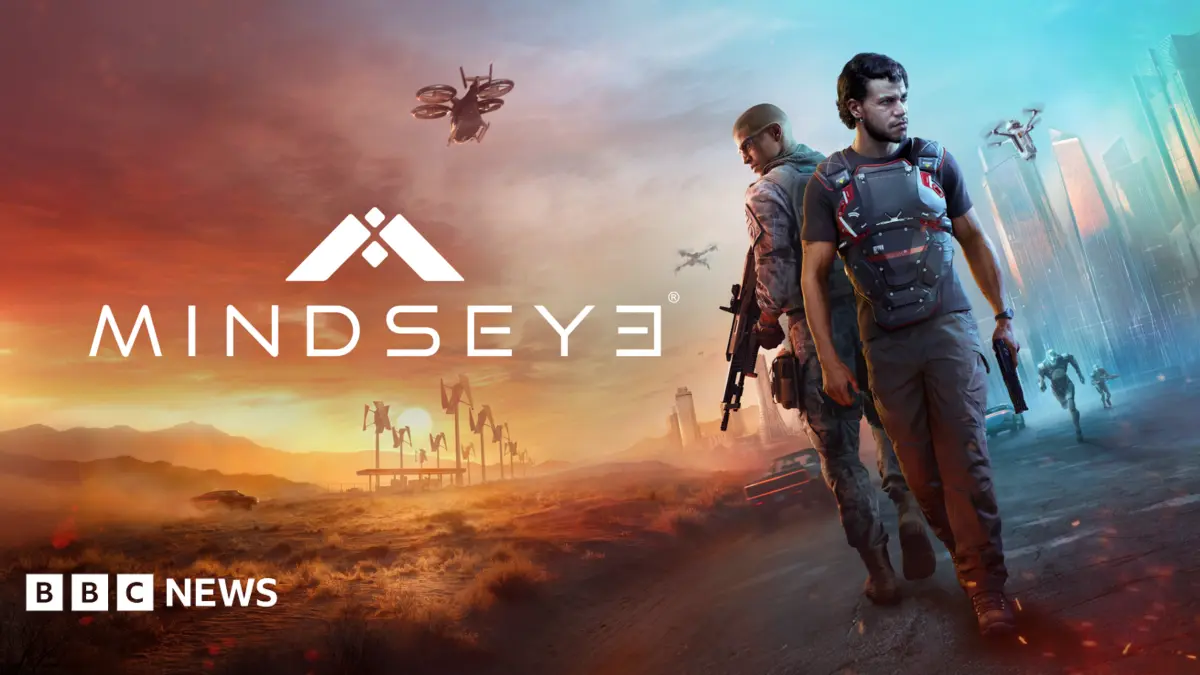
Set in a gritty, near-future corporate dystopia, MindsEye was designed to showcase high-octane vehicular combat, cinematic set-pieces, and a gripping sci-fi narrative. On paper, it was precisely the kind of blockbuster single-player experience that Benzies’ former employers at Rockstar specialized in. In practice, however, the pivot introduced immense logistical strain. The studio was now attempting to build two massive, distinct products concurrently: the expansive Everywhere platform and the story-driven MindsEye.
2023–Early 2024: Financial Bloat and Internal Dissent
By 2023, the scale of Build A Rocket Boy’s operations had ballooned exponentially. Headcount swelled into the hundreds, and administrative overhead skyrocketed across multiple international offices. To fund this sprawling enterprise, Benzies and his executive team tapped into an insatiable appetite from investors.
According to official UK company house filings, Build A Rocket Boy had successfully attracted an astonishing cumulative investment of more than £233 million by 2024. This made BARB one of the most heavily funded independent studios in European history.
However, money could not buy organizational cohesion. Former staff members, speaking on the condition of anonymity, later revealed to investigative outlets that the development pipeline had descended into chaos. Workers described a culture of creative paralysis where projects suffered from "no coherent direction." According to insiders, senior managers operated within an insular bubble, routinely ignoring direct warnings and technical concerns raised by line producers, engineers, and designers on the ground.
Milestones were missed, timelines were stretched to their breaking point, and the pressure within the studio reached a boiling point. The promise of a collaborative, visionary workplace had given way to a tense, hierarchical environment where dissent was discouraged.
Late 2024–2025: The Botched Launch, "Saboteurs," and Collapse
The endgame commenced with the commercial rollout of MindsEye. Burdened by years of development hell, conflicting management directives, and a fragmented vision, the game arrived on the market to a profoundly muted and critical reception. It failed to resonate with critics or consumers, lacking the polish, depth, and mechanical refinement expected of a project backed by a quarter of a billion pounds.
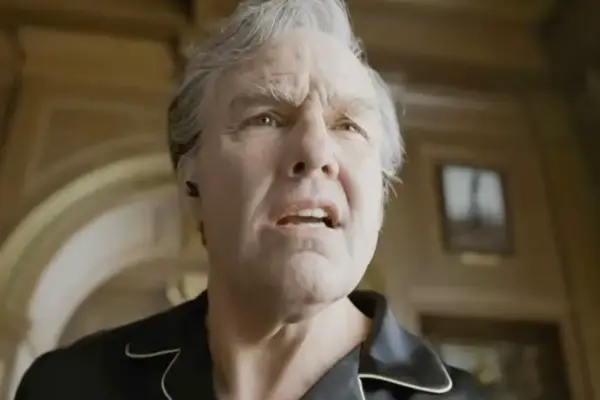
Shortly before the public fallout, tensions inside the studio reached a cinematic and surreal climax. During a turbulent all-staff video call, Leslie Benzies addressed his demoralized workforce. Rather than offering a traditional corporate mea culpa, Benzies alleged that a coordinated conspiracy of "internal and external" forces had actively worked to undermine and sabotage MindsEye’s release. Visibly aggrieved, he vowed to hunt down and root out the "saboteurs" hiding within the company’s ranks.
For the employees who had spent years burning the midnight oil under grueling conditions, the accusations were the final straw.
The launch catastrophe triggered an immediate corporate contraction. Between 250 and 300 members of staff—representing a massive percentage of the studio’s total workforce—were unceremoniously laid off in the immediate aftermath.
In the months following the launch, the company attempted to salvage the project through a series of emergency patches, hotfixes, and content updates. These efforts proved to be too little, too late; they failed entirely to attract a broader audience or rehabilitate the game’s damaged reputation.
Following a second wave of deep layoffs, final reports surfaced confirming that the remaining workers across the studio’s remaining operational hubs had also been let go, bringing the once-mighty Build A Rocket Boy to a quiet, inglorious halt.
Supporting Context & Metrics
To fully understand the magnitude of Build A Rocket Boy’s collapse, one must examine the hard financial and structural metrics that underpinned its existence. The studio’s trajectory offers a cautionary tale about the perils of unchecked capital injection within the modern video game industry.
The £233 Million War Chest
The financial lifeline of Build A Rocket Boy was nothing short of staggering. Regulatory filings retrieved from the UK’s Companies House (specifically concerning corporate records under company number SC537252) reveal that by 2024, BARB had amassed over £233 million in external investment.
In the independent games sector, this level of capitalization places a studio in rare, ultra-elite company—putting it on par with major mid-tier publishers. With hundreds of millions of pounds at their disposal, leadership had the luxury of time, talent acquisition, and technological experimentation. Yet, this vast war chest also created a dangerous cushion that insulated management from early market feedback. Without the immediate financial pressures that force smaller studios to maintain strict scoping and disciplined budgeting, BARB fell victim to feature creep and an endless cycle of conceptual iteration.
Headcount and Burn Rate
To execute the dual vision of Everywhere and MindsEye, the studio aggressively scaled its workforce. At its peak, Build A Rocket Boy employed upwards of 400 to 500 people distributed across multiple offices in the UK and Hungary.
Maintaining this level of infrastructure requires an astronomical monthly burn rate—covering salaries, software licenses, state-of-the-art motion capture facilities, office leases, and hardware. When MindsEye failed to generate the immediate blockbuster revenues required to sustain this financial machine, the studio’s cash flow dried up almost overnight. The subsequent redundancy wave—cutting 250 to 300 jobs—was not merely a routine corporate downsizing, but an emergency amputation designed to keep a sinking ship afloat. When even those measures failed, total liquidation became the only remaining option.
Official Statements and Corporate Accountability
The chasm between corporate spin and ground-level reality is often wide in the video game industry, but the discourse surrounding Build A Rocket Boy’s demise highlights a particularly stark disconnect.
The "Saboteur" Narrative
Benzies’ emergency all-staff address blaming "internal and external forces" for MindsEye’s commercial failure shocked many observers. By framing the studio’s shortcomings as the result of malicious sabotage rather than systemic management failure, leadership attempted to deflect accountability away from the executive suite. In an industry where creative vision must be translated into operational reality through rigorous project management, invoking hidden saboteurs pointed to a severe detachment from the realities of software development.
Management’s Formal Apology
When pressed for comment by investigative outlets, Build A Rocket Boy struck a markedly different, more conciliatory tone through an official corporate statement:
"Leslie and the entire senior management team take full responsibility for the initial launch [of MindsEye]. The version of the game that was released did not reflect the experience our community deserved."
While the statement formally acknowledged responsibility for the substandard product, it arrived far too late to alter the fate of the hundreds of developers who had already lost their livelihoods. Critics and former employees pointed out that acknowledging shortcomings after mass layoffs and studio insolvency rings hollow, serving as little more than a public relations formality for a ship that had already hit the rocks.
Future Outlook: Lessons Learned and the State of Independent AAA
The rise and fall of Build A Rocket Boy serves as a profound, sobering milestone in the modern history of video game development. It offers several vital takeaways for the industry at large:
- The Myth of the Auteur Without Controls: The era of the single, all-powerful visionary directing a massive enterprise unchecked by modern production methodologies is fading. While Leslie Benzies undeniably played a pivotal role in shaping some of history’s greatest games, the complex ecosystem of contemporary multi-platform development requires rigorous, transparent, and empathetic management structures.
- The Dangers of Unchecked Capital: Pumping hundreds of millions of dollars into an unproven, newly formed studio without a disciplined scope can foster an environment of creative drift. Money alone cannot solve structural disorganization; in fact, an excess of capital can often mask deep-seated operational flaws until it is too late to correct them.
- The Human Cost: Beyond the balance sheets, lost millions, and canceled projects, the true tragedy of Build A Rocket Boy lies with the hundreds of developers, artists, QA testers, and support staff who bore the brunt of executive miscalculation. Their careers were upended by a development cycle marked by poor direction, shifting goals, and broken promises.
As the digital dust settles on Build A Rocket Boy, the industry is left to ponder what might have been. MindsEye and Everywhere will stand in the digital archives as monuments to boundless ambition unmoored from practical execution. For aspiring studio heads and veteran creators alike, the downfall of Leslie Benzies’ grand enterprise will long serve as a cautionary tale: in the unforgiving landscape of modern game development, even the brightest stars can burn out if they lose touch with the people building the rocket.