Executive Overview
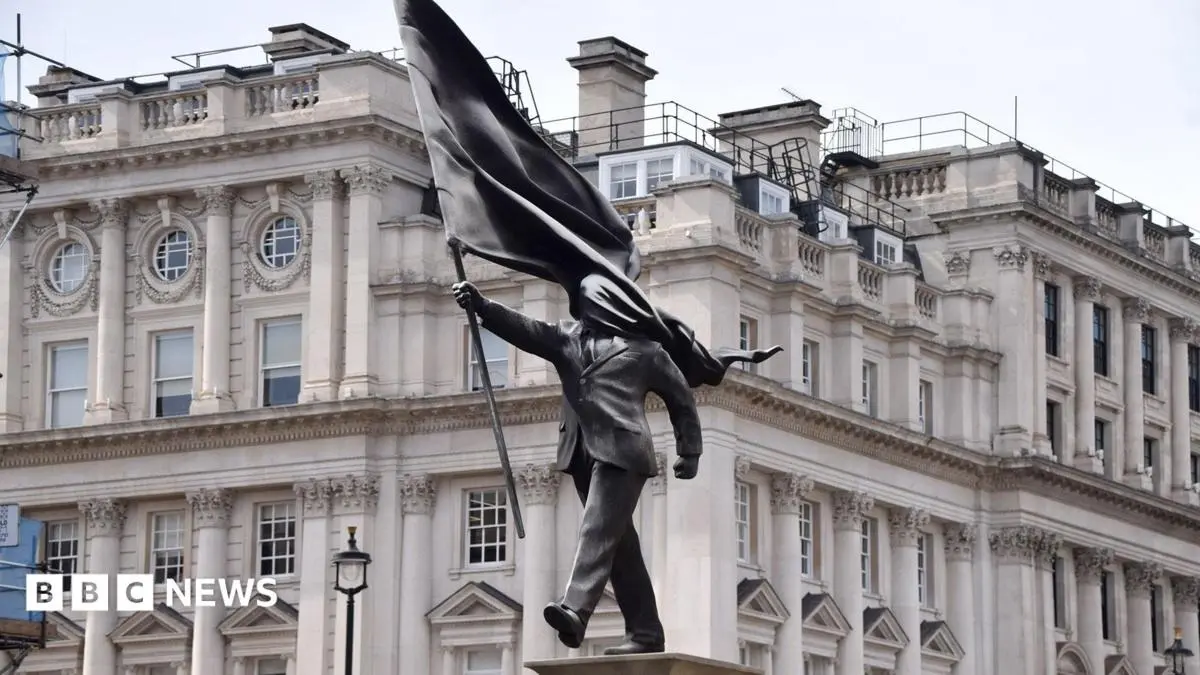
Westminster City Council has confirmed it is actively "exploring all options" concerning the long-term future of Banksy’s high-profile sculpture, Blinded by the Flag, situated in the heart of central London. The artwork—featuring a figure marching off a plinth with its face completely obscured by a draped flag—was covertly erected at Waterloo Place in the early hours of 29 April. Since its appearance, it has sparked intense public debate, cultural tourism, and complex administrative questions regarding urban governance, copyright law, and the preservation of ephemeral street art.
While informal discussions regarding the sculpture’s fate took place throughout the summer months, no definitive consensus has yet been reached by local authorities. However, insiders via the Local Democracy Reporting Service have confirmed that the matter is slated for formal debate at an upcoming cabinet meeting. Westminster City Council has assumed the role of de facto custodian for the piece, maintaining an active dialogue with representatives of the elusive anonymous artist. While Banksy retains the intellectual property and copyright of the work, the local authority bears the financial and logistical burden of securing the installation, managing crowds, and preventing vandalism in one of the capital’s most historically sensitive zones.
This report provides an exhaustive examination of the controversy surrounding Blinded by the Flag. It details the chronology of its installation, explores the fraught intersection of municipal administration and guerrilla art, analyzes the geopolitical and aesthetic context of its placement, and outlines the prospective futures facing one of London’s most politically charged modern monuments.
Detailed Chronology: From Covert Installation to Municipal Dilemma
29 April: The Unannounced Unveiling
The narrative of Blinded by the Flag began in the pre-dawn hours of 29 April, when the elusive street artist Banksy struck once more in the British capital. Eschewing the decaying industrial walls or boarded-up shopfronts typically associated with guerrilla interventions, this installation targeted the neo-classical grandeur of Waterloo Place, located just off Pall Mall.
Passersby and early-morning commuters were met with a striking installation: a life-sized sculpture of a man striding purposefully, yet blindly, off an elevated stone plinth. The figure’s identity and facial expressions are completely hidden beneath a heavy, meticulously rendered flag. The sudden appearance of the piece immediately drew crowds, transforming a quiet ministerial thoroughfare into an impromptu open-air gallery. Within hours, social media channels were flooded with imagery of the work, sparking global speculation over its immediate political commentary and long-term viability in a heavily regulated public space.
May–August: Summer Deliberations and Custodial Realities
As spring turned to summer, the initial spectacle of the installation gave way to the bureaucratic grind of local government administration. Westminster City Council found itself thrust into an unfamiliar role. Unlike standard street art—which councils typically either clean away under anti-graffiti legislation or preserve conditionally if it adds localized economic value—Blinded by the Flag is a three-dimensional sculptural installation erected on public land.
Throughout the summer, council officials held behind-the-scenes discussions to determine the legal, physical, and financial implications of the artwork. Because the piece sits on a high-profile municipal thoroughfare, it required constant security monitoring to prevent theft, unauthorized modifications, or damage by detractors. While municipal representatives maintained open lines of communication with Banksy’s professional team, the logistical weight of stewardship fell entirely upon local taxpayers. Despite these ongoing talks throughout the warmest months of the year, the local authority maintained a strict silence, refusing to commit to a permanent retention strategy or a removal timeline.
Autumn: The Cabinet Threshold
As the political and administrative cycle moves into its next phase, the Local Democracy Reporting Service has confirmed that the future of Blinded by the Flag has officially graduated from exploratory administrative talks to high-level executive review. The issue is now officially docketed for discussion at an upcoming Westminster City Council cabinet meeting.
This meeting represents a critical watershed moment. City leaders must weigh the intense public appetite for retaining the work against the strict regulatory frameworks governing central London’s historic monuments, setting a vital precedent for how municipal governments handle unauthorized contemporary interventions in heritage-dense environments.
Supporting Context & Metrics: The Geography and Economics of Guerrilla Art
The Significance of Waterloo Place
To fully comprehend the gravity of Westminster City Council’s dilemma, one must analyze the hyper-charged geographical context in which Blinded by the Flag was placed. Waterloo Place is not a neutral urban plaza; it is an epicentre of British imperial, military, and political history.
Situated just off the Mall and immediately adjacent to historic monuments such as the Crimean War Memorial and the statue of pioneering nurse Florence Nightingale, the plaza is designed to project national memory, sacrifice, and institutional stability. By placing a figure marching blindly off a plinth directly into this arena of solemn commemoration, Banksy created a biting visual critique of patriotism, blind obedience, and the state-sanctioned narratives inscribed in London’s bronze and stone.
The juxtaposition of a temporary, subversive street sculpture against permanent, Victorian-era imperial statuary creates a jarring dialogue that elevates the work far beyond standard graffiti. However, it also presents a severe curation headache for a council tasked with maintaining the dignity and historical integrity of the district.
The Economics of Custodianship: Copyright vs. Cost
A fascinating dynamic at the heart of the Waterloo Place dispute is the legal and financial division of labour between the artist and the municipality. According to official statements released by Westminster City Council, the relationship is structured around a distinct separation of powers and fiscal responsibilities:
- Intellectual Property: Banksy retains absolute ownership of the copyright to Blinded by the Flag. This means that while the physical object rests on council-managed land, the artist controls the commercial and reproductive rights of the imagery.
- Physical Custodianship: Westminster City Council has officially designated itself the "custodian" of the statue.
- Financial Burden: While the artist conceptualized and installed the piece, the local authority is entirely responsible for the ongoing financial and logistical costs of keeping the statue safe, managing visitor footfall, and mitigating security risks.
This financial asymmetry has raised questions among local taxpayers and policy analysts. In an era of squeezed municipal budgets and essential public service cuts, spending ratepayer funds to secure and manage a privately owned, high-value artwork by a multi-millionaire artist creates a delicate political balancing act for the council leadership.
Official Statements and Institutional Perspectives
The official stance of Westminster City Council has been carefully calibrated to maintain administrative flexibility while acknowledging the immense cultural footprint of the installation.
A formal council spokesperson addressed the situation with a concise update regarding the summer’s administrative trajectory:
"Over the summer the council has been exploring all options for the Banksy Statue in Waterloo Place. No formal decision has been made about its long-term future."
Significantly, when pressed by journalists and local reporters regarding the specific scenarios under consideration, the spokesperson declined to elaborate. This reticence underscores the sensitivity of the deliberations. The council is likely weighing several competing pressures:
- Cultural Tourism: The statue acts as a powerful magnet for domestic and international visitors, injecting footfall and economic activity into central London’s retail and hospitality sectors.
- Heritage Protection: Strict planning laws and conservation guidelines protect the visual integrity of central London’s historic zones, leaving unauthorized modern structures open to legal challenges.
- Precedent Setting: Permitting a high-profile unauthorized installation to remain indefinitely on a historic plaza could encourage a wave of copycat installations across Westminster’s iconic public spaces.
Meanwhile, representatives for Banksy have maintained their characteristic discretion, leaving the interpretive weight of the artwork—and the bureaucratic fallout of its physical presence—entirely in the hands of the public and the local authorities.
Future Outlook: What Lies Ahead for Blinded by the Flag?
As Westminster City Council prepares for its decisive cabinet meeting, urban planners, art historians, and London residents are left to speculate on the potential outcomes facing Blinded by the Flag. Industry analysts suggest there are three primary pathways the council could pursue:
1. Permanent Integration and Legalization
The council could choose to formally retro-fit planning permission, recognizing the statue as a permanent or semi-permanent addition to the contemporary cultural landscape of central London. This would likely involve formalizing an agreement with Banksy’s estate regarding long-term maintenance, liability, and insurance. While this would satisfy tourists and contemporary art advocates, it risks alienating preservationist groups who argue that municipal spaces should not be commandeered without formal planning consultation.
2. Relocation to a Controlled Institutional Space
To resolve the conflict between the artwork’s subversive nature and its sensitive historical surroundings, the council could negotiate the careful removal and relocation of the statue. Transferring Blinded by the Flag to a recognized cultural institution—such as the Museum of London, Tate Modern, or a dedicated temporary exhibition space—would preserve the artwork while clearing Waterloo Place of unauthorized installations. However, critics of this approach argue that removing street art from its site-specific urban context strips the work of its political and geographic punch.
3. De-installation and Return to the Artist
Should the council determine that the security costs, precedent risks, and heritage conflicts outweigh the cultural benefits, they could order the dismantling of the installation and its return to Banksy or his representatives. Such a move would undoubtedly spark public outcry and fierce debate among contemporary art supporters, but it would restore Waterloo Place to its traditional commemorative function.
Conclusion
The saga of Blinded by the Flag transcends a simple debate over local property management; it serves as a microcosm of the ongoing tension between grassroots artistic expression and institutional urban control. As Westminster City Council convenes to decide the fate of the man marching blindly off his stone plinth, the eyes of the global art world remain fixed on London—waiting to see whether the establishment will shelter the dissident street art or reclaim the historic plaza for the status quo.