Executive Overview
For decades, the standard 33 1/3 rpm 12-inch long-player has reigned supreme as the ultimate canvas for recorded music. Since Columbia Records disrupted the audio landscape in the late 1940s by phasing out heavy, brittle 10-inch 78-rpm shellacs, the album format has evolved from a mere collection of hit singles wrapped in filler into a sophisticated high-art medium. Artists from The Beatles to David Bowie transformed the sequence of grooves on vinyl into cohesive artistic statements.
Yet, nestled within the critical canon of nearly every acknowledged masterpiece lies an unsung, often maligned phenomenon: the "duff track."
Far from being an accidental failure of quality control, the substandard, baffling, or deliberately abrasive filler song serves as a vital structural pillar in the architecture of recorded music. Whether it is George Harrison’s sitar-heavy exploration on Sgt. Pepper’s Lonely Hearts Club Band, David Bowie’s perplexing placement of "It Ain’t Easy" on The Rise and Fall of Ziggy Stardust and the Spiders from Mars, or Lou Reed’s deadpan throwaways, these misfires provide the necessary dynamic contrast, friction, and conversational fuel that elevate an album from a passive listening experience into a cultural touchstone.
This deep-dive investigation explores the psychology, history, and strategic necessity of the album’s most divisive element: the glorious, indispensable duff track.
Detailed Chronology: The Evolution of the Long-Player and Its Discontents
To understand the birth of the duff track, one must first chart the evolution of the 12-inch vinyl LP.
The 1940s–1950s: The Dawn of the Long-Player
The transition from 78-rpm discs—which could barely hold three minutes of music per side—to the 33 1/3 rpm microgroove vinyl LP fundamentally altered how audiences consumed sound. Initially utilized for classical music and comprehensive musical theater soundtracks, the format quickly filtered down to pop and jazz. Record labels suddenly found themselves with a sprawling canvas. No longer forced to rely solely on standalone, chart-chasing singles, producers and artists were tasked with filling roughly 40 minutes of audio real estate.
The 1960s: The Fab Four and the Elevation of "Filler"
Enter The Beatles. While pop culture history rightfully credits the Liverpool quartet with redefining the early-sixties "hit-single-plus-filler" template into cohesive masterpieces like Rubber Soul and Revolver, they also inadvertently perfected the art of the intentional anomaly.
When Sgt. Pepper’s Lonely Hearts Club Band dropped in 1967, it was universally hailed as pop music’s crowning artistic glory. Yet, wedged squarely into side two was George Harrison’s "Within You Without You." To modern ears, the track is viewed as a fascinating, psychedelic eastern exploration of its era. For years upon its release, however, it was frequently cited by critics and mainstream listeners alike as a glaring blemish on an otherwise flawless record—the quintessential duff track.
Harrison’s compositions on subsequent releases would occasionally draw similar domestic ire; mothers across the globe voiced strong opinions that Harrison’s nasal, plaintive delivery occasionally threatened to derail otherwise sublime arrangements (such as his vocal style on compositions that predated his mid-career peak).
The 1970s: Bowie, Lou Reed, and Masterclass Misfires
As the golden age of the album reached its zenith in the 1970s, rock auteurs weaponized the duff track as a deliberate tool of subversion.
David Bowie, the master of reinvention, practically institutionalized the practice. Hunky Dory (1971) is widely regarded as a flawless pop-rock document, yet it includes polarizing curiosities like "Eight-line Poem" and "Fill Your Heart." While Bowie famously popularized covers and introduced listeners to oddball troubadours like Biff Rose and Tiny Tim, his sequencing often left purists scratching their heads.
Even more flagrant was the placement of "It Ain’t Easy" at the tail end of side one on The Rise and Fall of Ziggy Stardust and the Spiders from Mars (1972). Sandwiched among an unbroken chain of glam-rock bangers, this Ron Davies cover was perceived by many as a narrative speed bump. Yet, purists argue that without its rough-hewn, bluesy plodding, the glittering sheen of the surrounding tracks would lose its sharp edge.
Similarly, Lou Reed mastered the art of inserting head-scratching tracks into otherwise revered records. Whether it was "Wagon Wheel" on Transformer, "A Gift" on Coney Island Baby, or "Disco Mystic" on The Bells, Reed understood that absolute, unbroken perfection can quickly turn sterile. The Velvet Underground’s Loaded (1970), a beloved masterwork, features interchangeable side-two tracks that listeners have debated for decades. Once dismissed as weak points, songs like "I Found A Reason" or "Lonesome Cowboy Bill" eventually reveal themselves through the lens of time to be exercises in deadpan brilliance or charmingly throwaway narrative vignettes.
The Post-Punk Era: Mark E Smith and Strategic Obscurity
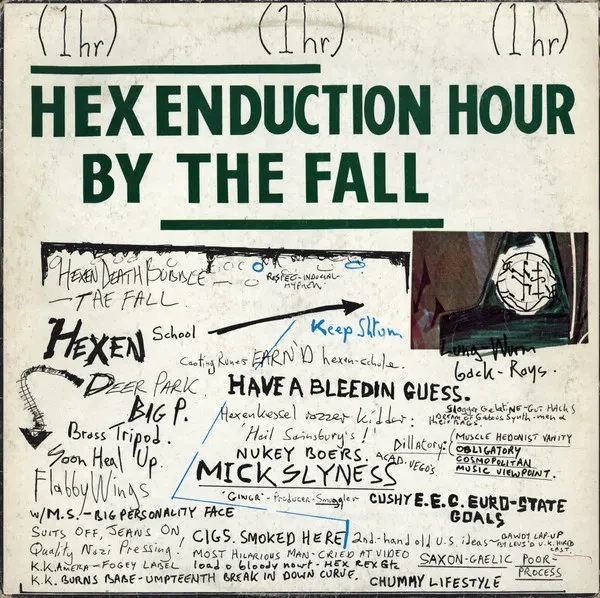
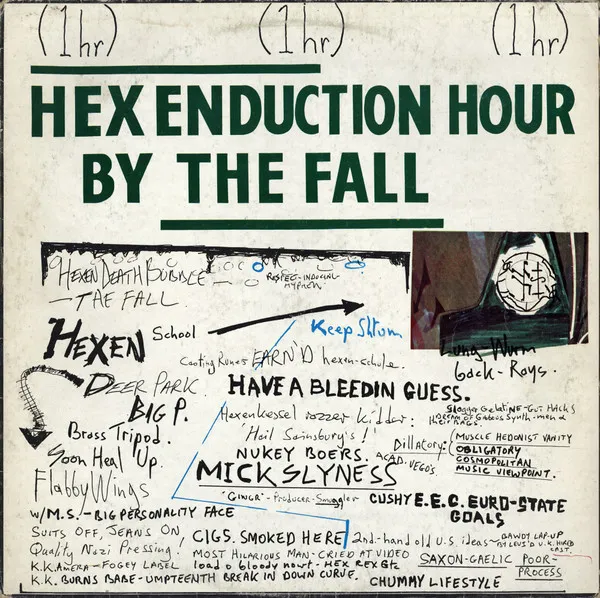
As the music landscape fractured into post-punk and indie aesthetics, underground architects utilized the duff track with clinical precision. Mark E. Smith of The Fall was a master of avant-garde trainspotting. On classic records like Grotesque (After the Fact), tracks like "WMC Blob 59" openly flaunted their experimental awkwardness right down to their whimsical titles. Meanwhile, records like Hex Enduction Hour featured tracks of monolithic, hypnotic monotony—such as "And This Day"—proving that some album segments are designed less for casual listening and more as endurance tests for the devoted fan base.
Supporting Context & Metrics: The Psychology of the Flaw
Why do listeners cherish records because of their flaws rather than in spite of them? Cultural analysis and consumer behavior within music fandom point to several distinct factors:
- The Pub Discussion Dynamic: Music fandom relies heavily on debate. If an album were universally recognized as flawless from start to finish, critical discourse would stagnate. The duff track acts as a lightning rod for conversation, spawning decades of passionate pub arguments over whether a particular song is a misunderstood masterpiece or an unlistenable disaster.
- Dynamic Relief: Just as a visual artist uses negative space or dark tones to make bright colors pop, an audio producer requires valleys to accentuate the peaks. A sequence of 10 consecutive high-energy anthems leads to ear fatigue. A deliberate slowdown, an odd stylistic left-turn, or a slightly weaker composition resets the listener’s palette.
- The Nostalgia Anchor: Ironically, duff tracks often become the most memorable parts of an album over time. Listeners grow fond of their eccentricities, transforming an initial point of annoyance into an idiosyncratic badge of honor for true aficionados.
Official Industry Perspectives and Conceptual Alternatives
Over the years, industry veterans, conceptualists, and avant-garde producers have theorized about alternative ways to construct recorded media, often running headfirst into the very problem of the duff track.
The late, legendary producer and engineer Steve Albini offered a radical thought experiment during the pre-internet downloading era. Pondering the structural integrity of the album format, Albini famously mused: why bother assembling an entire tracklist with inevitable weak spots? Why not simply take a single, perfect 12-inch vinyl track and press it on repeat 14 times?
While Albini’s minimalist engineering logic holds a certain streamlined appeal, cultural commentators and vinyl purists quickly point out the fatal flaw in his proposition: where is the fun in that?
Even if an imaginary record were packed with twelve successive renditions of an artist’s greatest work—be it David Bowie’s "Starman" or any other generational anthem—listeners would still instinctively search for, and arguably require, an eccentric outlier like "It Ain’t Easy" to ground the experience in reality. Perfection, when sustained indefinitely, ceases to feel human.
Future Outlook: The Duff Track in the Streaming and Vinyl Revival Era
As the music industry continues to navigate the hybrid landscape of high-density streaming platforms and the booming global vinyl renaissance, the future of the album format—and by extension, the duff track—faces unique pressures.
In the era of algorithmic playlists, skipped tracks, and shuffle buttons, the traditional album tracklist is arguably under greater threat than at any point since the 70s. Modern streaming data constantly reveals that listeners are increasingly prone to cherry-picking singles, effectively creating their own custom, filler-free micro-playlists.
Yet, the resurgence of physical media—particularly vinyl records, which continue to smash sales records year after year—proves that audiences still crave tangible, long-form artistic statements. Physically lifting a tone arm, flipping a heavy piece of wax, and sitting through an entire side of an LP forces a level of intentional engagement that instant-gratification streaming cannot replicate.
Within this physical ritual, the duff track retains its sacred, disruptive power. It reminds us that art is made by humans, not algorithms. Whether it’s a jarring avant-garde detour, a misplaced cover song, or a lyrical misfire, the imperfect track ensures that listening to music remains an active, deeply personal dialogue between the artist and the ear of the beholder. Long live the duff track; pop culture would be profoundly boring without it.