
Executive Overview
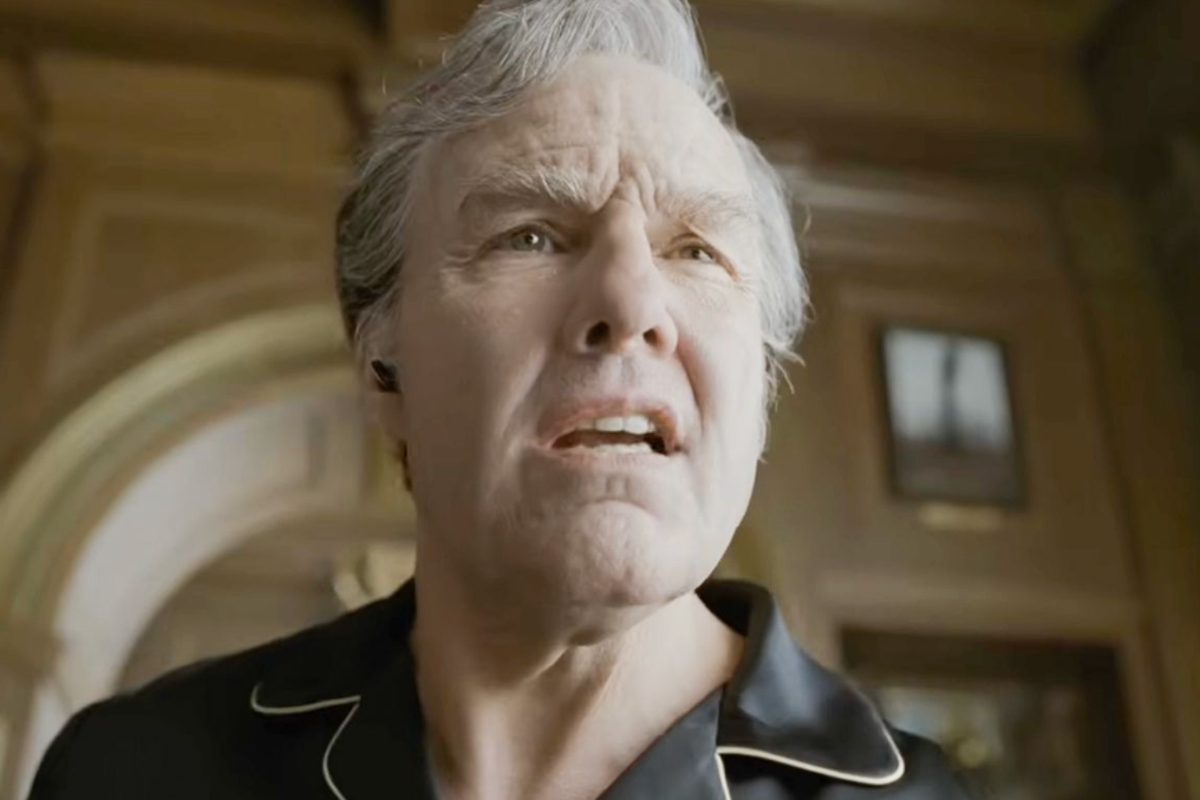
In Digger, visionary Mexican auteur Alejandro G. Iñárritu plunges headfirst into the grotesque realities of modern oligarchy, leveraging the unmatched star power of Tom Cruise to construct a towering, wildly polarizing monument to capitalist decay. Premiering to a mixture of awe and bewilderment, the film casts Cruise not as the infallible American action hero of recent decades, but as Digger Rockwell: a sagged, liver-spotted billionaire oil baron whose empire—and sanity—are on the verge of total collapse.
Supported by an elite ensemble cast featuring Riz Ahmed, John Goodman, and Sandra Hüller, Digger is designed to provoke, challenge, and ultimately disorient its audience. At its narrative core, the film tracks Rockwell from his bizarre, hyper-insular domestic rituals—coddling a dying, semi-carcass of a white cat fed on pale meat paste—to a rude awakening when a Greenland oil rig breaches an ice shelf, threatening a Norwegian apocalypse. Yet, beneath the high-decibel bluster of Iñárritu’s maximalist direction and Emmanuel Lubezki’s washed-out limbo cinematography lies a deeply confounding paradox.
While Digger aims to skewer the ultra-wealthy class that governs contemporary geopolitics, it struggles to match the terrifying absurdity of real-world figures like modern tech moguls or populist leaders. Instead, it frequently collapses into a self-referential maze, querying its own utility as art. Does the cinematic satire act as a vital catharsis, or is it merely a distraction that permits the powerful to rewrite their own narratives? As audiences and critics parse the layers of Digger, the film stands as one of the most daring, if uneven, cinematic experiments of the decade.
Detailed Chronology: The Rise and Ruin of Digger Rockwell
Act I: Domestic Isolation and the Dying Feline
The film opens within the suffocatingly lavish, melted-Norman-Rockwell confines of Digger Rockwell’s private estate. Far removed from the ordinary struggles of humanity, Rockwell (Tom Cruise) is introduced in a state of advanced physical decay. His once-impenetrable cinematic physique is now riddled with sagged flesh and liver spots. His primary companion—and the focal point of his obsessive affections—is an ailing white cat destined for imminent biological expiration.
In these opening sequences, Iñárritu establishes a tone of high farce. Digger’s entire universe revolves around the feline:
- He dips his weathered fingers into pots of pale meat paste to manually feed the animal.
- He permits the cat to urinate nightly across his silk bedding, leaving the cleaning duties to a revolving door of exhausted domestic staff.
- In a swift display of corporate and personal ruthlessness, he fires a resident veterinarian simply for suggesting that putting the creature out of its misery is the most humane course of action.
This microscopic focus on domestic degradation serves as a satirical buffer against the macro-crises brewing outside his window. Digger is insulated by his billions, unable or unwilling to recognize that the very foundations of his wealth are rotting away—until a disruptive ping shatters the silence.
Act II: The Greenland Breach and the Apocalyptic Notification
The catalyst for the film’s chaotic narrative acceleration arrives via a phone notification. Digger is informed that his company’s rogue oil-drilling operations in Greenland have triggered a catastrophic structural failure along a major ice shelf. A massive chunk of glacier is currently barreling toward the Norwegian coastline, threatening a localized environmental apocalypse that could wipe out coastal populations within days.
Rather than accepting culpability, Digger immediately pivots to damage control, transforming his PR strategy into a messianic performance. He positions himself simultaneously as the visionary seer and the ultimate savior of mankind. This brings him into direct conflict with Ganesh (Riz Ahmed), the whistleblower scientist tasked with delivering unvarnished scientific truths.
During a tense confrontation, Digger aggressively abuses Ganesh, feigning sleep or outright dismissal when the scientist reads out a comprehensive ledger of the oil baron’s committed corporate atrocities. Refusing to let accountability ruin his day, Digger bypasses regulatory bodies entirely and communicates directly with the President of the United States (John Goodman). Goodman’s commander-in-chief, perpetually broadcasting a dark fatalism regarding his imminent demise from "cancer of the asshole," shares an increasingly delusional view of their mutual legacy, treating the end of the world as a personal stage for theatrical grandeur.
Act III: The Farcical Collapse and Metatextual Interrogation
As the glacier draws closer to its destination, the film plunges deeper into theatrical chaos. Sandra Hüller enters the fray as Digger’s volatile half-sister, chewing the scenery with manic monologues that echo the frantic energy of Cosmo Sheldrake’s death-rattle score.
The narrative culminates in a blistering public speech where Digger confronts the populace directly. He attempts to flip the script on his critics, arguing that society’s collective addiction to comfort and convenience has made ordinary citizens utterly complicit in their own destruction. Yet, it is precisely here that the film’s narrative logic begins to fray. By attempting to position Digger as a philosophical mastermind of greed, the film misses the banal, charmless reality of actual billionaires—figures whose emptiness defies the operatic grandeur Cruise brings to the role.
The final third of Digger abandons straightforward linear storytelling altogether, opting instead for a metatextual deconstruction. Characters occasionally break the fourth wall not through direct address, but through an overwhelming sense that they know they are trapped within a failing satire. The film explicitly asks: What is the point of cinematic critique when the world it mimics is already beyond salvation?
Supporting Context & Metrics
To fully understand the cultural and artistic footprint of Digger, it is necessary to examine the pedigree of its creators, its technical specifications, and how it measures up against historical cinematic satires.
Production and Technical Specifications
- Director: Alejandro G. Iñárritu
- Cinematographer: Emmanuel Lubezki
- Composer: Cosmo Sheldrake
- Runtime: 129 minutes
- MPAA/BBFC Rating: Cert 15
- Key Cast: Tom Cruise (Digger Rockwell), Riz Ahmed (Ganesh), John Goodman (US President), Sandra Hüller (Half-Sister), Michael Stuhlbarg, Jesse Plemons.
Directorial Lineage: The Evolution of Iñárritu’s Maximalism
Alejandro G. Iñárritu has long been a director who operates at the volume of a brass fanfare. His filmography is defined by relentless formal ambition:
- Birdman (2014): Utilized a simulated continuous shot that sprinted down claustrophobic backstage corridors to capture the terror of an actor facing professional obsolescence.
- The Revenant (2015): Deployed punishing natural lighting and brutal physical environments to demonstrate how nature violently strips away human pretense.
With Digger, Iñárritu applies this same maximalist lens to contemporary plutocracy. However, critics note that while The Revenant operated with the crushing weight of a predatory bear, Digger often lands with the force of a gentle summer breeze. Despite its grotesque trappings, it frequently lacks the narrative meanness required to deliver a truly devastating blow to modern capitalism.
Comparative Analysis: Digger vs. Historical Satire
Iñárritu’s film clearly attempts to walk in the long, formidable shadow cast by Stanley Kubrick’s Dr. Strangelove (1964). However, the satirical landscape of the 21st century presents a unique challenge that Kubrick did not have to navigate: reality has far outpaced fiction.
| Satirical Element | Dr. Strangelove (Kubrick) | Digger (Iñárritu) | Real-World Parallel (2020s) |
|---|---|---|---|
| Portrait of Power | Cold War bureaucrats driven by bureaucratic absurdity. | A theatrical oil baron obsessed with a dying cat. | Tech oligarchs launching rockets while ignoring planetary collapse. |
| Tone | Relentlessly bleak, icy, and misanthropic. | Operatic, farcical, and strangely romantic. | Bizarrely mediated through performative social media stunts. |
| Efficacy | Exposes systemic paranoia with surgical precision. | Softened by Hollywood star power and metatextual doubt. | Outdone daily by actual geopolitical headlines. |
As noted in early critical reactions, Digger Rockwell is ultimately "no Musk or Zuckerberg." Furthermore, John Goodman’s preposterous president appears remarkably composed when juxtaposed against the chaotic populist figures dominating contemporary global politics.
Official Statements and Critical Reception
The arrival of Digger has generated immense industry chatter, primarily due to Tom Cruise’s radical departure from his recent multi-decade string of physics-defying action blockbusters (Mission: Impossible, Top Gun: Maverick).
Industry and Cast Perspectives
While official press statements from Warner Bros. Pictures have focused on the film’s breathtaking technical achievements and Iñárritu’s visionary direction, industry insiders have highlighted the intentionality behind Cruise’s transformation. Far from a complete reinvention, critics and early festival reviewers have drawn direct parallels between Digger Rockwell and Cruise’s legendary, paunchy, foul-mouthed studio executive Les Grossman in Tropic Thunder (2008).
"Cruise is dependably formidable and magnetic," notes one early festival review. "He delivers dialogue like he’s setting up a sniper shot. Yet, the film’s central conceit constantly threatens to collapse under the weight of its own philosophical questioning."
The Meta-Debate: Art vs. Pointlessness
The most contentious element of Digger remains its aggressive self-awareness. By inviting the audience to question whether satirical filmmaking is merely a form of moral cleansing for complicit liberals, Iñárritu has split critical consensus down the middle.
- The Pro-Boldness Camp: Supporters argue that Iñárritu should be applauded for his uncompromising audacity. By breaking the illusion of the narrative and forcing viewers to interrogate the very medium they are consuming, Digger achieves a rare level of cinematic self-reflexivity.
- The Skeptical Camp: Detractors counter that acknowledging a film’s potential pointlessness does not excuse it from being dramatically inert. As one dissenting voice remarked: “When you’re watching a film that doesn’t really seem to work, which then voluntarily indulges the suggestion that its very existence might be completely pointless—well, then, why did any of us, filmmaker or audience, bother in the first place?”
Future Outlook
As Digger prepares for its broader commercial rollout, its trajectory through the upcoming awards season and cultural discourse remains one of the most unpredictable in recent memory.
Box Office and Cultural Impact
Tom Cruise remains one of the few remaining cinematic deities capable of driving global box office returns purely on the strength of his name. However, Digger is not a crowd-pleasing stunt-fest; it is an abrasive, deeply cynical, and structurally baffling art-house satire draped in blockbuster aesthetics.
- Commercial Prospects: Audiences seeking the high-octane thrills of Top Gun may find themselves alienated by the film’s glacial pacing, grotesque imagery, and bleak existential nihilism. Conversely, cinephiles and awards voters will likely dissect Lubezki’s cinematography and Cruise’s bravura performance for months to come.
- The Verdict on Satire: Ultimately, Digger will be remembered as a fascinating cultural artifact of the mid-2020s—a time when filmmakers struggled to find a cinematic language grand enough to capture the absurdity of modern collapse. Whether Iñárritu’s experiment is viewed as a misunderstood masterpiece or a brilliant misfire, it proves that even when standing at the edge of the apocalypse, Tom Cruise and his director are entirely unafraid to look the void in the eye and dare it to blink first.