Executive Overview
In what cultural authorities are calling an unprecedented catastrophe for Italian heritage, four priceless Renaissance panels of "extraordinary value" have been stolen from the Regional Interdisciplinary Museum of Messina in Sicily. The audacious weekend break-in has sent shockwaves through the international art community, prompting an urgent, multi-jurisdictional manhunt led by Italy’s specialized Carabinieri command for the protection of cultural property.
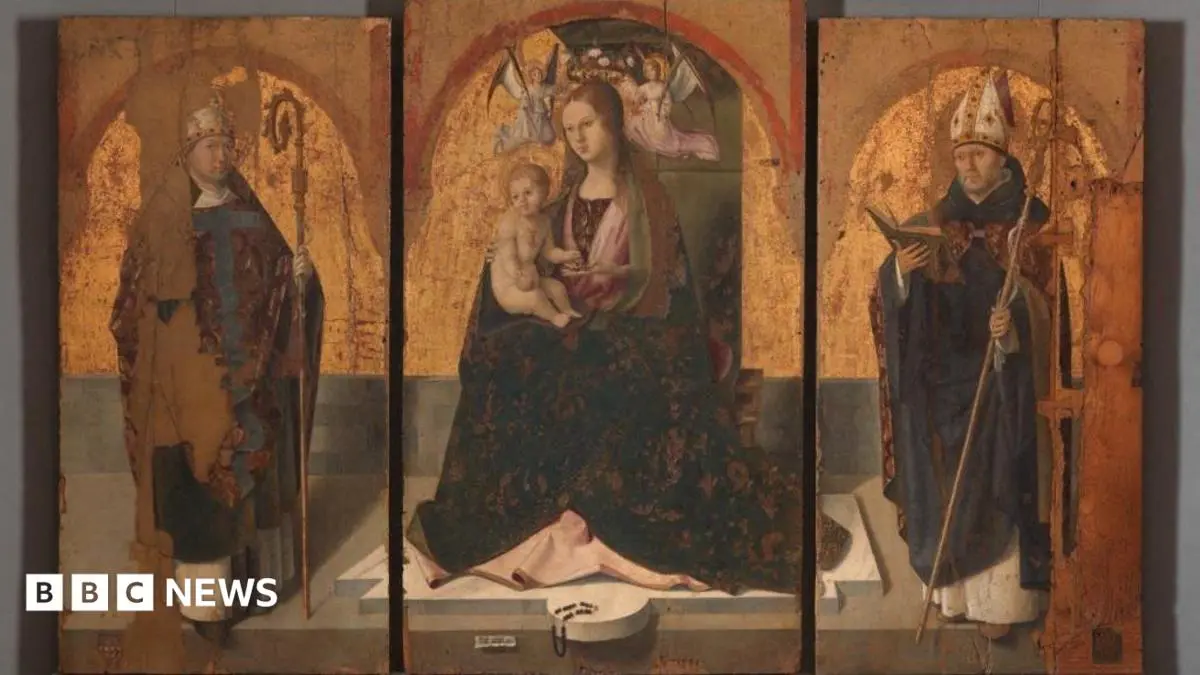
The stolen works are all attributed to the towering 15th-century Sicilian master Antonello da Messina, a foundational figure of the early Italian Renaissance whose revolutionary integration of Flemish oil techniques transformed Mediterranean art. According to statements confirmed by Italy’s Culture Minister, Alessandro Giuli, the stolen cache comprises three panels from the revered Polyptych of San Gregorio (1473) and a delicate, double-sided panel depicting the Madonna with Child and Christ in Pietà.
Preliminary investigative theories suggest a high-precision, professional operation. The thieves bypassed security systems without triggering automated alarms, selectively targeted specific masterworks, and extracted sensitive wooden panels—including one taken directly from inside a secure display case. Italian news agency Ansa reported that investigators are working on the strong initial suspicion that the paintings were stolen to order for an international black-market syndicate, raising grim parallels to the shadowy world of elite art trafficking.
This catastrophic loss is not merely an isolated local crime; it represents the latest high-profile escalation in a troubling wave of museum heists across Europe. Over the past decade, organized criminal networks have increasingly exploited vulnerabilities in regional cultural institutions, resulting in the steady disappearance of irreplaceable artistic heritage from public view. As Italian authorities race against the clock to recover the masterworks before they vanish into private, illicit collections, questions are mounting over museum security protocols, asset protection, and the vulnerability of regional galleries housing world-class treasures.
Detailed Chronology
Saturday Night: The Anatomy of a Precision Break-In
The timeline of the Messina heist points to a meticulously planned operation executed with chilling efficiency. Based on preliminary investigative findings and statements provided by museum director Marisa Mercurio, the intrusion occurred under the cover of darkness on Saturday night.
- 21:50 Local Time (19:50 GMT): According to museum authorities, investigators have narrowed down the precise window of the theft to approximately 9:50 PM. At this time, the Regional Interdisciplinary Museum of Messina was closed to the public.
- The Breach: How the perpetrators managed to enter the secure perimeter of the museum remains one of the central mysteries baffling local law enforcement. Investigators from the Italian State Police and the Carabinieri are probing how the thieves successfully infiltrated the building without tripping the facility’s electronic alarm grid. Whether the intrusion involved sophisticated signal-jamming technology, insider collusion, or a catastrophic blind spot in the museum’s physical security infrastructure remains under intense scrutiny.
- The Extraction: Once inside, the perpetrators did not wander aimlessly or engage in opportunistic looting. They moved directly to specific galleries housing the prized works of Antonello da Messina. Demonstrating an intimate knowledge of the museum’s layout and the physical properties of the art, the thieves executed a targeted extraction.
- The Display Case Breach: Most alarmingly, the double-sided panel of the Madonna with Child and Christ in Pietà was removed directly from inside a secure display case. This required defeating specialized locking mechanisms and glass-integrity sensors without triggering alerts. Furthermore, all four stolen artifacts were painted on fragile wooden panels. Unlike rolled canvases, wooden panels cannot be easily concealed or folded, demanding careful, deliberate handling during extraction and transport to prevent catastrophic structural damage to the 15th-century paint layers.
The Immediate Aftermath and Forensic Sweep
By Sunday morning, as museum staff arrived for the opening shift, the scale of the disaster became apparent. The empty spaces on the walls and within the display cases immediately triggered emergency protocols.
The Regional Interdisciplinary Museum of Messina was locked down, and forensic teams from the Carabinieri’s Nucleo Tutela Patrimonio Culturale (TPC)—Italy’s elite art crime squad—were deployed to the scene. Investigators spent hours dusting for latent fingerprints, collecting digital access logs, reviewing closed-circuit television (CCTV) footage from surrounding streets, and analyzing the precise mechanical methods used to compromise the display cases.
As of Monday, local police forces have expanded their sweep across eastern Sicily, setting up roadblocks along major transit corridors, inspecting maritime ports, and monitoring known transit routes used by antiquities smugglers operating between the Italian mainland and North Africa or Eastern Europe.
Supporting Context & Metrics
The Stolen Masterpieces: A Closer Look at the Art
To fully grasp the magnitude of the loss, one must understand the unique historical and artistic significance of the stolen works. Antonello da Messina (c. 1430–1479) holds a mythical status in the history of art. Born and raised in Messina, he was a pioneering genius who bridged the gap between the Italian Renaissance and Northern European art. By synthesizing the monumental composition and perspective of the Italian masters with the luminous oil-painting techniques of Flemish painters like Jan van Eyck, Antonello revolutionized Sicilian and Italian art.
The stolen artifacts include:
- Three Panels of the Polyptych of San Gregorio (1473): Originally commissioned for the monastery of Santa Maria di Graces, this monumental altarpiece is a cornerstone of Antonello’s mature period. The surviving polyptych originally featured the Virgin Mary enthroned with the infant Jesus, flanked by various saints. The stolen components include figures integral to the narrative composition, showcasing Antonello’s mastery of human anatomy, light diffusion, and psychological depth.
- The Double-Sided Panel of the Madonna with Child and Christ in Pietà: A deeply intimate and technically dazzling devotional work. Because it is double-sided, the panel required exceptional conservation care and structural support. The obverse depicts the tender relationship between the Madonna and the Christ Child, while the reverse presents a harrowing, emotionally charged depiction of Christ in Pietà. The fact that thieves targeted this specific piece inside a secure case underscores their awareness of its immense market value and portability.
The Economics of Art Theft: The Black Market Reality
Art theft is frequently romanticized in popular culture as the work of eccentric, highly educated gentlemen cat burglars. In reality, modern museum heists are overwhelmingly driven by transnational organized crime syndicates.
According to criminological data compiled by international agencies like Interpol and Europol, stolen art is rarely sold openly. Instead, high-value masterpieces stolen "to order" often function as high-yield collateral in criminal underworld economies. They are used to back narcotics shipments, launder cartel capital, or secure loans among criminal syndicates.
Furthermore, the physical nature of these stolen panels presents severe conservation risks. Wooden panels from the 15th century are notoriously sensitive to fluctuations in humidity, temperature, and physical shock. Stored improperly in clandestine hideouts—such as damp basements, shipping containers, or rural safe houses—the delicate gesso, tempera, and oil layers are highly vulnerable to cracking, warping, and irreversible decay. Experts warn that every day these panels remain outside a climate-controlled museum environment drastically increases the likelihood of permanent structural degradation.
Europe’s Mounting Museum Security Crisis
The Messina heist is not an isolated incident; it forms part of an alarming, continent-wide surge in cultural property thefts. Over the past five years, European museums—particularly regional institutions operating under severe municipal budget constraints—have increasingly become soft targets for professional criminal networks.
From high-profile daytime smash-and-grabs in France to sophisticated nighttime infiltrations of provincial galleries in Italy and Spain, criminal syndicates have capitalized on systemic vulnerabilities:
- Underfunded Security Infrastructure: Many regional museums struggle to maintain state-of-the-art, redundant alarm systems and 24/7 armed monitoring due to slashed public cultural budgets.
- Staff Shortages: Reductions in custodial and security personnel often leave vast exhibition spaces monitored by solitary guards or relying entirely on automated systems vulnerable to technological circumvention.
- Fragmented Cross-Border Policing: While specialized units like Italy’s Carabinieri TPC are among the best in the world, the rapid transit of stolen goods across porous European borders creates bureaucratic and operational delays that favor transnational thieves.
Official Statements
The gravity of the incident has elicited immediate, high-level responses from Italian cultural leaders, regional authorities, and museum administrators.
Alessandro Giuli, Italy’s Culture Minister:
"The theft of these four Renaissance panels of extraordinary value from the Regional Interdisciplinary Museum of Messina is an intolerable wound inflicted upon our national heritage. Antonello da Messina is not merely a son of Sicily; he is a foundational pillar of the Italian Renaissance. We have mobilized the full investigative weight of the Carabinieri Command for the Protection of Cultural Property to track down these masterworks and bring those responsible to justice. The Italian State will spare no resource in recovering what rightfully belongs to the public domain."
Marisa Mercurio, Director of the Regional Interdisciplinary Museum of Messina:
"We are utterly shocked and devastated by what happened on Saturday night. This is not just a physical loss of property; it is a profound and irreparable loss for our museum, for the city of Messina, for our local community, and for the global art history world. Our team is fully cooperating with investigators, providing every piece of security data, inventory record, and logistical detail necessary to assist in the recovery of these priceless treasures."
Local Law Enforcement Spokesperson (Carabinieri TPC Investigation Unit):
"We are examining every possible angle, from professional transnational art smuggling rings to opportunistic local criminal elements with specialized knowledge of the museum’s security layout. The precision with which these wooden panels were extracted—particularly the piece removed from inside a secure display case—strongly points to a targeted commission. Our priority is twofold: securing the immediate and safe recovery of the artworks before environmental damage sets in, and dismantling the network responsible for this atrocious crime."
Future Outlook
As the investigation enters its critical second week, the immediate future hinges on a delicate balance between aggressive police fieldwork and international intelligence sharing.
1. The Interantional Manhunt and Interpol Coordination
Through Interpol’s Stolen Works of Art Database, details, high-resolution photographs, and physical descriptions of the stolen Antonello da Messina panels have been instantly broadcast to law enforcement agencies, border control authorities, and customs officials worldwide. Major international auction houses, prominent private art dealers, and known secondary-market brokers have been placed on high alert. Because these masterworks are globally recognized, attempting to sell them on the open market is virtually impossible, increasing the likelihood that they will remain hidden within underground criminal channels until an informant steps forward or a police raid yields a breakthrough.
2. Museum Security Overhauls Across Italy
The catastrophe in Messina will inevitably trigger a nationwide security audit of Italy’s regional and provincial museums. Cultural ministry officials are already facing immense political pressure to enact immediate structural reforms. Future policy initiatives are expected to focus on:
- Injecting emergency capital into provincial museums to upgrade aging alarm systems, biometric access controls, and motion-detection grids.
- Enhancing physical hardening measures, including ballistic display cases and multi-layered locking mechanisms for high-value artifacts.
- Increasing staffing levels to eliminate blind spots and ensure comprehensive physical monitoring during closing hours.
3. The Race Against Time for Conservation
Ultimately, the primary concern for art historians and conservators remains the physical preservation of the stolen panels. Fifteenth-century wooden panel paintings are living, breathing historical objects that demand precise, stable climatic conditions. If law enforcement does not locate the paintings swiftly, the irreversible ravages of humidity, improper handling, and environmental neglect may inflict permanent damage on these irreplaceable foundations of Renaissance art.
For the city of Messina and the global cultural community, the coming days will be a tense, high-stakes waiting game as investigators scour the shadows for the missing masterpieces of Antonello da Messina.