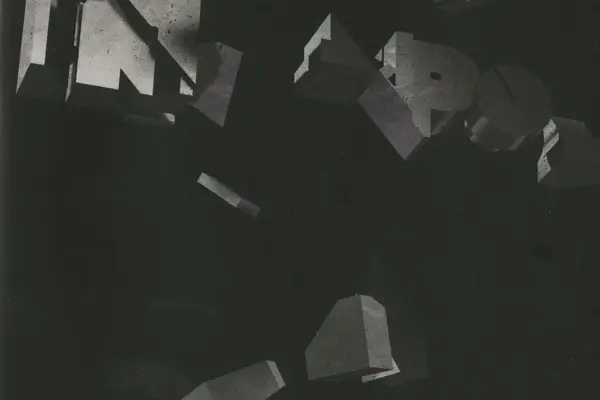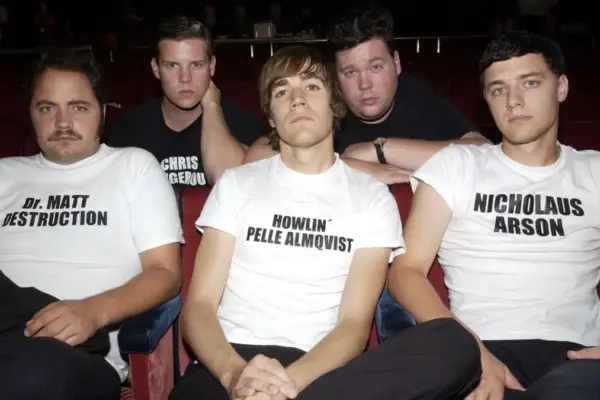
The modern landscape of heavy music exists in the shadow of foundational architects. Yet, few bands navigate the treacherous waters of legacy, evolution, and maturity with the precise balance of urgency and self-awareness demonstrated by Quicksand. With the release of their third post-reunion studio album, Bring On The Psychics (arriving July 17 via Equal Vision Records), frontman and principal songwriter Walter Schreifels, alongside bassist Sergio Vega and drummer Alan Cage, reframes what it means for a seminal 1990s post-hardcore outfit to exist in the modern era.
Rather than succumbing to the safe, self-plagiarizing comfort of nostalgia, Quicksand has constructed a record that feels dangerously alive. Clocking in with an uncompromisingly punchy sequence, Bring On The Psychics confronts the anxieties of encroaching mortality while channeling the raw, driving immediacy of youth. In an era where underground punk and hardcore lean heavily toward antisocial, punishing heaviness—and where massive crossover acts like Turnstile dominate festival grounds with bouncy, high-tempo anthems—Quicksand’s newest material arrives not as an imitation, but as a masterclass from the very architects who drafted the blueprint.
This deep-dive investigative review explores the making of Bring On The Psychics, analyzes Schreifels’ prolific ongoing creative renaissance, contextualizes the band’s historical weight within New York Hardcore (NYHC), and assesses how this release positions Quicksand at the bleeding edge of guitar music’s aging demographic.
Detailed Chronology: From the New York Hardcore Underground to Modern Masters
The Genesis: A Wild Era of NYHC
To understand the cultural resonance of Bring On The Psychics, one must trace the winding trajectory of Walter Schreifels’ career. In the late 1980s, Schreifels was a teenage fixture in the hyper-aggressive, ideologically rigid New York Hardcore scene. He logged pivotal stints in monumental bands such as Youth Of Today, Warzone, and Gorilla Biscuits. These groups established a fast, orthodox template for hardcore punk characterized by speed, social consciousness, and ideological straightedge purity.
However, as Schreifels entered his early twenties, his artistic compass began to shift. Evolving tastes drew him toward the textured atmospheres of shoegaze, alternative rock, and a loosening of rigid lifestyle dogma. Recognizing that traditional hardcore parameters could no longer contain his expanding sonic ambitions, he pivoted. In 1990, he recruited musicians from fellow influential NYHC projects—including ex-members of Bold and Burn—to form Quicksand.
The Birth of Post-Hardcore and Major-Label Exploits
Quicksand slowed down the breakneck tempos of traditional hardcore, injecting deep, cavernous space, intricate groove mechanics, and soaring, melodic vocal lines. They effectively invented the modern lexicon of "post-hardcore."
During the post-Nirvana major-label signing frenzy of the early 1990s, major labels desperately scouted underground punk scenes for the next breakout alternative rock phenomenon. Quicksand was swiftly snapped up by Geffen/Island, releasing their luminous 1993 debut album, Slip. An exquisite, churning masterwork of dynamic tension and release, Slip stands as a genre-defining monument. It proved that heavy music could be both punishingly heavy and deeply emotional, cerebral, and spacious.
Following extensive touring—including headlining slots on the inaugural Warped Tour—and the release of their critically lauded sophomore effort Manic Compression (1995), internal pressures fractured the band. By the close of the decade, Quicksand was history. Yet, their DNA permeated the subsequent decades of heavy music, laying groundwork utilized by generations of bands, including Deftones (featuring long-time Quicksand bassist Sergio Vega) and modern stadium-adjacent standard-bearers like Turnstile.
Quicksand 2.0: The Reunion Era
Dormant for over a decade, Quicksand surprised the underground by officially reuniting for a one-off show in 2012. What began as a nostalgic celebration snowballed into a permanent creative vehicle. Eschewing the lazy circuit of greatest-hits performances, the band re-entered the studio, releasing Interiors in 2017 and Distant Populations in 2021.
With the announcement of Bring On The Psychics, Quicksand 2.0 has officially surpassed the album count of their original 1990s incarnation. This milestone arrives while Schreifels simultaneously juggles active touring duties across his historical catalog—fronting Gorilla Biscuits, Youth Of Today, and Rival Schools, alongside Quicksand. For an artist constantly asked to inhabit his multiple past lives, Bring On The Psychics represents an aggressive, forward-looking refusal to live exclusively in museum-piece retrospection.
Supporting Context & Metrics: Analyzing Bring On The Psychics
Sonic Architecture and Production Aesthetics
Recorded with a lean, unfussy clarity by producer Jon Markson (known for his work with Drug Church and Drain), Bring On The Psychics prioritizes live-room punch over digital pristine gloss. Following the 2017 departure of founding guitarist Tom Capone, Quicksand streamlined their studio and live attack into a razor-sharp power trio format—anchored by Schreifels’ vocals and rhythm guitar, Vega’s melodic low-end, and Alan Cage’s relentless, precise drumming.
| Track Attribute | Detail / Musical Focus |
|---|---|
| Opening Track | "Get To It" – Urgent, anthemic, festival-ready bounce. |
| Lyrical Themes | Encroaching mortality, temporal urgency, modern interpersonal frustrations. |
| Standout Cuts | "Cool Guy", "Regenerate", "Days You Run To", "In Full Color". |
| Production Style | Unfussy, high-clarity analog attack by Jon Markson. |
| Label / Release Date | Equal Vision Records, July 17. |
The Turnstile Phenomenon and Underground Parallels
A striking aspect of the critical discourse surrounding lead single "Get To It" is its ability to trigger what reviewers describe as the "Turnstile alarm." Hearing a galloping drum tempo, clean yet soaring vocals, and a high-bounce guitar riff instantly brings contemporary heavy music giants to mind.
However, this dynamic highlights a fascinating generational inversion. While modern underground hardcore has largely pivoted toward darker, antisocial, and hyper-brutalist extremes, Turnstile’s massive crossover success popularized a bouncy, rhythmic accessibility clearly indebted to Quicksand’s foundational 90s output. When Quicksand adopts elements of that infectious rhythmic energy on Bring On The Psychics, the influence loops full circle. It is not that Quicksand sounds like Turnstile; rather, Turnstile sounds like the sonic world Quicksand helped architect over thirty years ago.
Navigating Mortality at 57
At 57 years old, Walter Schreifels occupies a rare echelon in heavy music. Many of his generational peers from the golden age of NYHC are no longer alive, making the contemplation of aging a heavy, unavoidable reality.
Bring On The Psychics confronts this existential reality head-on. The album juxtaposes classic hardcore grievances—such as dealing with insufferable people, as highlighted on the sharp-tongued head-splitter "Cool Guy"—with profound meditations on the speed of time. Tracks like "Regenerate" and "In Full Color" feature Schreifels processing the clutter of a lived-in life:
"Life can really pile up / Before you know, you’ve got all this stuff / Weighing down on your head / Wish you were somewhere else instead."
Rather than sliding into morose, late-career folk-acoustic melancholia (the "late-period Leonard Cohen" trajectory), Quicksand channels these existential anxieties into high-octane urgency. If time is running out, their response is to turn up the amplifiers and play with maximum velocity.
Official Statements and Industry Reception
While full-scale promotional interviews continue to roll out alongside the album’s rollout via Equal Vision Records, early press releases and track debuts emphasize Schreifels’ conscious decision to reconnect with the raw energy of the music he consumed in his pre-Quicksand youth.
In statements accompanying the rollout of singles like "Crystallize" and "Cool Guy," the band has emphasized that Bring On The Psychics was written with a conscious desire to strip away unnecessary fat. Speaking on the modern creative environment, Schreifels has noted the symbiotic energy derived from sharing festival stages with young, hungry hardcore acts. This cross-generational dialogue is palpable in the record’s pacing: quieter, reflective soundscapes like "Days You Run To" sit comfortably alongside some of the most aggressive, direct tracks the band has recorded since their 2012 resurrection.
Industry analysts and indie music tastemakers have praised the single release block, positioning Bring On The Psychics as one of the most vital rock releases of the mid-2020s. Sharing a massive release week alongside heavy-hitting projects from artists like Steve Lacy, Fuming Mouth, Yard Act, and The Menzingers, Quicksand’s latest effort easily holds its ground as a masterclass in aging gracefully without losing teeth.
Future Outlook: The Blueprint for Legacy Acts
The central question posed by critics observing Quicksand’s current trajectory is profound: How do you age gracefully in a genre built on the visceral energy of youth?
Most legacy rock and hardcore bands stumble when attempting reunions. They either fall into the trap of self-parody—attempting to recreate their twenty-something angst with fifty-something bodies—or they water down their sound into generic adult-contemporary alternative rock.
Quicksand has successfully sidestepped both pitfalls. Bring On The Psychics proves that a band can respect its monumental history while treating its present catalog as a living, breathing entity. By staying physically active, remaining embedded in the modern touring ecosystem alongside younger bands, and embracing the wisdom—and anxiety—that comes with aging, Quicksand has established a roadmap for longevity.
As Bring On The Psychics hits record store shelves and streaming platforms on July 17 via Equal Vision, it stands not just as a triumphant third chapter for Quicksand 2.0, but as an existential benchmark for the entire post-hardcore genre. Will contemporary giants like Turnstile age this gracefully over the next three decades? Only time will tell. But for now, Quicksand has once again provided the definitive blueprint.