Executive Overview
The University of Oxford has long stood as a historic bastion of academic excellence, but its physical and cultural landscape is undergoing a monumental transformation. At the heart of this evolution is the newly established Stephen A. Schwarzman Centre for the Humanities—a striking architectural and intellectual hub designed by Hopkins Architects. Conceived as a multidisciplinary anchor for the university, the Schwarzman Centre houses seven core humanities faculties while seamlessly integrating state-of-the-art public performance spaces, including a premier concert hall, a versatile studio theatre, and an immersive black box performance venue.
To mark its emergence as a dynamic cultural nexus, the centre has spearheaded a flagship multidisciplinary initiative: a Day of Psalms, scheduled for November 28. This ambitious festival of music, literature, and cross-cultural dialogue serves as a living demonstration of the Schwarzman Centre’s mission to foster profound intellectual and artistic cross-fertilization. At the core of this celebration is an exploration of the enduring spiritual, literary, and musical resonance of the Psalms across the three Abrahamic faiths and beyond.
The initiative is anchored by celebrated artist and writer Edmund de Waal in his capacity as a Schwarzman Centre Cultural Fellow. Over the past year, de Waal has collaborated closely with Oxford academics to investigate how ancient poetic texts continue to shape modern human consciousness. The culmination of this research is a packed, day-long programme featuring intimate sunrise performances, avant-garde minimalist masterpieces, scholarly panels, poetry workshops, and a star-studded evening concert.
The festival’s marquee event bridges centuries of sacred tradition and contemporary innovation. Featuring the Aurora Orchestra, the BBC Singers, and conductor Nicholas Collon, the evening gala pairs Leonard Bernstein’s vibrant, Broadway-infused Chichester Psalms with Johann Sebastian Bach’s monumental Magnificat. Crucially, the programme also features the world premiere of Frideswide Psalms, a major new co-commission by acclaimed American composer Nico Muhly. Drawing inspiration from the life of Oxford’s patron saint, Anglo-Saxon Princess Frideswide, Muhly’s composition weaves together texts from the Book of Common Prayer and the pioneering 14th-century Wycliffe Bible translation.
For audiences eager to experience this convergence of history, architecture, and world-class performance, the programme will embark on a three-city regional tour, stopping at Saffron Hall on November 27, the Schwarzman Centre on November 28, and Kings Place in London on November 29. This event not only inaugurates a vibrant new chapter for Oxford’s cultural life but also establishes a high-water mark for contemporary institutional arts programming.
Detailed Chronology: From Ancient Roots to Modern Performance
To fully appreciate the scope of the Day of Psalms, it is necessary to trace a chronological arc that stretches from the early medieval origins of Oxford to the contemporary collaborative processes behind the Schwarzman Centre’s inaugural season.
The Medieval Genesis: Saint Frideswide and Early Oxford
The narrative of the Frideswide Psalms begins in the turbulent landscape of 8th-century Anglo-Saxon England. According to historical tradition, Princess Frideswide—daughter of local Mercian royalty—chose a life of religious devotion over worldly marriage, fleeing unwanted royal advances and eventually establishing a monastic community on the site that would later become the heart of Oxford.
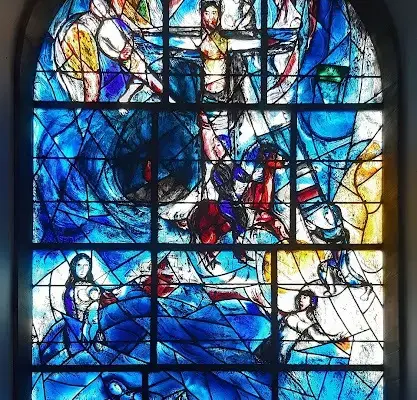
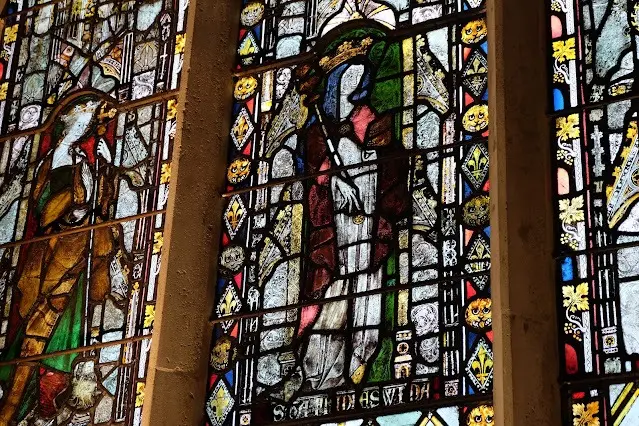
Frideswide’s legacy as the city’s patron saint is inextricably bound to the physical architecture of modern Oxford. The monastery she founded eventually evolved into Christ Church Cathedral, a site where her shrine became a focal point for medieval pilgrimage, scholarship, and sacred music. Her life represents an early synthesis of ascetic devotion and intellectual refuge—qualities that the University of Oxford would later inherit. Over centuries, her memory was preserved through illuminated manuscripts, stained glass windows (such as the striking 14th-century depictions in Christ Church), and vernacular translations of sacred texts, including the groundbreaking theological and linguistic work of John Wycliffe in the 14th century.
The Evolution of the Schwarzman Centre
Fast-forwarding to the 21st century, the University of Oxford identified a critical need to consolidate and elevate its fragmented humanities departments while creating a unified public face for its arts programming. Backed by a landmark philanthropic gift from investor and philanthropist Stephen A. Schwarzman, the university commissioned the renowned architectural firm Hopkins Architects to design a state-of-the-art facility.
The resulting Schwarzman Centre represents the largest infrastructural project in the university’s modern history. Designed to bring together seven disparate humanities faculties under one roof, the complex was engineered not merely as a cluster of lecture halls and offices, but as an active cultural engine. By embedding world-class performance venues directly into a humanities research center, the university sought to break down the traditional barriers between academic scholarship and creative practice.
The Fellowship and Collaborative Genesis
In the lead-up to the centre’s opening, multidisciplinary artist and writer Edmund de Waal was appointed as a Schwarzman Centre Cultural Fellow. Known for his deeply reflective, text- and material-driven installations (such as The Hare with Amber Eyes), de Waal embarked on an intensive residency designed to bridge academic research and creative output.
Working alongside Oxford theologians, historians, and literary scholars, de Waal initiated a deep dive into the Psalms. The research interrogated how these ancient texts function not only as liturgical artifacts within Judaism, Christianity, and Islam, but also as universal expressions of human suffering, joy, exile, and praise. This months-long academic and artistic exchange laid the conceptual groundwork for the Day of Psalms, transforming abstract historical inquiry into a visceral, living experience.
The Culmination: November 27–29, 2024
The culmination of this multi-year institutional vision takes place over three consecutive late-November days.
- November 27: The collaborative programme receives its pre-premiere airing at Saffron Hall, introducing regional audiences to the thematic weight of the project.
- November 28: The festival officially anchors itself at the brand-new Schwarzman Centre in Oxford. The day begins at sunrise with intimate performances by the GBSR Duo, unfolds through a series of workshops, lectures, and a performance of Steve Reich’s landmark minimalist masterpiece Tehilim by the Colin Currie Group, and reaches its grand crescendo with the evening gala concert.
- November 29: The tour concludes at Kings Place in London, offering metropolitan audiences a chance to witness a landmark moment in contemporary choral and orchestral programming.
Supporting Context & Metrics
The Day of Psalms and the opening of the Schwarzman Centre are underpinned by significant institutional metrics, artistic collaborations, and historical frameworks that highlight their scale and cultural importance.

Architectural and Institutional Scale of the Schwarzman Centre
- Faculties Housed: Seven of the University of Oxford’s core humanities faculties are united within the Hopkins Architects-designed complex, fostering unprecedented cross-disciplinary collaboration.
- Public Performance Venues: The facility features a premier concert hall, a flexible studio theatre, and an experimental black box performance space, designed to seat hundreds of audience members and accommodate everything from intimate chamber music to large-scale theatrical productions.
- Architectural Vision: Hopkins Architects designed the complex to harmonize with Oxford’s historic architectural vernacular while introducing cutting-edge sustainable building practices and acoustic engineering tailored for diverse acoustic performances.
Artistic Lineup and Programme Metrics
The musical and literary offerings of the Day of Psalms span centuries of compositional history, geographical boundaries, and stylistic approaches:
| Composer / Artist | Work / Contribution | Cultural & Historical Context |
|---|---|---|
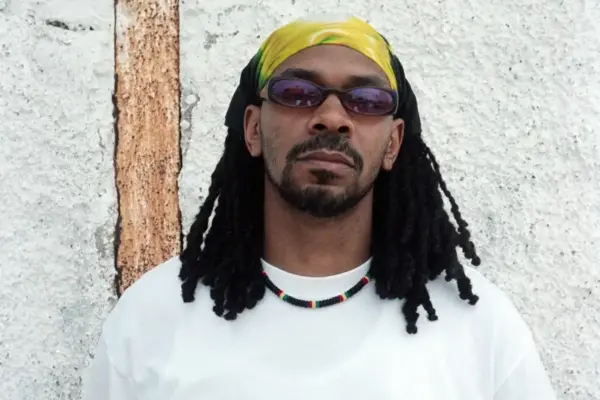
| GBSR Duo | Sunrise Concert (Piano & Percussion) | An intimate, meditative opening exploration of resonance and morning ritual. |
| Steve Reich | Tehilim (Performed by Colin Currie Group) | A cornerstone of 20th-century minimalism, setting Hebrew psalm texts using additive rhythms and vernacular vocal styles. |
| Leonard Bernstein | Chichester Psalms | Commissioned in 1965 for Chichester Cathedral, blending Hebrew biblical texts with Bernstein’s trademark Broadway-esque theatricality and jazz-inflected harmonies. |
| Johann Sebastian Bach | Magnificat (BWV 243) | A towering masterpiece of the Lutheran choral tradition, setting the Virgin Mary’s canticle (echoing the Psalms) with Baroque brilliance. |
| Nico Muhly | Frideswide Psalms (World Premiere) | A contemporary co-commission weaving early medieval history, Book of Common Prayer texts, and 14th-century Wycliffe translations. |
Linguistic and Literary Dimensions
A particularly rich aspect of Nico Muhly’s Frideswide Psalms is its textual genealogy. By incorporating excerpts from the 14th-century Wycliffe translation—the first complete translation of the Bible into English—the work directly connects modern audiences to the birth of English vernacular theology. Wycliffe’s efforts to make sacred texts accessible to the common people mirror the Schwarzman Centre’s overarching goal of democratizing access to humanities scholarship through the arts. Coupled with the stately cadence of the Book of Common Prayer, the libretto forms a linguistic tapestry that mirrors the architectural and historical layers of Oxford itself.
Official Statements & Curatorial Insights
The convergence of academic rigor and artistic innovation at the Schwarzman Centre has generated profound reflections from the key figures driving the project.
Edmund de Waal, Schwarzman Centre Cultural Fellow and Co-Curator, reflected on the enduring power of the Psalms:
"The Psalms are among the most persistent, contested, and shared texts in human history. To work with Oxford academics—historians, theologians, and literary scholars—has been an extraordinary journey into how these ancient poems continue to reverberate across the boundaries of faith and time. The Day of Psalms is not an exercise in nostalgia; it is an active investigation into how we articulate our deepest griefs, celebrations, and searches for meaning through poetry and sound."
Nico Muhly, speaking on the composition of Frideswide Psalms, emphasized the deep historical resonance of Oxford’s patron saint:
"When the Aurora Orchestra and the Schwarzman Centre approached me about writing a new piece, I immediately gravitated toward the local history of St Frideswide. There is something intensely cinematic and quietly radical about her story—a young medieval woman carving out a sanctuary that would eventually anchor one of the world’s great intellectual institutions. By weaving together the archaic, muscular English of the Wycliffe translation with the familiar rhythms of the Book of Common Prayer, the music attempts to circle her world—a world where the sacred and the earthly were inextricably intertwined."
University of Oxford leadership highlighted the transformative role of the Schwarzman Centre within the institution:
"The opening of the Stephen A. Schwarzman Centre marks a paradigm shift for Oxford. For centuries, our humanities research has been world-leading, but often siloed. This centre provides a physical and intellectual home where scholarship meets public performance, where rigorous academic inquiry collaborates directly with world-class artists. The Day of Psalms sets the exact tone we aspire to: fearless, cross-cultural, historically grounded, and boldly contemporary."
Conductor Nicholas Collon, sharing his perspective on leading the Aurora Orchestra and BBC Singers through the gala programme, noted:
"This programme is a breathtaking vertical slice of choral and orchestral music. Moving from the jazzy, life-affirming syncopations of Bernstein’s Chichester Psalms to the architectural perfection of Bach, and finally premiering Nico Muhly’s brilliant, texturally rich Frideswide Psalms, demands immense versatility from both the orchestra and the singers. It is a rare privilege to launch a new cultural chapter for Oxford with music of such profound spiritual and emotional magnitude."
Future Outlook
The launch of the Day of Psalms and the inauguration of the Stephen A. Schwarzman Centre signal a profound redefinition of how a major 21st-century university engages with both its local community and the global cultural sphere. By intentionally fusing advanced academic research with public-facing artistic performance, Oxford is pioneering a model of institutional stewardship that values the humanities not as a cloistered discipline, but as a vibrant, living dialogue with contemporary society.
Looking forward, the Schwarzman Centre is poised to become an international destination for experimental arts, interdisciplinary research, and cross-cultural exchange. The success of the Day of Psalms establishes a template for future artist fellowships and institutional co-commissions, proving that ancient historical narratives—such as the legacy of Saint Frideswide or the timeless poetry of the Psalter—retain an urgent, contemporary resonance.
As the Aurora Orchestra, the BBC Singers, and a constellation of international scholars and artists complete their three-city tour, the ripple effects of this inaugural season will undoubtedly be felt across the global academic and artistic communities. The Schwarzman Centre has opened its doors not merely with a building, but with a statement of purpose: a resounding affirmation that art, history, and scholarship remain inextricably bound in the continuous search for human understanding.